Reciprocating Saw Explained: Uses, Blades and Limits
A reciprocating saw cuts with a push-pull blade and suits rough work: demolition, pruning, nailed lumber and pipe. Here is what it does well, where it falls short, and which blade fits each job.
Curtis Boone
October 13, 2026 · 6 min read
A reciprocating saw drives a straight blade back and forth, so it cuts in tight spots and through mixed materials where a circular saw cannot reach. It is a rough-cut tool for demolition, pruning, pipe, and nailed lumber, not for fine or finish work. If you are shopping for a reciprocating saw, the blade you choose matters as much as the saw itself.
This guide lists what the tool does well and badly, task by task, then matches blades to jobs and covers the habits that keep the work controlled.
How a reciprocating saw works
The motor moves the blade in a short push-pull stroke. A flat plate at the front, called the shoe, rests against the work and steadies the cut. The blade is held by its tang in a clamp at the front of the tool, and many saws use a tool-free lever clamp.
Because the blade is exposed and the cut is aggressive, the tool is built for access rather than precision. You can plunge into a wall cavity, reach between joists, or cut a branch at an awkward angle. You give up a straight, clean edge in return.
Is the brand-name term a different tool?
No. Some people use one manufacturer's trademarked name as a general term for any saw of this type, but the tool category is the same: a handheld saw with a reciprocating blade. Corded and cordless versions both exist, and small one-handed models cover lighter work.
What a reciprocating saw does well and badly
Use this table to decide whether the job suits the tool before you pick up a blade.
| Task | Fit | Notes |
|---|---|---|
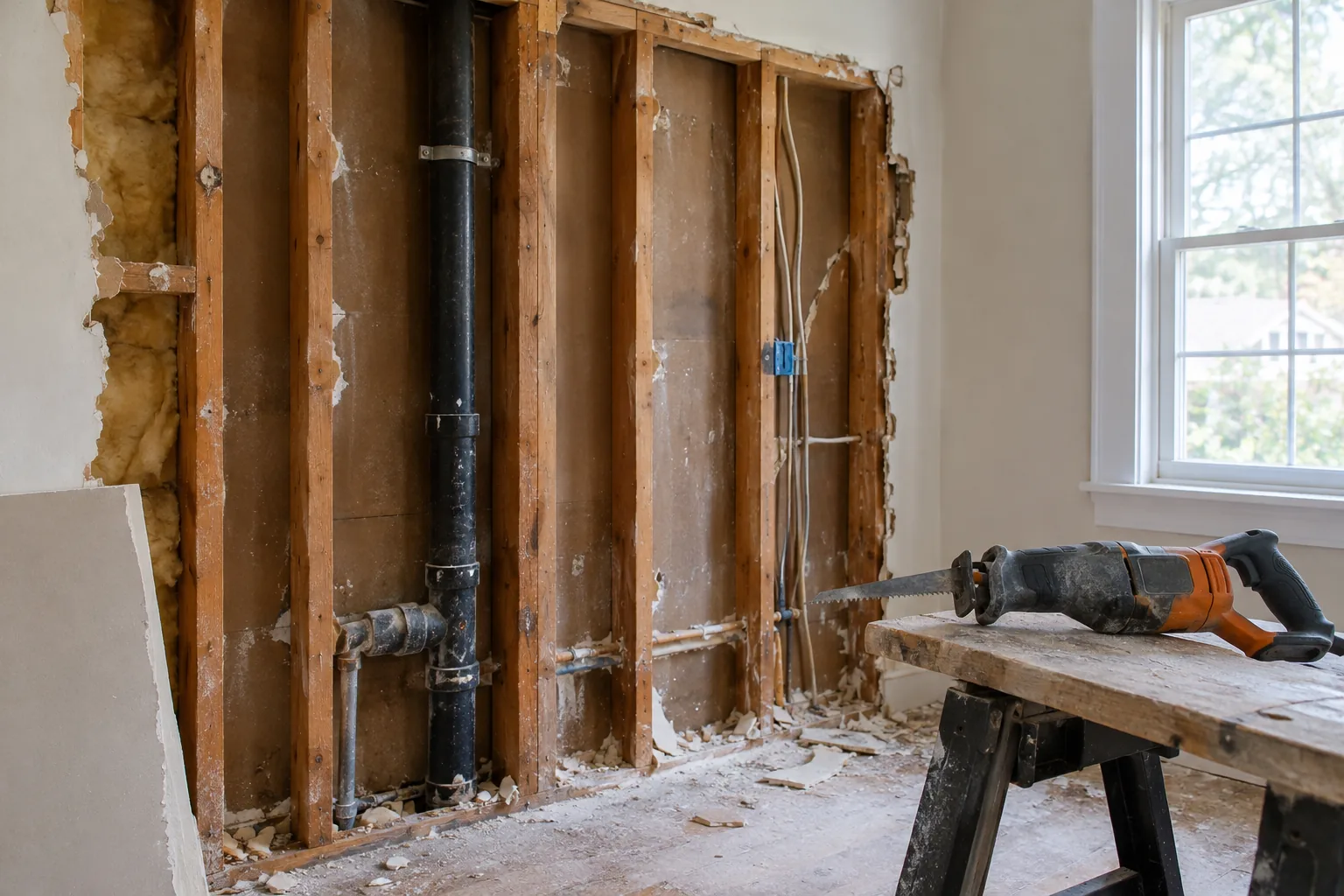
| Demolition of framing with nails | Well suited | Use a demolition blade; cut nails and wood in one pass. |
| Cutting pipe (plastic, copper, steel) | Well suited | Clamp the pipe and use a metal blade. |
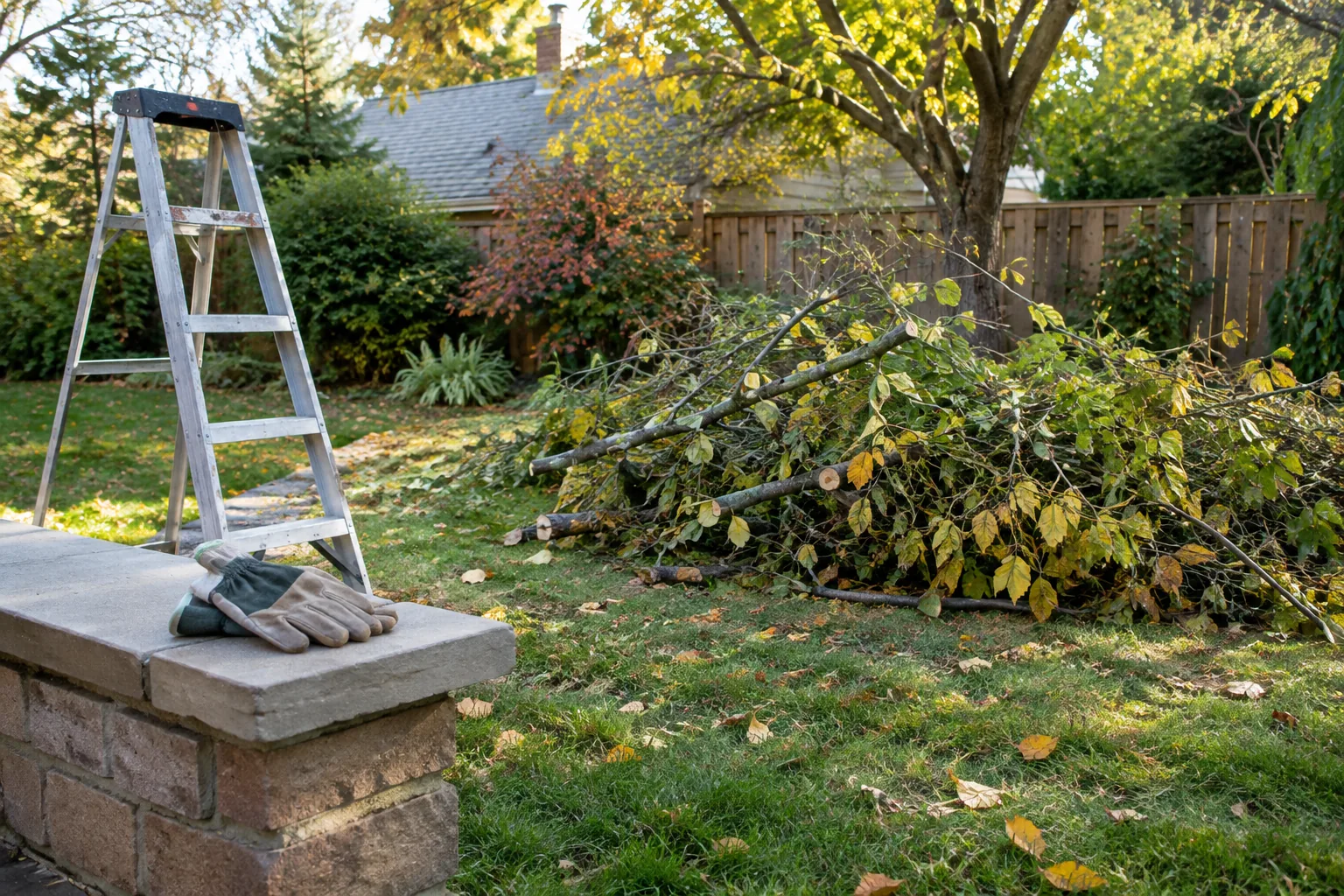
| Pruning branches and roots | Well suited | Use a coarse pruning blade; keep cuts at a comfortable height. |
| Cutting bolts, rebar, and sheet metal | Workable | Use a fine-tooth metal blade and a lighter trigger pull; clamp thin sheet to stop chatter. |
| Flush cuts at a wall or floor | Workable | Needs a flexible blade; expect some blade bending. |
| Straight, square cuts in lumber | Poor | The blade wanders. Use a circular saw or handsaw with a guide. |
| Trim, cabinetry, and finish carpentry | Poor | The cut edge is rough and often splintered. |
| Cutting small, loose pieces | Poor | The work vibrates and jumps unless it is clamped. |
| Cutting near hidden wires or gas lines | Avoid | Check first; ask an electrician or plumber if unsure. |
The pattern is simple: if the cut can be ragged and the access is awkward, the tool fits. If the cut needs to be straight, clean, or precise, choose another saw.
Choosing a blade for each job
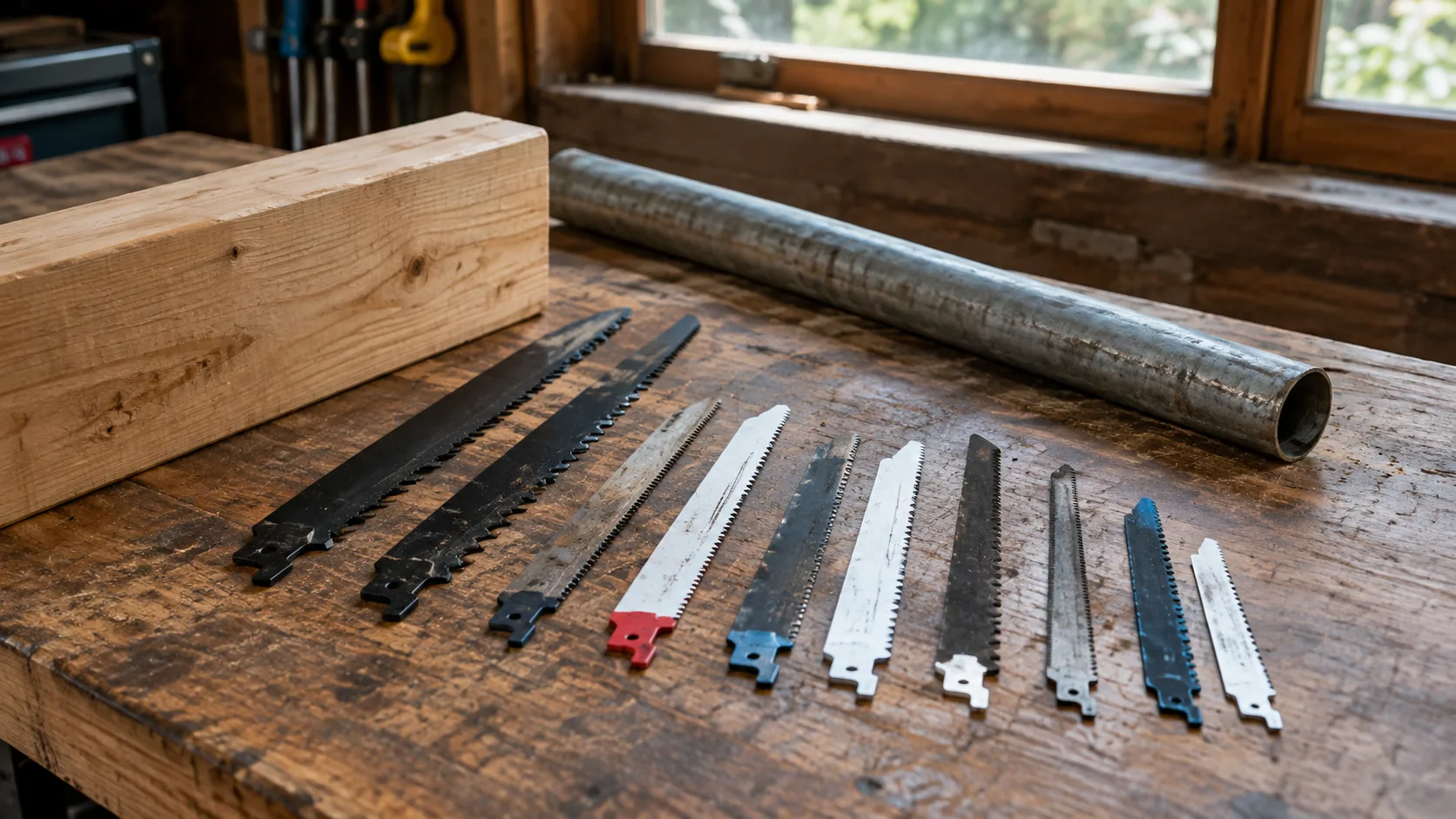
Blade choice changes how the saw behaves more than any other setting. Match the tooth pattern and length to the material, and keep a few types on hand.
| Job | Blade type | What to look for |
|---|---|---|
| Demolition (wood with nails) | Thick demolition blade | Coarse teeth and a stiff body that tolerates nails. |
| General wood cutting | Wood blade | Larger teeth with deep gullets to clear chips; expect a rough edge. |
| Thin metal and pipe | Fine-tooth metal blade | Many small teeth so several stay in contact with the work. |
| Thick metal, bolts, rebar | Heavy-duty metal blade | Hardened teeth; use a slower pace. |
| Pruning live wood | Pruning blade | Coarse, widely spaced teeth that clear green wood and sap. |
| Flush cuts | Flexible blade | Thin body that lies flat against a surface. |
Pruning blades
A reciprocating saw blade for pruning has coarse, widely spaced teeth so it can pass through branches. Green wood is wet and fibrous, and a fine-tooth blade clogs quickly. A good pruning reciprocating saw blade lets sawdust and sap fall out of the cut.
Choose a blade longer than the branch is thick, so the stroke clears the cut. For dry, dead wood, a standard wood blade also works. Wipe pruning blades clean after use, since dried sap makes the next cut drag.
Matching length and thickness
- Short blades give more control in tight spaces and flex less.
- Long blades reach deep into thick material or past obstructions, but they bend more.
- Thicker blades resist bending in demolition; thinner ones follow a curve or flush surface.
Field note
Keep a pruning blade, a wood blade, and a metal blade labeled and stored apart. Using a metal blade on green branches or a coarse blade on thin sheet metal is the quickest way to get a stalled, jumping cut.
A cordless option for demolition, pruning and metal
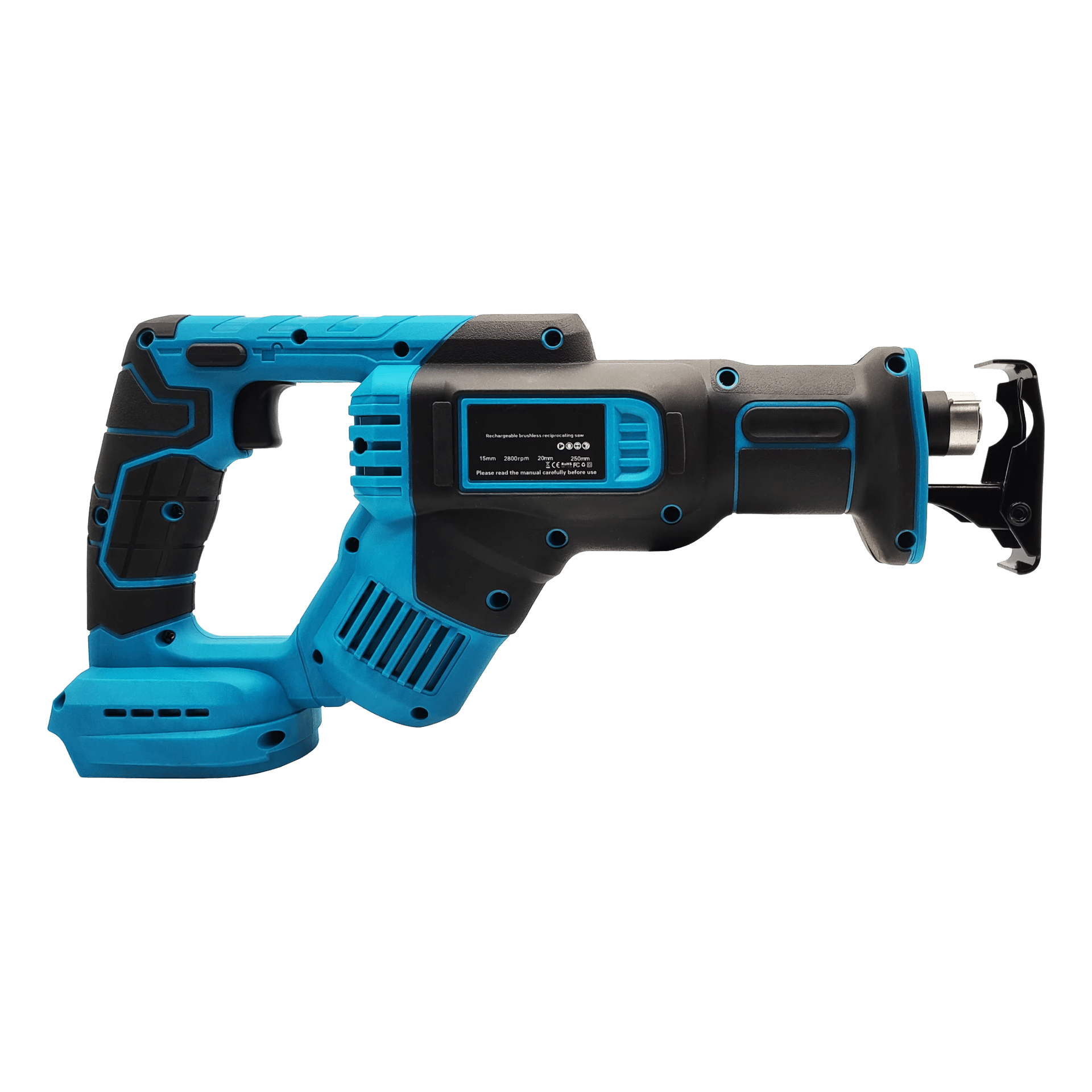
A cordless saw removes the cord from ladder work, crawl spaces, and yard jobs. The IronCleave is a cordless reciprocating saw for demolition, pruning, and cutting wood or metal. It takes an 18V battery, which is an optional add-on in this package.
Its variable-speed trigger responds to how far you squeeze it. Use a lighter pull for metal and a heavier pull for nailed lumber, matching the saw's pace to the material and blade. A lever-actuated clamp holds the blade by its tang, so you can swap between wood and metal blades without tools.
A counterbalance mechanism in the body manages the back-and-forth motion at the handle, and the body is balanced for one-handed control on overhead cuts. It accepts standard reciprocating blades with a standard tang mount, and four blades come in the package.
 In this guideIronCleave$149.99View
Setup checklist before the first cut
- Read the manual for your saw, including the blade and battery instructions.
- Remove the battery or unplug the saw before changing a blade.
- Seat the blade fully in the clamp and tug it to confirm it is locked.
- Wear eye protection, hearing protection, and gloves suited to the job.
- Clamp or brace the work so it cannot jump or swing.
- Check behind the cut for wiring, pipes, and fasteners. If you suspect live wiring, stop and ask an electrician.
- Set the shoe firmly against the surface before pulling the trigger.
What not to do with a reciprocating saw
Most trouble comes from a few repeat mistakes. Avoiding them keeps the cut under control, though no habit removes every hazard.
- Do not start the cut with the blade touching the work. Begin with the blade clear, then ease it in.
- Do not let the shoe float. Without contact, the saw bounces and the blade can bind.
- Do not force the saw. Let the blade do the cutting and adjust trigger pressure instead.
- Do not use one hand on a heavy cut unless the saw and the position allow it. Overhead one-handed cuts need a balanced tool and a stable stance.
- Do not cut near power lines or from an unstable ladder when pruning. Call a qualified tree service for work near utilities or large limbs.
- Do not cut unknown materials. Old paint, insulation, and some building products need specific precautions. Check local guidance first.
- Do not leave a worn blade in place. A dull or bent blade overheats, wanders, and can snap.
Cordless, corded, and mini: how to choose
Pick by where you will work, not by a spec sheet.
| Type | Suits | Trade-off |
|---|---|---|
| Cordless full-size | Yard work, attics, ladders, mixed jobs | Needs a charged battery; keep a spare on hand. |
| Corded full-size | Long sessions at a workbench or shop | The cord limits reach and can snag. |
| Mini, one-handed | Light pruning, small pipe, tight spaces | Less capacity for thick or nailed material. |
When comparing models for value, check the blade clamp, how the trigger controls speed, whether the battery is included, and which blades come in the box. Those details affect daily use more than headline numbers. You can browse more options in our Hand & Power Tools collection.
Care and storage
- Remove the battery before cleaning, and wipe dust from the clamp and shoe.
- Clean sap and resin from blades with a rag after pruning.
- Discard bent, chipped, or dull blades rather than forcing them.
- Store blades flat or in a case so the teeth do not contact each other.
- Keep the battery and tool in a dry place, following the manual.