How to Sharpen Chainsaw Chain: Files, Angles and Depth Gauges
Match the round file to your chain pitch, hold the marked angle, file every cutter the same number of strokes, then check the depth gauges. Signs it is time for a new chain are below.
The Quindrel Team
November 4, 2026 · 7 min read
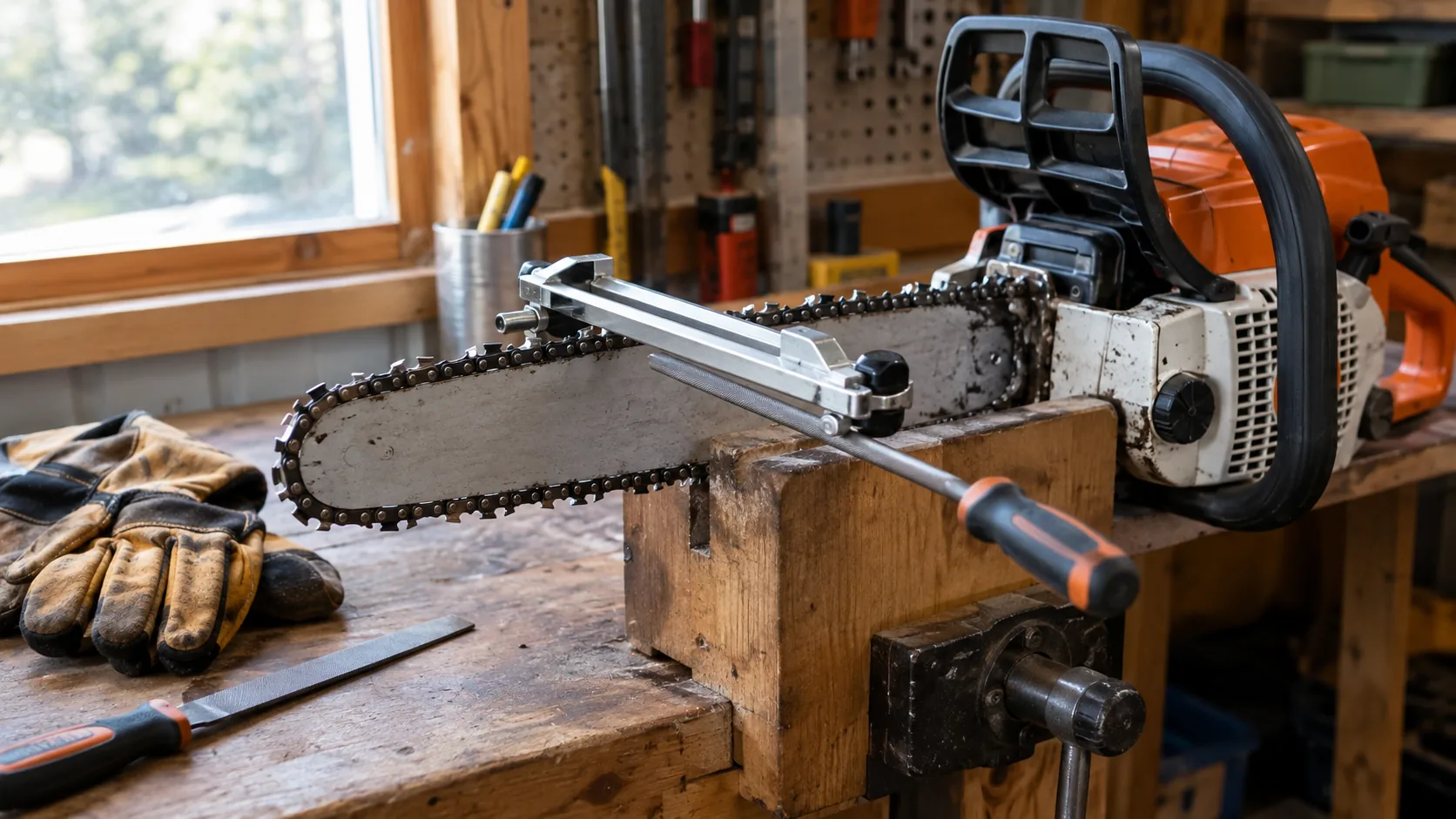
Learning how to sharpen chainsaw chain comes down to four settings: a round file that matches the chain, the filing angle marked on the cutters, the same number of strokes on every tooth, and a depth gauge check at the end. Do these with the saw switched off and the power source removed, and the chain cuts with clean chips again.
This guide gives a file size chart by pitch, a stroke routine you can repeat, the depth gauge steps, and the signs that a chain should be replaced instead of filed.
Signs the Chain Needs Sharpening
A sharp chain pulls itself into the wood. A dull one has to be pushed. Watch for these signs before you pick up a file:
- The saw makes fine sawdust instead of curled chips.
- You have to press down to keep the cut going.
- The saw drifts to one side, which can mean the cutters on one side are duller or shorter than the other.
- The wood smokes or darkens in the kerf.
Hitting soil, rock or a nail dulls a chain, so file after any contact like that, even mid-job.
Tools and File Size by Chain Pitch
You need a round file sized to the chain, a flat file for the depth gauges, a filing guide that rests on the cutters, a depth gauge tool, a vise or stump vise to hold the bar, and gloves. The round file diameter matters: a file that is too small cuts a shallow hook, and one that is too large damages the cutter.
The pitch is stamped on the drive links or listed in the owner manual. The chart below shows common pairings; if your manual lists a different file size or angle, follow the manual.
| Chain pitch | Round file diameter | Typical top plate angle |
|---|---|---|
| 1/4 inch | 4.0 mm (5/32 inch) | 25 to 30 degrees |
| 3/8 inch low profile | 4.0 mm (5/32 inch) | 25 to 30 degrees |
| .325 inch | 4.8 mm (3/16 inch) | 25 to 30 degrees |
| 3/8 inch | 5.2 or 5.5 mm (13/64 or 7/32 inch), check the manual | 25 to 30 degrees |
| .404 inch | 5.5 mm (7/32 inch) | 25 to 30 degrees |
A filing guide has angle lines etched on it. Line those up parallel with the bar, and the angle follows.
How to Sharpen Chainsaw Chain by Hand, Step by Step
Work in a well-lit spot with the saw on a stable surface. Wear gloves, because the cutters are sharp edges.
- Switch the saw off and remove the battery, or unplug it, or pull the spark plug boot on a gas saw. Follow the manual.
- Clean the chain and bar of oil and sawdust with a rag.
- Clamp the bar in a vise or stump vise so the chain can be pulled by hand.
- Set the chain tension so it is snug, not loose. A loose chain moves under the file.
- Find the shortest cutter, which sets the length for the rest, and mark a cutter near it with a marker so you know where you started.
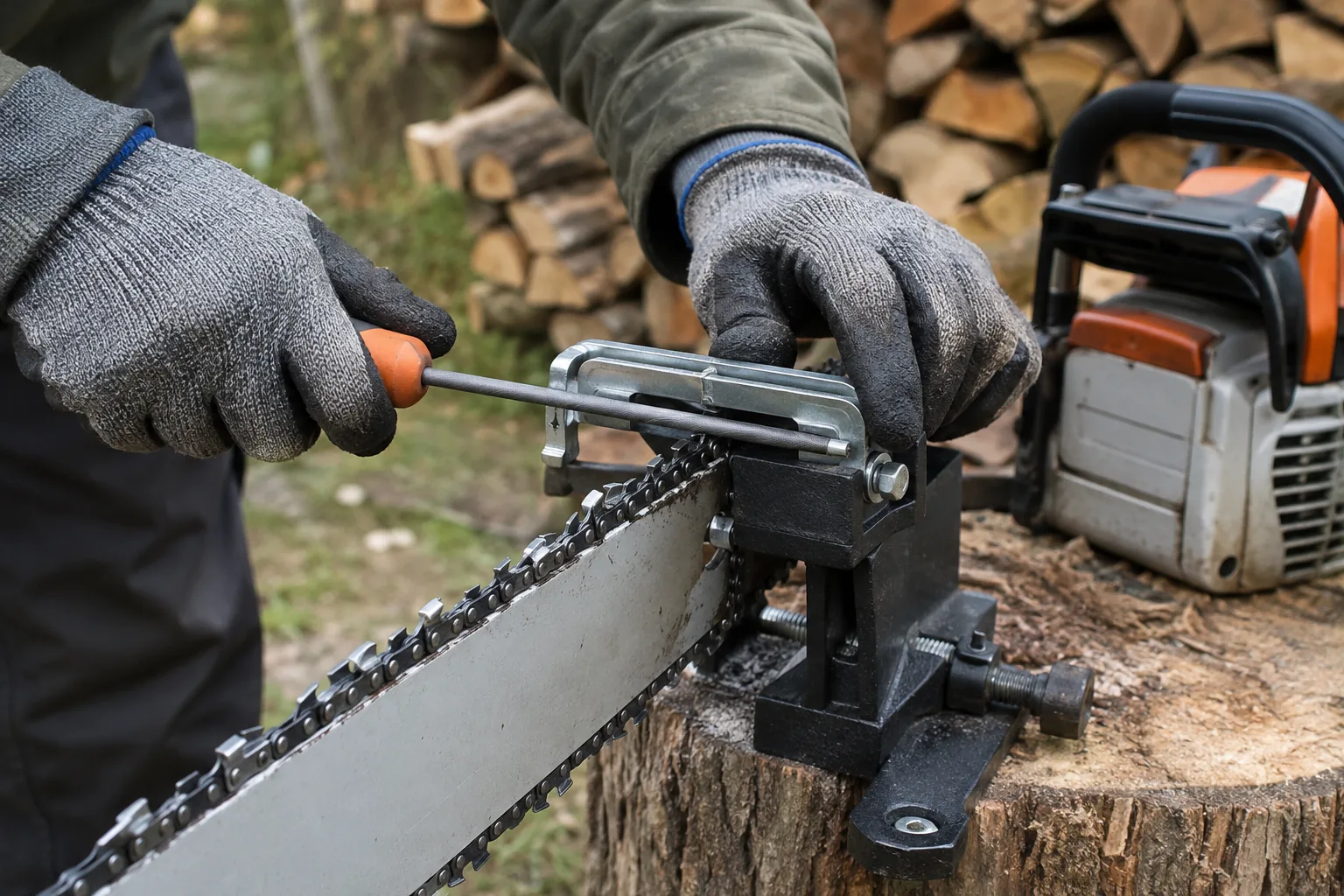
- Seat the filing guide on the cutter with the round file resting in the cutter's curve and about one-fifth of the file diameter above the top plate.
- Push the file across the cutter in one direction only, from the inside edge outward, following the angle line on the guide.
- Lift the file on the return, then repeat the same number of strokes.
- Pull the chain forward, and work through every cutter on one side.
- Flip the saw in the vise and repeat on the other side, holding the opposite angle.
Keep the file level with the ground, at 90 degrees to the bar, unless the manual shows a different setting for your chain.
Stroke Count Routine
Consistency matters more than force. Pick a stroke count, use it on every cutter, and check the results before changing it. A light, steady pass leaves a bright edge; heavy pressure rounds the file's contact and wastes the cutter.
| Chain condition | Strokes per cutter | What to check |
|---|---|---|
| Lightly dull, routine touch-up | 2 to 3 | Bright, even edge on the top plate |
| Dull from regular cutting | 3 to 5 | Edge reaches the full length of the cutter |
| Nicked or uneven | 5 or more, until the damage is gone | All cutters end up the same length |
The right stroke count is the one that restores a bright edge on the shortest cutter, then the same count everywhere else. If the shortest cutter needs more strokes to clean up, match the others to it so the chain cuts straight.
Every few cutters, roll the file a little in the guide so wear spreads across the file's surface.
Field note
Mark your starting cutter with a marker, and count strokes out loud. Losing track of which cutter you started on is how one side ends up sharper than the other.
Check and Lower the Depth Gauges
The depth gauge is the small raised tab in front of each cutter. It sets how deep the cutter can bite. After several sharpenings the cutters get shorter in relation to the gauges, and the chain starts to skim the wood instead of cutting.
Check them every few sharpenings, or sooner if the saw cuts slowly with a freshly filed chain:
- Lay the depth gauge tool over the chain so the slot sits on a cutter.
- If the gauge tab sticks up through the slot, file it flat with the flat file, following the tool's top line.
- Round the front corner of the tab slightly so it matches the original shape.
- Check every gauge on the chain the same way.
The setting depends on the chain and the wood. The manual lists the clearance for your chain; do not file lower than it says, because a gauge set too low makes the saw grab and adds to kickback risk. For general guidance on chain saw use and maintenance, see a chapter on chain saw use and maintenance.
Sharpening a Chain on a Cordless Saw
The steps are the same on a cordless saw, but small saws may use a different pitch than a full-size saw. Check the pitch and file size in the manual or on the drive links before you buy a file, and do not assume the chart row from another saw applies.
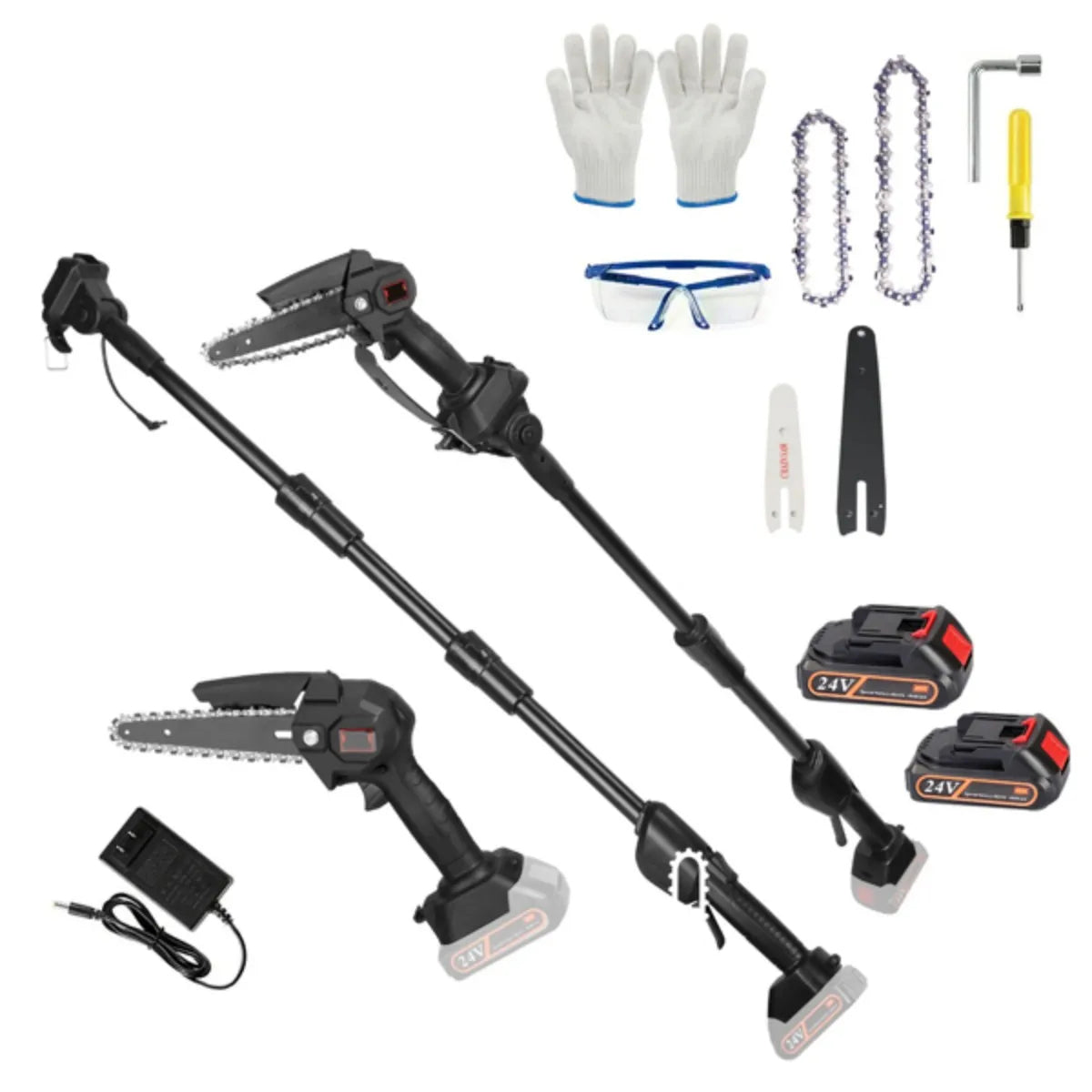
The ArborSaber includes a 6-inch chain and blade and sets chain tension by hand, with no tools, so you can adjust the tension before filing and check it again after you reassemble the saw. It runs from 24V rechargeable batteries; take the battery out before you touch the chain.
 In this guideArborSaber$269.99View
The same routine applies to the TimberJet Pro, which works with a 4-inch or 6-inch bar and takes 18V battery packs that are not included. Its safety lock sits ahead of the trigger; leave the pack removed while you file, and read the manual for the chain specification before choosing a file. If you are comparing saws for pruning work, browse Chainsaws, Pruning & Tree Care.
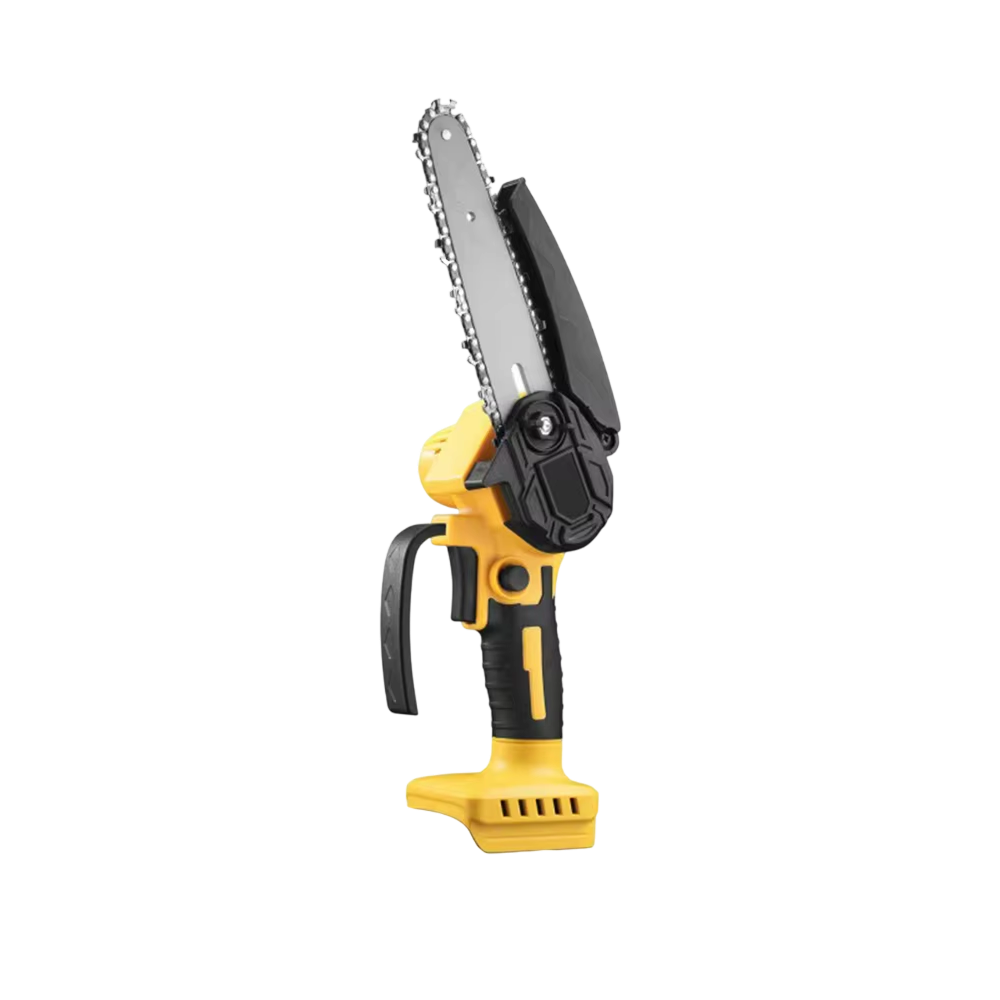 In this guideTimberJet Pro$99.99View
Chainsaw Sharpener Options: Guide, Rotary Tool, Electric Grinder
If you are weighing a chainsaw sharpener against a hand file, all of them aim for the same cutter shape. They differ in how they hold the angle.
| Method | How it holds the angle | Watch for |
|---|---|---|
| Round file in a filing guide | Guide rests on the cutter and the depth gauge | Wrong file diameter |
| Rotary tool with a chain stone | You hold the angle by hand | Stone size must match the pitch, and heat can darken the cutter |
| Drill-mounted sharpening attachment | Fixed attachment | Follow the attachment's instructions closely |
| Electric bench sharpener | Adjustable head with angle scale | Setting each side correctly |
A hand file is easy to carry to the job and lets you control each stroke, so it is a good method to learn first. Whichever tool you use, finish with the depth gauge check.
Paying for a Professional Sharpening
Sharpening shops set their own prices, so call for a quote. Compare it with the cost of a new chain for your bar. If you file at home, a file, a guide and a depth gauge tool cover many sharpenings.
When to Replace the Chain Instead
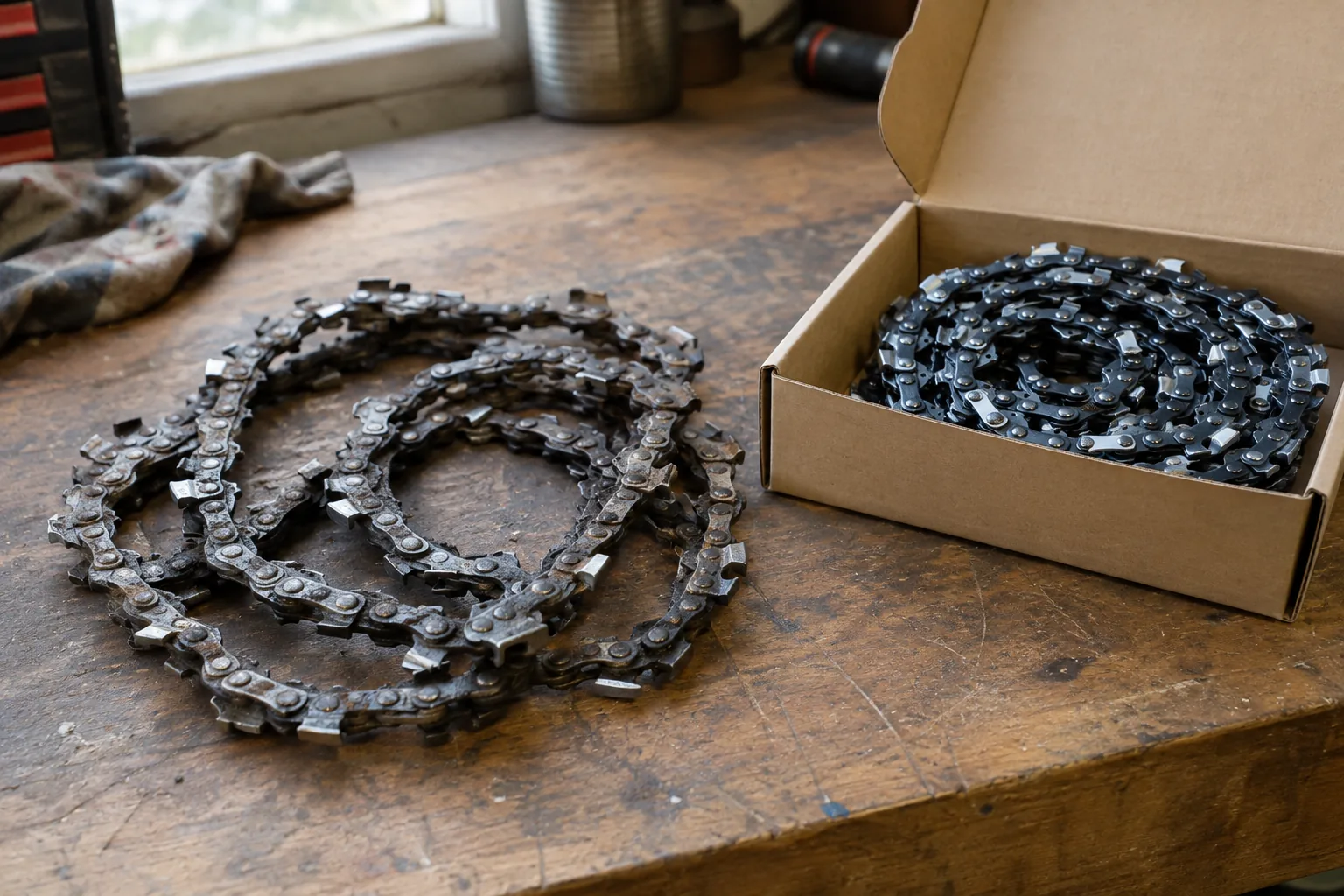
Chains are worth sharpening until the cutters are worn out. A chain can be filed many times, but there is a point where filing stops helping.
| What you see | Sharpen or replace |
|---|---|
| Dull cutters, edge still intact | Sharpen |
| Cutters filed down to the wear mark on the top plate | Replace |
| Cracked cutters or cracked drive links | Replace |
| Stretched chain that needs constant re-tensioning | Replace, and check the sprocket |
| Bent or damaged drive links | Replace |
| Uneven cutters the file cannot even out | Replace |
Check the bar groove and the sprocket when you change the chain, since worn parts shorten a new chain's service life.
Common Mistakes and Care
- Using a file diameter that does not match the pitch.
- Changing the angle from tooth to tooth.
- Filing with too much pressure or in both directions.
- Skipping the depth gauges.
- Sharpening a loose chain.
After you finish sharpening by hand, wipe the chain, add bar oil as your manual directs, and store it dry. If a chain has surface rust, this rust removal guide covers soaks and abrasives for tools.