How to Remove Rust From Tools: Soaks, Abrasives, Prevention
Match the method to the rust: a vinegar or citric acid soak for heavy rust, a brush or abrasive for surface rust, then dry and oil the metal.
The Quindrel Team
October 31, 2026 · 6 min read
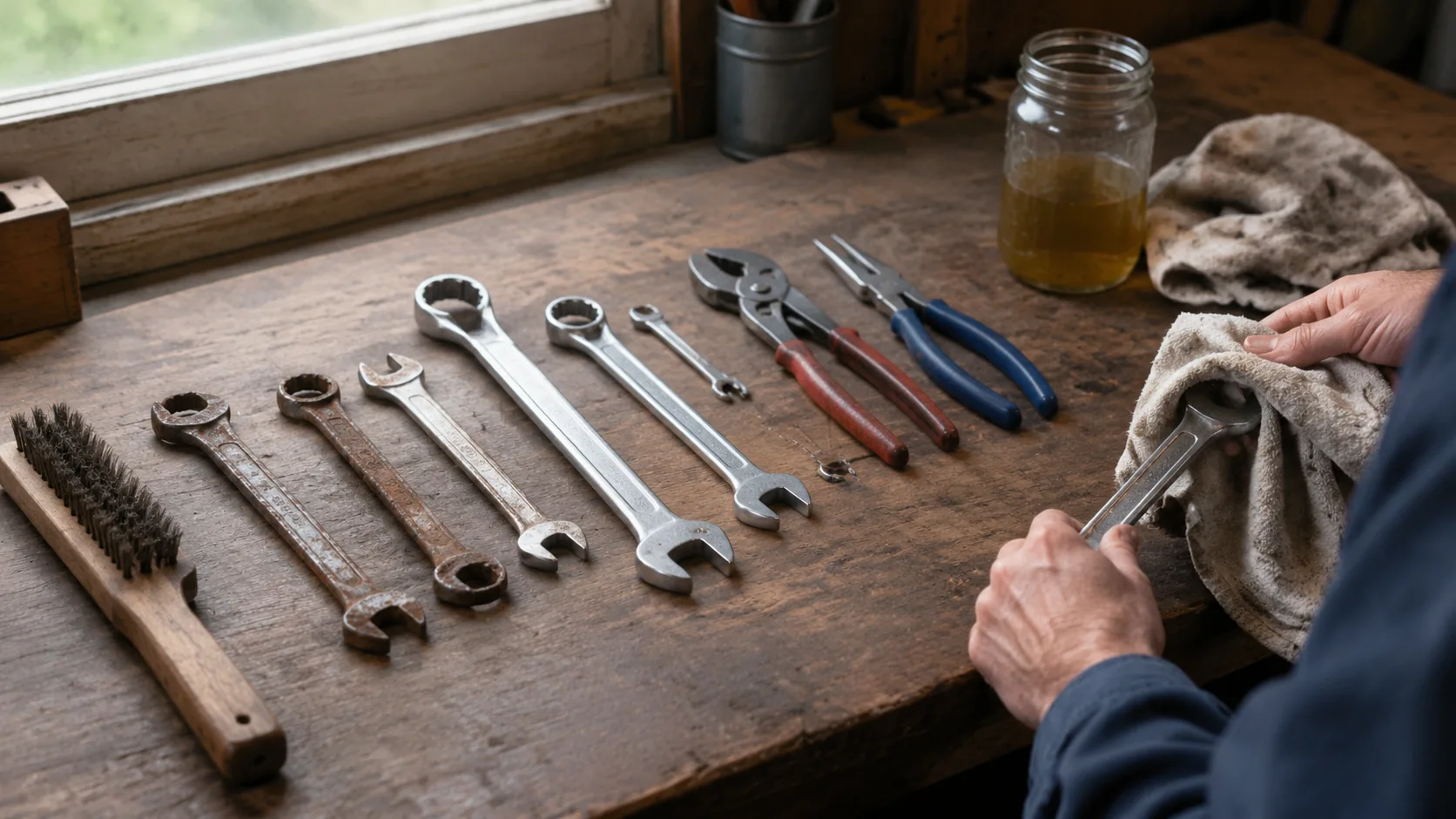
Here is how to remove rust from tools: match the method to the damage. Use a white vinegar or citric acid soak for heavy rust, a wire brush or abrasive pad for surface rust, and power sanding for flat, stubborn patches. After the rust is gone, rinse, dry the metal fully and wipe on a light coat of oil. This guide compares each option by how bad the rust is, then sets out a prevention routine.
How to Remove Rust From Tools: Pick the Method by Rust Level
Start by judging the rust, not by reaching for the nearest bottle. Light orange haze needs very little. Pitted, flaking metal needs a soak. Use the table to choose.
| Rust level | What it looks like | Method | Good for |
|---|---|---|---|
| Light | Orange film, no texture | Oiled abrasive pad, wire brush or baking soda paste | Wrenches, pliers, hammer heads |
| Moderate | Rough, dull patches | Baking soda paste, then brush; or a short vinegar soak | Handles, small parts, hinges |
| Heavy | Flaking, scaly, pitted | White vinegar or citric acid soak | Old hand tools, sockets, clamps |
| Flat surface | Rust across a plane or blade | Power sanding with a fine pad | Saw tables, flat steel stock |
| Seized | Parts stuck together | Penetrating oil, then soak | Adjustable wrenches, vises |
Begin with the mildest method that fits the rust. You can repeat a soak, but metal you sand away is gone. Precision flat surfaces, such as plane soles, are better worked by hand on a flat backing, since a hand-held sander can round them.
Prepare the Tool and Your Workspace
Wipe off grease and dirt first, because oil blocks acid from reaching the rust. A degreasing wash, covered in our guide to cleaning hand and power tools, gets the surface ready.
Wear chemical-resistant gloves and eye protection, and work in a ventilated space. Read the label of any product you use and follow it. Unplug and remove the battery from any power tool before cleaning, and keep electrical parts out of any liquid.
Take apart what comes apart. Pliers, clamps and adjustable wrenches need open pivots, since rust hides inside joints.
Vinegar Soak: Step by Step
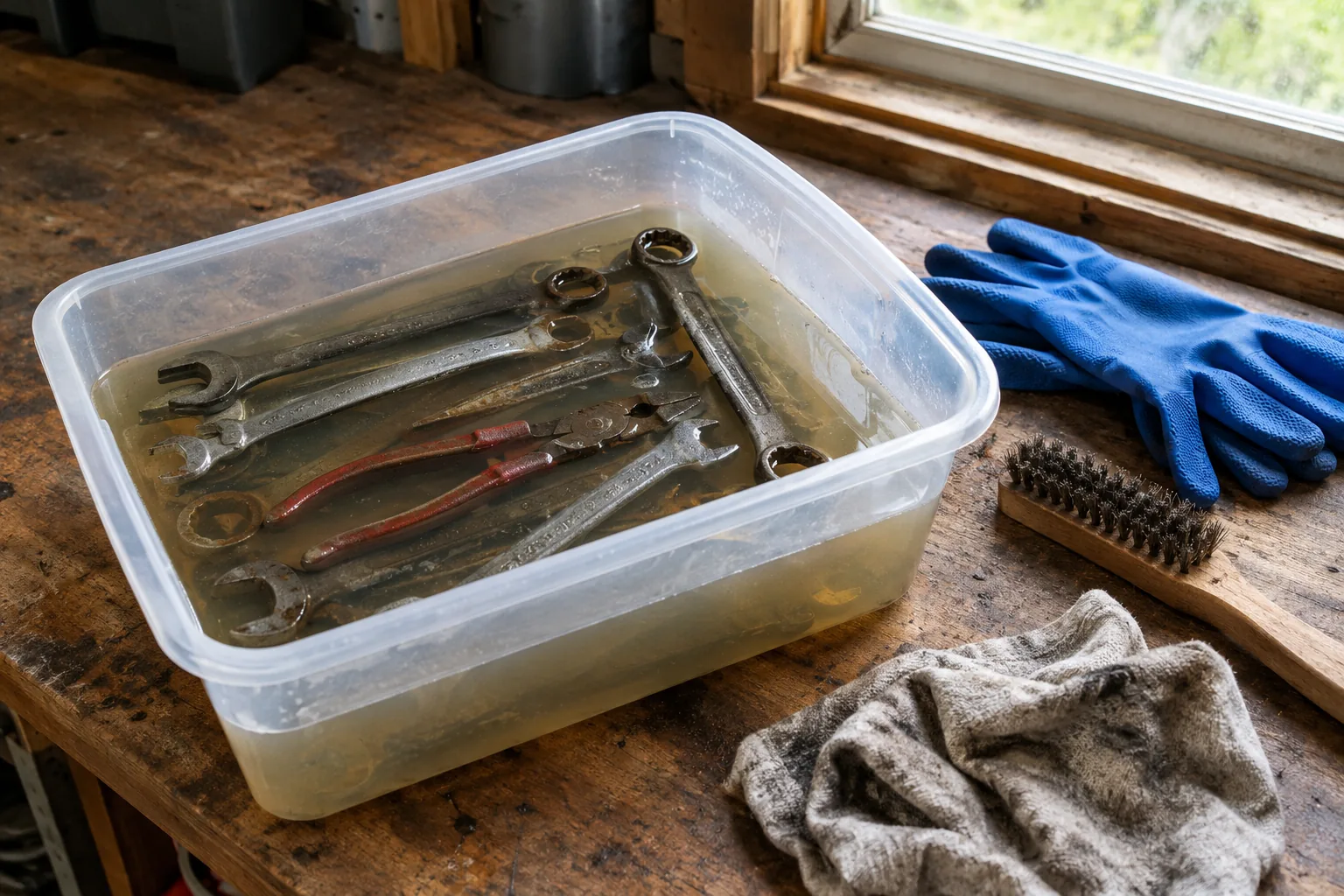
Yes, you can soak rusty tools in vinegar. Plain white vinegar is a mild acid that loosens iron oxide, which makes it a common homemade rust remover for old hand tools. It also suits you if you want to remove rust from tools without scrubbing, because the acid does much of the work.
- Pour white vinegar into a plastic tub or glass jar, enough to cover the tool.
- Submerge the tool fully. Keep metal containers out of it.
- Check the tool at intervals. Pull it out once the rust looks dull and loose.
- Scrub with a wire brush or a nylon pad under running water.
- Rinse in a mix of baking soda and water to neutralize the acid.
- Dry at once with a rag, then oil the metal.
Do not leave tools in vinegar for days. Once the rust is gone, the acid keeps working on bare steel and leaves a rough, gray surface. Chrome plating and painted markings can also dull, so try a small spot first on a plated tool.
Citric Acid, Baking Soda, Cola and Sprays
Citric acid
Citric acid powder dissolved in warm water works as a soak in the same way as vinegar. Follow the mixing directions on the package. You can choose it if you dislike the smell of vinegar, and you rinse and dry the tool the same way.
Baking soda paste
For light rust, mix baking soda with a little water into a paste. Spread it on the rust, let it sit, then scrub with a brush. This method suits small parts and handles, and it fits when a full soak is too much for the tool. For moderate rust, follow the paste with a brush or a short soak.
Cola
Will cola remove rust? It can loosen light rust because it contains phosphoric acid, but it is sugary and sticky. Rinse the tool thoroughly and dry it. A vinegar soak leaves no sugar residue to rinse off.
Penetrating oil and water-displacing sprays
Does a water-displacing spray remove rust? It is not a rust remover. It loosens seized parts and leaves a thin film, so use it to free a stuck joint, then clean the rust with a soak or brush. For a protective coat afterward, use one of the options in the prevention section below.
Which homemade rust remover to pick
For heavy rust, choose a white vinegar soak. For light rust, choose baking soda paste. If you dislike the vinegar smell, choose citric acid. Skip anything you cannot rinse off completely.
Abrasives and Power Sanding for Stubborn Rust
When a soak does not reach the spot, or the rust sits on a flat surface, use an abrasive. Work through grits: coarse paper or a wire wheel for scale, then finer paper to smooth the metal. Wet-and-dry paper with a few drops of oil keeps the surface clean as you go.
Steel wool and a nylon abrasive pad suit curved shapes such as wrench jaws. For fine detail, a brass brush loosens rust from teeth and threads without cutting into the steel.
For larger flat areas, a power sander does the repetitive part. The TorqGrip Pro is a cordless hand-held sander with a brushless motor and three speed settings of 4000, 6000 and 8000 RPM. Its hook-and-loop pads change without tools, and it handles light jobs on metal. Start at a lower setting with a fine pad, hold the sander with light, steady pressure, and let the dust port draw debris into the bag. Wear eye protection and a dust mask, and follow the manual.
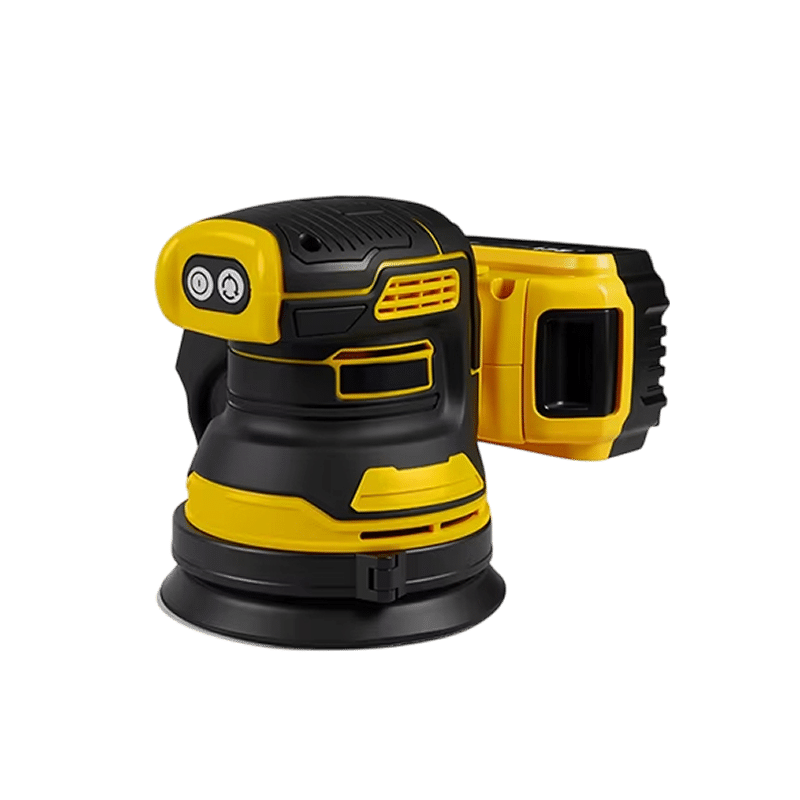 In this guideTorqGrip Pro$139.99View
Field note
Sand in one direction along the grain of the metal, not in circles. Wipe the surface with a clean rag between grits so loose rust particles do not scratch the finish.
Prevention Routine After the Rust Is Gone
Knowing how to remove rust from tools is half the job; the rest is keeping it off. Bare steel rusts as soon as moisture reaches it, so finish every cleanup with a protective coating. Dry the tool, then wipe on a thin film of machine oil, paste wax or a rust-inhibiting spray. Wipe off the excess so it does not collect dust.
- Dry tools after every wet job, including wiping off sweat from handles.
- Store tools indoors, away from concrete floors and open windows.
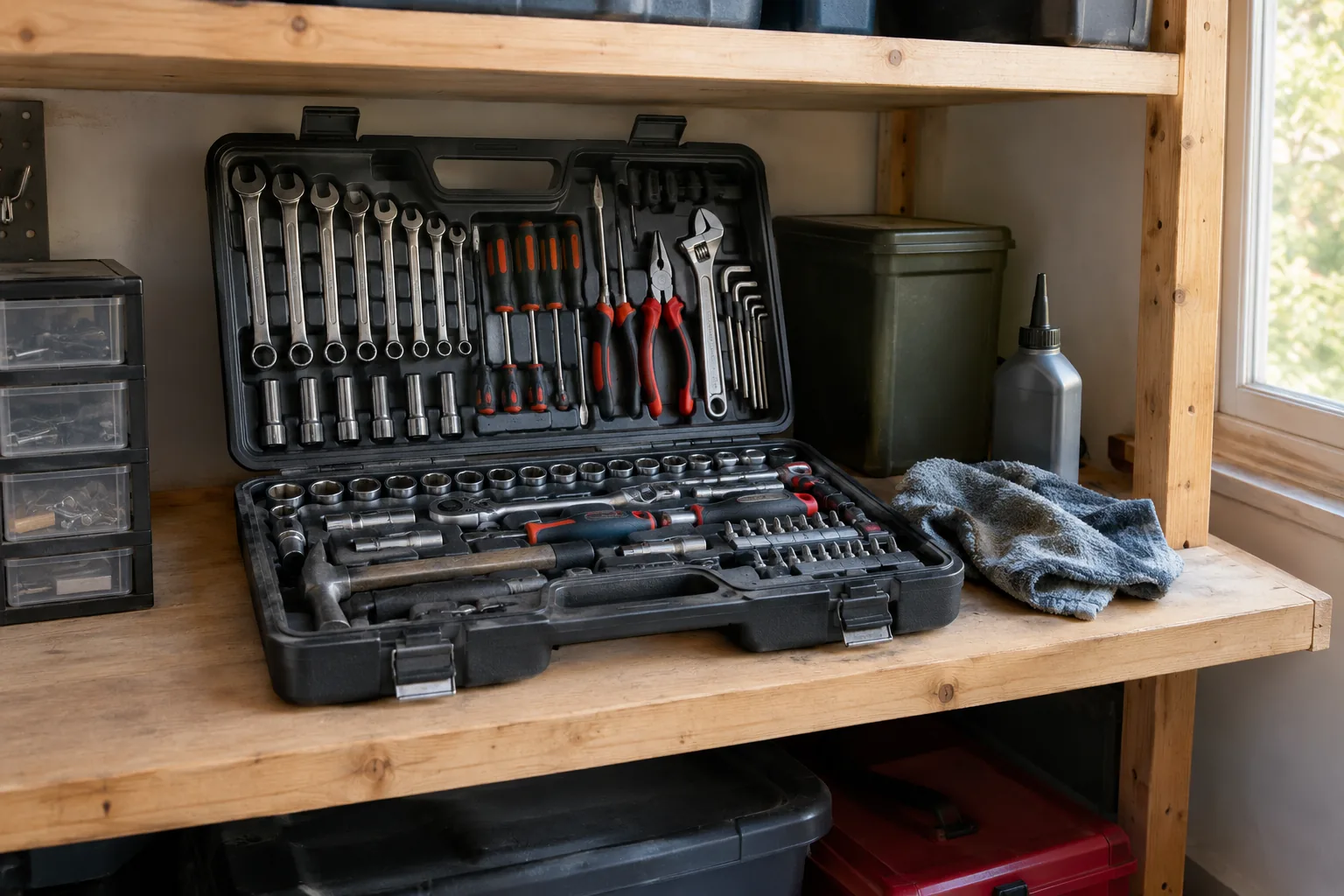
- Keep tools in a closed case or drawer with a desiccant pack.
- Oil moving joints on pliers, clamps and adjustable wrenches on a set schedule that fits your use.
- Inspect stored tools each season and clean spots of rust early.
A fitted case also helps you spot missing or damp pieces. The TorqueVantage 53-piece 1/4-inch drive socket set holds each socket and bit in its own marked slot of a plastic storage case, with sockets forged from carbon steel and finished in chrome. When a piece is out of place, you see it at a glance, so you can dry it and put it back. For more tools, browse the Hand & Power Tools collection.
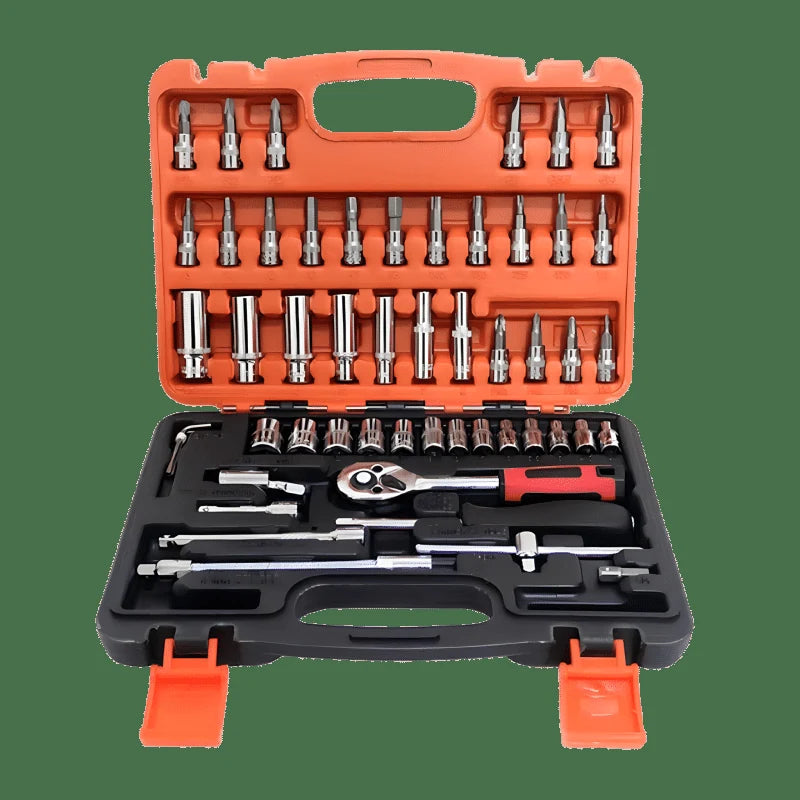 In this guideTorqueVantage$119.99View
Common Mistakes When Removing Rust From Tools
These errors undo good cleanup work when you remove rust from tools at home.
- Leaving tools in acid too long, which pits the metal.
- Skipping the rinse, so acid or sugar residue stays on the steel.
- Air-drying instead of wiping, which lets fresh rust form on damp steel.
- Soaking tools with wooden handles. Remove the handle if you can, or clean the metal head only.
- Using a power sander at the highest setting on thin metal, which can heat and mark it.
- Mixing household chemicals. Do not combine vinegar with bleach or other cleaners.
If a tool is cracked, deeply pitted at a stress point, or a load-bearing item such as a chisel or a jack, ask a professional whether it should stay in service. Rust removal restores the surface, not the structure.
For sanding technique on larger work, see sanding with a belt sander, which covers grit choice and common errors.