Choosing a Good Power Washer for Home Use: PSI, GPM, Power
A good power washer for home use runs about 1,300 to 2,000 PSI with 1.4 to 2.0 GPM. Match those numbers to your car, deck, siding or driveway with the table below.
The Quindrel Team
October 18, 2026 · 8 min read
A good power washer for home use delivers roughly 1,300 to 2,000 PSI with about 1.4 to 2.0 GPM of water flow. That range covers cars, patio furniture, decks, siding, driveways and walkways when you pair it with the right nozzle. Higher PSI is only needed for stained concrete, and it raises the chance of damaging softer surfaces.
This guide matches pressure and flow to specific jobs, then walks through power source, nozzles, soap, setup and care. Use the table to pick your numbers first, then compare models.
PSI, GPM and cleaning units explained
PSI is the force of the water against the surface. GPM (gallons per minute) is the volume of water moving across it. PSI loosens a stain, while GPM carries the loosened dirt away and feeds a foam cannon.
Multiplying the two gives cleaning units, a rough way to compare machines. A washer at 1,600 PSI and 1.6 GPM works out to 2,560 cleaning units. Two machines with the same PSI can behave differently if their water flow differs, so read both numbers on the spec sheet.
Converting metric spec sheets
Spec sheets for imported models often list bar and liters per hour. One bar is about 14.5 PSI, and 3.785 liters make a gallon. Divide liters per hour by 227 for an approximate GPM.
| Spec sheet value | Approximate US figure |
|---|---|
| 100 bar | 1,450 PSI |
| 110 bar | 1,595 PSI |
| 125 bar | 1,813 PSI |
| 360 l/h | 1.6 GPM |
| 400 L/h | 1.8 GPM |
Pressure washer vs. power washer
In store listings the two names are used interchangeably. Strictly, a power washer heats the water and a pressure washer uses cold water. Home-use machines you plug in or fill with gas are cold-water units, so you can treat both terms as the same thing when you shop.
How to choose a good power washer for home use: match the job first
Start with the most delicate surface you will clean, not the toughest. A machine that suits your car and siding can still handle a patio by using a narrow nozzle and moving slowly. Going the other way, from a high-pressure unit down to a car, depends on a wide nozzle and a lot of distance.
| Job | Typical starting PSI | Typical GPM | Nozzle angle |
|---|---|---|---|
| Car body and wheels | 1,200 to 1,900 | 1.4 to 2.0 | 25° to 40°, or a wide fan |
| Outdoor furniture, grills, bikes | 800 to 1,500 | 1.2 to 1.8 | 40° |
| Wood deck and fence | 500 to 1,500 | 1.2 to 2.0 | 25° to 40°, move with the grain |
| Vinyl or painted siding | 1,300 to 1,600 | 1.4 to 2.0 | 40°, spray downward |
| Concrete driveway and patio | 1,900 to 3,000 | 1.8 to 2.5 | 15° to 25° |
These are starting points for general home cleaning. Check the surface maker's guidance, and try a hidden patch before you commit to a pressure.
Four decision steps
- List every surface you plan to clean this year, from the car to the driveway.
- Mark the most delicate one. Its row in the table sets your upper PSI.
- Check the GPM for your soap and rinse needs, especially if you plan to use a foam cannon.
- Decide on power source by where the nearest outdoor outlet is and how large your biggest surface is.
Is 3,000 PSI too much for a house?
It can be. At 3,000 PSI a narrow jet can gouge wood, strip paint, force water behind siding and etch soft masonry. For concrete alone, that pressure is useful, but house exteriors, cars and decks do not call for it.
If you already own a high-pressure machine, widen the nozzle angle, step back from the surface and keep the wand moving. A 40° nozzle at a distance acts very differently from a 0° tip up close. Do not aim at windows, light fixtures, vents or people.
Electric, gas or cordless
| Type | Fits | Things to plan for |
|---|---|---|
| Electric | Cars, furniture, decks, siding, small patios | Needs an outdoor outlet and a cord that reaches; no fuel or exhaust to handle |
| Gas | Large driveways, big concrete areas, fences on large lots | Needs fuel and oil; run it in open air only; engine upkeep adds to the routine |
| Cordless | Quick rinses away from an outlet | Runtime depends on the battery pack; check the flow rate before buying |
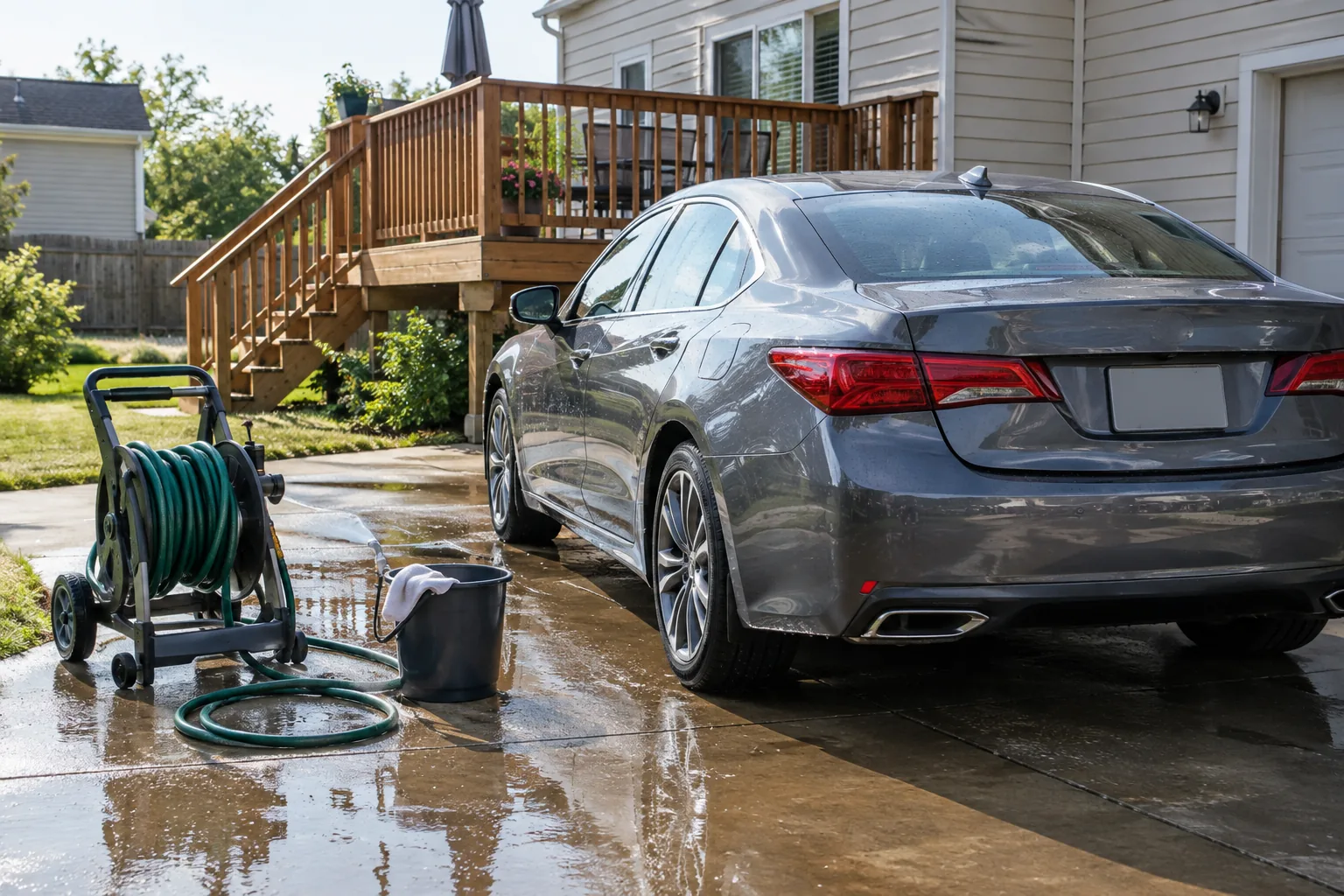
What is a good power washer for home use when your list is a car, a deck and a few chairs? An electric pressure washer usually covers that list, because the jobs sit near the house and an outlet. Gas makes sense when the surface area is large and the outlet is far away.
Do not run a gas engine in a garage or enclosed space. Follow the manual and keep the exhaust in open air. For electric units, ask an electrician if you are unsure about the outlet or an extension cord.
Nozzles, soap and accessories that matter
The nozzle shapes the cleaning result as much as the motor does. Narrow angles concentrate force, and wide angles spread it. Some machines ship with color-coded quick-connect nozzles, while others use a single adjustable lance that twists from a narrow jet to a wide fan.
A foam cannon mixes car soap with water for a pre-wash coat on vehicles. It relies on adequate water flow, so check the GPM, not just the PSI. A detergent suction tube is another soap route, drawing soap from a bottle into the stream.
Look also for the following features before you buy:
- An inlet filter to catch grit before it reaches the pump.
- A hose long enough to reach the far side of a vehicle.
- A trigger gun with solid fittings, such as brass.
- A cord long enough to reach your outlet without an extension.
- Storage hooks or a carry handle, so the unit and its hose have a place on a shelf.
Read the label on any soap or chemical to confirm it is meant for use through a pressure washer, and rinse the system with clear water afterward.
Two washers for home jobs we stock
These two units cover different home situations. Browse the full range in Pressure Washing, Snow & Weed Control.
For driveways, decks, siding and vehicles
The JetPulse Pro has a 125 bar (about 1,813 PSI) pressure spec and 400 L/h (about 1.8 GPM) of flow. You pick the spray pattern and pressure setting with the controls: a wider fan suits vehicles and softer surfaces such as wood decking, and a focused jet suits concrete. It is self-priming, so it can draw water from a faucet, bucket or tank, and quick-connect fittings need no tools.
It weighs 5.1 kg (about 11.2 lb) and has a built-in carry handle. The box includes a 2 m inlet pipe, inlet filter, 7 m high-pressure outlet hose, trigger spray gun, extension wand rod, short rotary nozzle, foam cannon pot, quick connector and faucet quick-connect adapter.
For cars, wheels and outdoor surfaces
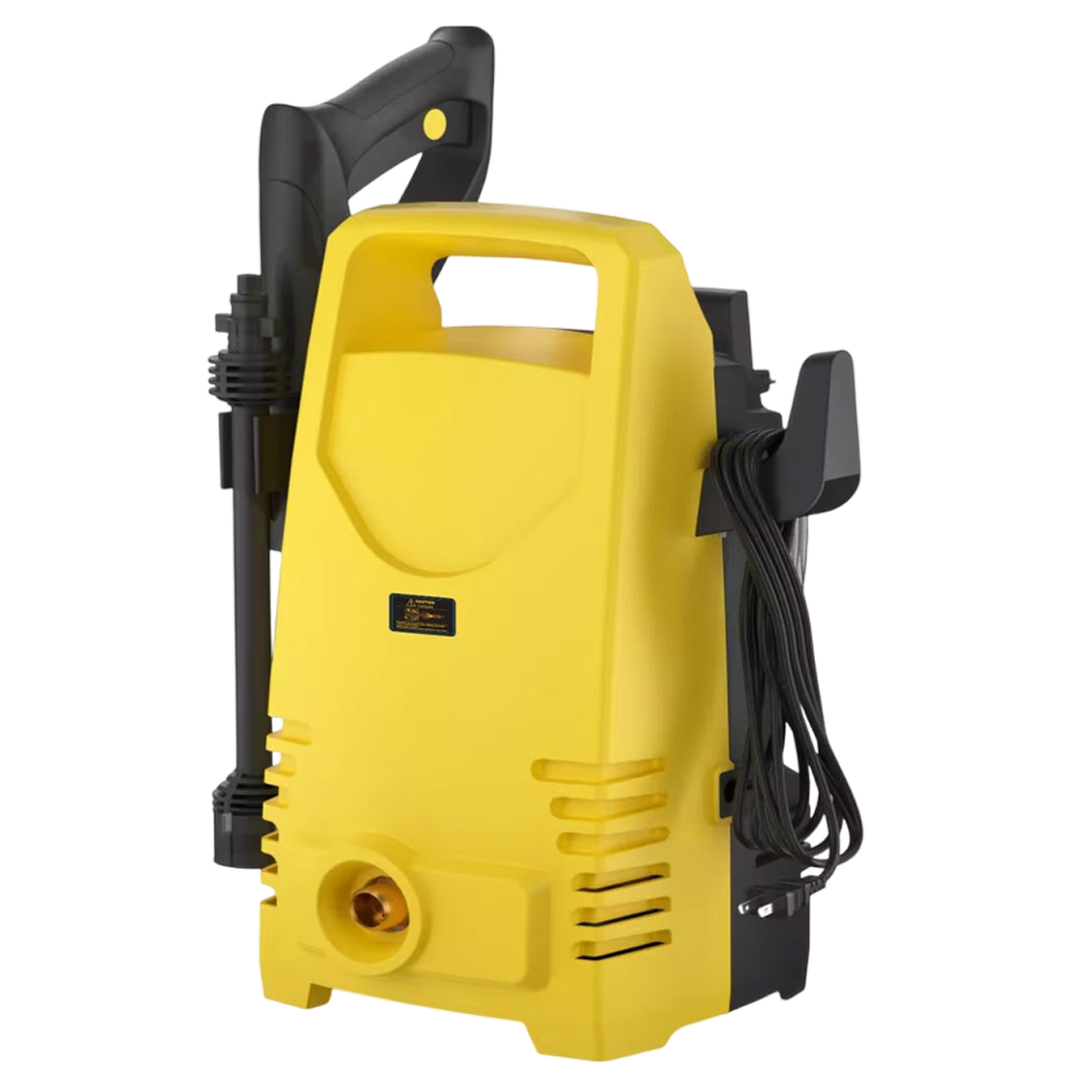
The WashForge is a 1800W electric pressure washer delivering 360 l/h (1.6 GPM) at 110 bar (about 1,595 PSI). Its lance twists from a 1° narrow jet to a 180° wide fan, so you can move from wheel barrels to body panels at the wand. It has a 7 m (about 23 ft) outlet hose, a brass M22 trigger gun fitting and a detergent suction tube for foam soap.
A replaceable mesh filter sits at the inlet. The unit weighs 5.3 kg (about 11.7 lb) and has built-in storage hooks for the hose and cable. Plug the 5.5 m cord into a covered outdoor outlet.
 In this guideWashForge$179.99View
Setup, safety and common mistakes
Read the manual for your model before the first use. The CDC pressure washer safety page covers general hazards such as high-pressure spray and electrical contact.
- Check the hose, gun and fittings for cracks or leaks before connecting anything.
- Connect the water supply and squeeze the trigger until water flows steadily, before you switch on the motor.
- Plug electric units into a covered outdoor outlet.
- Choose the widest nozzle that still cleans the surface, and start from a distance.
- Try a hidden patch of the surface first.
- Wear closed shoes and safety glasses, and keep children and pets away from the work area.
- Release the trigger, shut off the water and squeeze the gun to bleed off remaining pressure before changing nozzles.
Field note
Keep a note on your phone with the nozzle and distance that worked on each surface. Next season you can start there instead of experimenting on the siding.
Mistakes to avoid
- Buying for the hardest job and then using the same tip on every surface.
- Comparing PSI alone and ignoring GPM, which matters for soap and rinsing.
- Holding a narrow jet close to wood, which leaves fuzzy gouges along the grain.
- Spraying upward at siding, which can drive water behind the panels.
- Running the pump with no water supply.
- Letting wash water run into storm drains. The Michigan EGLE wastewater sheet explains why wash water needs thought, so check local rules for soap and runoff.
Care after each use
Disconnect the water, squeeze the trigger to release remaining pressure, then drain the hose and gun. Coil the hose and cord loosely, and check the inlet filter for grit. Store the unit where it will not freeze, since water left inside can damage the pump.
Wipe down the body and fittings, and look over the nozzle tips for debris before you put them away. A clogged tip changes the spray pattern and strains the pump, so clear it with the tool in the manual.
A good power washer for home use stays useful through routine checks. For a seasonal routine covering oil, filters and seals, see Pressure Washer Servicing: A DIY Maintenance Checklist.