
Power Washing at Home: Driveways, Decks and Siding
Power washing at home comes down to nozzle, distance and pressure for each surface. Use the table and checklist below for driveways, decks and siding.
The Quindrel Team
October 29, 2026 · 6 min read
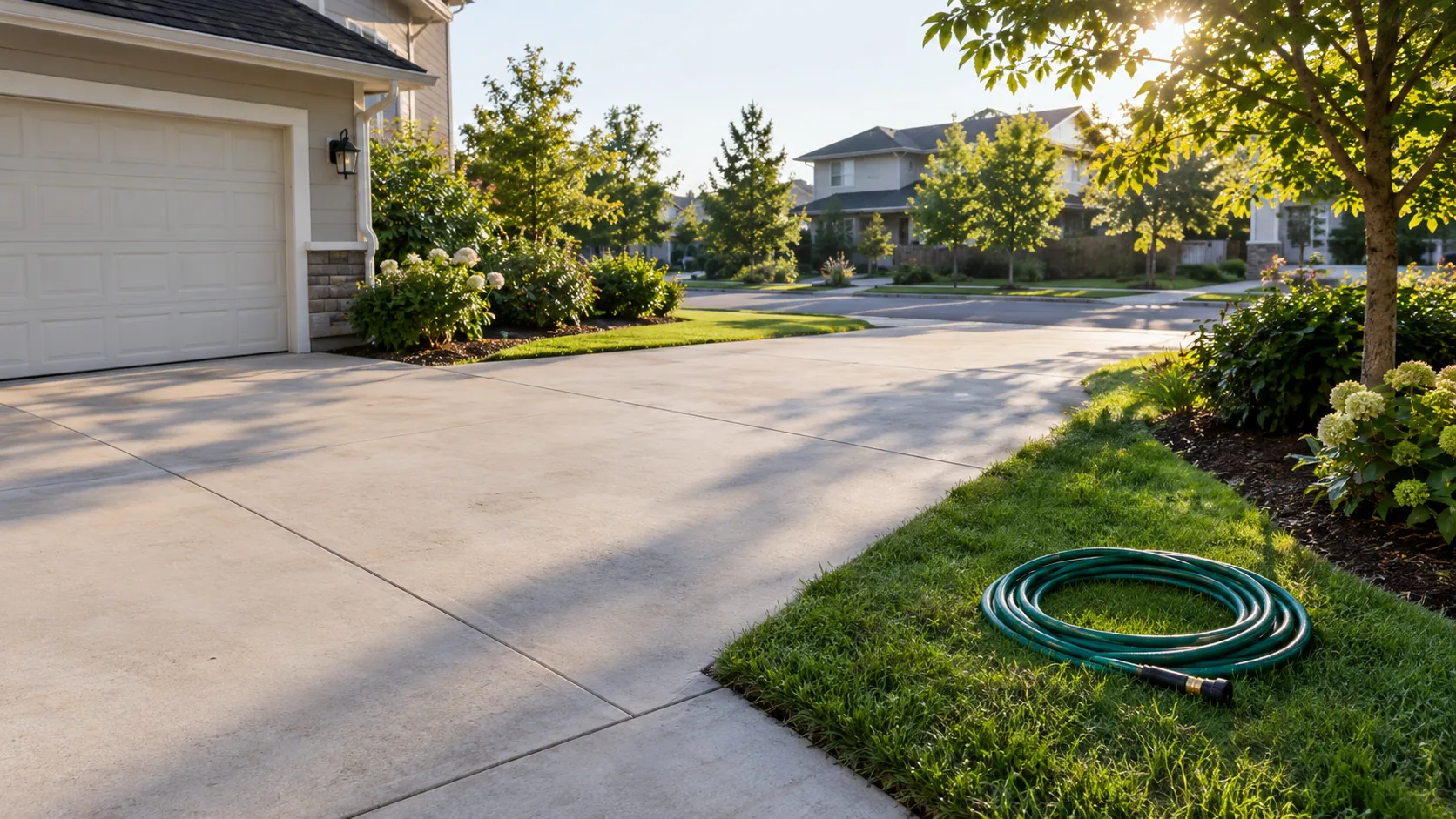
Power washing is cleaning an exterior surface with a high-pressure water jet. Some in the trade use "power washing" for heated water and "pressure washing" for unheated water, though the two terms are used interchangeably in everyday speech. The result depends on three settings you control: nozzle angle, distance from the surface, and pressure. This guide gives those settings surface by surface, plus a checklist to run before you start.
What power washing does, and how it differs from pressure washing
A pressure washer pushes water through a narrow nozzle so the stream lifts loose dirt, mildew, algae, mud and old film off hard surfaces. Detergent loosens what water alone leaves behind, such as oil film or green growth.
The names overlap. Some crews say pressure washing for water at ambient temperature and power washing for heated water, which they use on grease and heavy buildup with a hot water unit on a trailer or truck. A home electric machine sprays unheated water, and the technique in this guide applies either way.
Soft washing is a related method for siding and roofs: low pressure plus a cleaning solution that does the work, then a rinse.
Pre-wash checklist
Damage often traces back to skipped setup rather than the machine. Run through this list first.
Surface and site
- Read the manual for your machine, including the maximum pressure and the detergent it allows.
- Close windows and doors, and cover outdoor outlets, light fixtures and vents.
- Move furniture, planters and grills off the area, and wet nearby plants.
- Sweep off loose debris so grit is not dragged across the surface.
- Check for loose boards, cracked mortar, failing caulk and peeling paint, which water can force open.
- Flush the hose and check the inlet filter for grit before connecting the machine.
- Try the spray on a hidden spot before you start on the main area.
Electrical and personal protection
- Plug into a covered outdoor outlet, keep connections off wet ground, and unplug before changing parts. Ask an electrician if you are unsure about your outlet.
- Wear eye protection and closed shoes.
- Keep the spray pointed away from people, pets and your own hands and feet.
- Expect the wand to push back when you pull the trigger, and plant your feet before you start.
- Keep children and animals out of the work area.
- Follow the manual for your machine at every step.
Nozzle, distance and PSI by surface
Machine specs may be printed in bar. As a conversion, 110 bar is roughly 1,600 PSI and 125 bar is roughly 1,800 PSI. The figures below are general starting points for the pressure at the surface. Begin with the wider fan and more distance, then close in only if the dirt stays.
| Surface | Nozzle | Distance | Pressure guide |
|---|---|---|---|
| Concrete driveway | Focused jet or narrow fan | 6 to 12 in. | 1,500 to 3,000 PSI |
| Patio pavers | Narrow to medium fan | 10 to 15 in. | 1,000 to 2,000 PSI |
| Wood deck | Wide fan | 12 to 18 in. | 500 to 1,200 PSI |
| Vinyl siding | Wide fan | 18 to 24 in. | 500 to 1,500 PSI |
| Brick | Wide fan | 12 to 18 in. | 500 to 1,500 PSI |
| Vehicle | Wide fan | 18 in. or more | 1,000 to 1,500 PSI |
Home electric units sit at the lower end of the concrete range, so concrete may need more passes or a cleaner. Check the siding or deck maker's instructions, since they may set lower limits. Keep the tip moving and overlap each pass slightly.
Driveways and concrete
Concrete suits a focused jet. Sweep, then apply a concrete cleaner to oil spots and let it dwell per the label. Do not let it dry.
Work in overlapping strips with the wand at a constant angle and distance, always in the same direction. Uneven passes leave pale stripes. For a large driveway, for example 2,000 sq ft, split the job into sections you finish one at a time, working downhill so rinse water leaves the cleaned area.
Rust stains need a cleaner made for rust. Plain water does not lift them.
The JetPulse Pro works at 125 bar with 400 L/h flow and has adjustable spray patterns and pressure settings, a trigger spray gun, an extension wand and a foam cannon pot. It draws water from a faucet, bucket or tank, and the box includes a 7M high-pressure outlet hose.
Decks and wood
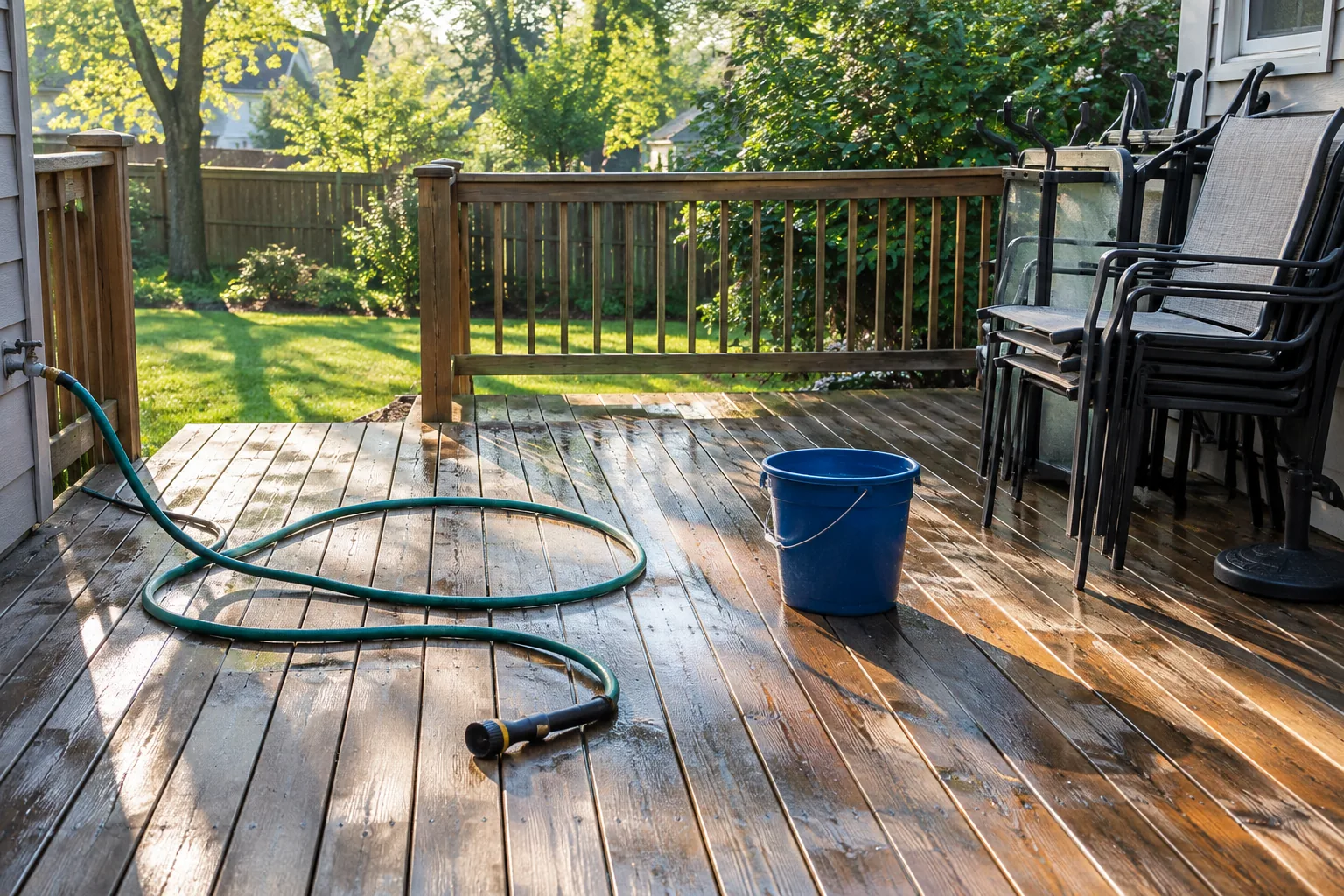
Wood scars readily. Use the widest fan, hold the tip well back, and follow the grain, one board at a time. A tight jet leaves fuzzy, gouged lines you can see after drying.
Let the deck dry fully before sanding, staining or sealing, and follow the sealer label for drying times. Repair soft or rotted boards rather than spraying them.
Siding and exterior walls
Spray siding from the bottom up with a detergent, then rinse from the top down. Keep the wand angled slightly downward so water does not get behind the lap joints. Stay clear of windows, vents, light fixtures and meter boxes.
Work from the ground with an extension wand. Do not spray from a ladder, because the wand pushes back when you pull the trigger; hire a service for upper stories.
Work a section at a time, rinse thoroughly, and keep the tip moving. Older paint and caulk can lift under direct spray, so use more distance on those areas.
Choosing a machine for home power washing
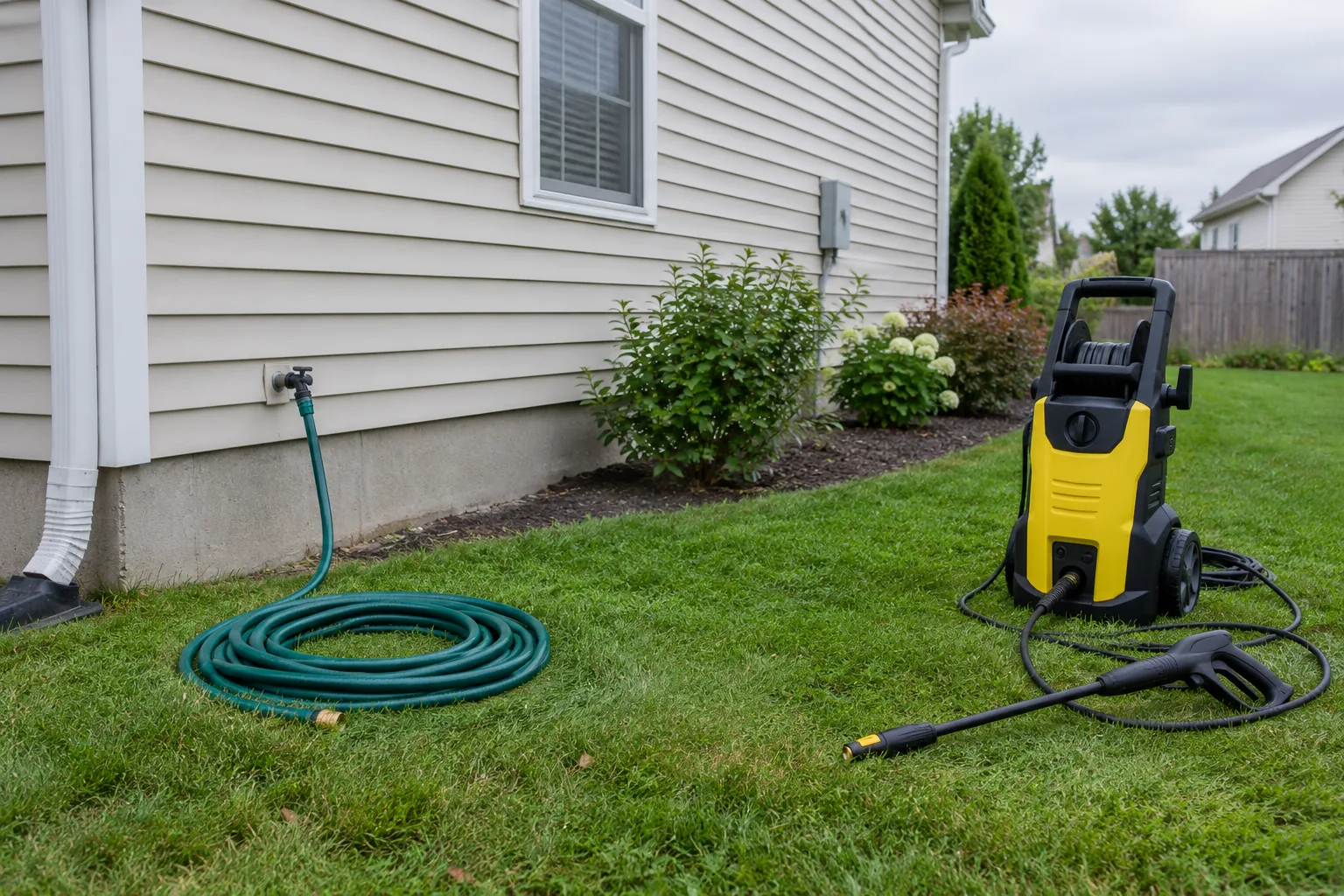
For cars, wheels and small outdoor surfaces, an electric unit fits the job. The WashForge is a 1800W electric pressure washer delivering 360 l/h (1.6 GPM) at 110 bar, with a 7m outlet hose, an adjustable 1-180° nozzle and a detergent suction tube for foam soap.
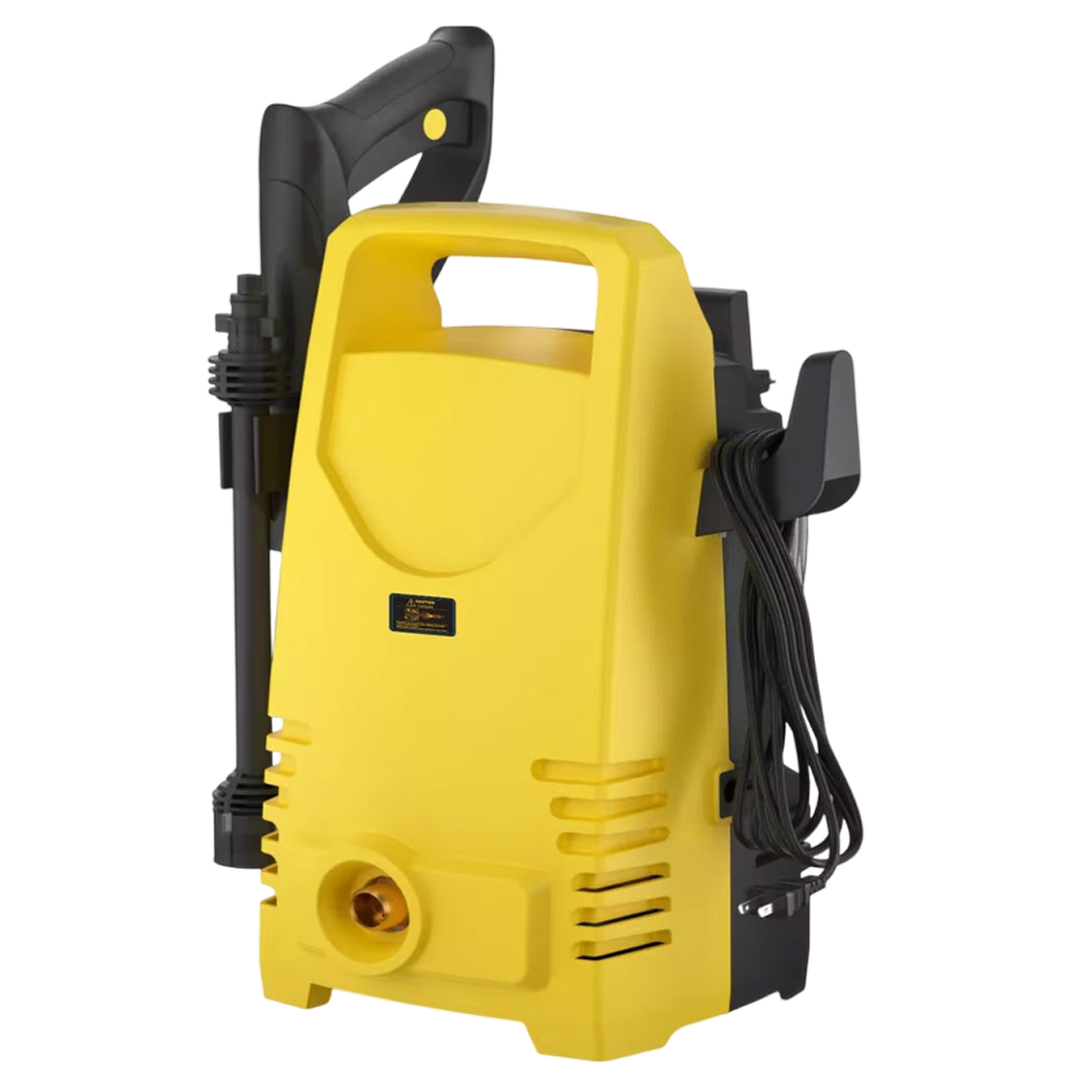 In this guideWashForge$179.99View
For help weighing PSI, GPM and power, read Choosing a Good Power Washer for Home Use. You can also browse the Pressure Washing, Snow & Weed Control collection.
Field note
Try every new nozzle and distance on a hidden corner first. If the surface changes color or roughens, back off or switch to a wider fan.
Cost: DIY or hire a service
Professional quotes depend on the area, the surface, how dirty it is, access, and whether hot water or soft washing is needed. Ask for a written quote that lists each surface, the cleaning method and what is included. For a driveway of about 2,000 sq ft, ask whether the quote is by square foot or a flat job rate.
Doing it yourself shifts the cost to the machine, detergent and your time. Hiring a professional makes sense for tall siding, roofs, or heavy graffiti and stain removal.
Common mistakes
- Starting with a narrow jet instead of a wide fan.
- Holding the tip too close, which etches concrete and gouges wood.
- Spraying upward into siding laps.
- Spraying from a ladder.
- Letting detergent dry on the surface.
- Skipping the rinse, which leaves streaks.
- Storing the unit with water in the pump or hose. Follow the manual, and see Pressure Washer Servicing for a care checklist.
Frequently asked questions
Keep reading
 Pressure Washing, Snow & Weed ControlChoosing a Good Power Washer for Home Use: PSI, GPM, Power8 min read
 Pressure Washing, Snow & Weed ControlPressure Washer Servicing: A DIY Maintenance Checklist9 min read
 Chainsaws, Pruning & Tree CareHow to Sharpen Chainsaw Chain: Files, Angles and Depth Gauges7 min read