How to Use a Battery Charger for a Car, Step by Step
Clip red to positive, black to negative or ground, set the amp rate, then plug in. Here are the connection order, amp choice and how to confirm the charge.
The Quindrel Team
October 22, 2026 · 7 min read
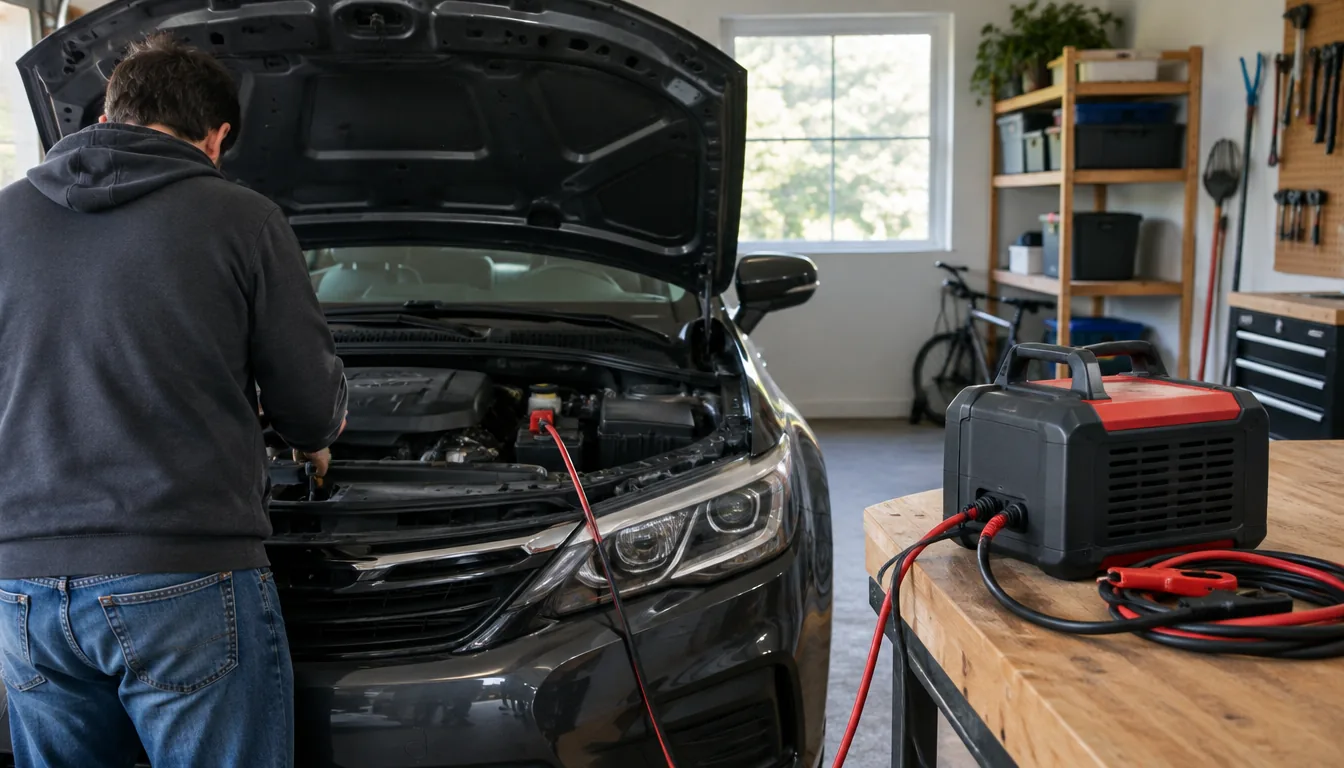
How to use a battery charger for a car comes down to a fixed order: charger off and unplugged, red clamp to the positive terminal, black clamp to the negative terminal or a bare metal ground point, then set the battery type and amp rate before you plug in. Charging is finished when the charger's indicator says full, and you disconnect in reverse order. Read your charger's manual first, because indicator colors and mode names differ between units.
This guide covers connection order, amp choice, how to tell when the battery is full, and how to test the battery before and after so you know whether charging was enough.
What a battery charger for a car does
A car battery charger converts household current into the low-voltage current a 12V battery accepts and feeds it back into the battery's lead plates. A discharged lead-acid battery builds up lead sulfate crystals on those plates, and a charge cycle works to reverse that buildup. A charger restores charge; it does not repair a battery with internal damage.
Chargers come in a few types, and the type decides how long you can leave one connected.
| Type | What it does | Typical use |
|---|---|---|
| Standard (manual) charger | Delivers current at the setting you choose; you watch the indicator and disconnect | Charging a drained battery while you are present |
| Smart (automatic) charger | Monitors the battery and changes its stages on its own | Garage charging with a battery type selector |
| Maintainer | Holds a full battery at charge level with a float stage | Stored cars, boats and motorcycles |
| Portable jump starter and charger | Clamps on and supplies a boost to start the engine | Roadside or driveway starts |
Deciding what battery charger for car use you need starts with your battery type, flooded, AGM or GEL. Then confirm the charger has a 12V mode. For general background on charger types, see Battery Chargers.
Before you connect: prep checklist
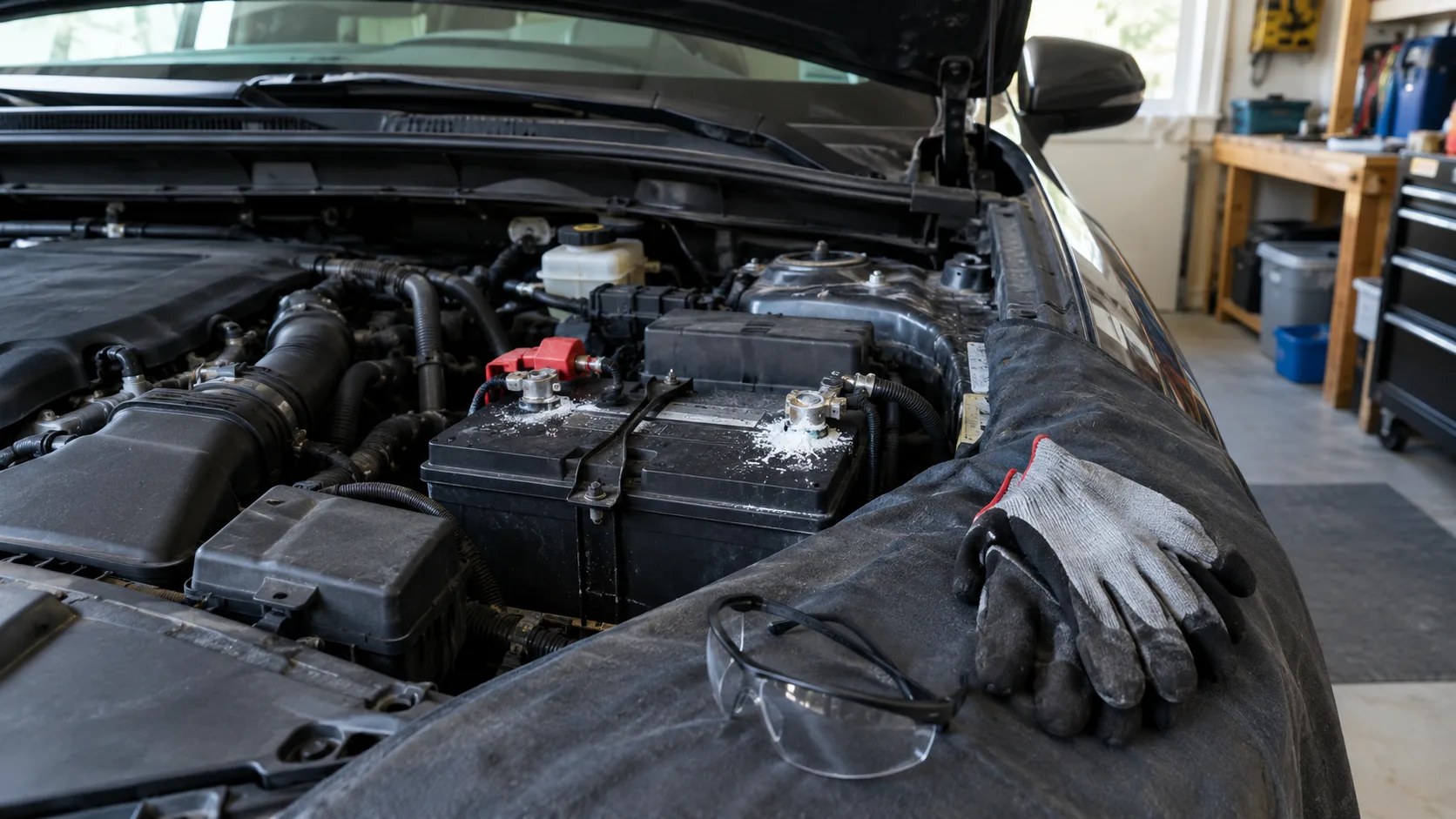
- Park the car in a ventilated space, switch the ignition and all accessories off, and keep flames and sparks away.
- Wear eye protection and gloves, and remove rings and watches.
- Read the battery label for voltage, amp-hours and CCA (cold-cranking amps).
- Inspect the case for cracks, bulging or leaking fluid. If you see any, stop and ask a professional.
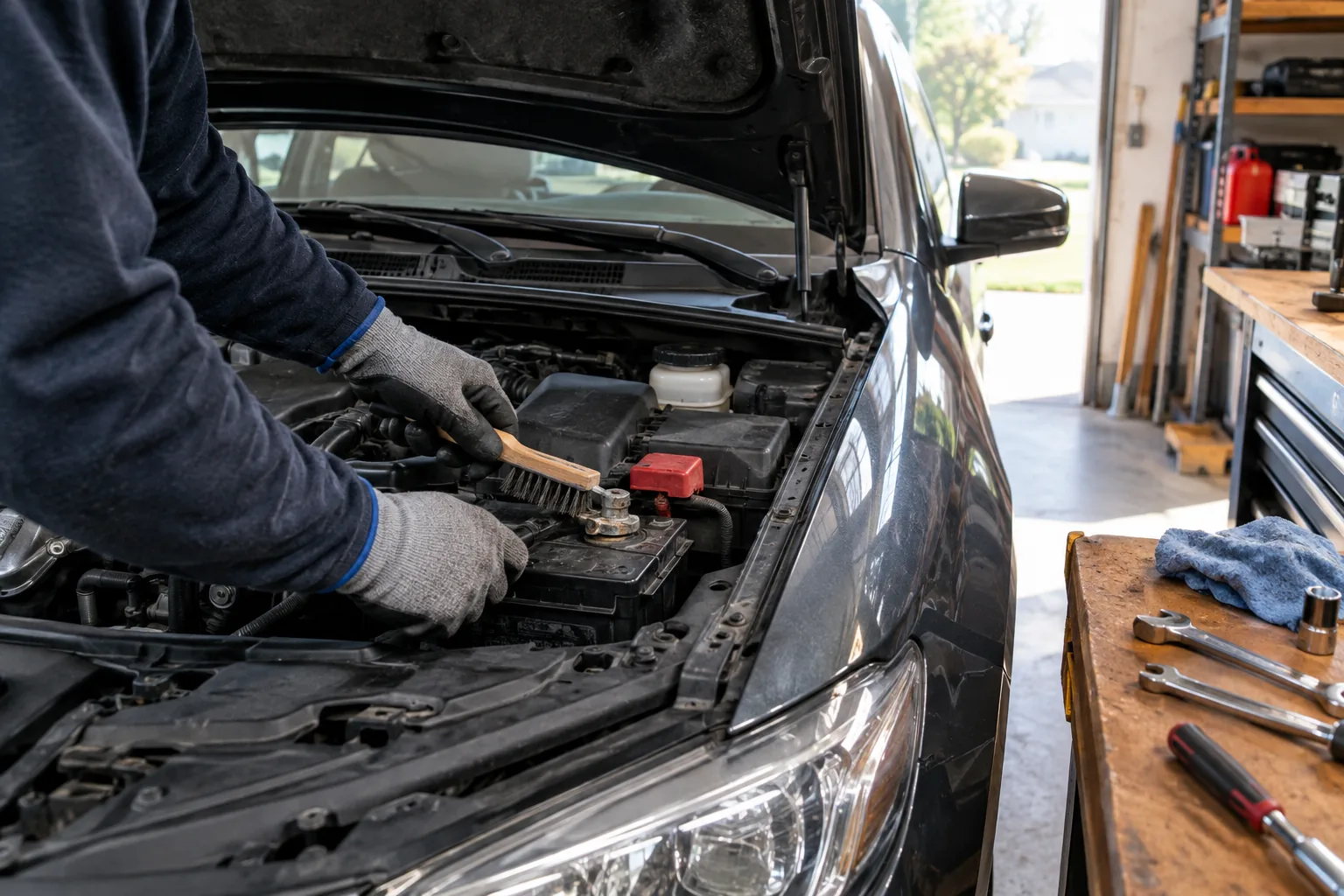
- Clean corroded terminals with a wire brush so the clamps touch bare metal.
- Confirm the charger is unplugged and switched off before you touch the clamps to the battery.
Follow your charger and vehicle manuals for anything that differs from this list.
Test the battery first
A charger cannot tell you why a battery went flat. Testing first shows whether the battery is merely discharged or worn out, and gives you a baseline to compare against after charging.
A car battery tester such as VoltProbe clips to the terminals with the engine off, so the battery can stay in the vehicle. You select Flooded, AGM or GEL, enter the CCA value printed on the battery label, and start the test. It reads voltage, CCA and State of Health, and the color LCD shows a GOOD, CHARGE or REPLACE verdict plus an alternator and charging system result.
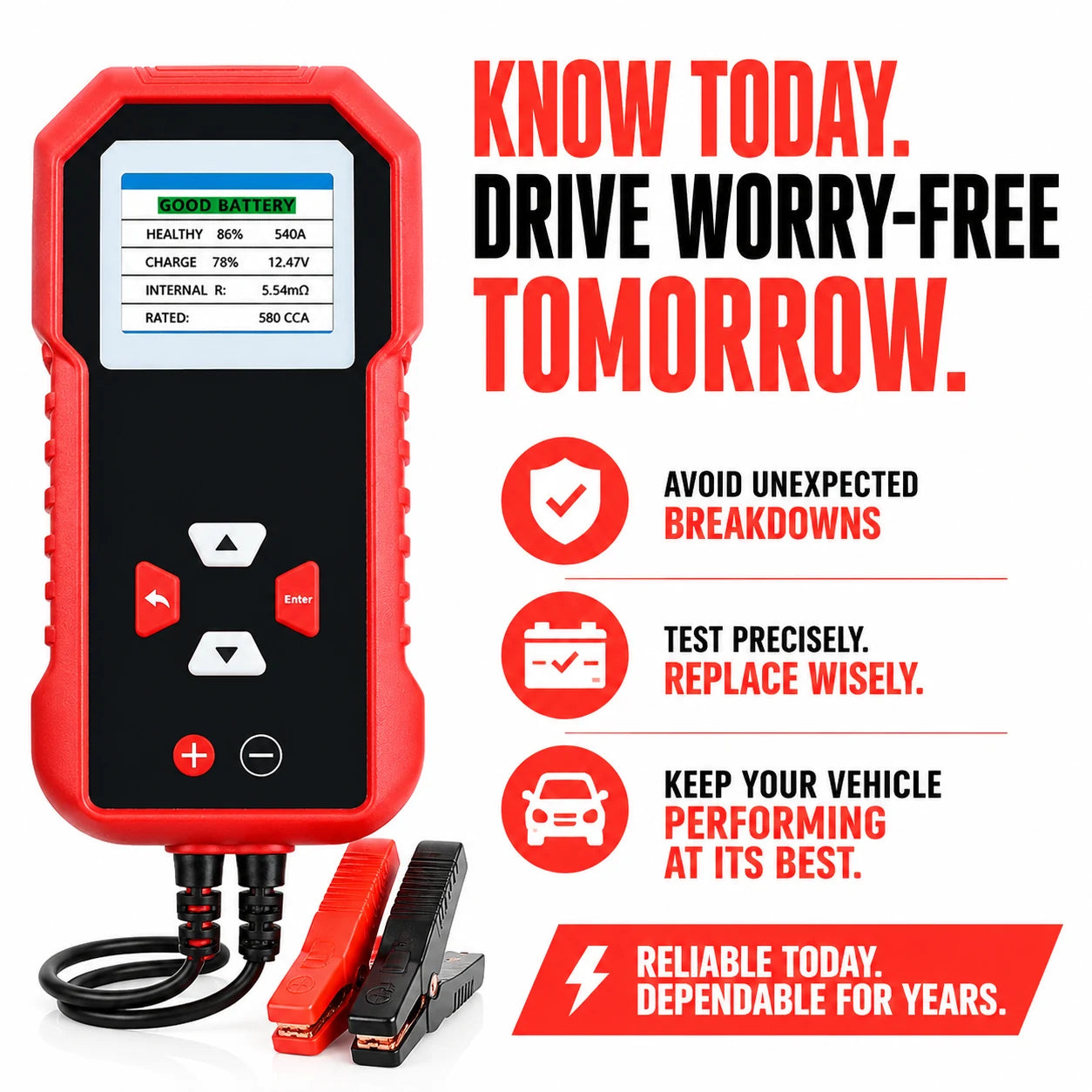 In this guideVoltProbe$99.99View
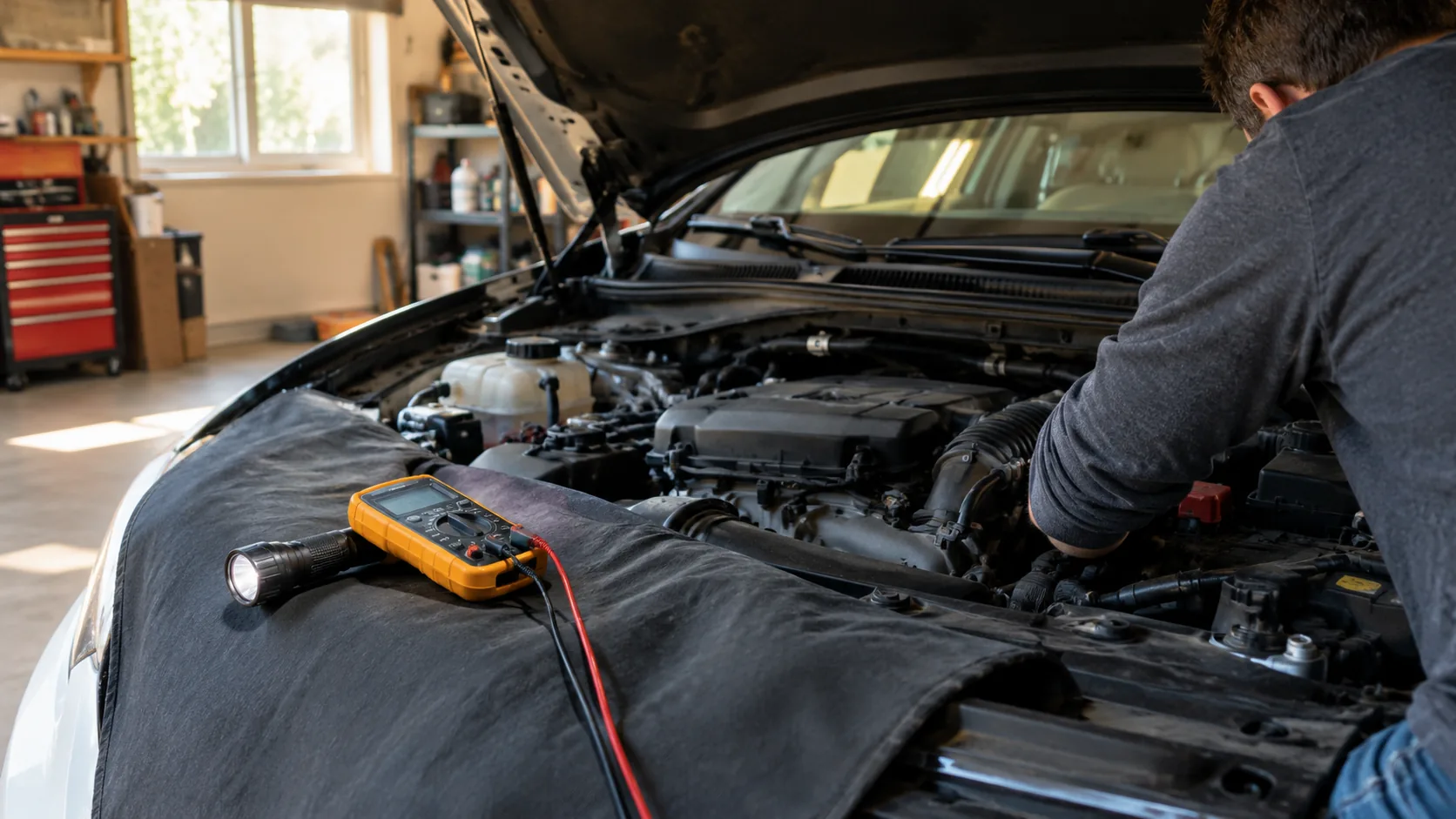
A CHARGE verdict means the battery needs a charge. A REPLACE verdict means charging may not solve the problem. If you only have a multimeter, using it as a basic tester for car battery voltage works too: note the resting voltage before you charge so you can compare it afterward.
How to use a battery charger for a car: connection steps
This is how to work a battery charger for car batteries when the charger plugs into an outlet, whether it is a standard or smart unit. Your manual's order takes priority if it differs.
- Make sure the charger is unplugged and set to off.
- Connect the red clamp to the positive terminal, marked + or POS.
- Connect the black clamp to the negative terminal, marked - or NEG. If your manual says so, clip it to an unpainted metal part of the engine block or chassis away from the battery instead.
- Check that both clamps are tight and not touching each other.
- Select 12V, the battery type and the amp rate.
- Plug the charger into the outlet and switch it on.
- Watch the indicator until it shows the battery is full.
- Switch off and unplug the charger, remove the black clamp, then the red clamp.
Connect the clamps before powering on and disconnect after powering off, as the manual describes. Keep the charger body off the battery and away from engine belts and moving parts.
Field note
Before you start, confirm which terminal is positive by the + mark or red cover. Red goes to positive and black to negative on every connection.
How many amps for a car battery charger
The right setting depends on the battery's capacity and the charger's own range. Check the amp-hour figure on the battery label, then look in the charger manual for the setting it lists for that size. Charge time depends on capacity, how discharged the battery is and the rate you select, and the manual explains each setting.
As a general idea, low settings, often called trickle or maintain, suit small or long-idle batteries. Higher settings are meant for car batteries when you are present and watching the indicator. Use the exact value from the label and the manual.
| Situation | What to look for |
|---|---|
| Everyday car or SUV battery | The setting your manual lists for 12V lead-acid at that amp-hour size |
| Small battery (motorcycle, lawn tractor) | A low-amp or motorcycle mode, if the charger has one |
| AGM or GEL battery | The matching battery type mode, not the flooded setting |
| Battery that has sat idle | A low setting, or a repair or recondition mode if the manual describes one |
If a charger has no battery type selector, check the manual before using it on AGM or GEL batteries. When unsure, ask a professional.
How to tell when the battery is charged
Smart chargers show a full or float indicator. A standard charger may have a meter or light that signals completion, so follow the manual for what yours shows. Time alone is a poor guide, because charge time depends on how discharged the battery is, its capacity and the rate you chose.
How long to leave the charger on
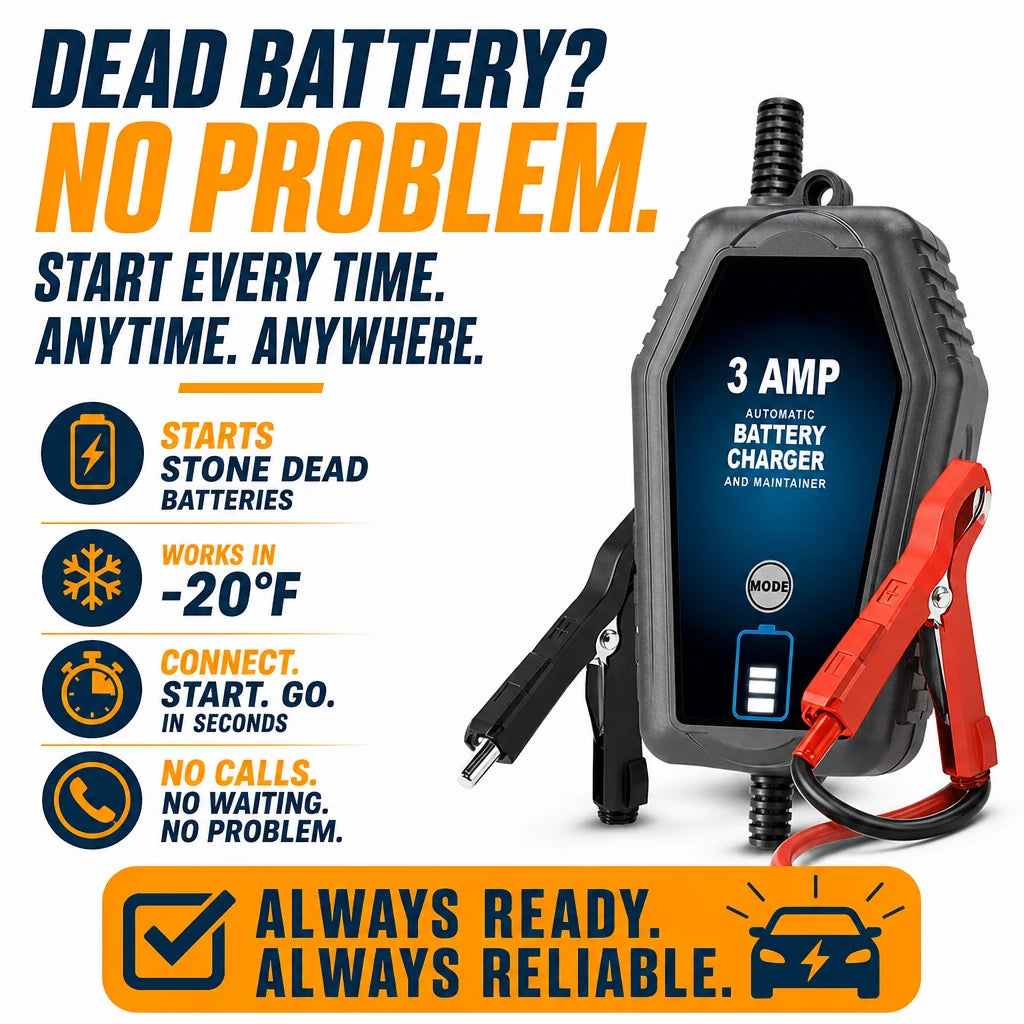
Leave a standard charger on only while you are present and the indicator shows charging. Once the unit reports full, disconnect it. For a stored car, a battery maintainer such as VoltKeep is meant to stay connected. A microprocessor monitors the charge level and moves into a float stage once the battery is full. It has selectable STD/AGM, Lithium/LiFePO4 and Repair modes, plus eight built-in protection functions covering overcharge, reverse polarity and overheating.
To use it, clamp red to positive and black to negative, plug it into a standard outlet and pick the mode that matches your battery. Browse more options in the Battery, Tire & Air Care collection.
Charging a dead battery, jump starts and no-charger options
A battery that is completely flat may not accept charge from a standard charger, since some units need to detect voltage before they start. A repair mode with pulse charging, if your charger has one, is meant for batteries that will not take a charge from a standard profile. If the battery still will not hold charge, test it and consider replacement.
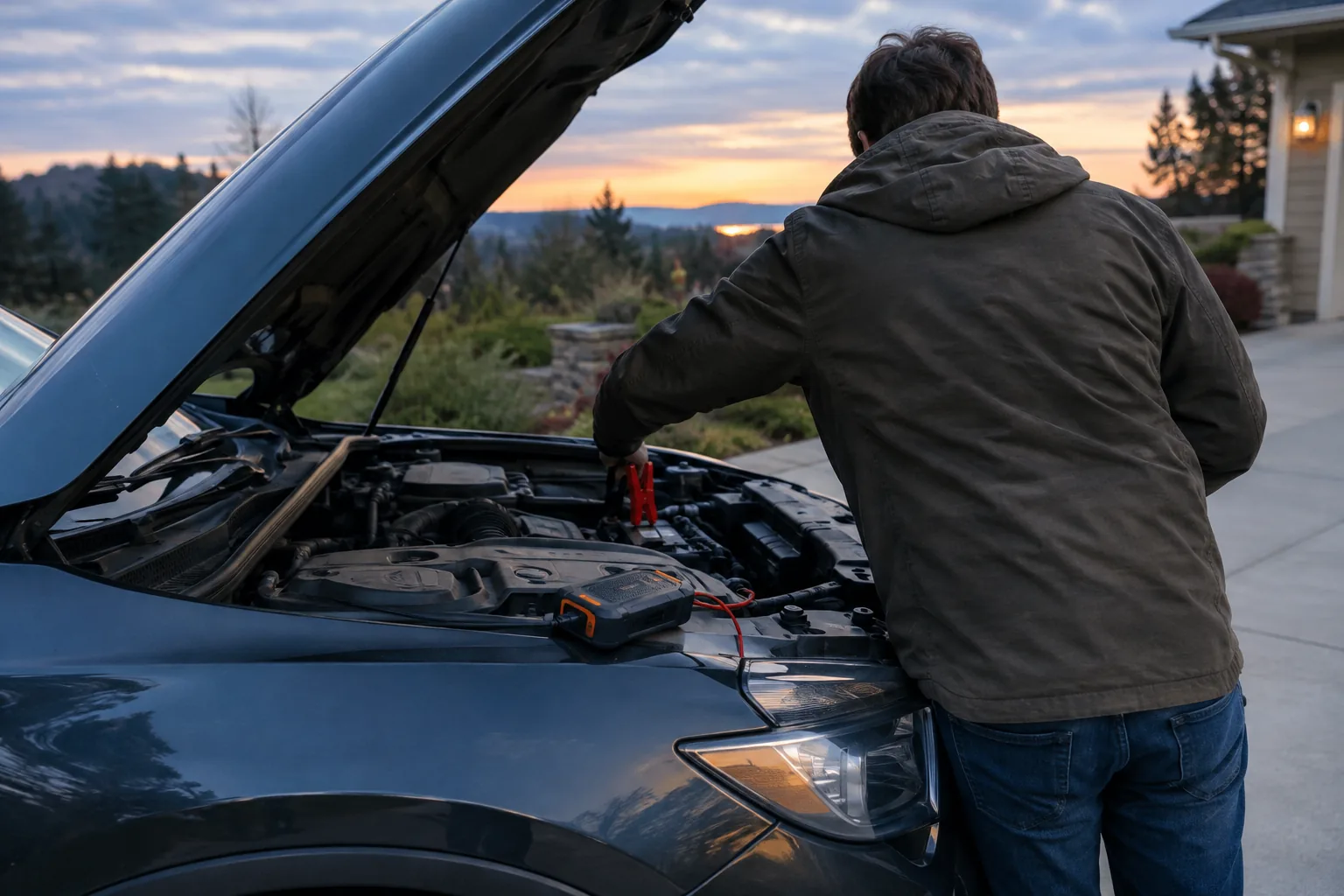
Portable charger and jump starter
VoltCore is a portable car battery charger and jump starter with clamp connectors. Clip the clamps to the battery terminals and check the indicator light: green means the unit is ready to boost. If the battery is deeply discharged and the light is red, hold the manual override button to bypass the low-voltage lockout, then press the power button, start the vehicle and disconnect the clamps. Its clamps have reverse polarity protection. It also has USB output ports and a built-in LED light with 7 modes.
 In this guideVoltCore$99.99View
Other ways to get a charge
You can jump start from another vehicle using jumper cables, following the manual for both cars, then drive so the alternator can put charge back in. A drive may not fully recharge a deeply drained battery. If the engine cranks weakly again the next day, test the battery and the charging system.
Test after charging and common mistakes
Once you know how to use a battery charger for a car, close the job with a second test. Let the battery rest after charging, then test it again. If the VoltProbe verdict is now GOOD, the charge was enough. If it still says CHARGE or REPLACE, the battery may be worn out, or a charging system fault may be draining it.
- Reversing the clamps: red is positive, black is negative.
- Charging a cracked or leaking battery.
- Choosing an AGM or GEL battery type setting that does not match the battery.
- Leaving a standard charger connected after it reports full.
- Skipping terminal cleaning, which can leave a poor connection.
- Charging in a closed space with no ventilation.
If the charger gets very hot, smells or the battery case swells, unplug it and ask a professional.