Pruning Saw Blades for Reciprocating Saws: Choose and Use
Choose a coarse blade of 3 to 6 TPI, longer than the branch is thick. This guide matches length and TPI to branch diameter and walks through the cut.
The Quindrel Team
October 21, 2026 · 7 min read
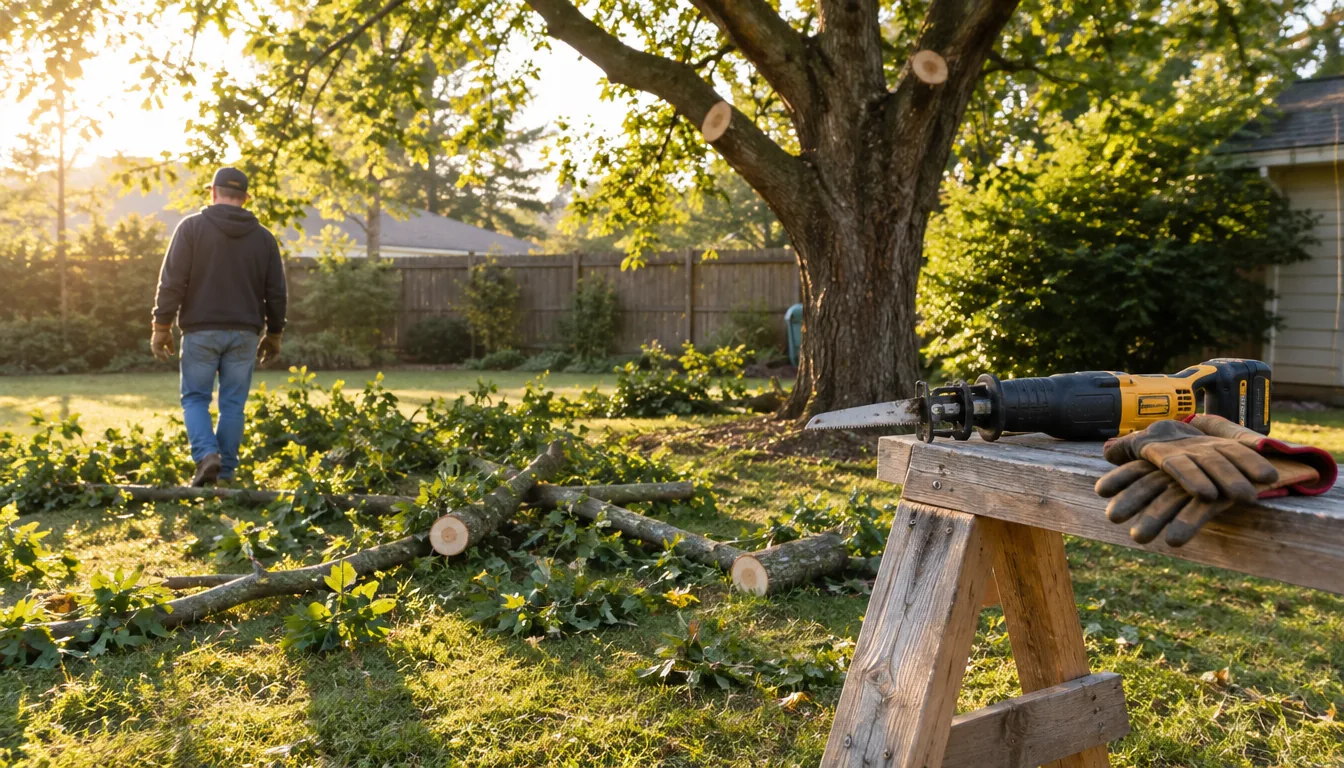
Pruning saw blades for reciprocating saws are long, coarse-toothed blades, typically 3 to 6 TPI (teeth per inch), chosen so the blade is longer than the branch is thick. A 9-inch blade suits small limbs, and a 12-inch blade suits thicker ones. Pair the blade with a firm grip on the saw, a braced branch and a clear drop zone.
This guide gives you a length and TPI chart by branch diameter, explains tooth styles, and lays out a cutting routine you can follow from the first cut to the last. It closes with blade care and storage.
Can you use a reciprocating saw for pruning?
Yes. A reciprocating saw with a pruning blade cuts live branches and dead limbs, and it reaches into spots where a hand saw is awkward. The back-and-forth stroke suits small to mid-size limbs, brush clearing and cutting back shrub stumps.
It has limits. The blade is thin and flexes, so it does not suit precise finish cuts on ornamental trees. Very thick trunks call for a chainsaw or a pruning saw with a longer bar. For a wider look at the tool itself, read Reciprocating Saw Explained: Uses, Blades and Limits, which covers uses and limits of the saw.
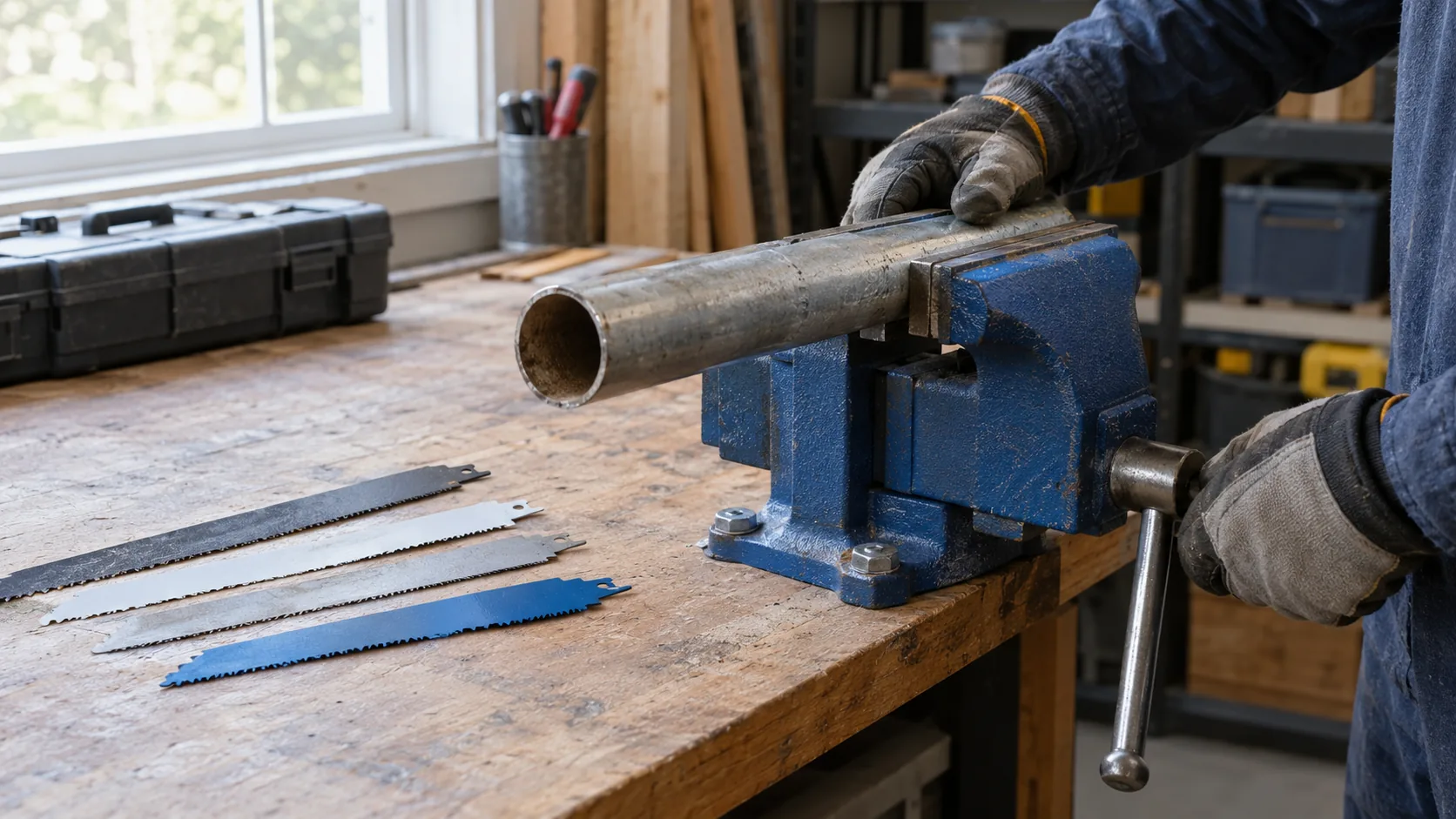
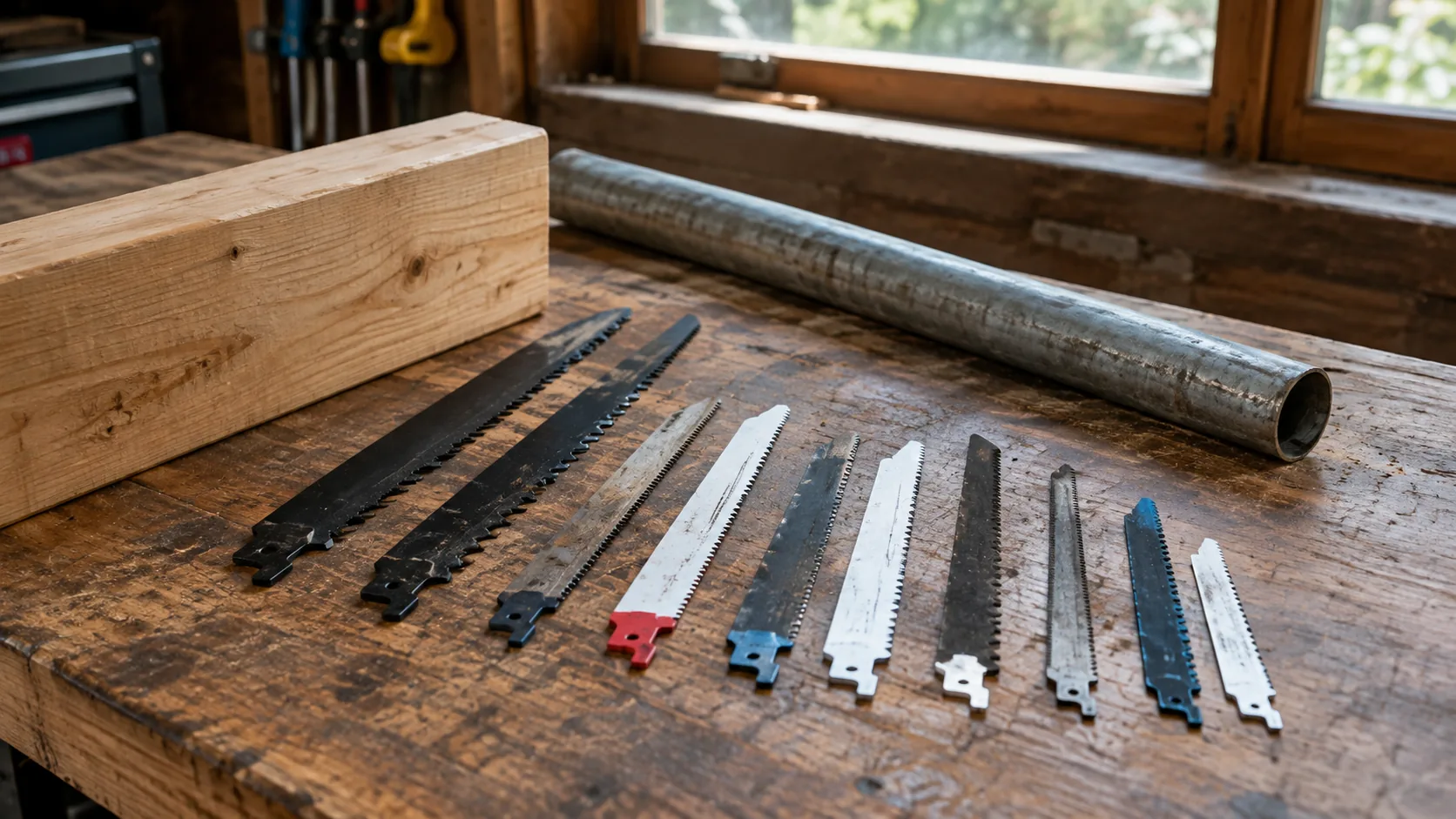
A pruning blade is not the same as a demolition or metal blade. Demolition blades have fine, closely spaced teeth for nails and sheet material. A pruning blade has big teeth and deep gaps meant for green wood.
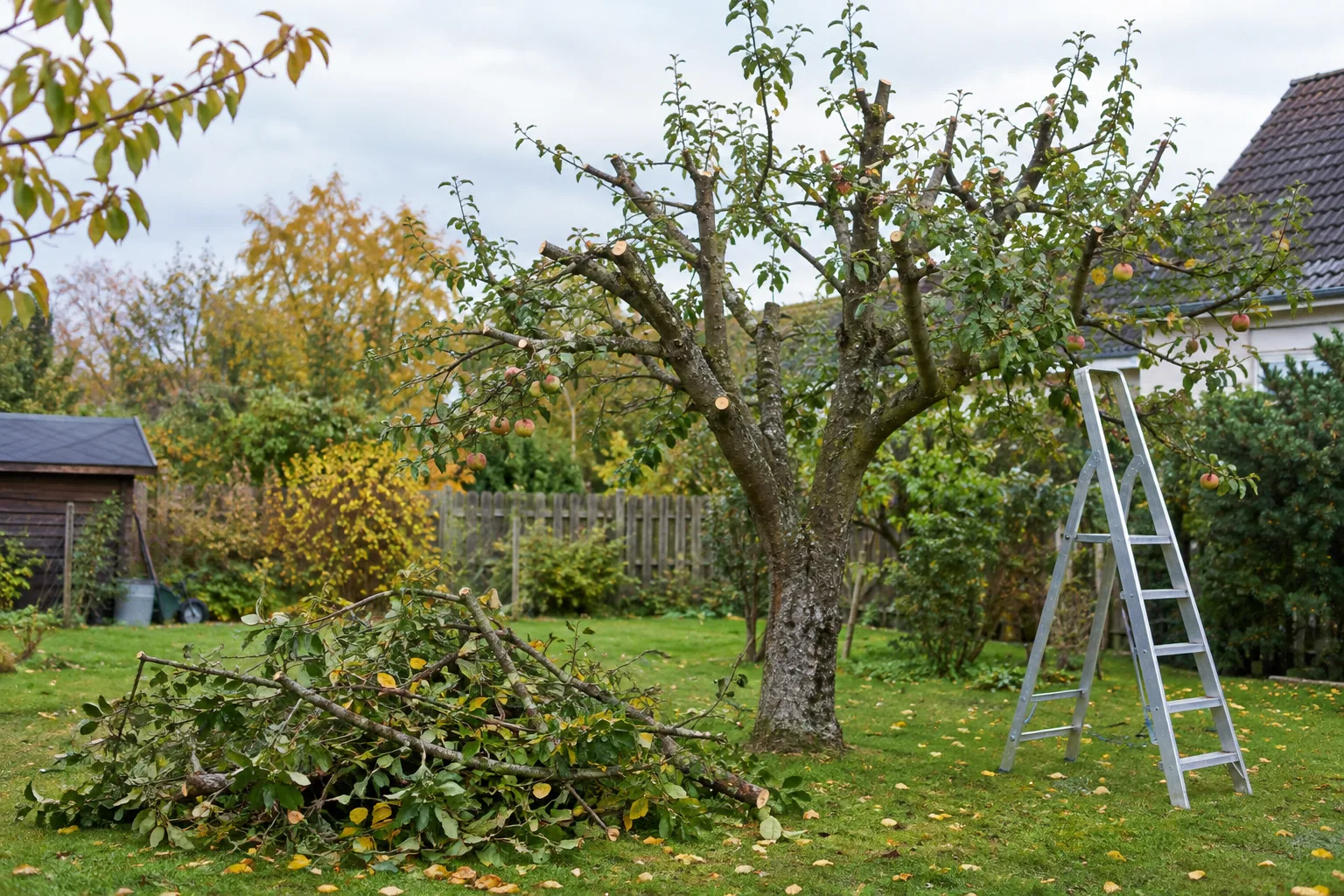
Pruning saw blades for reciprocating saws: length and TPI by branch diameter
Two numbers decide the match: blade length and TPI. Length sets how thick a branch the blade can span. TPI sets how large each tooth and gap is. Green wood packs the gaps with wet sawdust, so a lower TPI with wider gaps leaves room for the chips to clear.
Use this chart as a starting point, then adjust for wood species and how the saw feels in the cut.
| Branch diameter | Blade length | TPI | Notes |
|---|---|---|---|
| Under 1 inch | 6 to 9 inches | 5 to 6 | Shrubs, suckers, small twigs |
| 1 to 3 inches | 9 inches | 5 | General limb removal |
| 3 to 6 inches | 12 inches | 3 to 5 | Wide gaps for wet sawdust |
| Over 6 inches | 12 inches or longer | 3 to 5 | Consider a chainsaw instead |
How many TPI for pruning?
Stay between 3 and 6 TPI. Fine-tooth reciprocating saw blades of 10 TPI and above clog in green wood and are meant for metal or thin stock. Dry, dense deadwood can take the higher end of the range, while fresh, sappy limbs suit the lower end.
Why length matters
Choose a blade whose usable length is longer than the branch diameter. The whole stroke should travel through the wood with room to spare. A short blade buried in a thick limb binds, heats up and wears its teeth.
Tooth style and blade shape
Pruning blades share a few traits: widely spaced teeth, a deep gullet between them and a blade body wide enough to hold its line. Beyond that, you will see a few variations.
- Straight blades with aggressive teeth suit general limb work.
- Curved blades pull into the wood and suit round branches.
- Wider blade bodies suit thick wood, while narrow blades fit tight spots in brush.
- A thicker blade body bends less sharply when the cut wanders off line.
A curved blade keeps its teeth engaged as the cut deepens, which suits round limbs. Whichever shape you choose, check that the blade has a standard tang so it seats in your saw.
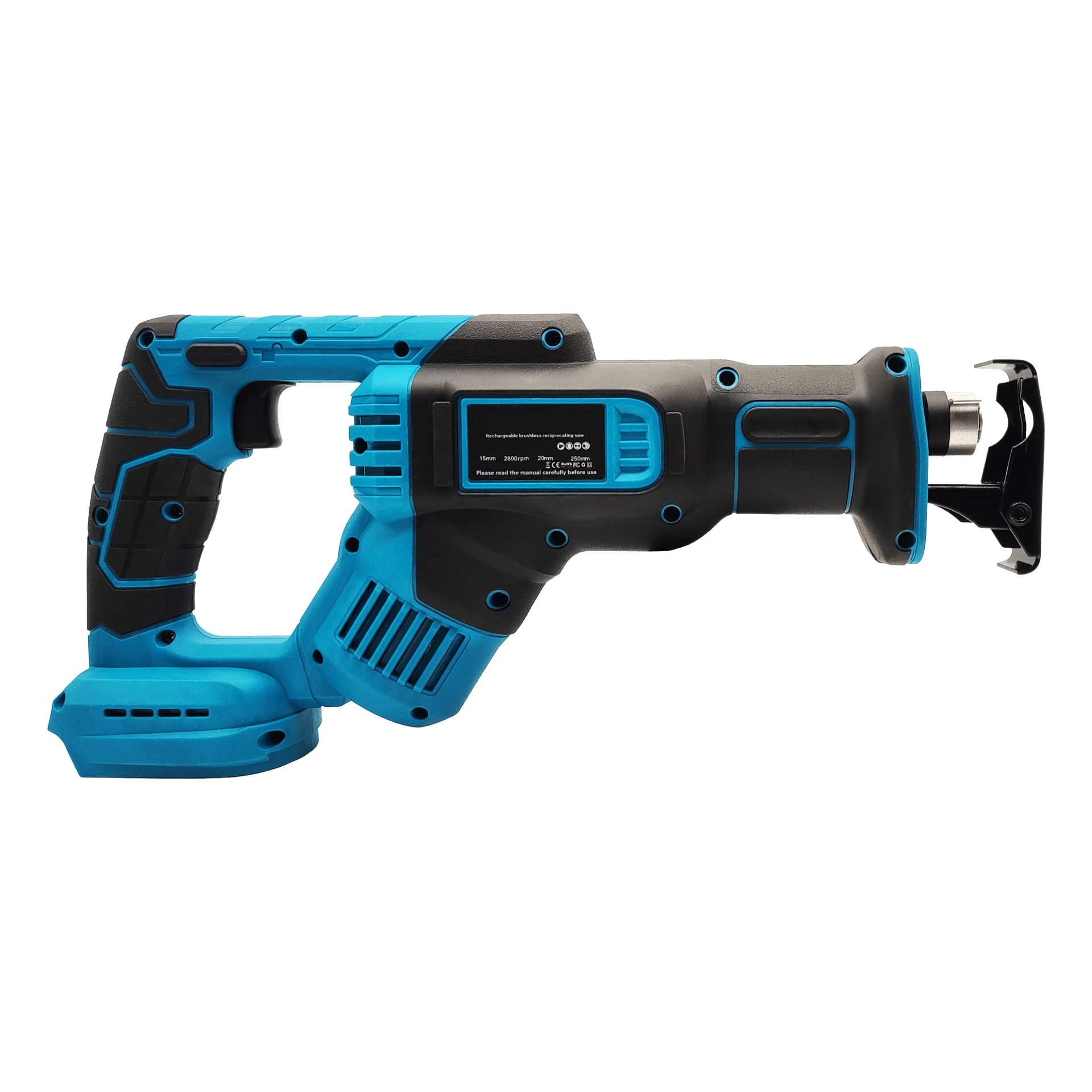
The IronCleave is a cordless reciprocating saw that accepts standard reciprocating blades with a standard tang mount. Its lever-actuated clamp lets you swap blades in and out without tools, so you can move between a pruning blade and a metal blade. It uses an 18V battery, listed as optional in the package, and four reciprocating saw blades come in the box. Browse similar tools in the Hand & Power Tools collection.
 In this guideIronCleave$149.99View
Setup checklist before the first cut
Take time on setup so the cut goes the way you plan. Run through this list each time.
- Remove the battery or unplug the saw before you change a blade. Follow the manual for your model.
- Seat the blade fully in the clamp and tug it to confirm it holds.
- Wear safety glasses or goggles, work gloves, hearing protection and sturdy boots.
- Look up for power lines, and leave any limb near a power line to your utility company or a qualified tree service.
- Pick your standing spot on solid ground, and decide where the cut limb will fall.
- Clear the drop zone of people, pets and breakable objects.
- Check the blade for bent teeth or cracks. Replace a damaged blade.
Walk around the tree before you start. Note where the drop zone sits, where the limb will swing as it falls, and whether a neighboring branch could catch it.
Field note
Mark the cut with a stroke of chalk or a strip of tape before you start. A visible line helps you keep the blade square to the branch.
How to cut a branch with a reciprocating saw
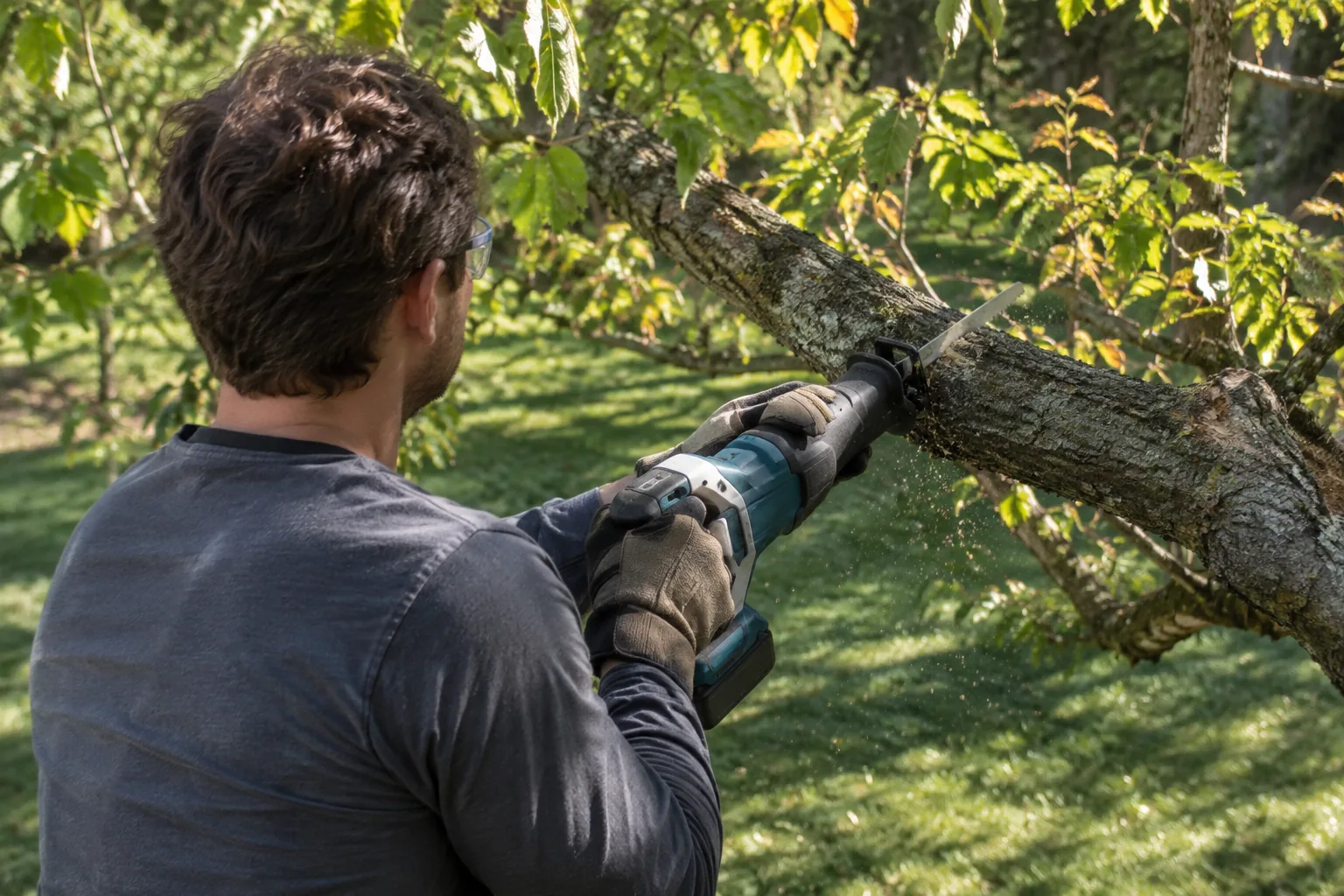
The routine below fits limbs thinner than the blade is long. Use both hands on the saw and keep your balance on the ground rather than reaching from an unsteady perch.
- Locate the branch collar, the slightly swollen ring where the limb meets the trunk. Plan to cut just outside it.
- Press the saw's shoe, the metal plate at the base of the blade, firmly against the branch.
- Start the blade moving before it touches the wood. With a variable-speed trigger, begin with a light squeeze to set the notch, then increase as the blade bites.
- Let the blade do the cutting. Guide it in a straight line and avoid forcing it sideways.
- For a limb thicker than about 2 inches, use three cuts. Make an undercut a short way out from the trunk, a top cut a bit farther out to drop the limb, then a final cut near the collar to remove the stub.
- Stop the saw and wait for the blade to come to rest before you lift it away or set it down.
The branch collar is the guide for the final cut. Cutting just outside it leaves the swollen ring in place rather than a flush cut into the trunk.
The IronCleave has a variable-speed trigger that responds to how far you squeeze it, so you can start with a lighter pull and increase it as the cut settles. A counterbalance mechanism at the handle manages the back-and-forth motion.
Common mistakes with pruning blades
These habits cause trouble when you work with pruning saw blades for reciprocating saws, and each can be corrected.
- Using a fine-tooth metal blade on green wood, which clogs and glazes.
- Choosing a blade shorter than the branch is thick.
- Cutting without bracing the shoe, so the saw chatters and the blade bends.
- Cutting overhead with the arms fully extended, which strains your control of the saw.
- Letting a heavy limb pinch the blade because the cut was not supported or opened with an undercut.
- Pruning near hidden wire, nails or fence staples embedded in old trees. Inspect the trunk and branches first.
If a blade starts to burn the wood or the teeth look rounded, swap it for a fresh one.
Blade cleaning and storage
Sap and sawdust build up on the teeth and in the gullets as you cut. Resin buildup makes the blade drag, so wipe it with a rag after each session. For stubborn sap, use a rag dampened with a household solvent suited to resin, and follow the label and ventilate the area.
Dry the blade completely before you put it away. Check the steel for rust spots, and discard a blade that is rusted, cracked or missing teeth.
Keep spare blades in a dry box or case so the teeth do not rub against each other. Sort them by length and TPI so you can reach for the right one at the tree. Before each job, give every blade a quick look along its edge and body.
When a pruning chain saw fits the job
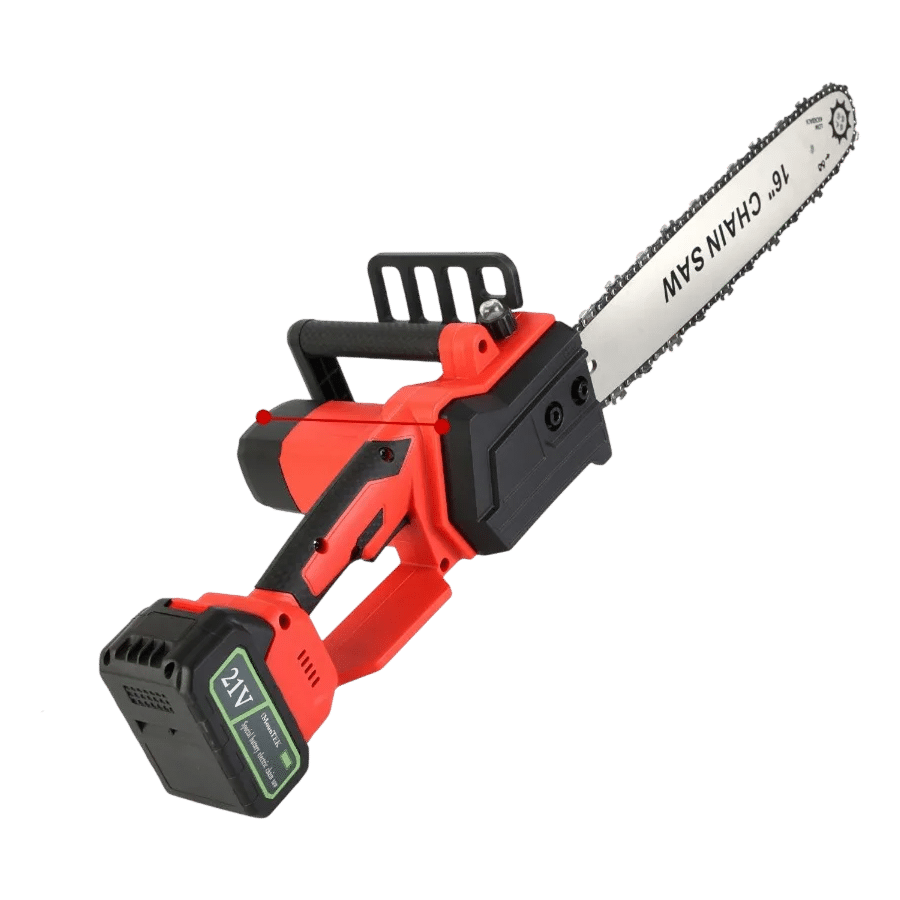
If you cut thick limbs often, a tool built around a chain may suit the work. The TimberVolt is a cordless pruning saw with an 850W brushless motor and a 16-inch chain. It comes with two 21V 3.0Ah batteries and a charger, a dual-switch start, an anti-splash baffle near the cutting area and an oil reservoir you fill with bar oil.
The kit includes protective gloves and goggles. As with any power cutting tool, read the manual before use.
 In this guideTimberVolt$239.99View
You can browse more options in the Chainsaws, Pruning & Tree Care collection. Pick the tool by the thickest limb you plan to cut: a reciprocating saw with a 9 to 12 inch pruning blade suits the small to mid-size range in the chart above, while larger limbs point toward a chain.
Choosing pruning saw blades for reciprocating saws comes down to matching blade length and TPI to the branch. Those two choices set up every cut that follows.