Reciprocating Saw Blades for Cutting Metal: TPI and Material
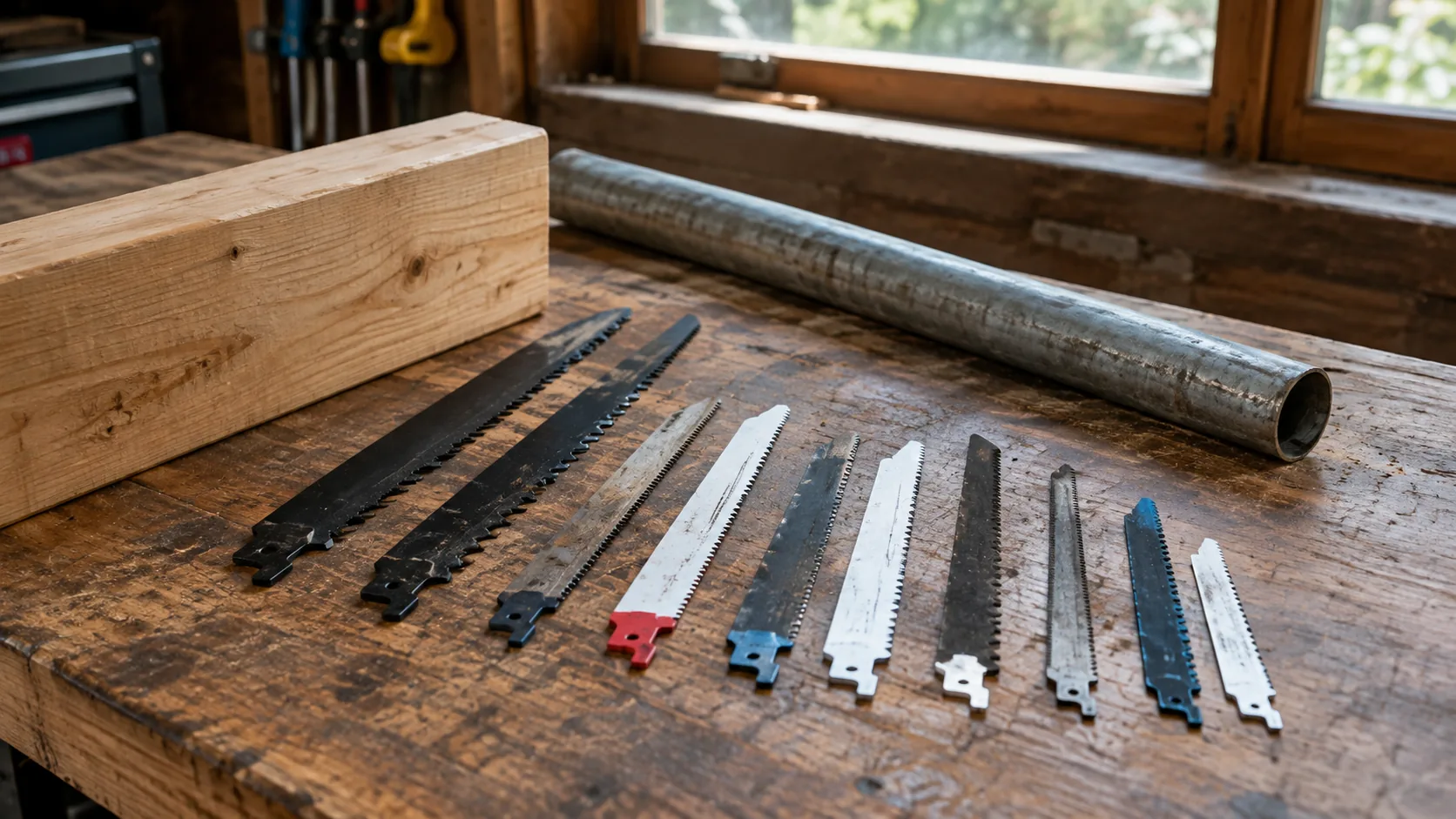
Pick reciprocating saw blades for cutting metal by thickness first: more teeth per inch for thin sheet, fewer for thick stock. Bi-metal covers general work; carbide suits harder jobs.
The Quindrel Team
October 28, 2026 · 6 min read
Reciprocating saw blades for cutting metal are chosen by teeth per inch (TPI) and blade material. Use roughly 18 to 24 TPI for thin sheet and tubing, 14 to 18 TPI for pipe and medium stock, and 8 to 14 TPI for thick steel. Bi-metal blades cover general metal work, and carbide blades are the choice for harder or abrasive material.
The rule behind every number below is simple: keep at least three teeth in contact with the metal at all times. Fewer teeth than that can snag the edge and chatter, and the blade can dull or lose teeth.
Reciprocating saw blades for cutting metal: TPI chart by thickness
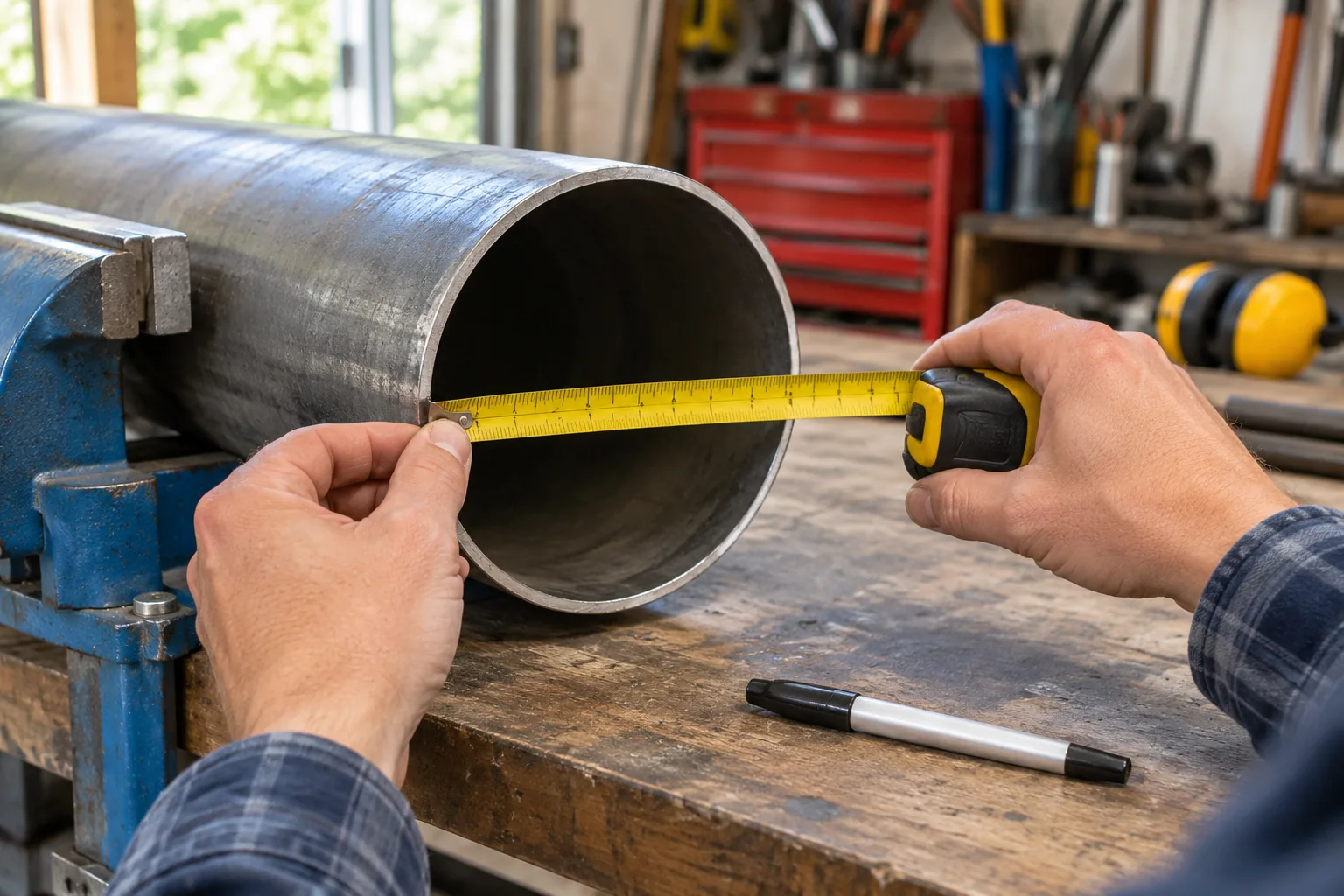
Measure the thickness of the metal where the blade will pass through it. For round pipe or tube, think of the wall thickness, since the blade enters through the wall twice. The chart gives starting points; check the blade packaging and the saw manual for the exact use of each blade.
| Metal and thickness | Starting TPI | Blade type |
|---|---|---|
| Thin sheet, thin conduit, light tubing | 18 to 24 | Bi-metal |
| Pipe, angle iron, medium tubing | 14 to 18 | Bi-metal |
| Thick plate, solid bar, heavy structural steel | 8 to 14 | Bi-metal or carbide |
| Stainless steel | 14 to 18 (thinner stock may call for more) | Bi-metal made for stainless, or carbide |
| Cast iron pipe | Carbide-tipped or carbide grit | Carbide |
| Nail-embedded lumber | 6 to 10 | Bi-metal demolition |
If you are between two sizes, pick the finer blade for thin metal and the coarser blade for thick metal. Coarse teeth have deeper gullets that clear thick chips; fine teeth hold more teeth in thin material.
Bi-metal vs carbide blades
The blade material decides what the teeth can handle. Both types are made for metal, but they fit different jobs.
Bi-metal
A bi-metal blade pairs a flexible steel body with a harder cutting edge. The flexible body lets it bend under side load without snapping, which matters in a hand-held saw that moves around. This is the general-purpose choice for pipe, angle iron, sheet, conduit and nailed lumber.
Carbide
A carbide blade has either carbide tips on each tooth or a carbide grit edge. It suits hard, abrasive or work-hardened material such as cast iron, thick stainless and some plate. Carbide is more brittle than bi-metal, so keep the shoe steady against the work and avoid bending the blade to steer the cut.
| Question | Bi-metal | Carbide |
|---|---|---|
| Typical use | Mixed metal, demolition, general repair | Cast iron, stainless, hard plate |
| Flexibility | Flexes under side load | Stiffer, can chip if bent |
| Tooth style | Set steel teeth | Carbide tips or grit |
| Choose when | You cut many materials | The metal is hard or abrasive |
Matching the blade to the metal
Steel
Yes, a reciprocating saw cuts steel, provided the blade is made for metal and the tooth count suits the thickness. Mild steel pipe, angle, rebar and bolts all fall within its range. Thick plate is slow work, and a metal-cutting band saw or a cut-off tool may suit a long straight line.
Stainless steel
Stainless hardens when the blade rubs without cutting, so keep the blade moving at a steady pace and do not lean hard at a high speed. Use a bi-metal blade labeled for stainless or a carbide blade, and a lighter trigger pull at the start of the cut.
Cast iron
Cast iron is hard and brittle. Carbide-grit or carbide-tipped blades are the usual match, and a steady, low-speed pace helps keep the cut straight. Wear eye protection, since cast iron breaks into sharp fragments.
Nails in wood
For demolition, such as cutting through studs that still hold nails, use a bi-metal blade of about 6 to 10 TPI. It is made to run through wood and the occasional nail in one pass.
Blade length, thickness and shape
TPI is only part of the choice. Length, body width and thickness change how the blade behaves in the cut.
- Length: choose a blade that extends at least 1 to 2 inches beyond the far side of the material, so the teeth can clear the cut over the full stroke. A 6-inch blade suits pipe and sheet; longer blades suit deep cuts and demolition.
- Width: a wider body resists bending and wandering on thick stock, while a narrow body turns tighter curves in thin material.
- Thickness: a thicker blade body flexes less and holds a straighter line; a thinner body fits into tighter kerfs.
- Tang: confirm the blade has a standard tang so it fits the clamp.
For pruning and wood-only blades, see Pruning Saw Blades for Reciprocating Saws: Choose and Use. For the overall tool, Reciprocating Saw Explained: Uses, Blades and Limits covers what the saw can and cannot do.
Setup checklist before you cut
The right blade still cuts poorly if the work moves or the saw is set up loosely. Run through this list each time, and follow the saw manual.
- Remove the battery or unplug the saw before changing the blade.
- Seat the blade fully in the clamp and tug it to confirm it is locked.
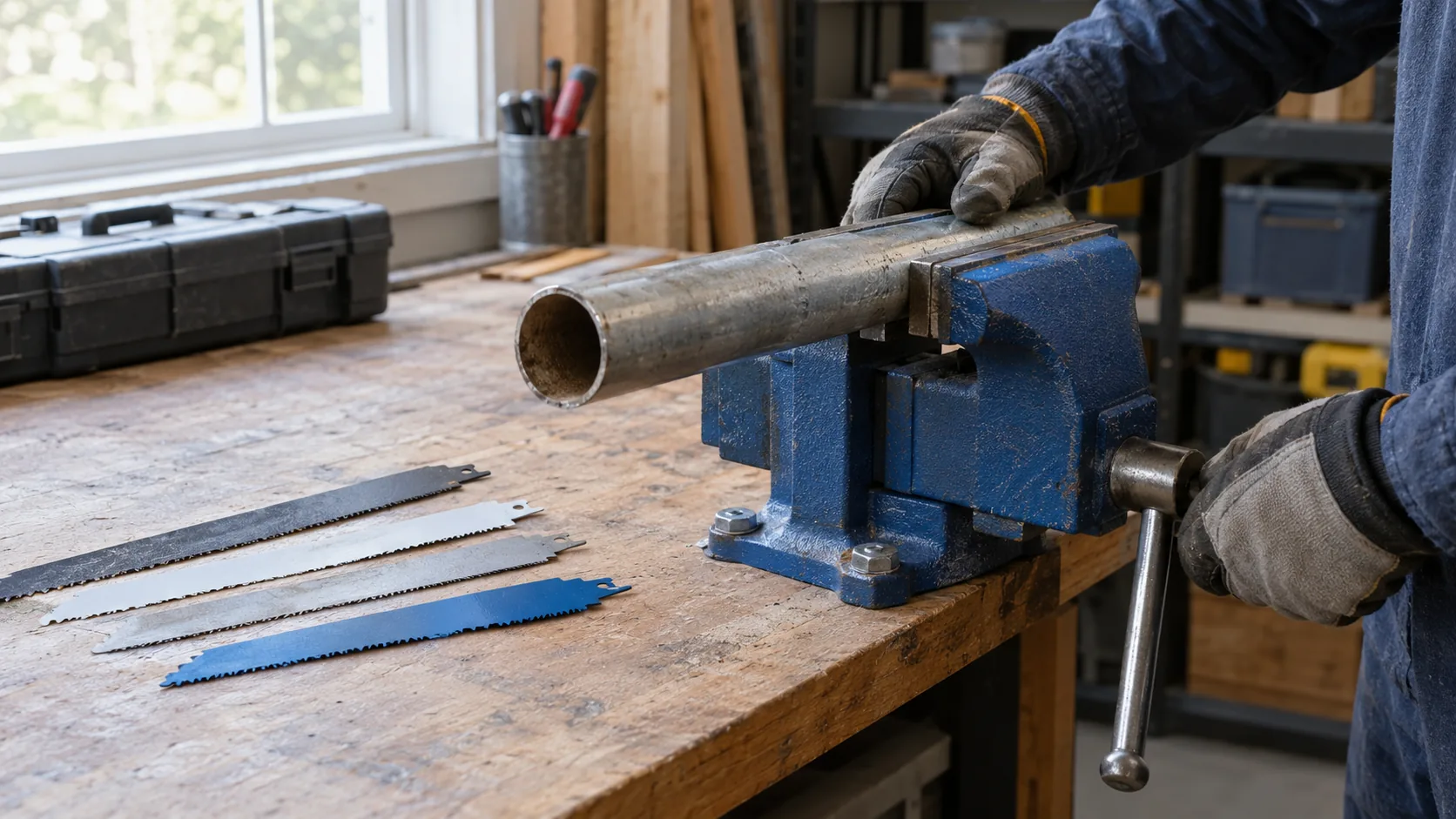
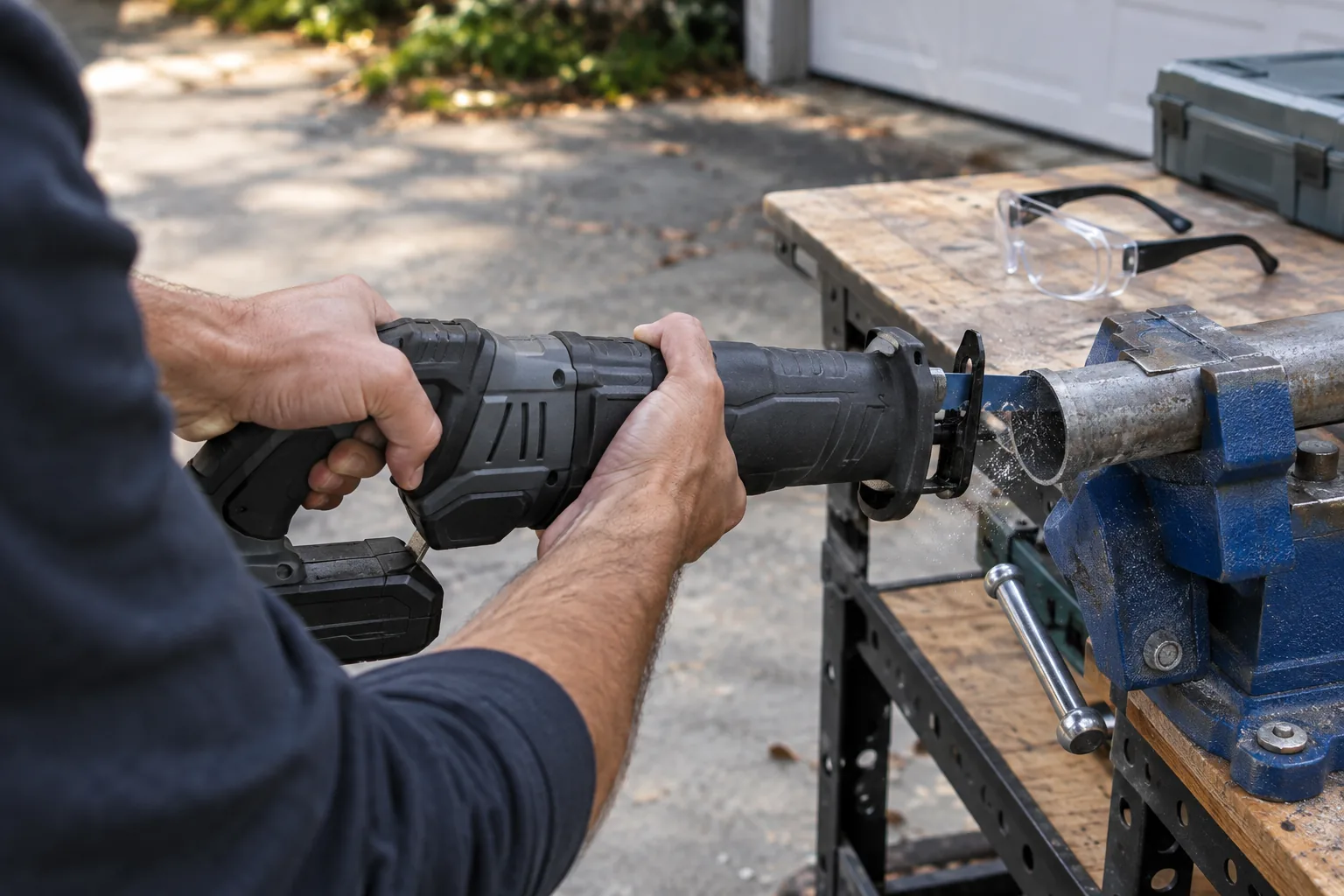
- Clamp the metal so it cannot vibrate. Loose stock chatters and dulls teeth.
- Mark the line and check behind the cut for wiring, pipes or people.
- Rest the shoe firmly against the work before pulling the trigger.
- Start with a light trigger pull, then settle into a steady pace.
- Wear eye protection, hearing protection and gloves suited to handling cut metal edges.
A saw built for blade swaps
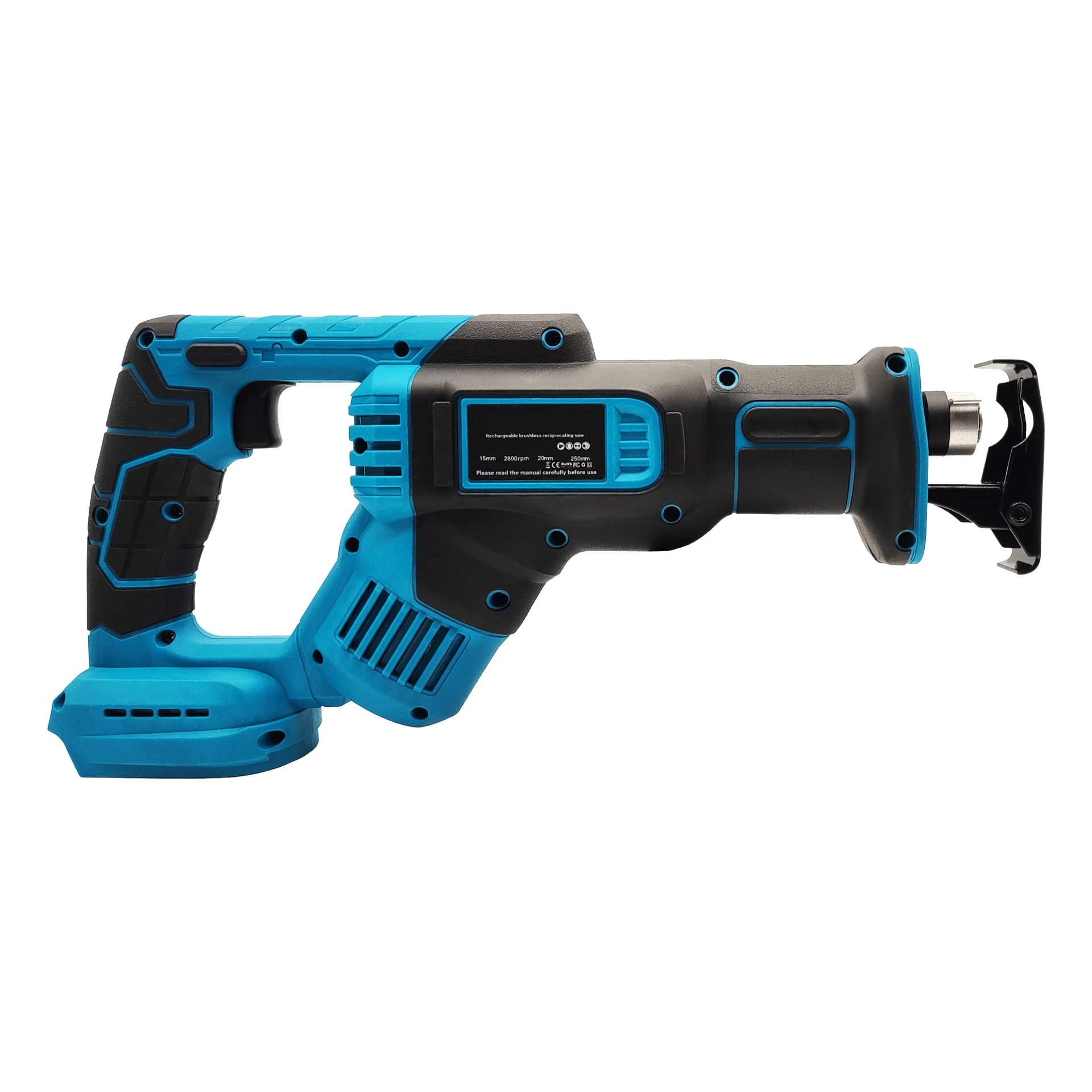
Mixed jobs mean switching between a metal blade and a wood blade. The IronCleave is a cordless reciprocating saw for demolition, pruning and cutting wood or metal. Its lever-actuated clamp releases a blade without tools, so changing between blade types takes a pull of the lever and a new blade.
The variable-speed trigger responds to how far you squeeze it, so you can use a lighter pull for metal and a heavier pull for nailed lumber. It runs on an 18V battery, which is optional in this package, and accepts standard reciprocating blades with a standard tang mount. Four blades are included, along with a user manual.
 In this guideIronCleave$149.99View
What not to do with a reciprocating saw
- Do not cut unclamped stock. The work can twist and bind the blade.
- Do not force the blade. Pressing hard heats the teeth and dulls them, especially in stainless.
- Do not use a wood blade on metal, or a coarse blade on thin sheet.
- Do not cut into walls or floors without checking for wiring and pipes.
- Do not touch freshly cut metal or the blade; both stay hot and sharp.
- Do not bend a carbide blade to steer the cut.
- Do not run the saw with the shoe off the work, which makes it kick.
Field note
If the blade glows, smokes or the cut slows, release the trigger and let the blade cool. On steel, add a drop of cutting oil before you resume instead of pressing harder.
Choosing a blade without chasing brands
Brand names matter less than the specs printed on the package: TPI, material, length, and the metals the blade is made to cut. Compare those across a few options, and buy the type that matches your most frequent metal. Keep a small set: one fine bi-metal for sheet, one medium for pipe, one coarse for thick stock, and a carbide blade if you cut cast iron or stainless.
Replace a blade as soon as teeth are missing or the cut wanders. Wipe the tool down afterward; What Should You Use to Clean Hand and Power Tools? covers cleaning. You can browse saws and accessories in the Hand & Power Tools collection.