What Should You Use to Clean Hand and Power Tools?
Use a brush and rag for dust, soapy water or a water-based degreaser for grease, and light oil on bare steel. Here is the cleaner and lubricant for each tool type and material.
The Quindrel Team
October 27, 2026 · 7 min read
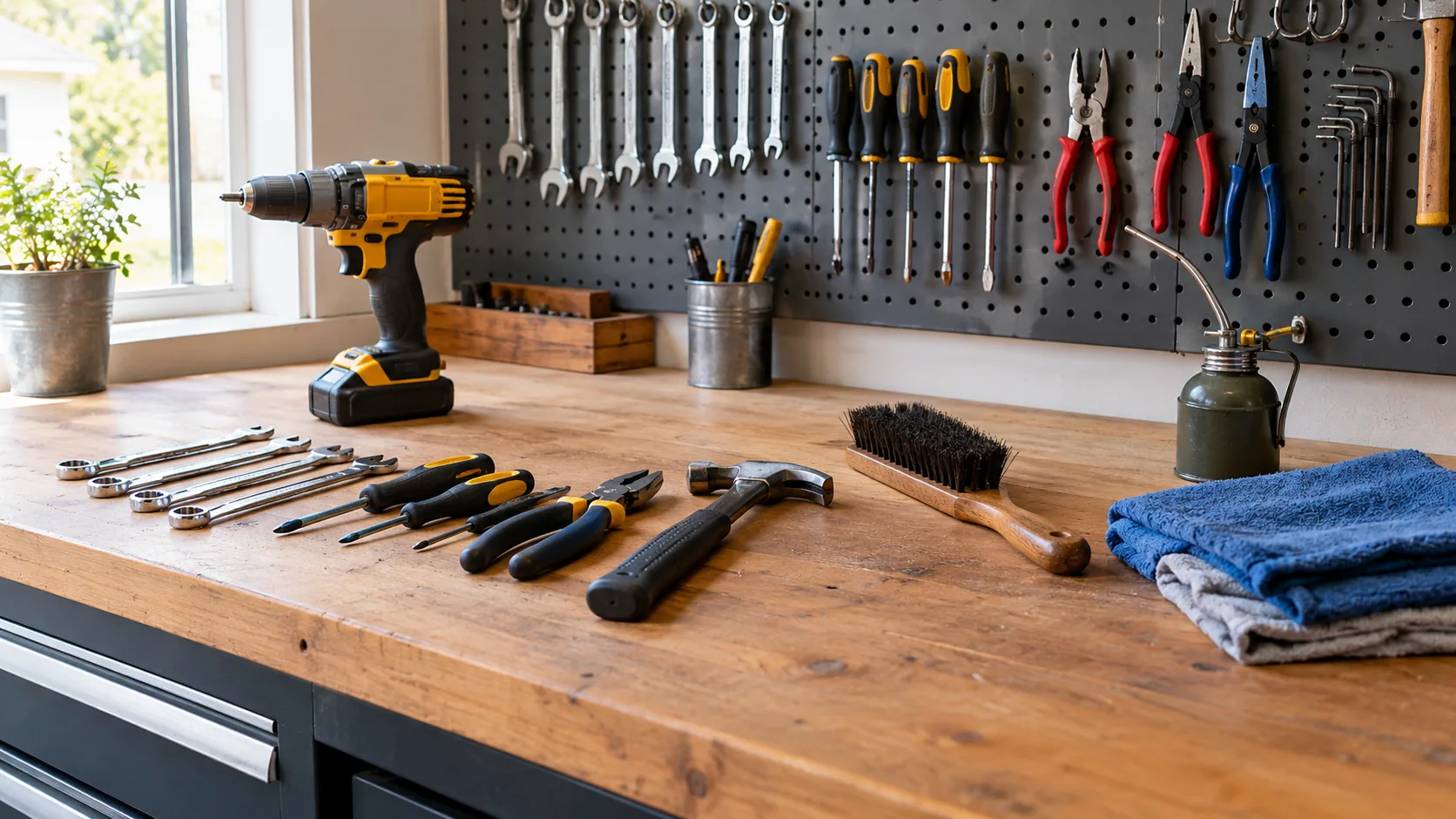
So, what should you use to clean hand and power tools? Use a dry brush and rag for dust, mild soapy water or a water-based degreaser for grease and oil, and a light machine oil on bare steel afterward. Match the method to the material: wipe-only for motors, vents and batteries, and wet cleaning for steel hand tools that can be dried right away.
This guide sorts cleaners and lubricants by tool type and material, then ends with a routine checklist you can print for the workbench.
What should you use to clean hand and power tools: the short list
Start with a dry method. Shop grime is a mix of dust, oil and dried residue, so a stiff nylon brush and a dry rag handle the first pass. Move to liquids only when dry methods leave a film.
| Tool or part | Clean with | Finish with |
|---|---|---|
| Bare steel hand tools (wrenches, pliers, chisels) | Rag, soapy water or mineral spirits on a cloth | Dry fully, then a light wipe of machine oil |
| Chrome-finished sockets and ratchets | Dry rag, then a damp cloth with a little dish soap | Dry fully, then a very light oil wipe on moving parts |
| Rusty steel | Wire brush or steel brush, then a rag | Light oil or paste wax |
| Wood handles | Barely damp cloth | Dry, then a thin coat of boiled linseed oil or paste wax |
| Rubber and plastic grips | Soapy water on a cloth | Dry with a clean rag |
| Power tool housing and vents | Soft brush, vacuum, rag; compressed air with eye protection | Dry wipe only |
| Battery contacts and terminals | Dry cloth or a cotton swab lightly dampened with isopropyl alcohol | Let dry before reinstalling |
| Blades, bits and belts | Brass or nylon brush; mineral spirits for resin and pitch | Dry, then a light oil wipe on steel |
Set up first: hand and power tools safety
Cleaning is a maintenance task, and hand and power tools safety starts before the first wipe. Follow each tool's manual, since it lists what the housing, motor and battery can and cannot touch.
- Unplug corded tools and remove the battery from cordless tools before cleaning.
- Wear eye protection when brushing, scraping or using compressed air.
- Wear gloves when using solvents, and work with the shop door open or a fan running.
- Keep rags soaked in oil or solvent in a closed metal container, not in a pile.
- Do not spray liquid into motor vents, switches or battery ports.
The same list covers hand tools and power tools safety for the whole routine: inspect while you clean. Cracked handles, mushroomed chisel heads, frayed cords and loose guards belong on the repair list, not back in the drawer.
Cleaning hand tools by material
Steel and chrome
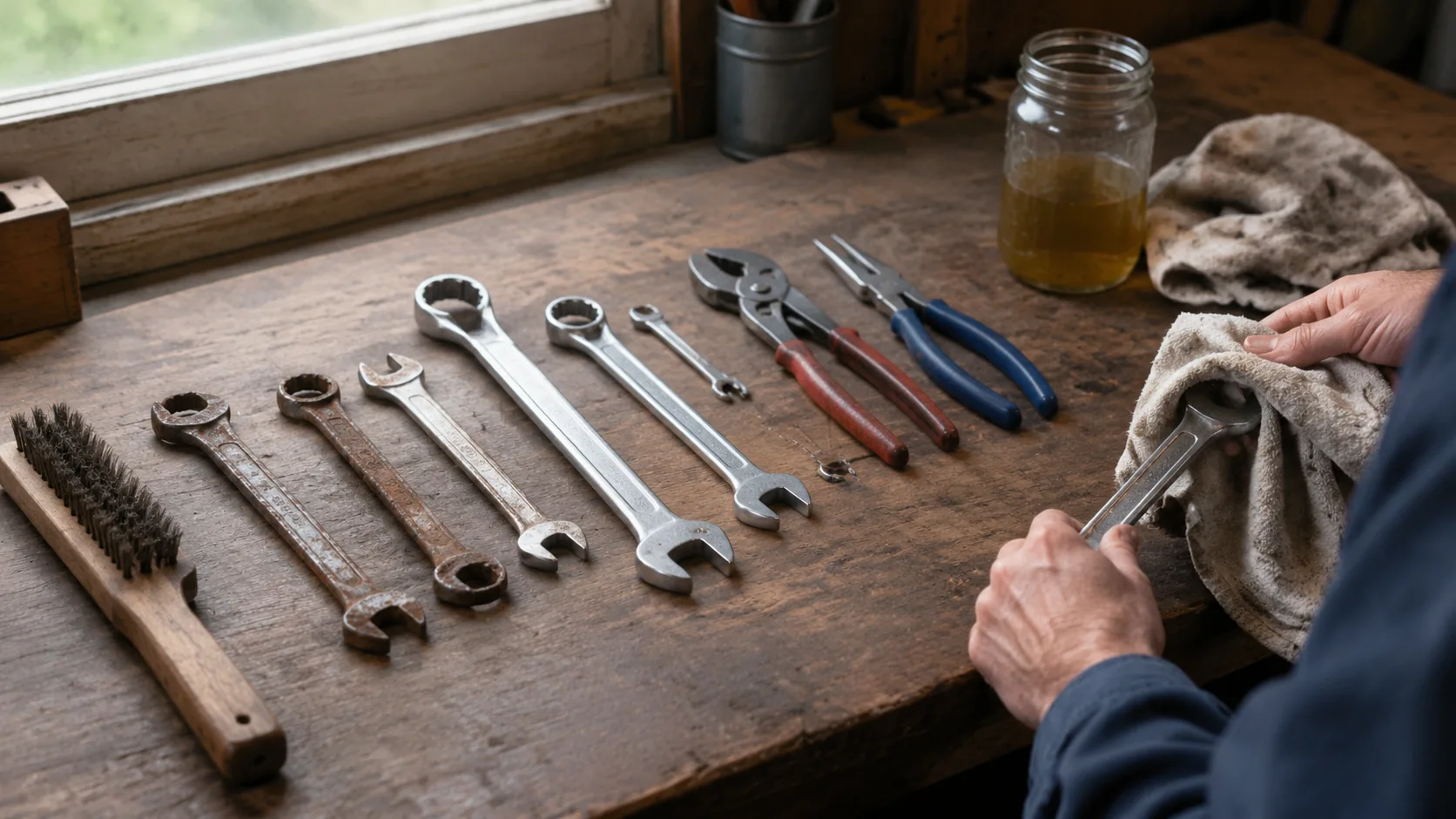
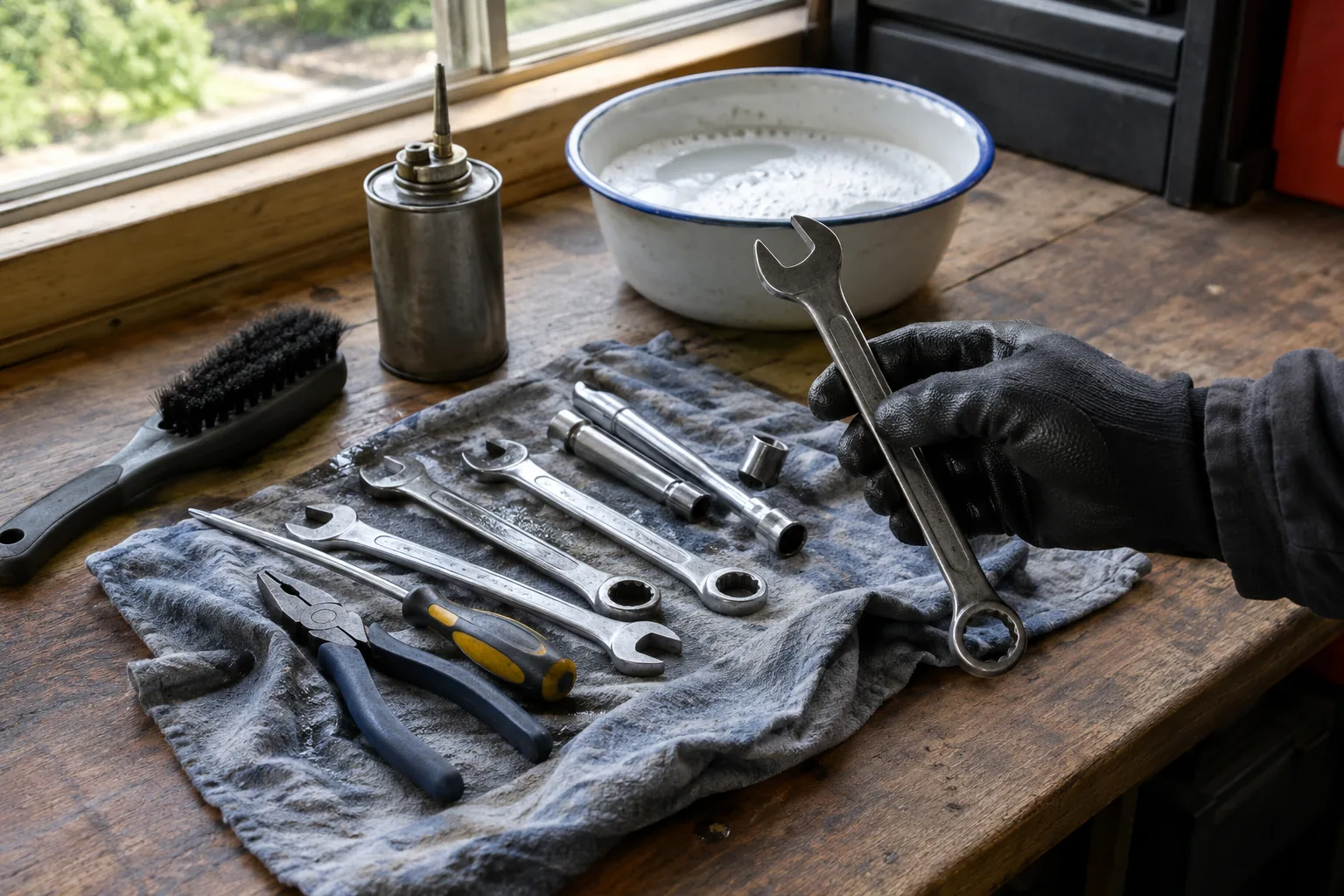
Wipe off loose dirt, then wash greasy pieces in warm soapy water or wipe them with a cloth dampened in mineral spirits. Dry each piece right away, because trapped moisture is what starts rust. Finish with a thin film of light oil on a rag, and wipe off the excess so it does not collect dust.
For surface rust, a wire brush or steel brush lifts the flakes. Brush along the surface of the tool, then re-oil. Skip abrasive brushing on chrome plating, where a damp cloth and soap are enough.
Ratchets and moving parts
For ratchet mechanisms, clean the outside, work the mechanism, and add a drop of light oil only if the manual allows. A sticky quick-release button is often packed grit, so brush it out first.
Wood, rubber and plastic
Wood swells when soaked, so use a barely damp cloth, dry it, and add a thin coat of oil or wax. Clean rubber and plastic grips with soapy water and avoid strong solvents on them, since some plastics react to solvent. If you are unsure, test on a hidden spot or check the manual.
 In this guideTorqueVantage$119.99View
Cleaning a socket set
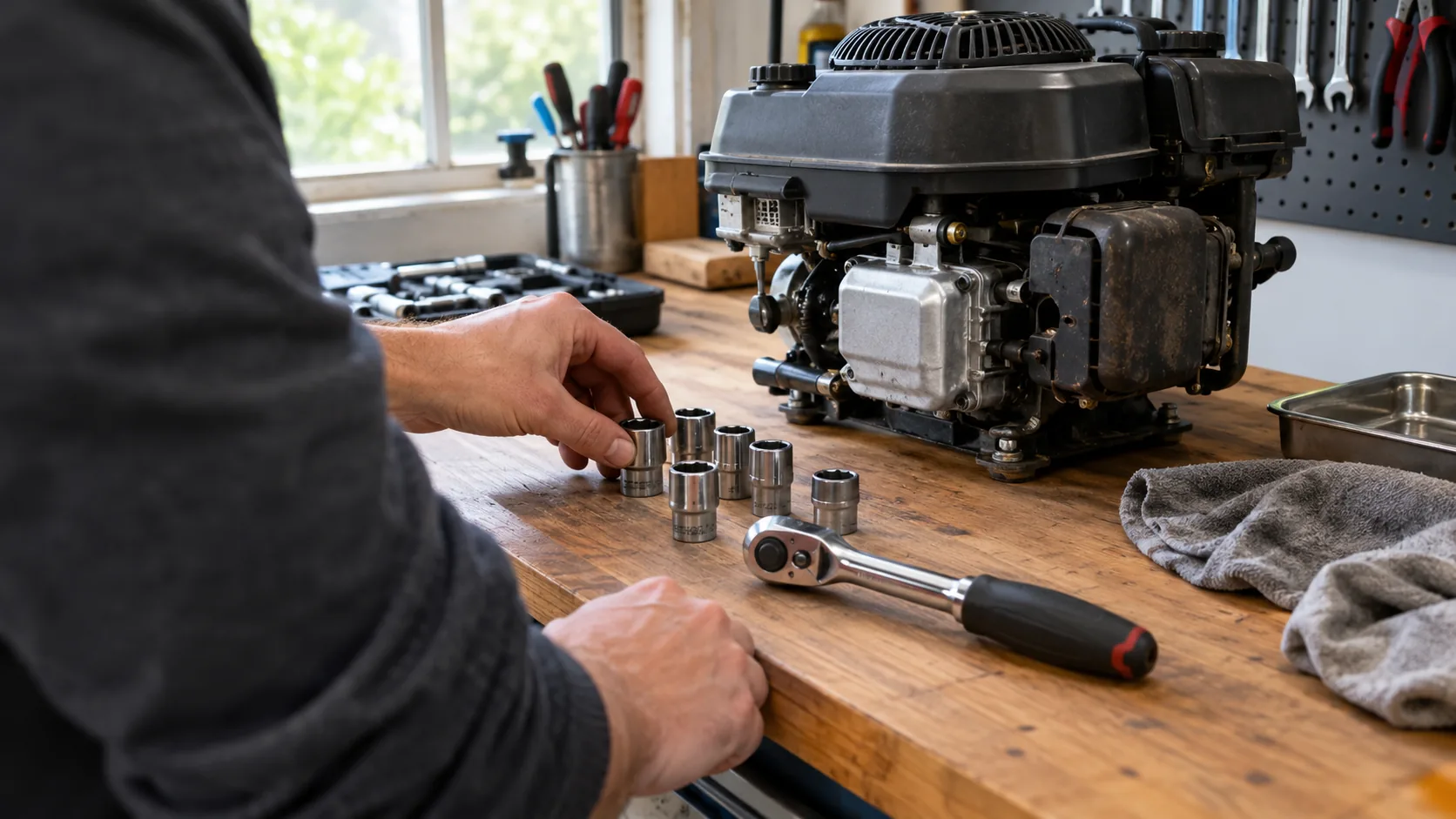
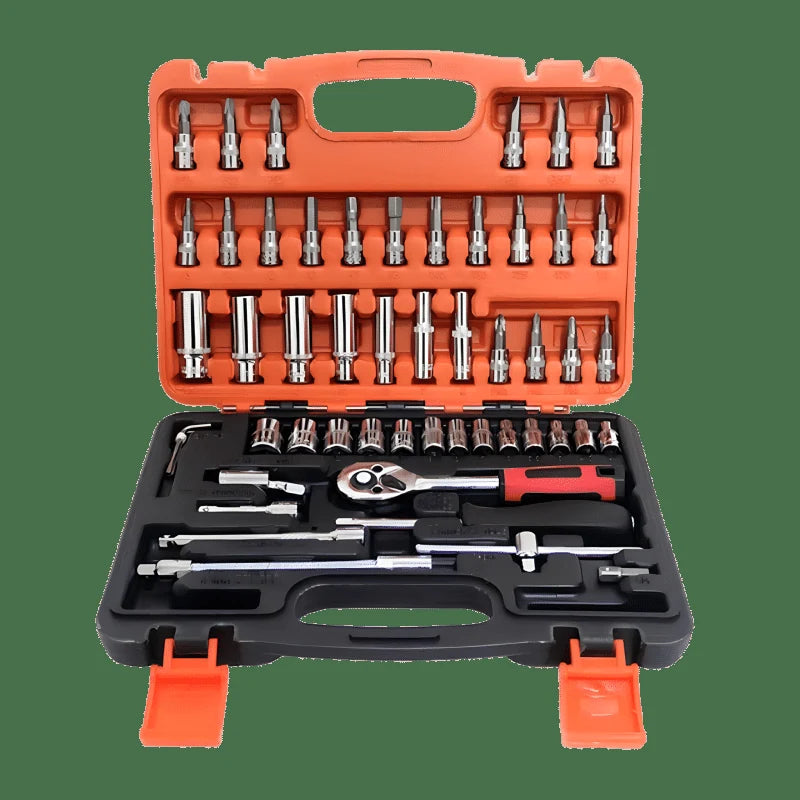
A socket set is a good example of hand-tool care because it has many small steel pieces. The TorqueVantage sockets are forged carbon steel with a chrome finish, and each piece has a marked slot in the plastic case. After a job, wipe each socket and bit with a dry rag, wash off grease with soapy water if needed, dry fully, and return it to its slot. With marked slots, you can see at a glance which piece is missing.
For sizing and drive questions, see Metric Socket Set: Sizes, Drives and What You Need.
Cleaning power tools
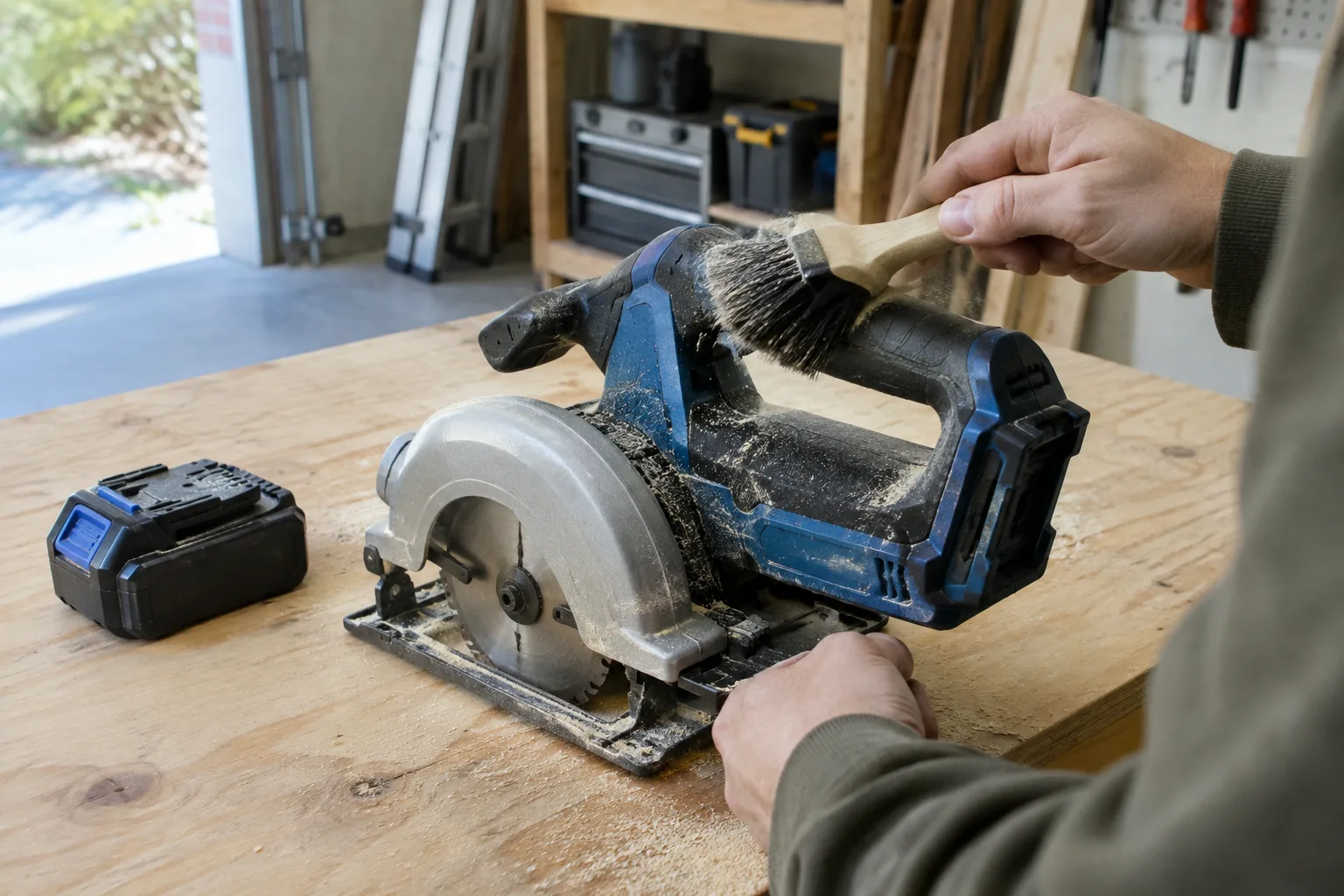
Water and motors do not mix, so power tool cleaning is mostly dry work. Brush dust out of vents and around the trigger, then wipe the housing with a cloth that is barely damp with soapy water. Use a vacuum with a brush attachment for fine dust, and keep compressed air at a distance with eye protection on.
Cordless tools and batteries
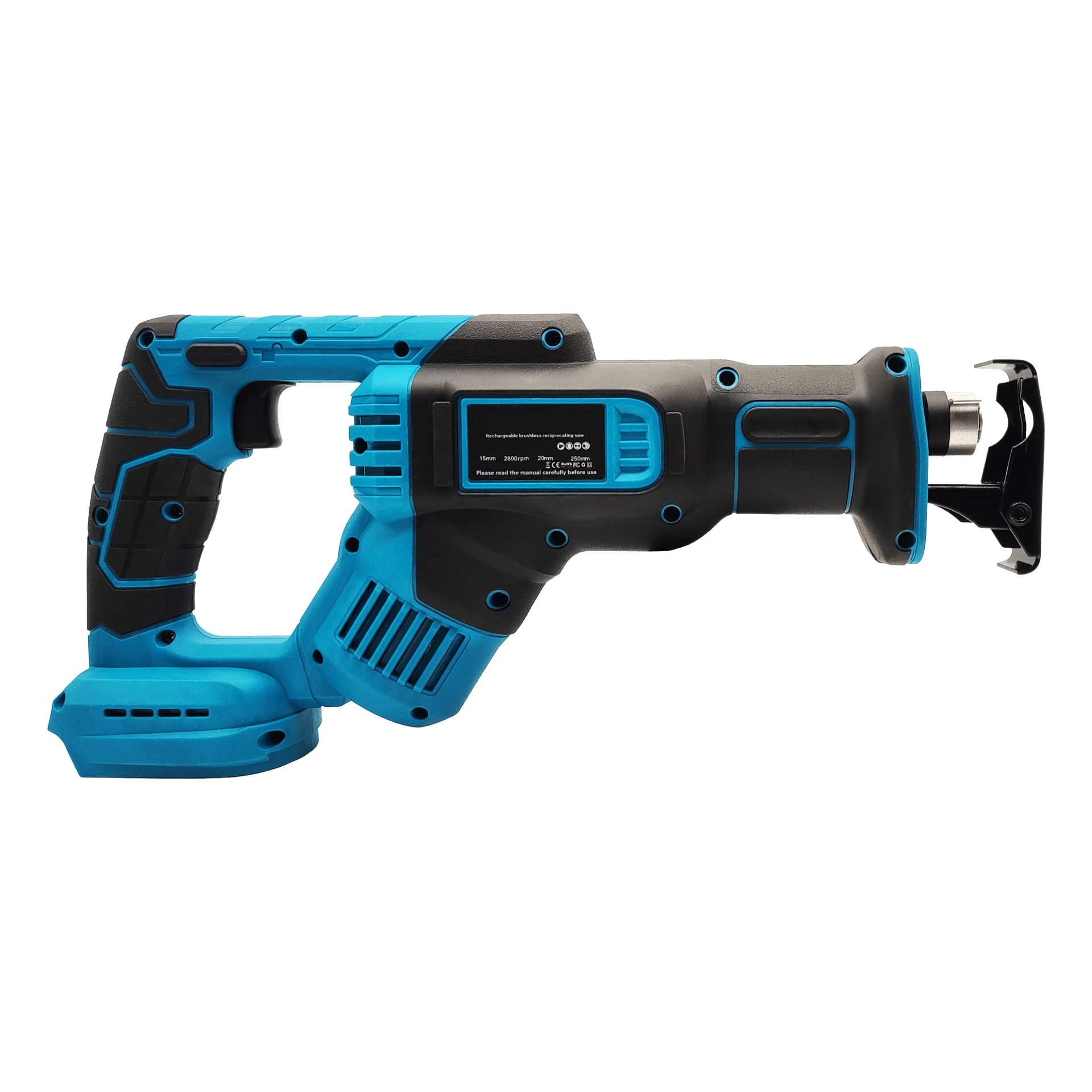
Remove the battery first. Wipe the body and grip, and clean the contacts with a dry cloth. Keep the battery out of any wet cleaning. A tool such as IronCleave takes an 18V battery, which is listed as optional in its package, so clean the battery and the saw body as separate parts.
 In this guideIronCleave$149.99View
Blades and clamps
Remove the battery first and wear gloves, since blades can be sharp and hot after cutting. Cutting wood leaves resin on blades, and cutting metal leaves fine filings in the clamp. Pull the blade, wipe resin off with a rag and mineral spirits, and brush the clamp area clean. IronCleave uses a lever-actuated clamp for tool-free blade changes, so work the lever a few times after brushing to confirm it moves freely. For blade choices, read Reciprocating Saw Explained: Uses, Blades and Limits.
Stationary tools and sanders
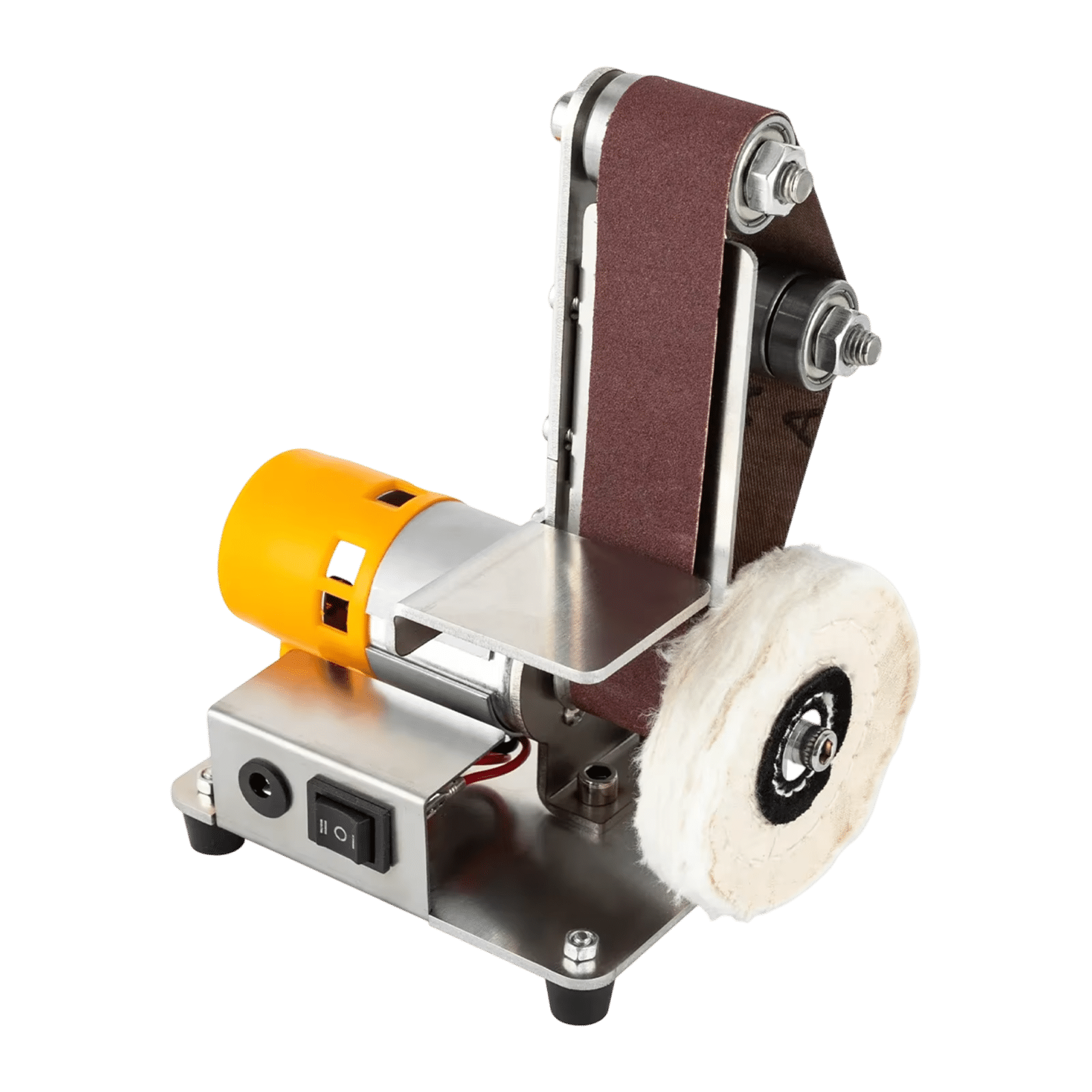
Sanding dust packs into motor vents and tracking parts. For a tabletop machine like GritMaster Pro, unplug the power cord, remove the belt or wheel, and brush the frame and the roller that holds the belt centered. Use a vacuum for fine dust. Metal grinding leaves filings, so wipe those off before oiling any bare steel surfaces.
 In this guideGritMaster Pro$159.99View
Belts clogged with resin or pitch can be cleaned or replaced; the kit includes 20 sanding belts and two wheels, so swapping is an option. Technique and grit choices are covered in Sanding With a Belt Sander: Technique, Grit and Mistakes.
Which lubricant goes where
Cleaner and lubricant do different jobs. A cleaner lifts dirt; a lubricant leaves a thin film so metal does not rub dry or rust. Use the manual for every power tool, since some parts are sealed or take a specified grease.
| Product type | Use it on | Avoid it on |
|---|---|---|
| Light machine oil | Bare steel surfaces, pivots, ratchet mechanisms | Sanding belts and wheels, grip surfaces, electrical parts |
| Penetrating oil | Stuck or rusted fasteners and seized pivots | Rubber grips, electrical parts |
| Paste wax | Wood handles and bare wood surfaces | Rubber or plastic grips, belts and sanding contact areas |
| Mineral spirits | Resin, pitch and heavy grease on steel | Plastic housings and rubber |
| Soapy water | General grime on steel, rubber and plastic | Motors, switches, battery ports |
A water-displacing spray can chase moisture off steel, but it is a light lubricant and not a cleaner. Wipe the tool afterward so the residue does not hold dust.
Field note
Keep one cloth for solvent and one for oil. Mixing them leaves a film on grips and handles that is hard to clean off.
Routine checklist
What should you use to clean hand and power tools on a schedule? The same few items, split into short passes instead of a single big clean. Adjust the timing to how often you use each tool.
| When | Task |
|---|---|
| After each use | Unplug or remove the battery, brush off dust, wipe the tool, put it back in its place |
| Weekly in heavy use | Clean vents, check cords and blades, wash greasy hand tools, dry and oil bare steel |
| Seasonally | Clean battery contacts, work clamps and ratchets, inspect handles, replace worn belts and blades |
| Before storage | Dry everything fully, apply a thin oil film to bare steel, store in a dry cabinet or case |
You can browse more shop gear in the Hand & Power Tools collection.
Common mistakes
- Putting tools away damp, which invites rust.
- Soaking wood handles or power tool housings.
- Spraying liquid into vents, switches or battery ports.
- Using too much oil, which holds sawdust and metal filings.
- Skipping inspection while cleaning, so damaged cords or handles stay in use.
- Using strong solvent on plastic or rubber.