Using a Meat Thermometer for Roast Beef: Placement and Temps
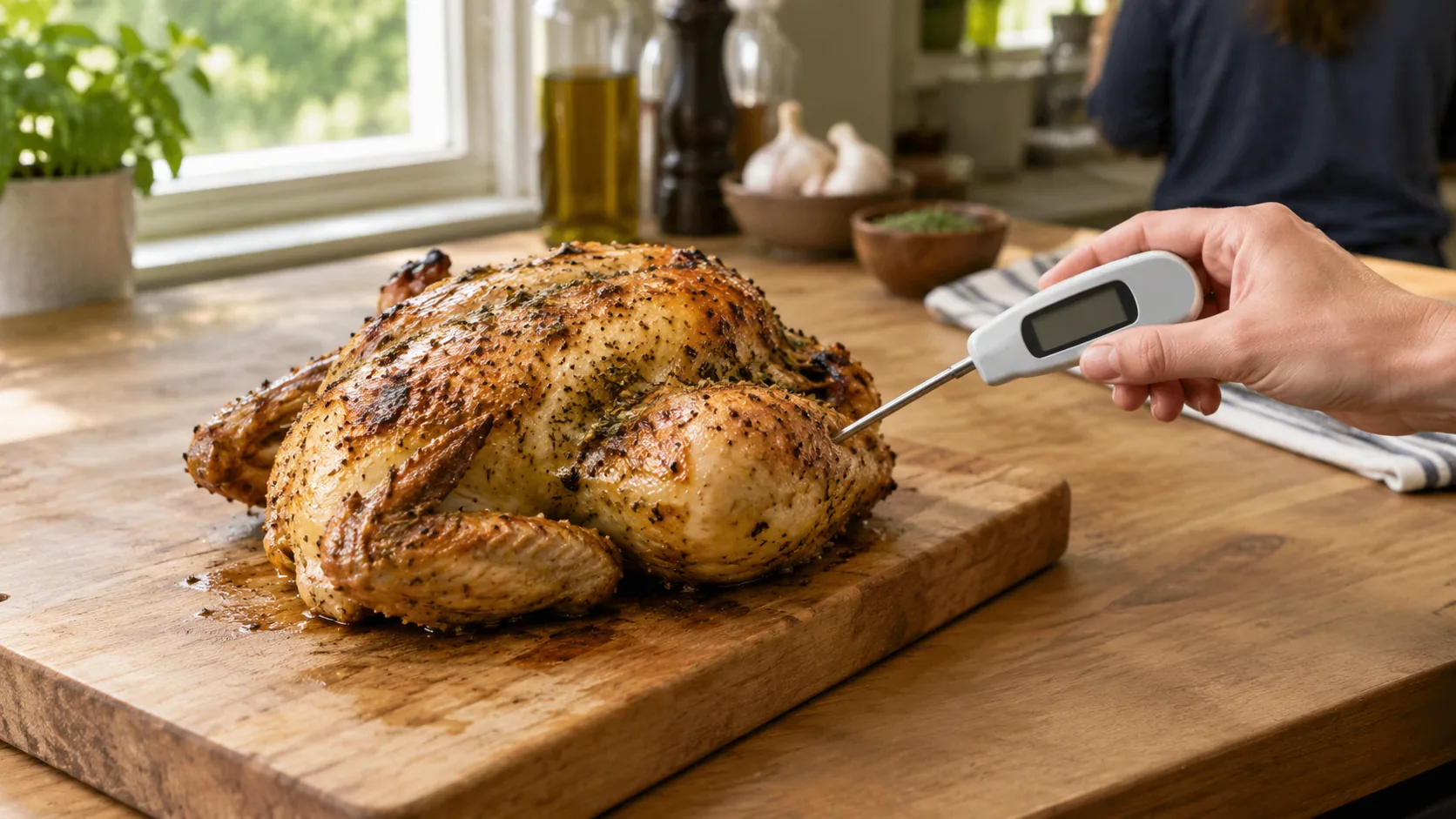
Put the probe in the center of the thickest part, away from bone and fat, and pull the roast 5 to 10°F (3 to 6°C) below your final target. The chart below gives every number.
The Quindrel Team
October 19, 2026 · 7 min read
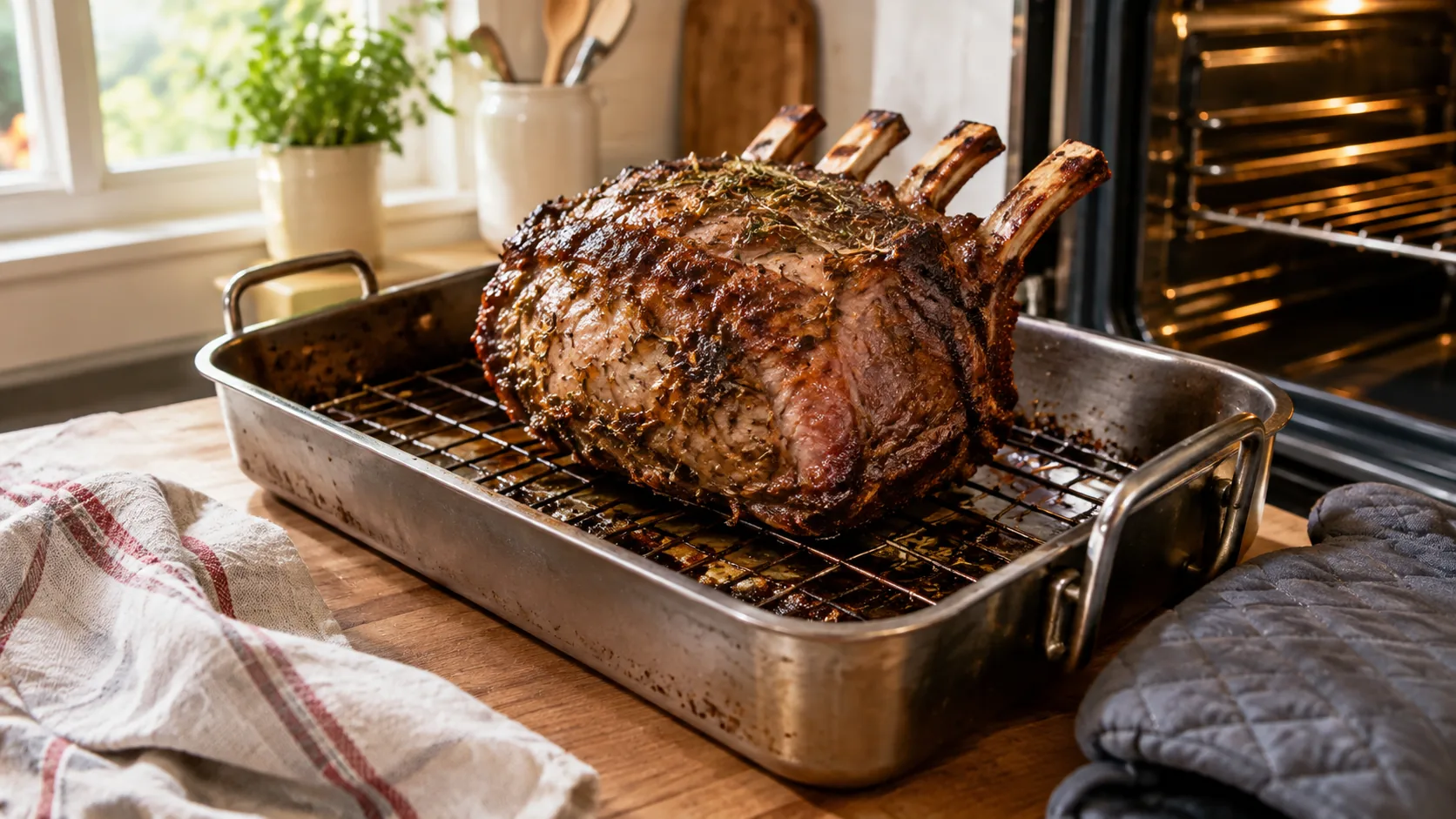
A meat thermometer roast beef check starts with placement: push the probe tip into the center of the thickest part of the roast, away from bone, fat and the pan. Pull the roast from the oven 5 to 10°F (3 to 6°C) before your final target, because the temperature keeps climbing while it rests. For a medium-rare roast, that means pulling at about 125°F (52°C) and serving at 130 to 135°F (54 to 57°C).
This guide covers probe placement, a doneness chart in Fahrenheit and Celsius, carryover timing, and the mistakes that throw readings off.
Roast beef temperature chart: pull and final temps
Two numbers matter for every roast: the pull temperature (when it leaves the oven) and the final temperature (after resting). The chart assumes a roast that gains 5 to 10°F (3 to 6°C) while it rests. Larger roasts sit at the high end of that gain, smaller ones at the low end.
| Doneness | Pull at | Final temperature | Center looks like |
|---|---|---|---|
| Rare | 115°F (46°C) | 120 to 125°F (49 to 52°C) | Deep red, cool center |
| Medium rare | 125°F (52°C) | 130 to 135°F (54 to 57°C) | Red-pink, warm center |
| Medium | 135°F (57°C) | 140 to 145°F (60 to 63°C) | Pink throughout |
| Medium well | 145°F (63°C) | 150 to 155°F (66 to 68°C) | Slight pink |
| Well done | 150°F (66°C) | 160°F (71°C) | Brown throughout |
Colors are a rough guide only. The thermometer reading is what decides when to pull.
Is beef 145 or 160?
Both numbers are real, and they apply to different beef. The 145°F (63°C) figure is for whole cuts such as roasts and steaks, followed by a rest before carving. The 160°F (71°C) figure is for ground beef, including burgers and meatloaf, because grinding mixes surface bacteria through the meat.
Cooking a roast to rare or medium rare means choosing a final temperature below 145°F (63°C). That is your call. If you are serving young children, older adults, pregnant guests or anyone with specific health concerns, cook to the higher number or ask a healthcare provider what fits.
Meat thermometer roast beef placement: where the probe goes
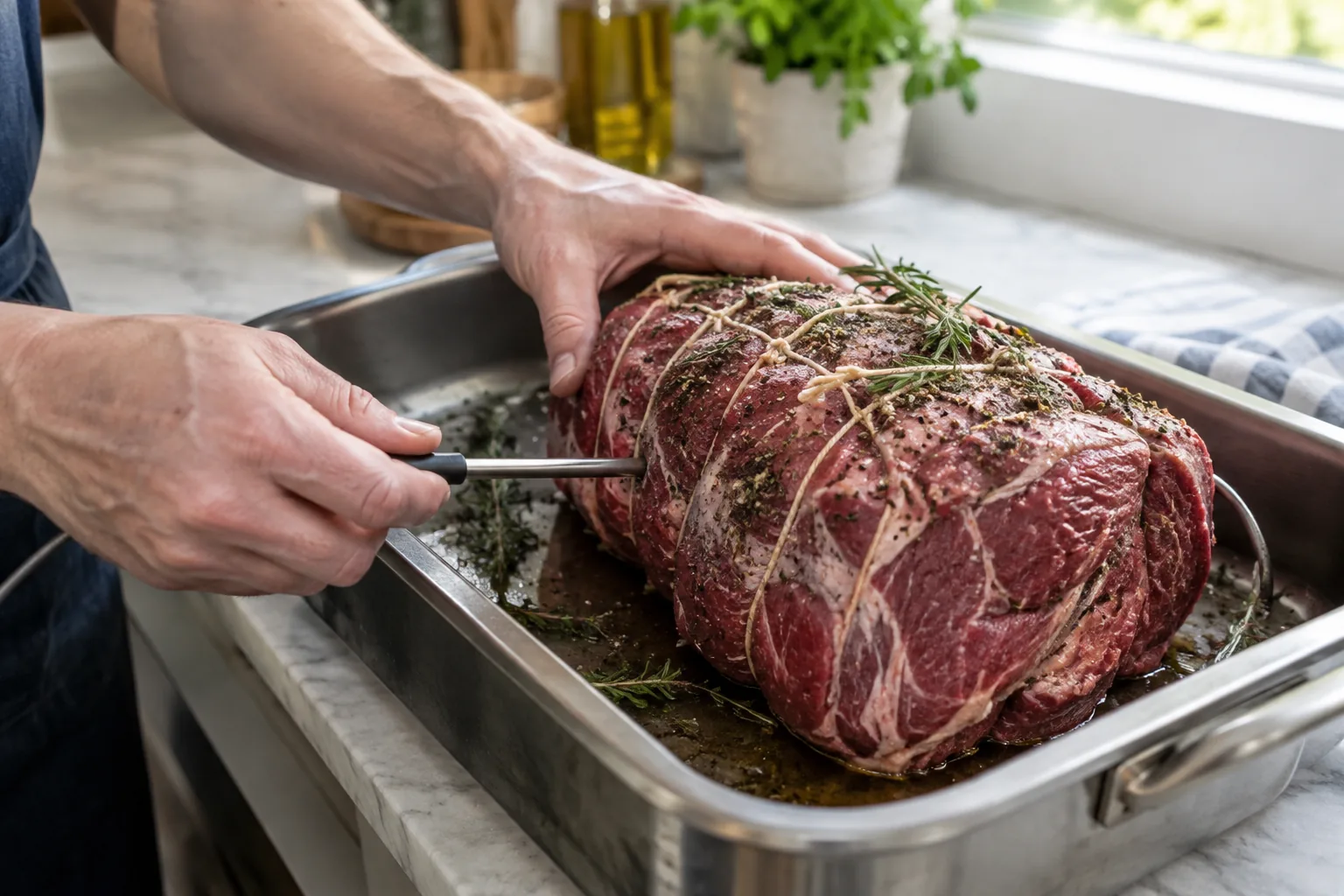
Probe position changes the reading by many degrees, so spend a minute on it before the roast goes in. Start by finding the thickest part of the roast, usually near the middle of its length.
| Roast type | Entry point | Where the tip sits | What to avoid |
|---|---|---|---|
| Boneless (rib eye, top round, sirloin tip) | From the side | Center of the thickest section | Fat pockets, string, the pan |
| Bone-in (standing rib) | From the side or top of the largest muscle | Center of the muscle, about an inch from bone | Touching bone |
| Tied or uneven roast | Two different spots | Thickest point of each section | Narrow or tapered ends |
Boneless roast
- Insert the probe from the side, not the top, so the tip sits in the center of the thick section.
- Check that the sensing area, near the tip, is in meat and not in a pocket of fat or string.
Bone-in roast
Aim for the center of the largest muscle and keep the tip about an inch from the bone. Bone conducts heat differently from meat, and a probe touching bone reads high or low depending on where it sits. If the reading jumps when you move the probe, back it off the bone.
Thin or tapered ends
Do not probe the narrow end. It finishes first and tells you nothing about the center. For a tied roast with uneven thickness, take readings in two spots and trust the lower one.
Spot-check or leave-in
A spot-check probe goes in near the end of cooking, and you pull it out after each check. A leave-in probe stays in the roast, so you can watch the internal temperature without opening the oven door. Our guide to a Bluetooth meat thermometer explains what to look for in a wireless model.
Carryover cooking: when to pull the roast
A roast is hot on the outside and cooler in the middle when it leaves the oven. During the rest, heat moves inward and the center keeps rising. That is carryover cooking, and it is why the chart has two columns.
Several things change how much the roast gains:
- Size: a large roast holds more heat and gains more than a small one.
- Oven temperature: a hotter oven leaves a hotter outer layer, so the center climbs further.
- Rest conditions: a loose foil tent holds heat in, while a roast carved right away loses it.
Keep the thermometer in during the rest, or probe again every few minutes until the final temperature shows. When the number stops rising and starts to drop, carryover is finished and you can carve. Resting also lets juices settle on the board.
Field note
Write your pull temperature on a sticky note and put it next to the oven. When the probe hits that number, take the roast out even if the clock says there is time left.
Using a wireless dual-probe thermometer
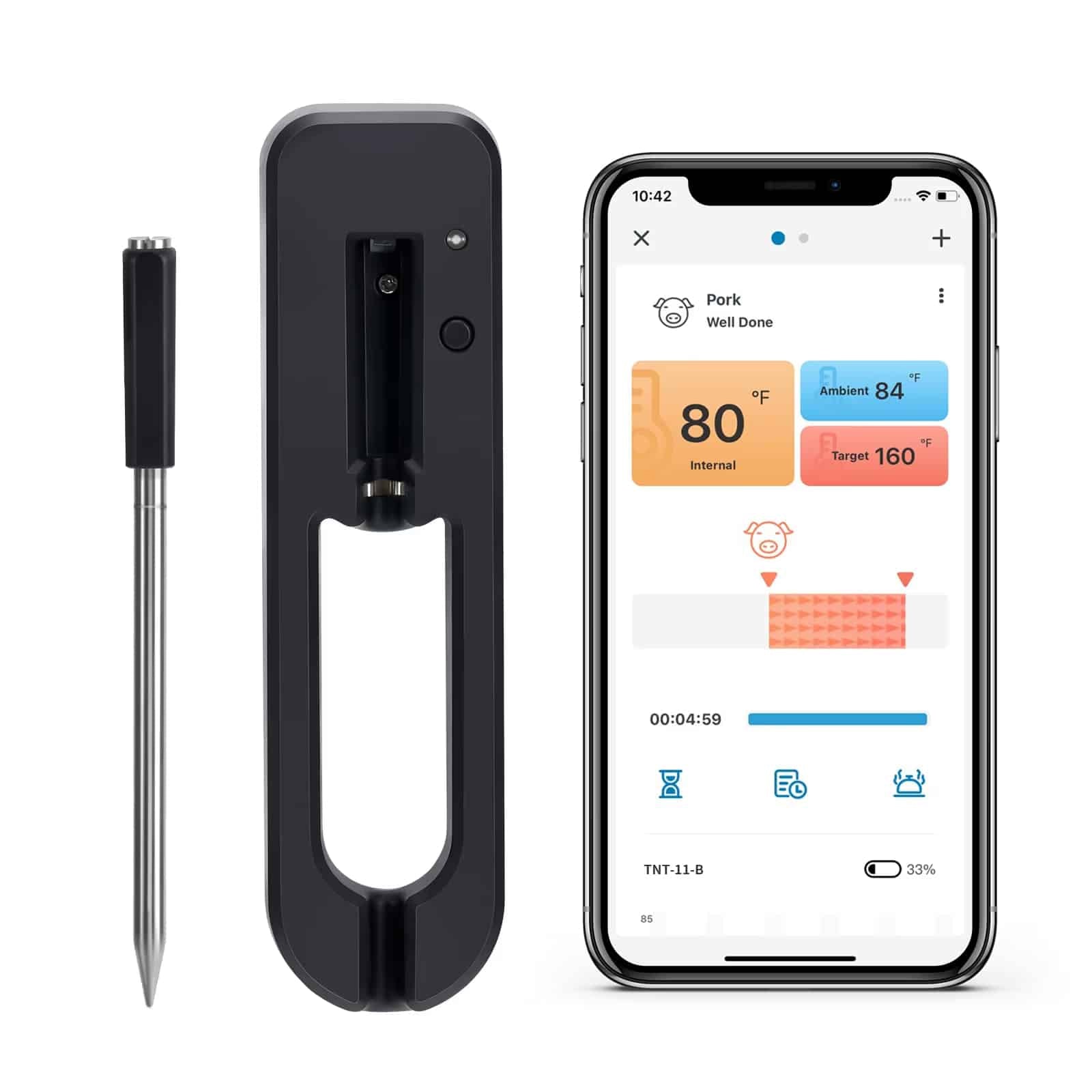
A leave-in wireless unit lets you read the temperature on your phone while the roast cooks. The GrillCraft is a wireless meat thermometer with dual probes. You insert a probe into the meat, set the base near your grill, smoker or oven, and pair it with a smartphone app over Bluetooth 5.0.
Its two sensors report separate readings: the temperature of the meat and the ambient temperature around it. Both show in the app side by side, so you can see how the oven is behaving while the roast climbs. The app holds 23 built-in food presets and alerts you when the target temperature is reached. Pre-warning alerts give you a notice as a food approaches its target, which fits the pull-early approach above.
It runs on a single replaceable AAA battery, and the box includes the thermometer with dual probes, a battery, a Quick Start Guide and a User Manual. Follow the manual for probe handling and for which parts can go into a hot oven.
 In this guideGrillCraft$79.99View
Setup checklist before the roast goes in
Run through this meat thermometer roast beef checklist before the oven door closes.
| Step | What to do |
|---|---|
| 1. Check the probe | Check it in ice water before you start. It should read near 32°F (0°C). If it is off by several degrees, check the manual for calibration or replace it. |
| 2. Season the roast | Pat dry and season. Let it sit out briefly if your recipe says so. |
| 3. Place the probe | Side entry, tip in the center of the thickest part, clear of bone and fat. |
| 4. Set the target | Enter your pull temperature, not the final one. |
| 5. Roast | Keep the probe clear of the oven walls and heating element. |
| 6. Rest | Tent loosely with foil and watch the reading rise to the final number. |
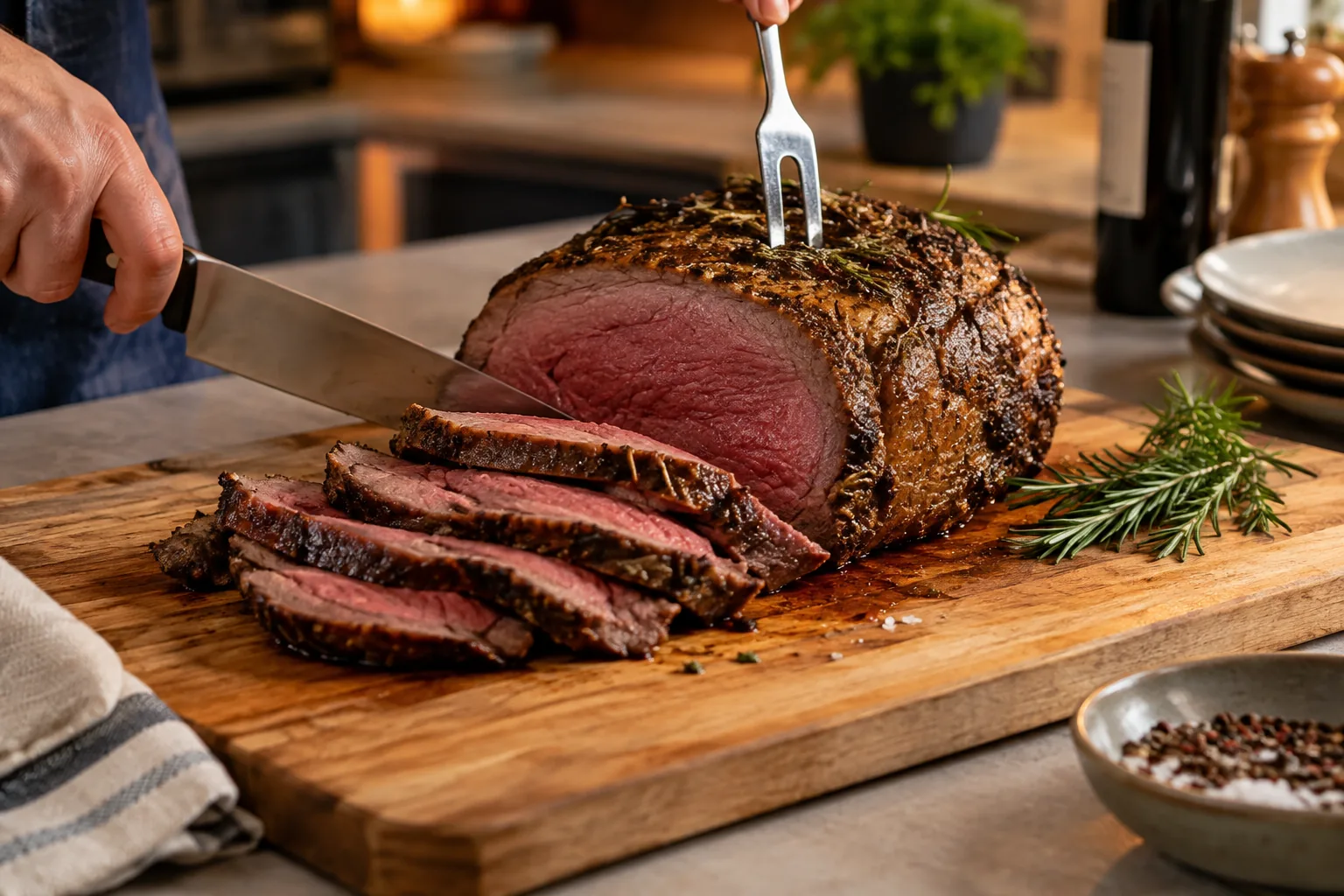
| 7. Carve | Slice against the grain once the reading levels off. |
Common meat thermometer roast beef mistakes
- Probing too early or too late: a single check near the end can miss a fast rise, so start checking well before the expected finish.
- Leaving the tip in the wrong place: a tip resting in fat or touching the pan reads off. Reposition and read again.
- Pulling at the final temperature: this overshoots, because the roast keeps rising on the board.
- Opening the oven door repeatedly: each check lets heat out of the oven.
- Reusing a probe without washing: wash it in hot soapy water between checks and between raw and cooked meat, unless the manual says otherwise.
- Trusting color alone: the inside of a roast can look pink or brown at different temperatures, so rely on the reading.
For a roast that goes into the fridge, cool it promptly and keep it cold. When reheating sliced beef, warm it until it is hot throughout and check with the thermometer.
Celsius and Fahrenheit quick reference
If your recipe or thermometer uses Celsius, these are the pull numbers to remember: rare at 46°C, medium rare at 52°C, medium at 57°C, medium well at 63°C and well done at 66°C. Final temperatures are listed in the chart above. For more tools that suit a home workshop or kitchen, browse Hobby & Specialty Tools.