How to Work a Socket Wrench: Ratchet, Sockets and Direction
Push a matching socket onto the ratchet drive, set the direction switch, seat the socket fully and pull the handle. This guide covers fit, direction, extensions and rounded bolts.
The Quindrel Team
November 12, 2026 · 7 min read
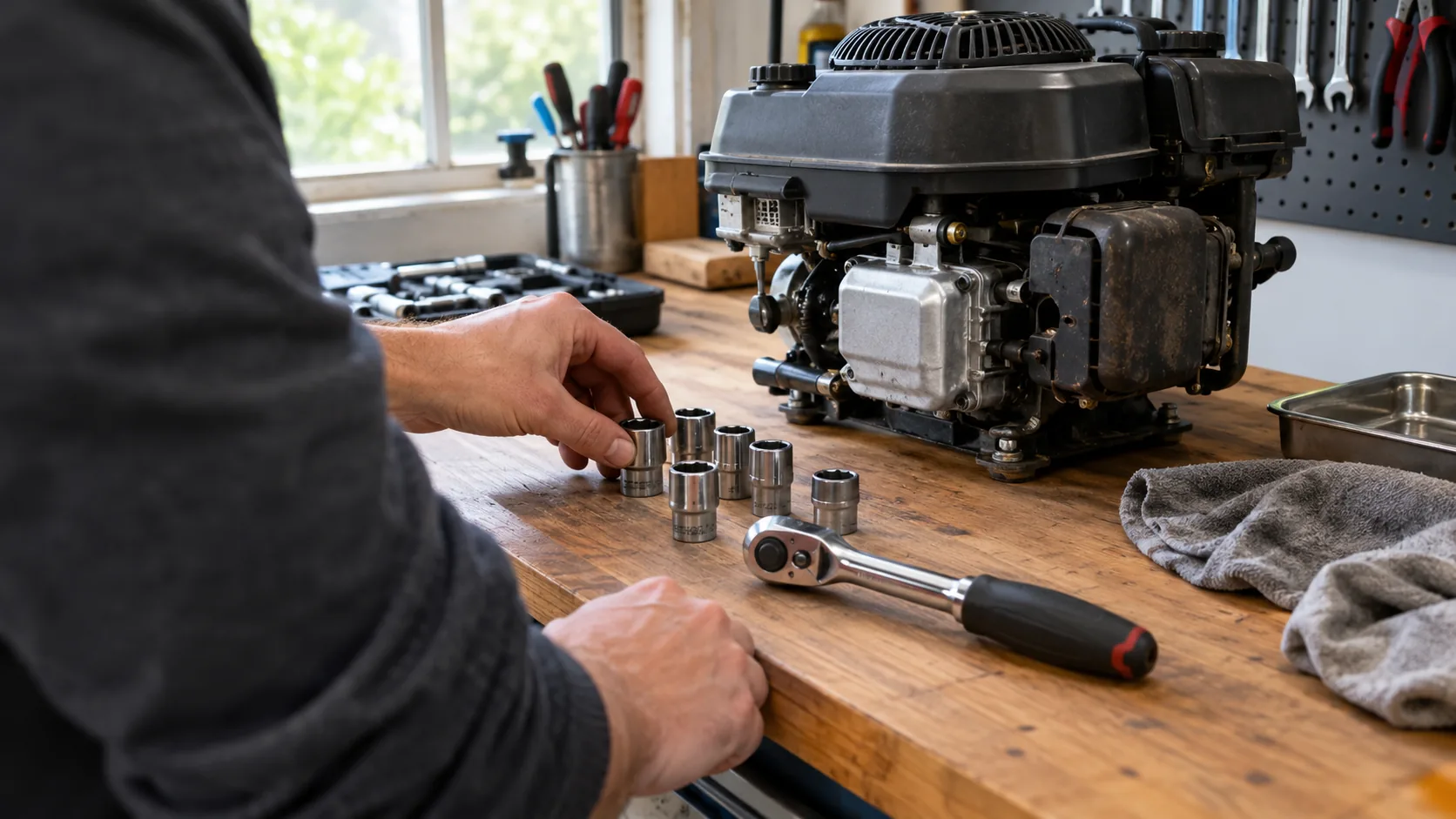
To learn how to work a socket wrench, push a socket that matches the fastener onto the square drive of the ratchet, set the direction switch, seat the socket fully on the bolt head, and turn the handle. Clockwise tightens and counterclockwise loosens, and the ratchet clicks freely on the return stroke so you do not lift the socket off the bolt.
The steps below cover fitting the socket, reading the direction switch, adding extensions and a universal joint, and the habits that keep bolt heads from rounding off. A short list of substitutes is included for when you do not have a ratchet at hand.
What the parts of a socket wrench do
A socket wrench is a system of parts, not one tool. The ratchet handle holds a gear mechanism and a square drive. The socket is a hollow cylinder that fits over the bolt head or nut. Extensions and joints sit between the two.
A ratchet tool is a handle whose internal gear and pawl turn the drive in one direction and let it freewheel in the other. That is why you can swing the handle back and forth in a small arc without removing the socket.
- Drive: the square stub on the ratchet that the socket pushes onto.
- Socket: the cup that grips the fastener, sized in metric or inch measurements.
- Direction switch: the lever or collar on the ratchet head that picks tighten or loosen.
- Extension: a rod that adds reach between ratchet and socket.
- Universal joint: a pivoting link that lets you turn a fastener from an angle.
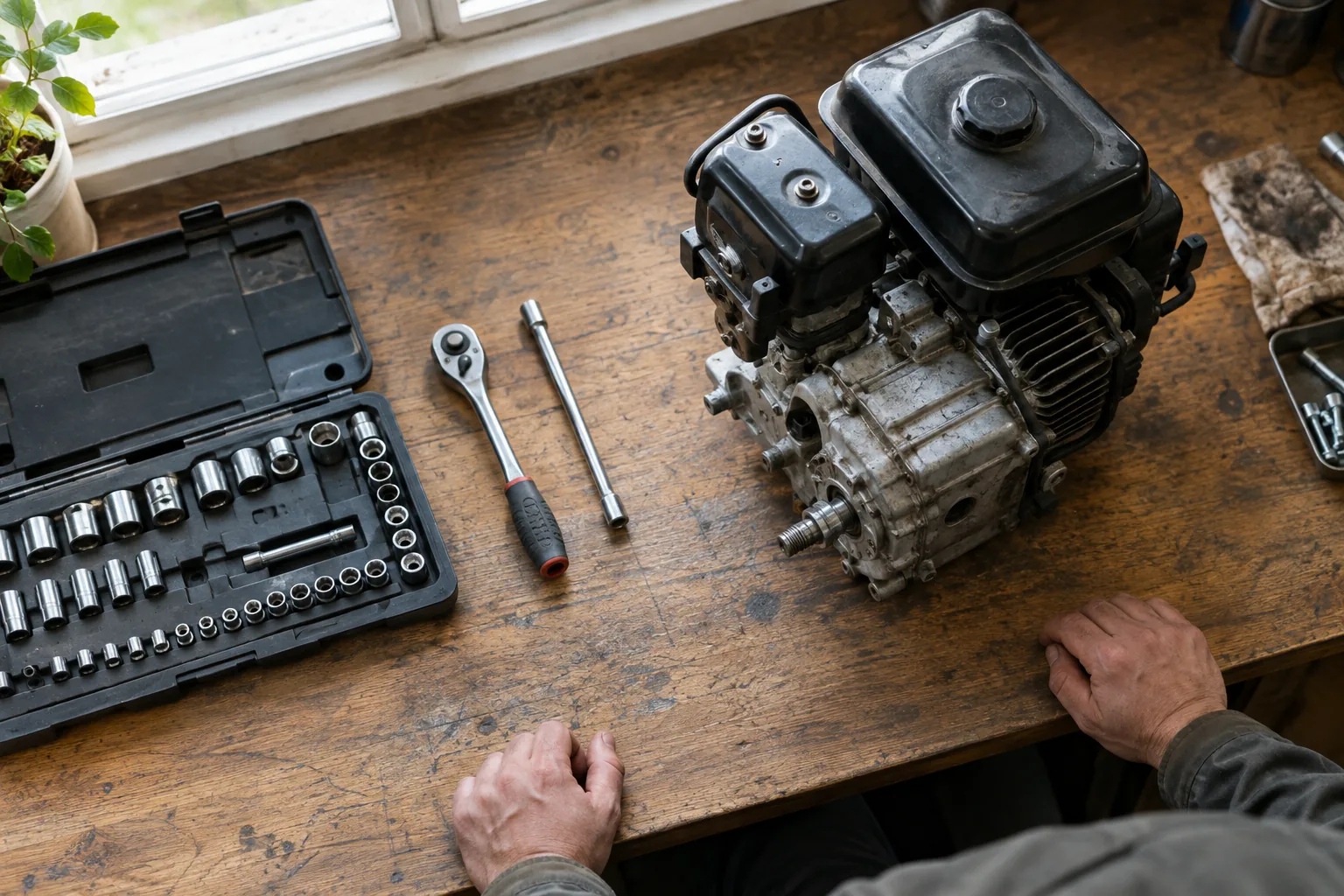
How to put a socket on a ratchet
- Match the socket to the fastener. A snug fit is the goal: if the socket rocks on the head, it is the wrong size.
- Check the drive size. The square hole in the back of the socket must match the square drive of the ratchet, for example 1/4-inch on 1/4-inch.
- Line up the square hole with the drive and push the socket on until it seats. Some ratchets hold the socket with a small spring-loaded ball detent; a gentle tug confirms it is held.
- To remove it, pull it straight off. If your ratchet has a release button, press it first.
An adapter changes the drive size but does not change what the small drive can handle, so match the drive size to the fastener instead of stepping up with adapters.
Drive sizes at a glance
| Drive size | Typical use |
|---|---|
| 1/4 inch | Small fasteners, brackets, small engines, tight spots |
| 3/8 inch | General automotive and household work |
| 1/2 inch | Larger fasteners such as suspension and wheel hardware |
For help choosing sizes and what a full kit should contain, see Metric Socket Set: Sizes, Drives and What You Need.
Setting the direction switch
The switch on the ratchet head decides which way the handle drives the socket. Designs differ: some use a flip lever, others a rotating collar. The side the lever points to, or the side of the collar that is engaged, varies by tool, so do not rely on memory.
Test it before you load the bolt. With the socket in your hand, turn the handle and listen. The direction that clicks freely is the return stroke; the direction that grips is the working stroke.
Loosening
Set the switch so the working stroke turns counterclockwise, as you look at the bolt head. Pull the handle toward you in a steady motion, then swing it back through the click.
Tightening
Flip the switch so the working stroke turns clockwise. Run the fastener down by hand or with light turns, then finish with a firm pull. If a procedure gives a torque figure, finish with a torque wrench rather than guessing by feel.
Remember that some bolts are reverse-threaded. If a fastener refuses to move, stop and check the service manual before adding force.
How to work a socket wrench on a stubborn bolt
- Wipe the bolt head and clear dirt from the hex so the socket seats fully.
- If it is rusted, apply penetrating oil and let it soak as directed on the product label. Our guide to removing rust from tools covers soaks and abrasives for the tools themselves.
- Choose a six-point socket where you can. It contacts the flats of the head instead of the corners.
- Push the socket on all the way. A half-seated socket is a frequent cause of a rounded head.
- Pull the handle toward you with a flat, steady force. Pushing away from you can send your hand into the work if the bolt lets go.
- If the ratchet does not move the bolt, switch to a longer handle or a breaker bar, which has no ratchet mechanism to strain.
Keep your body clear of the swing path, wear gloves and eye protection, and follow the manual for the vehicle or equipment you are working on.
Field note
Keep the handle at a right angle to the socket and pull rather than push. A socket that is tilted tends to climb the head and round the corners.
Using extensions and a universal joint
An extension adds reach so you can get the socket down into a recess, past a bracket or through a panel. Push it onto the ratchet drive, then push the socket onto the other end. Keep the whole line straight so force goes along the axis of the bolt.
A universal joint bends between the ratchet and the socket, which lets you turn a fastener from an angle. Use it for access, not for force: a joint at a steep angle wobbles and loses grip, so keep the bend small and turn with light, even strokes.
If the bolt end sticks out past the nut, a deep socket or a pass-through socket gives room for the threads. That article compares when each type fits.
A kit that includes the connecting pieces
If you do not own these parts yet, a single kit covers them. The TorqueVantage is a 53-piece 1/4-inch drive set with a quick-release ratchet wrench, extension rods, a 1/4-inch universal joint, metric sockets, hex sockets and screwdriver bits. It is sized for 1/4-inch drive hand-ratchet work on metric fasteners, such as bolts on small engines and brackets. Each piece has a marked slot in the plastic case, so you can see which piece is missing after the job.
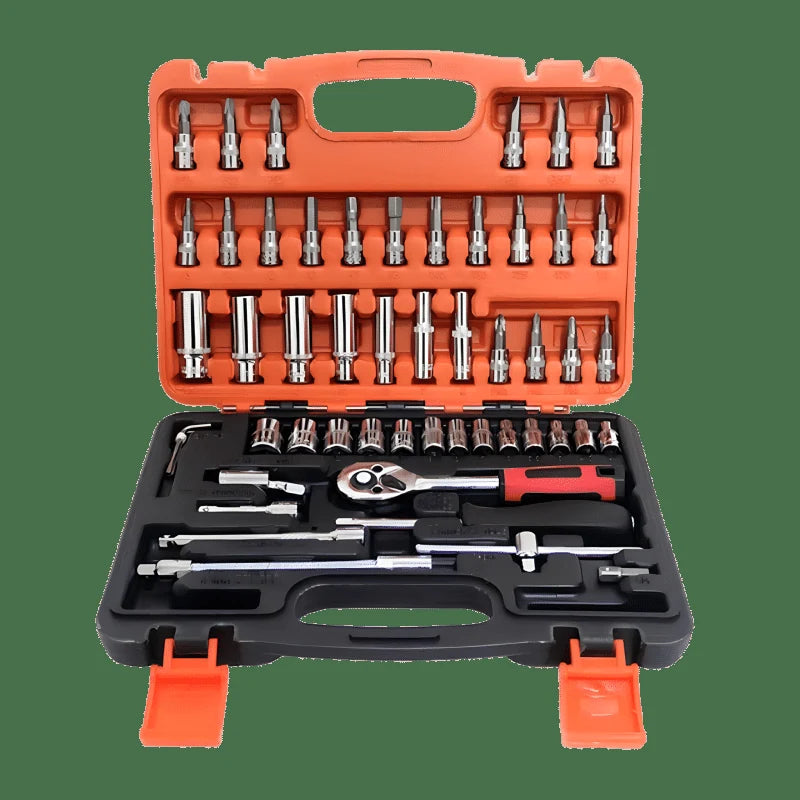 In this guideTorqueVantage$119.99View

Avoiding rounded bolts
A rounded head happens when the socket slips and wears the corners. The causes are about fit and technique, and you can control them. Part of knowing how to work a socket wrench is spotting these before you pull.
| Mistake | What to do instead |
|---|---|
| Socket is a little too large | Try the next size down; it should fit without rocking |
| Mixing metric and inch sizes | Test both by hand and use the one with no play |
| Socket not fully seated | Clean the head and push the socket all the way on |
| Twelve-point socket on a stuck bolt | Use a six-point socket |
| Jerking the handle | Pull with steady force |
| Tilted socket or joint at a steep angle | Straighten the line or add an extension |
If a head is already rounded, use a bolt extractor socket or ask a mechanic. Repeated attempts with a standard socket only wear it further.
When a hand ratchet is not enough
Lug nuts, lag bolts and long runs of fasteners can call for more than a hand ratchet. A cordless impact wrench takes sockets on a square drive. The BoltForge is a cordless impact wrench that runs on a compatible 18V lithium-ion battery and takes hex and square drive accessories. It is listed at 520 Nm of torque for loosening lug nuts and lag bolts, and it has a variable speed trigger and a built-in LED to light the fastener. It comes as a bare tool, so the battery is separate, with a set of hex and square adapters, a carrying case and a quick-start guide.
Use sockets made for impact tools with an impact wrench, and follow the manual.
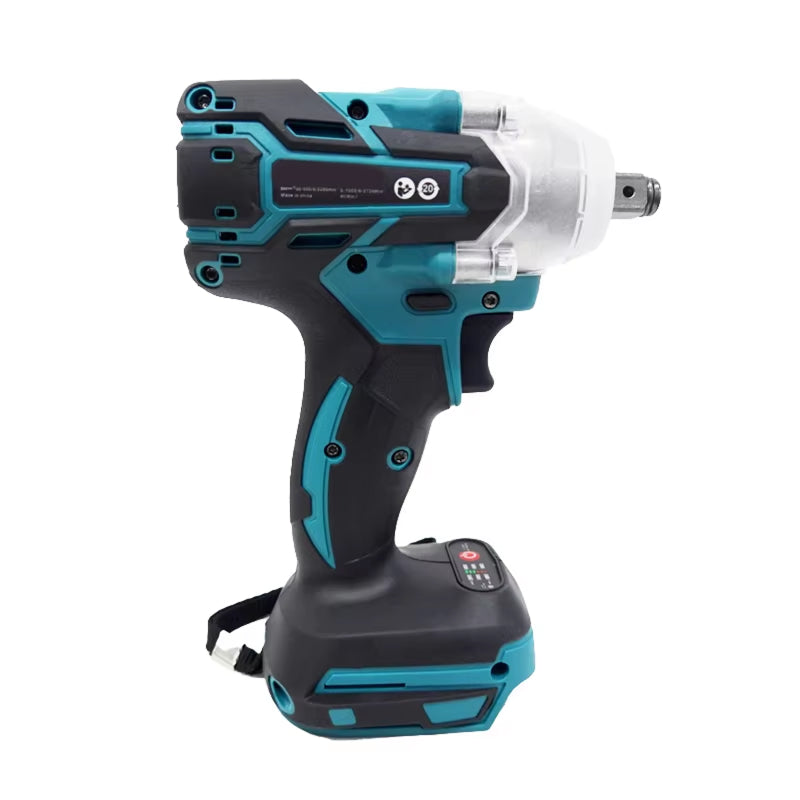 In this guideBoltForge$89.99View
What to use instead of a socket wrench
- Combination wrench: an open end on one side and a box end on the other, sized to the fastener. Use the box end where you can.
- Nut driver: a socket on a screwdriver-style handle, handy for small hex fasteners.
- Adjustable wrench: fits several sizes, but needs to be tight on the flats and pulled toward the jaw.
- Universal socket: a socket with a flexible or stepped bore that fits a range of head sizes. It is an option when you lack the exact size; a six-point socket in the exact size contacts the flats of the head.
- Locking pliers: a last resort for damaged heads that will wear the fastener further.
Browse more options in the Hand & Power Tools collection.
Care after the job
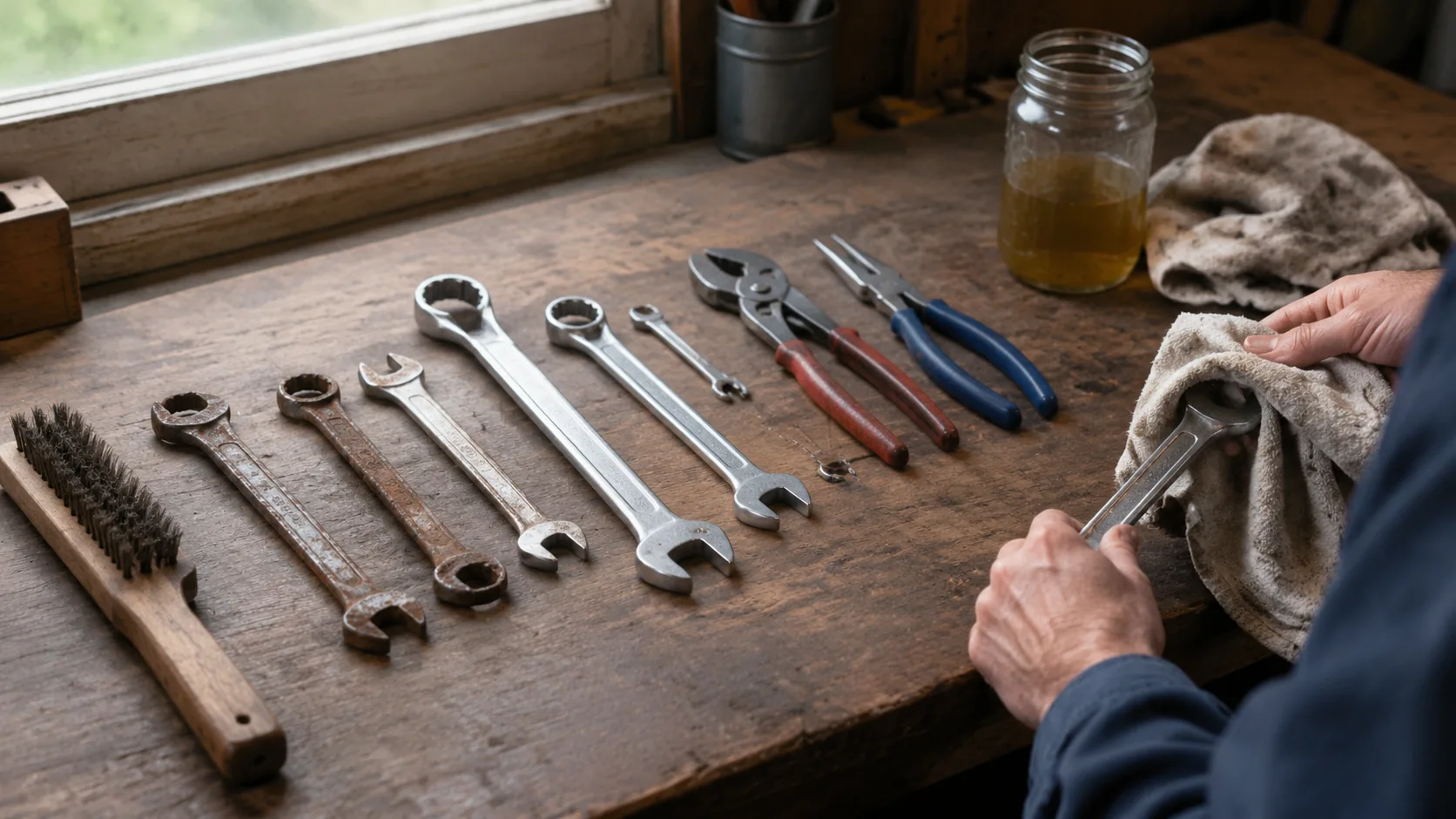
Wipe sockets and the ratchet clean of oil and grit, and dry them before storing. Return each piece to its slot so you can see what is missing. For cleaning products and methods, read what to use to clean hand and power tools.