What Does a Home Inspector Look For? A DIY Pre-Inspection Checklist
A home inspector reviews the roof, foundation, attic, plumbing, electrical, HVAC and interiors. Use this room-by-room checklist to find problems first.
The Quindrel Team
November 9, 2026 · 10 min read
What does a home inspector look for? A visual, non-invasive review of the structure and the major systems: roof, exterior, foundation, attic, plumbing, electrical, heating and cooling, and the interior surfaces. The inspector is looking for working systems, clear access, and signs of water intrusion, wiring defects or missing alarms.
This guide turns that list into a room-by-room walk-through you can finish before the appointment. Whether you are selling or getting a house ready for a buyer's visit, finding a problem first gives you time to fix it, get a quote, or plan how to disclose it.
What does a home inspector look for, system by system
An inspection often runs from the outside in: roof and grounds first, then the foundation, then the mechanical systems, then each room. The report lists defects, safety concerns and items that are near the end of their service life. It is a snapshot of what could be seen and reached that day.
| Area | What the inspector checks | Your pre-check |
|---|---|---|
| Roof and gutters | Missing or lifted shingles, flashing, clogged gutters, downspout discharge | Look from the ground, clear debris, extend downspouts away from the walls |
| Exterior and grading | Siding, trim, soil slope, cracks, decks, steps | Walk the perimeter and note soft trim or soil that slopes toward the house |
| Foundation and structure | Cracks, movement, stains, wood-to-soil contact | Check basement or crawl space walls and floors for cracks and damp patches |
| Attic | Insulation, ventilation, stains on the roof deck, wiring | Look for dark stains, wet insulation and blocked vents |
| Electrical | Panel, outlets, GFCI protection, visible wiring | Test every outlet, press every GFCI test button |
| Plumbing | Leaks, water heater, drains, fixtures | Run every faucet, flush every toilet, look under every sink |
| Heating and cooling | Operation, filters, visible condition | Replace the filter and run both modes |
| Interior | Walls, ceilings, floors, doors, windows, alarms | Open every door and window, check ceilings for stains, press alarm test buttons |
Short answers to common questions
Do home inspectors check the foundation? Yes. They look at the visible foundation walls, floors and structure for cracks, movement and moisture signs. They do not dig or open walls, so what is hidden behind finishes is outside the visual review.
Do home inspectors check every room? They visit every accessible room, open and close doors and windows, look at ceilings, walls and floors, and test a sample of outlets and fixtures. A locked or blocked room is often noted as not inspected.
The first thing an inspector wants to see is clear access: a path to the electrical panel, water heater, furnace, attic hatch and crawl space entry, with utilities turned on.
Before you start: access, utilities and tools
Access problems can hold up an inspection. Move stored boxes away from the electrical panel, the water heater and the attic hatch. Make sure the pilot lights, breakers and water supply are on so every system can be operated.
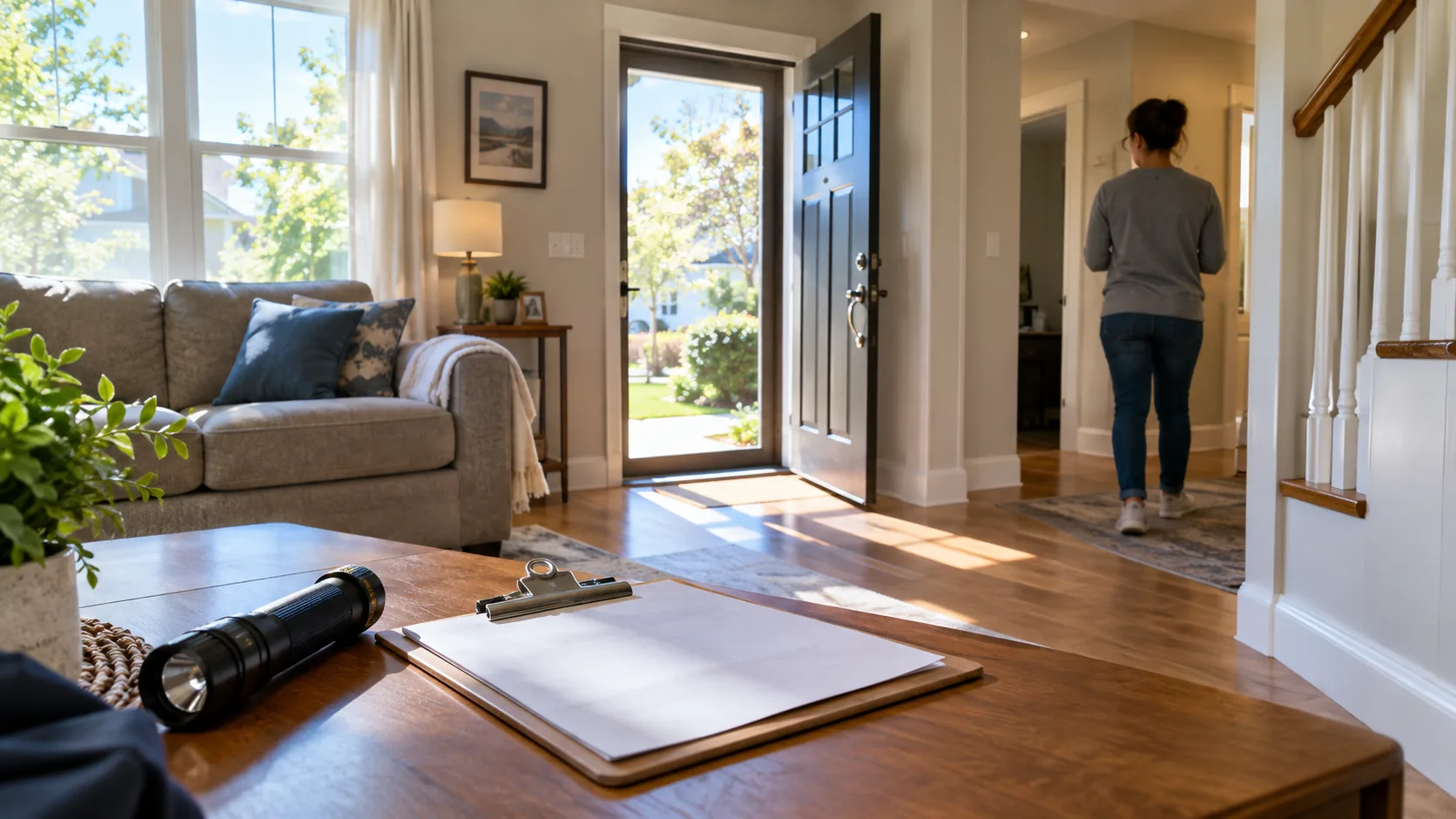
Gather a short pre-inspection kit: a flashlight, a step stool, a notepad or phone for photos, a screwdriver for probing trim, and a plug-in socket tester. If you want to compare meters, our precision measuring and detection tools collection lists what we stock.
Follow each device's manual, turn power off at the breaker before touching anything inside a panel, and ask a licensed electrician or plumber about anything beyond a visual check. Do not climb onto a roof. Look from the ground or with binoculars.
Exterior, roof and foundation
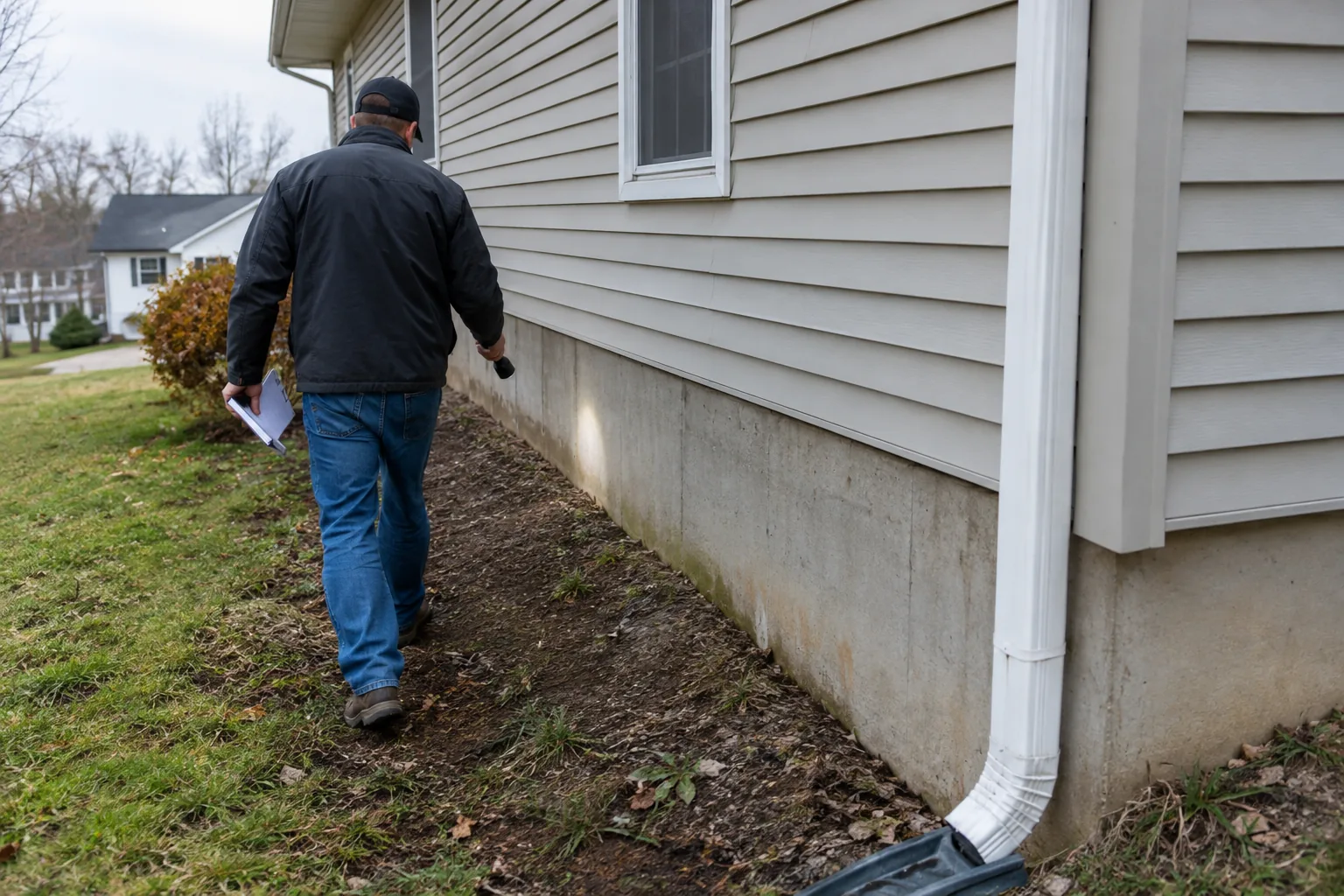
Water is the theme of the outside walk. Inspectors want roofing, gutters, siding and grading to move rain away from the structure.
- Look for cracked, curled or missing shingles and for flashing that has lifted around chimneys and vents.
- Clear gutters and make sure downspouts discharge away from the foundation.
- Check that soil slopes away from the house and that no wood siding or trim touches the ground.
- Press a screwdriver gently into suspect trim, deck posts and sills. Soft wood may point to rot or termites, and an inspector will note it.
- Check steps, railings and deck connections for movement.
For the foundation, look for stair-step cracks in block or brick, horizontal cracks, doors that stick, and gaps where walls meet ceilings. A thin hairline crack is noted differently from a crack that has shifted or leaks. Take dated photos of anything you find so you can show whether it changes.
Windows and doors from outside
Look for failed seals between window panes, cracked glazing and caulk that has pulled away. Open every exterior door and confirm it latches and the weatherstripping is intact.
Attic, basement and crawl space
These are the spaces where small leaks and wiring defects hide, and inspectors spend real time in them. Wear a mask and gloves, watch your footing on joists, and step only on framing.
Attic
Look at the underside of the roof deck for dark stains, rusted nail tips and daylight where there should be none. Insulation should be even, dry and not pushed against the vents in the eaves. Bathroom and kitchen fans should vent outside, not into the attic. Radon is a separate test the inspector may offer as an add-on, since it needs a dedicated measurement.
Basement and crawl space
Check walls and floors for white mineral deposits, peeling paint, musty smell and standing water. Look at the sill plate and joists for stains or soft spots, and at the sump pump if there is one. Make sure the dryer vent and any ductwork are connected.
Is mold checked during a regular inspection? Inspectors note visible growth and the moisture conditions behind it, but lab sampling is a separate service. Your job is to find and fix the water source first.
Electrical: test outlets before the inspector does
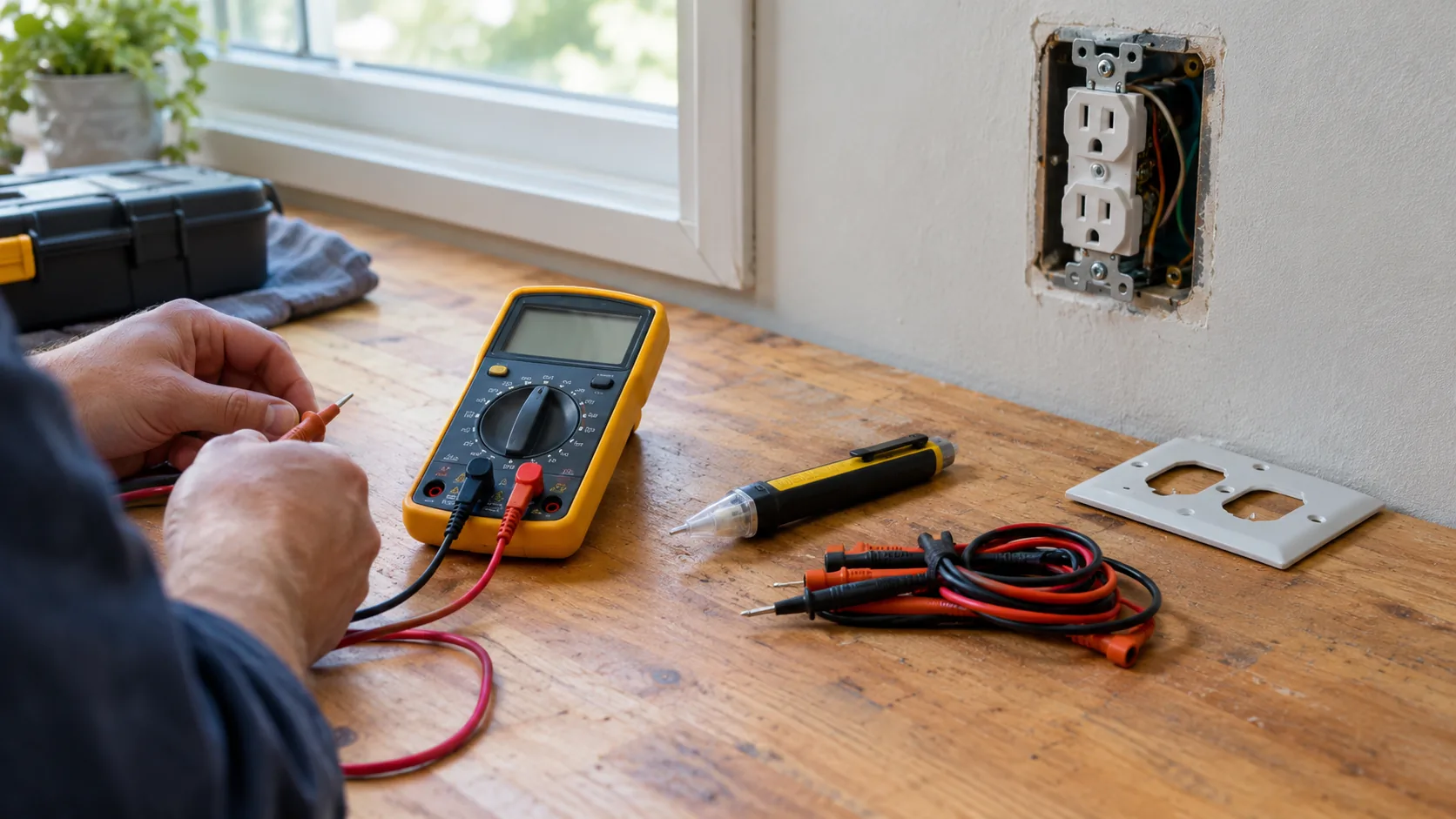
Electrical findings turn up in inspection reports, and outlets are the part you can check yourself. The inspector will test a sample of receptacles, look for GFCI protection near water, and open the panel cover to look at breakers and wiring.
A plug-in tester such as OutletIQ draws power from the outlet, so it needs no batteries. Plug it in and its backlit digital display shows the wiring status and AC voltage. It reads from 48V to 250V, and a standard US outlet is a 120V circuit. It reports conditions such as open ground and reversed polarity, which are the findings you want to catch before an inspector does.
 In this guideOutletIQ$69.99View
Outlet checklist
- Plug the tester into each outlet in every room, including garage, exterior, laundry and basement.
- Read the wiring status and the voltage on the display and write down the room and outlet location of any fault.
- At kitchen, bathroom, garage, exterior and basement outlets, press the dedicated RCD button on the tester to see whether the protective device trips. Then press the test and reset buttons on the GFCI outlet itself.
- Check that cover plates are present and not cracked, and that no outlet is loose in the wall.
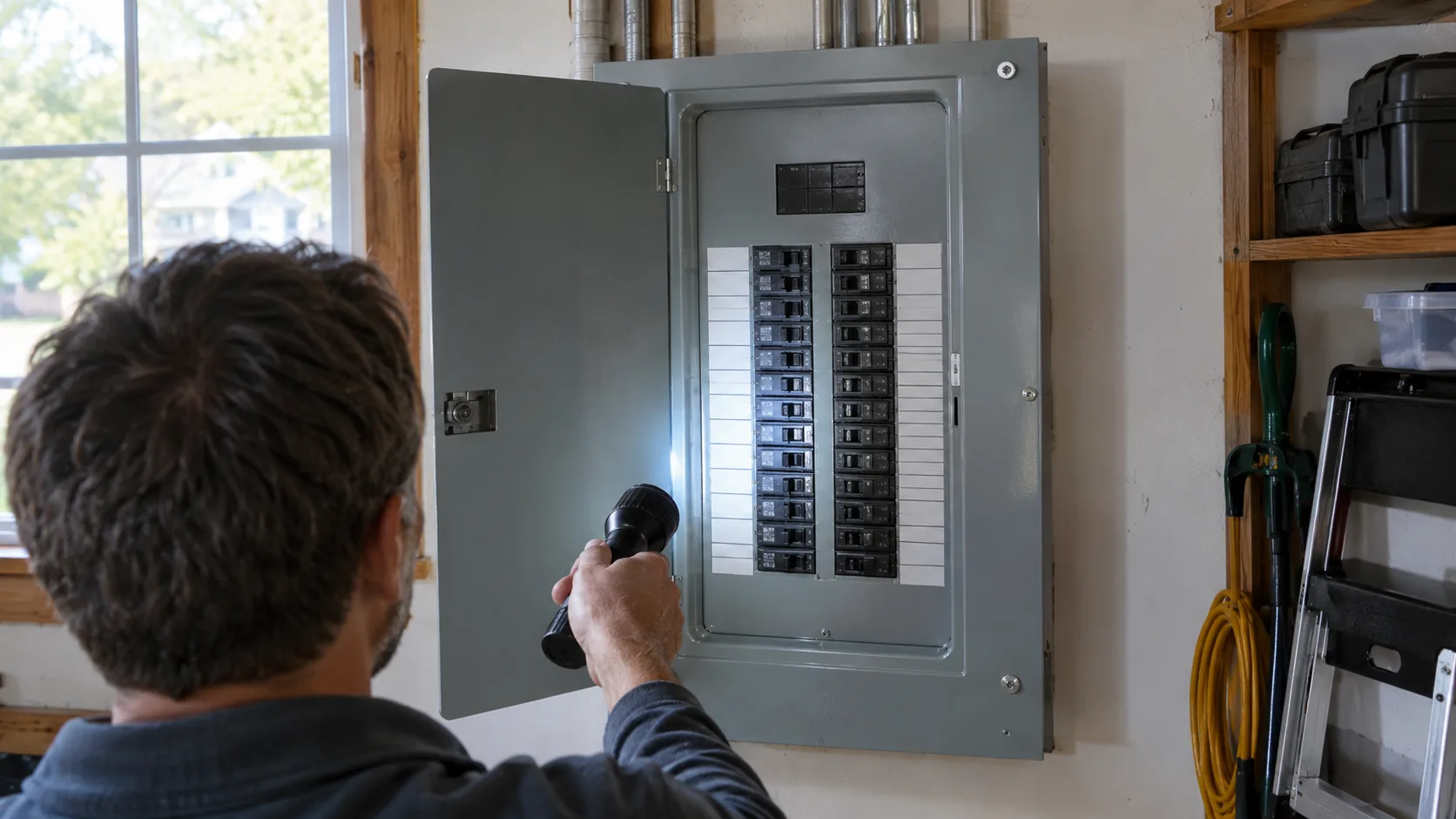
- Look at the panel exterior: labeled circuits, no rust, no missing knockout covers. Do not remove the panel cover yourself.
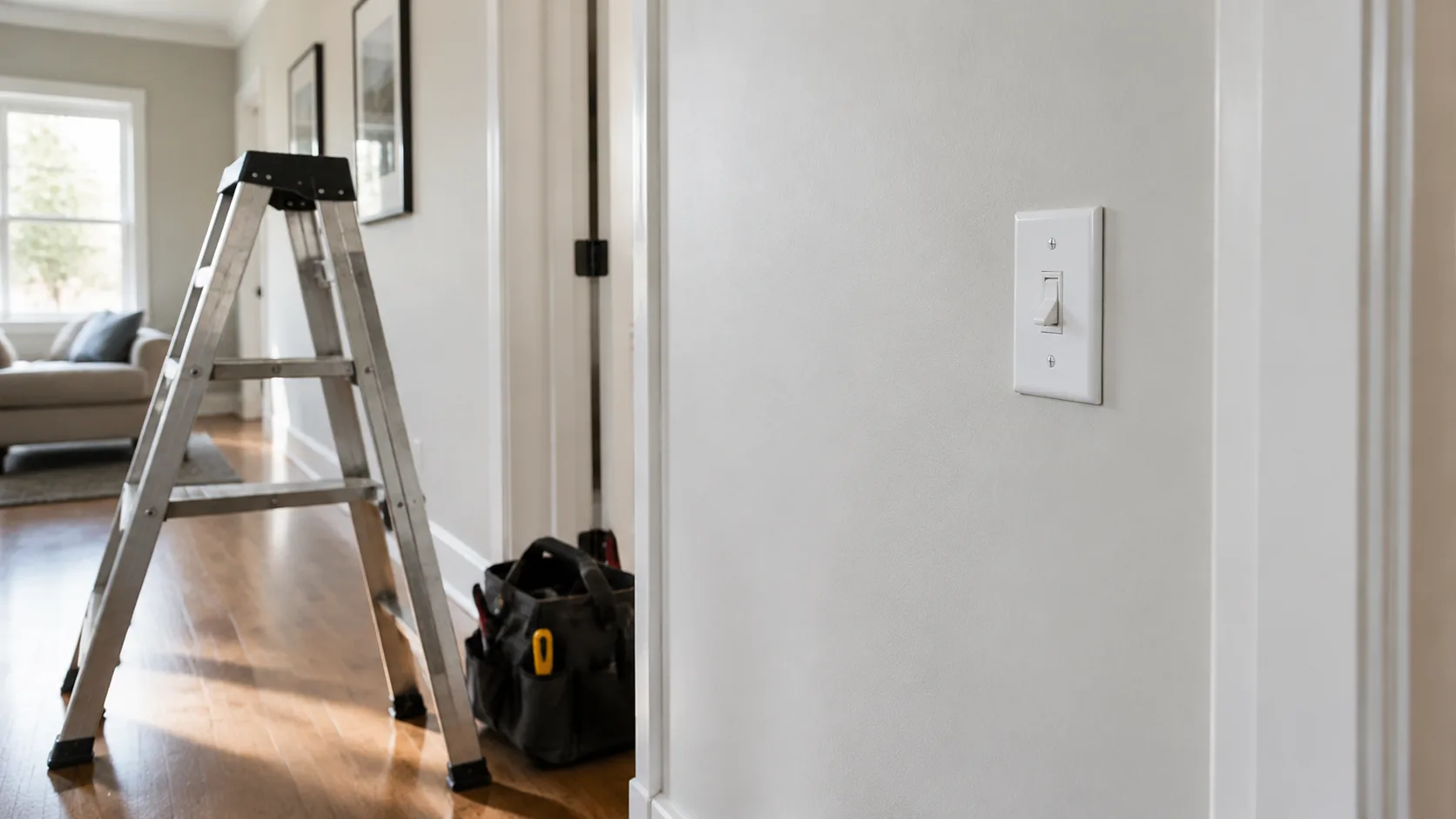
A fault flagged by the tester should go to an electrician. If a breaker keeps tripping, read how to reset a breaker and find what keeps tripping it. If a switch does not work, how to wire a light switch explains single-pole and 3-way wiring, though anything inside a box is a job for a licensed electrician if you are unsure.
Field note
Test outlets in a consistent order, left to right around each room, and note the results in the same order. A written list of faults gives the electrician a clear starting point.
Plumbing and moisture: find damp spots first
Inspectors run water at every fixture, flush toilets, check drains and look at supply lines, the water heater and any visible pipes. Water intrusion can lead to repair requests, and it is easy to miss when a stain has been covered with paint.
Fixtures and pipes
- Run each faucet hot and cold and check for drips at handles and under sinks.
- Fill and drain each sink and tub and watch for slow drains.
- Flush every toilet and check that it does not rock and the base is dry.
- Look at the water heater for rust, corrosion at connections and a discharge pipe on the pressure valve.
- Look under cabinets for swollen particleboard, stains or a musty smell.
Checking walls, floors and trim for damp spots
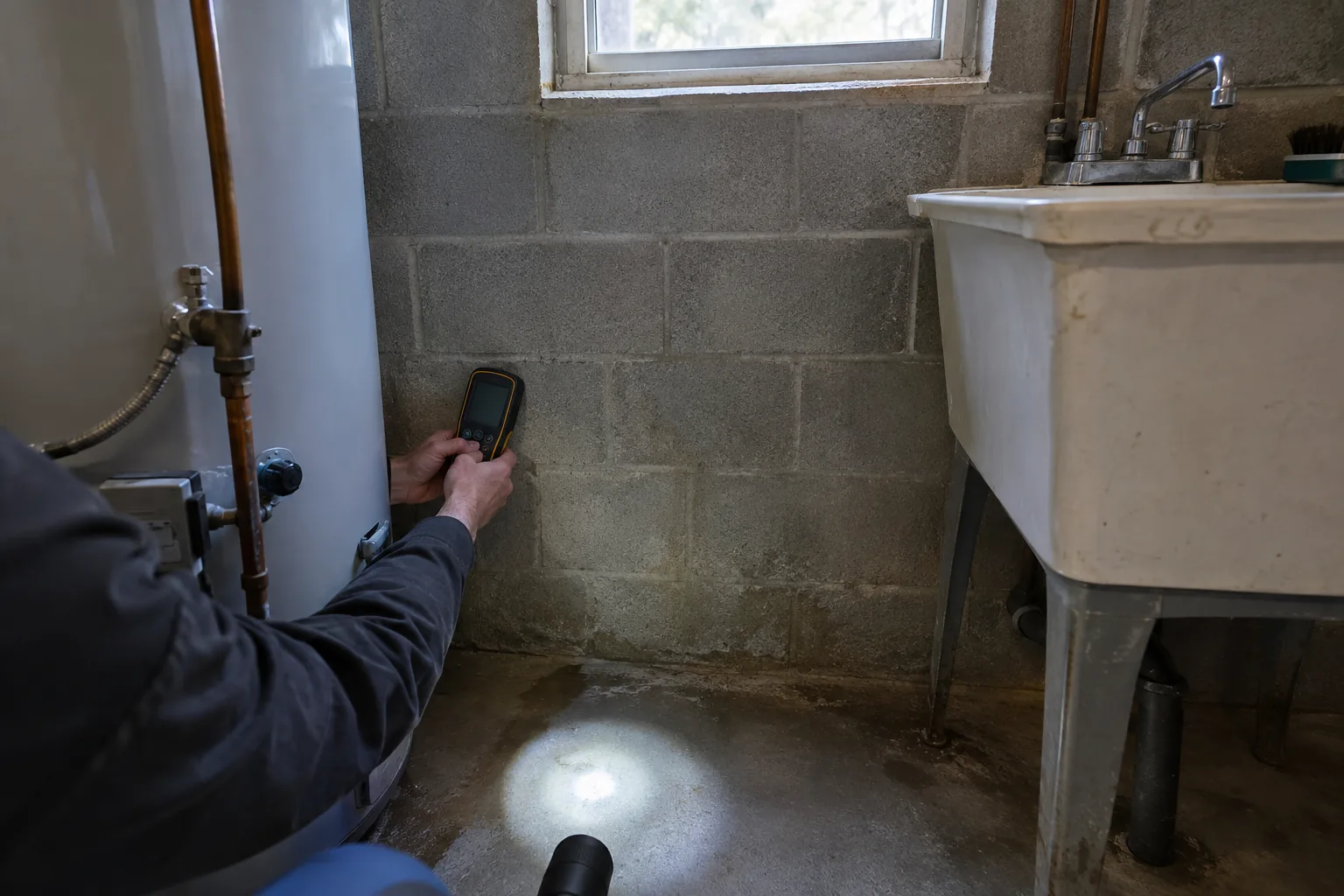
Check the spots where water collects: under sinks, around tubs and showers, along the base of exterior walls, below windows, under the water heater, and on basement walls. Shine a flashlight along the surface at a low angle to show bubbling paint, ripples in drywall and stains with a darker edge.
Press gently on soft-looking baseboards, door jambs and subfloor edges with a screwdriver tip, and touch the area with the back of your hand to feel for a cool, damp surface. Photograph anything you find with the date. Look for the source, such as a pipe fitting, a gutter or grading, and repair it before drying the area. For a hidden or large damp area, ask a plumber or a moisture specialist to look.
Interior rooms, alarms and heating and cooling
Inside, the inspector goes room by room. Doors should open and latch, windows should open, lock and stay up, floors should be reasonably level, and ceilings should be free of stains. Cosmetic issues are not the focus, but water stains, cracked ceilings and sticking doors raise questions about what is behind them.
Room-by-room checklist
- Bedrooms: window operation, closet doors, outlets, ceiling condition, alarm.
- Kitchen: sink and drain, dishwasher connections, range hood, GFCI outlets, under-sink area.
- Bathrooms: exhaust fan, toilet, tub or shower caulking, tile condition, GFCI outlets.
- Living areas: floors, fireplace and damper, ceiling stains, switches, outlets.
- Laundry: supply hoses, dryer vent, floor drain, outlet.
- Garage: door opener operation, the door to the house, exterior outlets.
Smoke alarms
Press the test button on each alarm and replace any that do not sound. Look for alarms in each bedroom, in the hallway outside sleeping areas, and on each level, and check the date printed on the back of each unit. A connected unit such as NovaSentry mounts to the ceiling with the included bracket and screws, connects to your WiFi through the free companion app, and has an 80dB alarm. Its listed coverage is 20 square meters (about 215 square feet) per unit. The setup steps do not call for an electrician. Install carbon monoxide alarms separately according to their manuals.
 In this guideNovaSentry$99.99View
Heating and cooling
Replace dirty filters, clear vegetation and debris from around the outdoor condenser, and run the system in both heating and cooling mode. Look for rust, water around the furnace and unusual noise. If the fireplace is used, check that the damper opens and ask a chimney sweep about the flue, since the inspector will only look at what is visible.
Things that fail a home inspection, and what inspectors skip
An inspection is not pass or fail. Still, some findings can lead to repair requests or a renegotiation, so knowing what a home inspector looks for helps you fix them first.
| Finding | Why it matters | What to do before the visit |
|---|---|---|
| Water stains or damp spots | Points to a leak or drainage problem | Find the source, repair it, then recheck |
| Open ground or reversed polarity | Wiring defect at the outlet | Have an electrician correct it |
| No GFCI protection near water | Missing protective device | Ask an electrician to add or replace it |
| Missing or dead smoke alarms | Alarm coverage gap | Install and test alarms |
| Grading toward the house | Water reaches the foundation | Regrade and extend downspouts |
| Old or damaged roofing | Possible leaks | Ask a roofer for an assessment |
| Blocked access | Systems cannot be inspected | Clear panel, attic and water heater areas |
What inspectors do not look for
Inspectors do not open walls, move furniture or stored items, or go into areas that are hard to reach. Septic systems, radon, termites, mold sampling and sewer lines are specialist add-ons. Cosmetic items such as paint color are outside the scope unless they point to a defect.
How long does a home inspection take?
Plan for a few hours, and longer for a larger house or one with an attic, crawl space or outbuildings. Be ready to leave the home if the inspector asks.
Day-of checklist
- Clear access to the panel, attic hatch, water heater and furnace.
- Turn on all utilities and pilot lights.
- Replace burned-out bulbs, since a dead fixture can look like a wiring fault.
- Replace furnace filters and alarm batteries.
- Leave your notes and repair records for the inspector.