Electric Tester Types: Which One for Outlets, Wires and Cars
An electric tester is any tool that detects or measures voltage, wiring state or continuity. Match the type to the job: outlet, wire, appliance or car circuit.
The Quindrel Team
November 13, 2026 · 6 min read
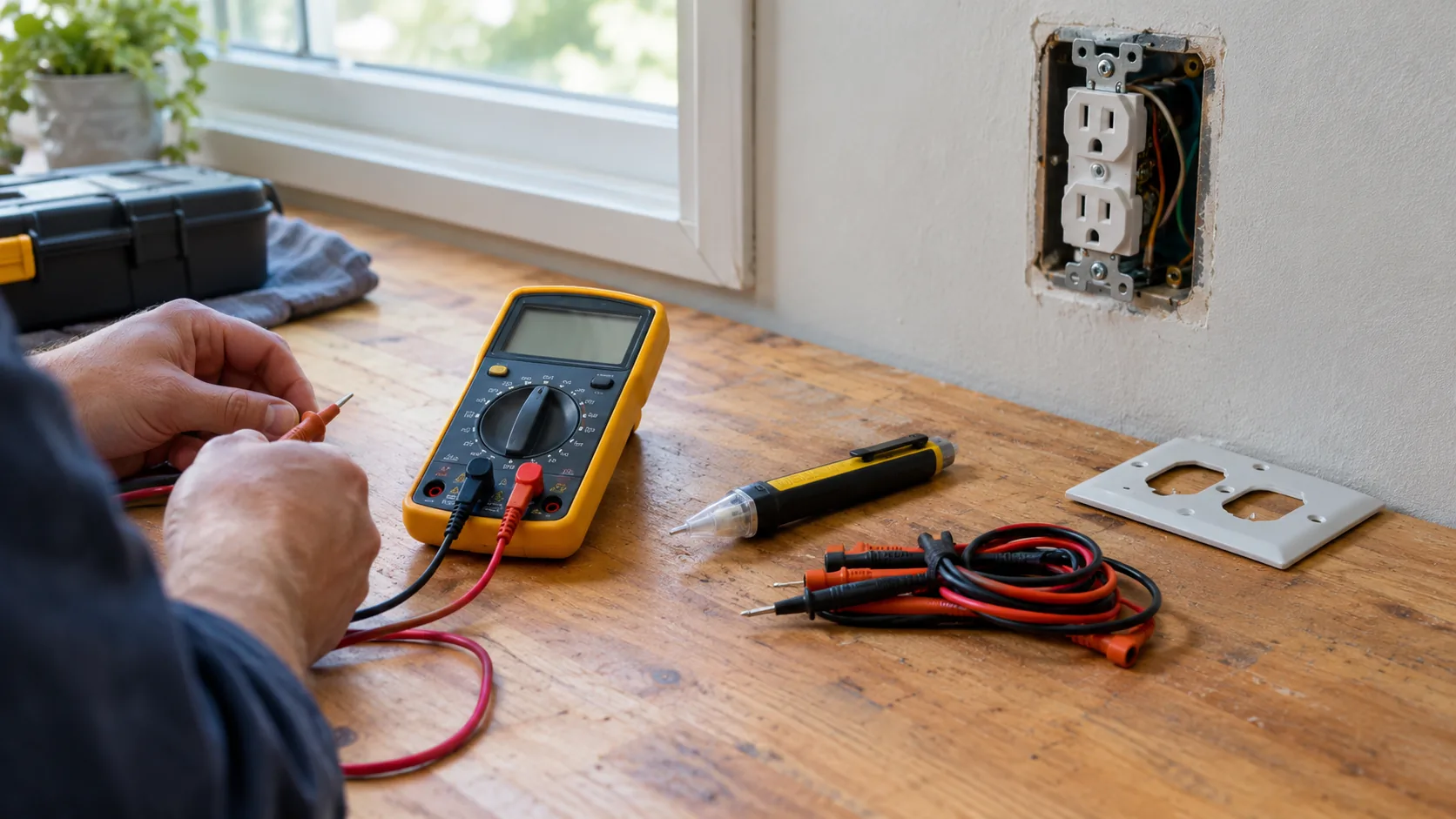
An electric tester is a tool that detects or measures electricity so you can check an outlet, a wire or a vehicle circuit before you work on it. There is no single tool for every job: a non-contact pen detects voltage, a plug-in outlet tester checks wiring, a multimeter measures values, and an automotive circuit tester probes 12V and 24V systems.
This guide matches each type to the task, then walks through how to choose one and the mistakes to avoid.
What an electric tester is and what it is called
The name changes with the tool. You will see voltage tester, voltage detector, tester pen, socket tester, circuit tester or multimeter, and each means a slightly different device. Shop categories lump them together as electrical testers, which is why the choice looks confusing.
What they share is a purpose: show whether voltage is present, whether wiring is connected correctly, or what a circuit is carrying. What differs is how much detail you get and where the tool is meant to be used.
Electric tester types matched to the job
Use this table first. Find the task in the left column and read across to the tool type.
| Job | Tester type | What it shows | Where it fits |
|---|---|---|---|
| Is this wire or outlet live? | Non-contact voltage detector (pen) | Presence of voltage, usually with a light or beep | Household wiring, cords, switch boxes |
| Is this outlet wired correctly? | Plug-in outlet tester | Wiring status, AC voltage, protective device trip | Wall outlets |
| How many volts, amps or ohms? | Multimeter | Numeric readings, continuity, resistance | Home circuits, batteries, appliances, cars |
| How much power does a device draw? | Plug-in energy meter | Voltage, amperage, wattage, running cost | Appliances and chargers |
| Which way does current run in a car circuit? | Automotive circuit tester | Voltage, resistance, polarity, component activation | 12V and 24V vehicle wiring |
If you only buy one tool for the house, a multimeter covers the most ground. A pen or outlet tester adds a first look, and the car tester is for vehicle work only.
Testing outlets: what electricians reach for
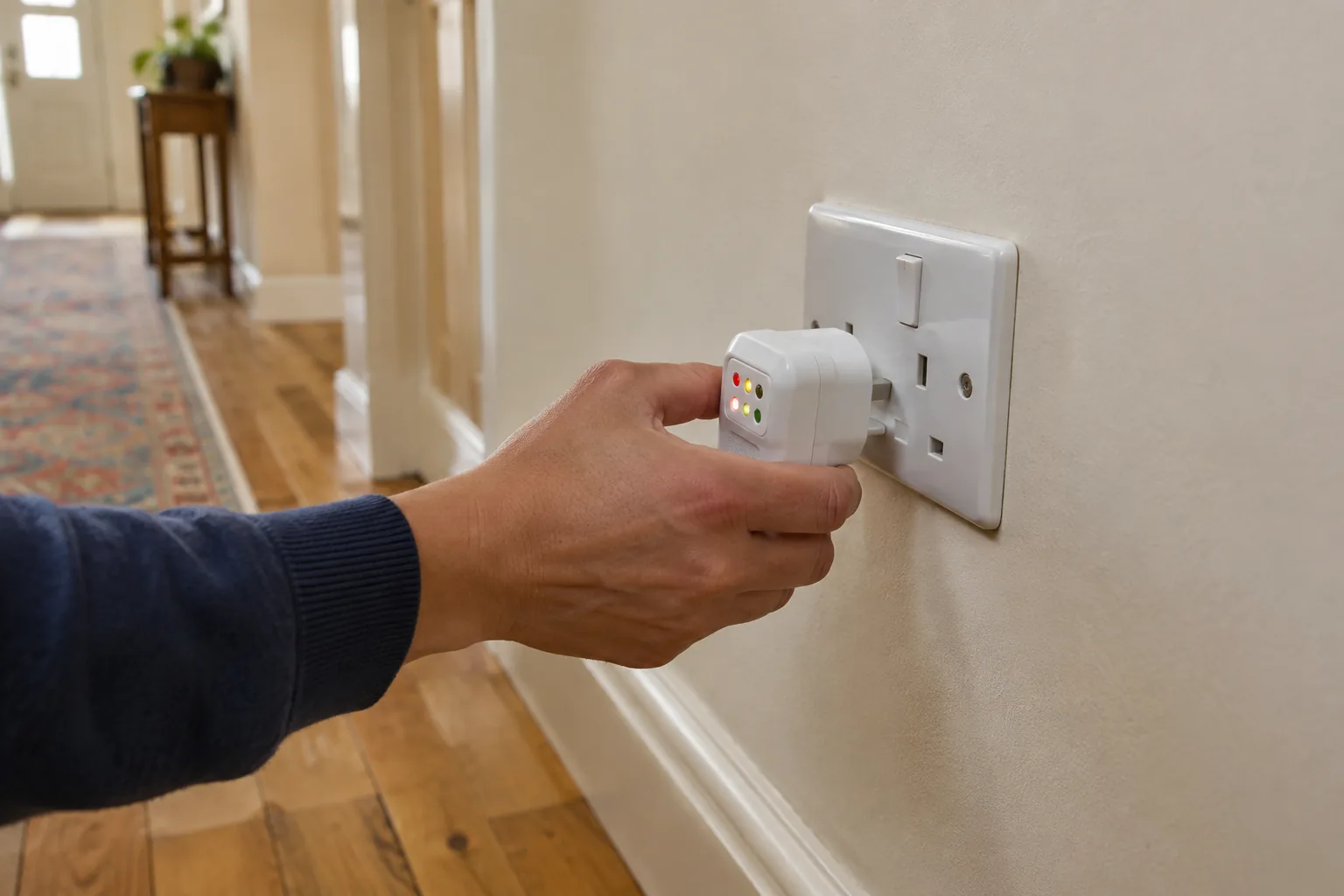
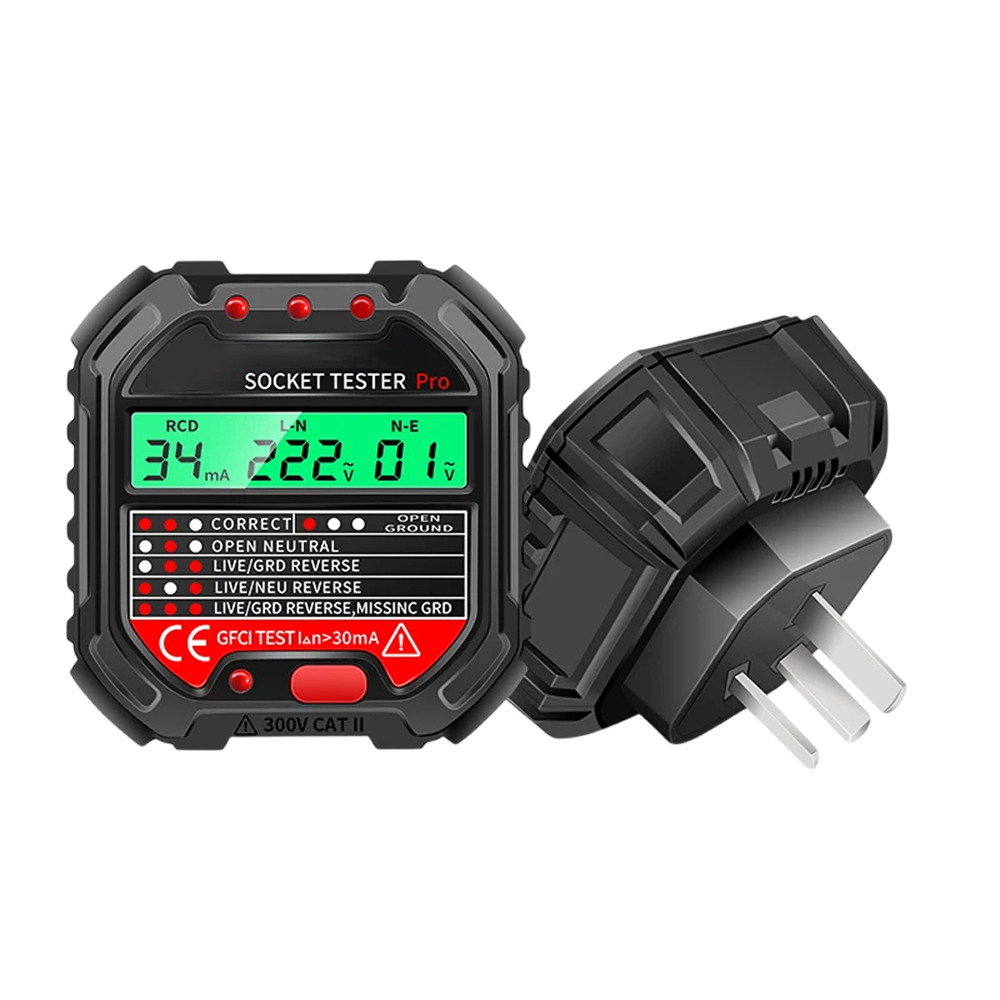
For a look at a wall receptacle, electricians use a plug-in outlet tester. You push it into the socket and it reports the connections between hot, neutral and ground. It can flag conditions such as an open ground or reversed polarity before you connect equipment.
A pen detector can tell you an outlet is live, but not whether the wiring behind it is correct. A multimeter gives exact voltage but takes more steps. The plug-in tester is the tool built for the wiring question.
A plug-in option
OutletIQ is a plug-in socket tester with a backlit digital display. It shows the wiring status and reads AC voltage from 48V to 250V, and it takes its power from the outlet, so it needs no batteries. A dedicated button lets you check RCD protection, which is the protective device that trips on a fault.
 In this guideOutletIQ$69.99View
The backlit screen helps in a dark closet or crawl space. Keep the tester in its box between jobs so the prongs and screen stay clean, and follow the manual for the RCD button.
Testing wires, switches and household circuits
Wires behind a wall or inside a switch box call for a different approach than outlets. Two tools do most of the work.
Non-contact pen
Hold the tip near a cord, wire insulation or a switch box, and the non-contact pen signals when it senses voltage. It is a first check, not a measurement. Check the pen on a known live outlet first so you know it responds, and remember that a quiet pen does not confirm a wire is dead.
Multimeter
A multimeter shows a number. Set the dial to AC or DC volts, place the probes on the two points, and read the display. It also checks continuity, so you can find a broken wire or a failed switch with the power off. Our guide to using a digital voltage meter on 12V and household circuits covers the dial settings and probe placement, and how to wire a light switch shows where a test fits into a real wiring job.
Turn the breaker off and confirm with a tester before touching wires. If anything looks damaged or unfamiliar, ask an electrician.
Checking appliances and chargers
Sometimes the question is not whether a circuit works but how much a device draws. A plug-in energy meter sits between the outlet and the appliance and displays voltage, amperage, wattage and running cost once you enter your utility rate per kWh.
Our store carries one such meter, but its input is specified for 230V and 19A, so it does not match a standard 120V US outlet. We leave it out of this guide; check the plug type and voltage rating on any energy meter before you buy. To understand the readings, what the unit of measure for power is explains watts and how they are measured.
Car circuits: the automotive circuit tester
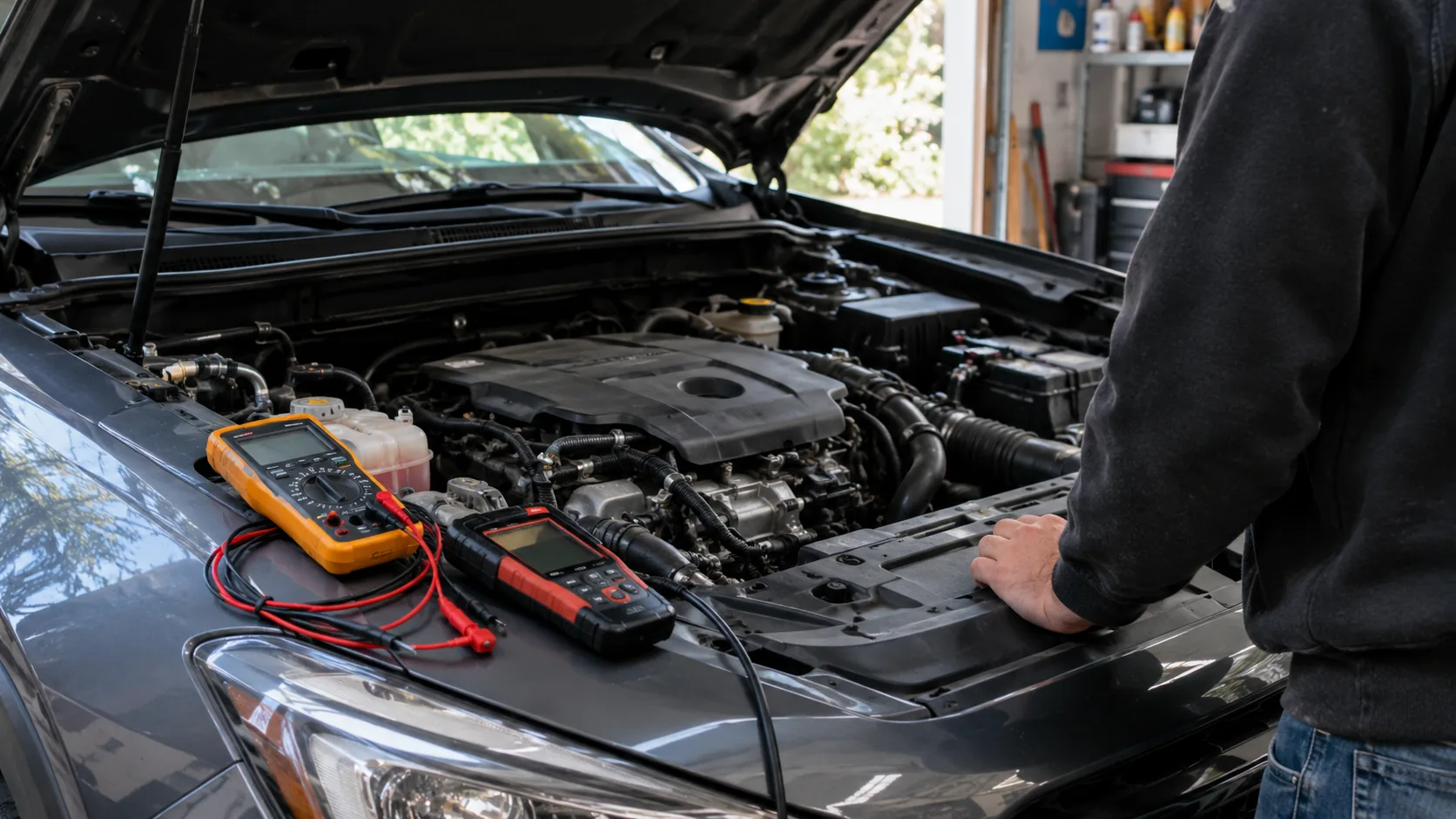
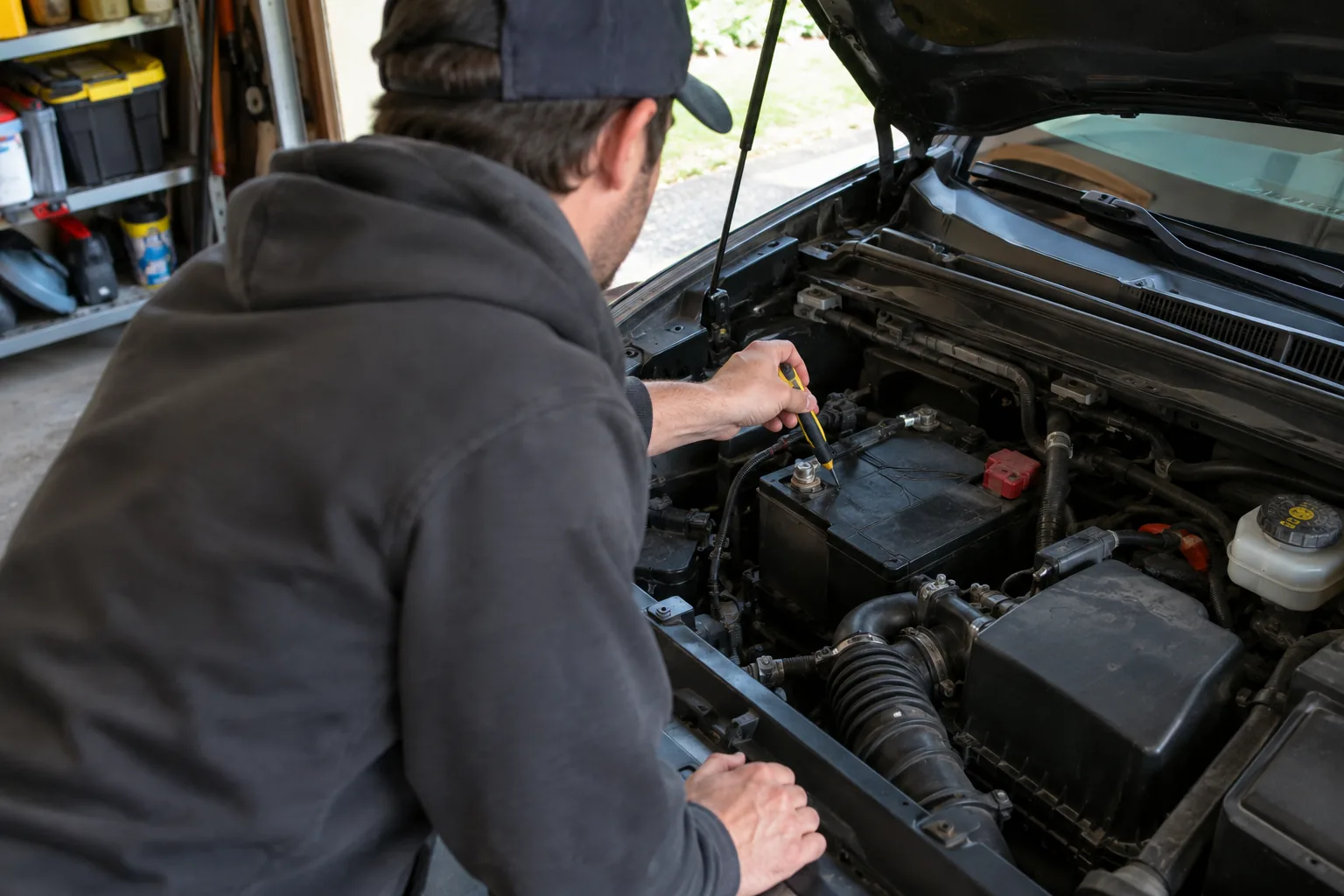
A household pen or outlet tester does not suit a vehicle. Cars run on direct current at 12V, and heavy trucks can run at 24V. An automotive circuit tester is built for that work: it has a probe and leads that clip to the battery, and it shows voltage, resistance and polarity at the wire or connector you touch.
This type also helps with components. Instead of running jumper wires to a fan or light, you can trigger it from the probe tip, which lets one person do the job. If your diagnosis points at a relay, see how to test a 4-pin and 5-pin automotive relay.
An automotive option
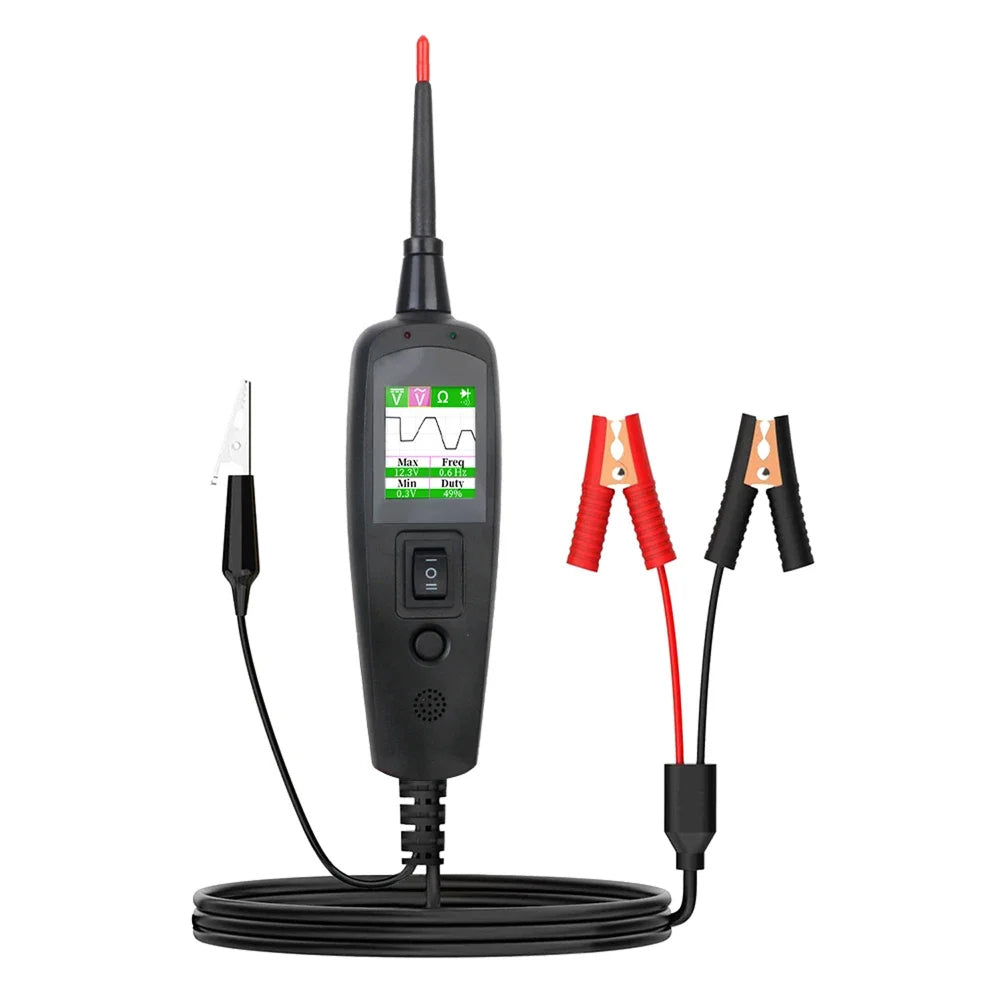
FaultLynk is an automotive circuit tester with a probe, a color display and dual-color LEDs. You power it by clipping the probe leads onto the vehicle battery terminals. Red and green LEDs show polarity on connection, and the Mode menu shows voltage, resistance or waveform readings. It works on 12V and 24V systems, and internal protection blocks short circuits and reverse polarity.
 In this guideFaultLynk$129.99View
Field note
Before you probe any car wire, clip the tester to the battery and check that the polarity LED matches what you expect. Catch a wrong connection at the start, before you probe further.
How to choose an electric tester: decision steps
- Write down the job: outlet, wire, appliance or vehicle.
- Decide if you need a yes/no answer or a number. A pen gives yes/no; a multimeter gives numbers.
- Check the voltage range. Household work is AC; car work is DC at 12V or 24V.
- Check the power source. Some testers take power from the outlet, some from a battery, some from the vehicle.
- Look at the display. A backlight matters in dark spaces; a color screen helps when menus carry several readings.
- Confirm the tool matches US outlets and voltage before buying.
To browse the range, the Electrical & Signal Testers collection groups these tools in one place.
Starter kit for a home
For general home use, a pen detector plus a plug-in outlet tester covers the first checks. Add a multimeter when you need exact readings or continuity. Keep vehicle work on a separate automotive tester.
Common mistakes and safety checks
- Using a pen as the only check that a circuit is off. Confirm with a second method, such as a meter reading zero volts.
- Skipping a check of the tester on a known live source.
- Setting a multimeter to the wrong mode or leaving probes in the amp jack when measuring voltage.
- Using a household tester on a vehicle, or a 12V tool on mains wiring.
- Ignoring the manual. Each tool lists its voltage limits and steps.
Electrical work carries real hazards, so follow the manual, turn the power off at the breaker where the job allows, and call an electrician for anything beyond a simple check. For a broader walk-through of home electrical checks, the DIY pre-inspection checklist shows where outlet and wiring tests fit.
Care between uses
Wipe dust from prongs and probe tips, store leads loosely coiled, and replace damaged leads rather than taping them. For battery-powered testers, install batteries according to the manual.