Changing Car Oil at Home: Lifting, Draining and Refilling
Changing car oil at home follows one order: support the car, drain, replace the filter, refill, then check torque, oil level and leaks. This is the full checklist.
The Quindrel Team
November 23, 2026 · 7 min read
Changing car oil at home follows one fixed order: lift and support the car, drain the old oil, replace the filter, refill with the grade your owner manual lists, then check torque, oil level and leaks. Work on a firm, level surface with the engine cool enough to touch.
The sections below give the tools, the oil choice, the ten steps and the final checks in the order you need them.
What to have on hand before you start
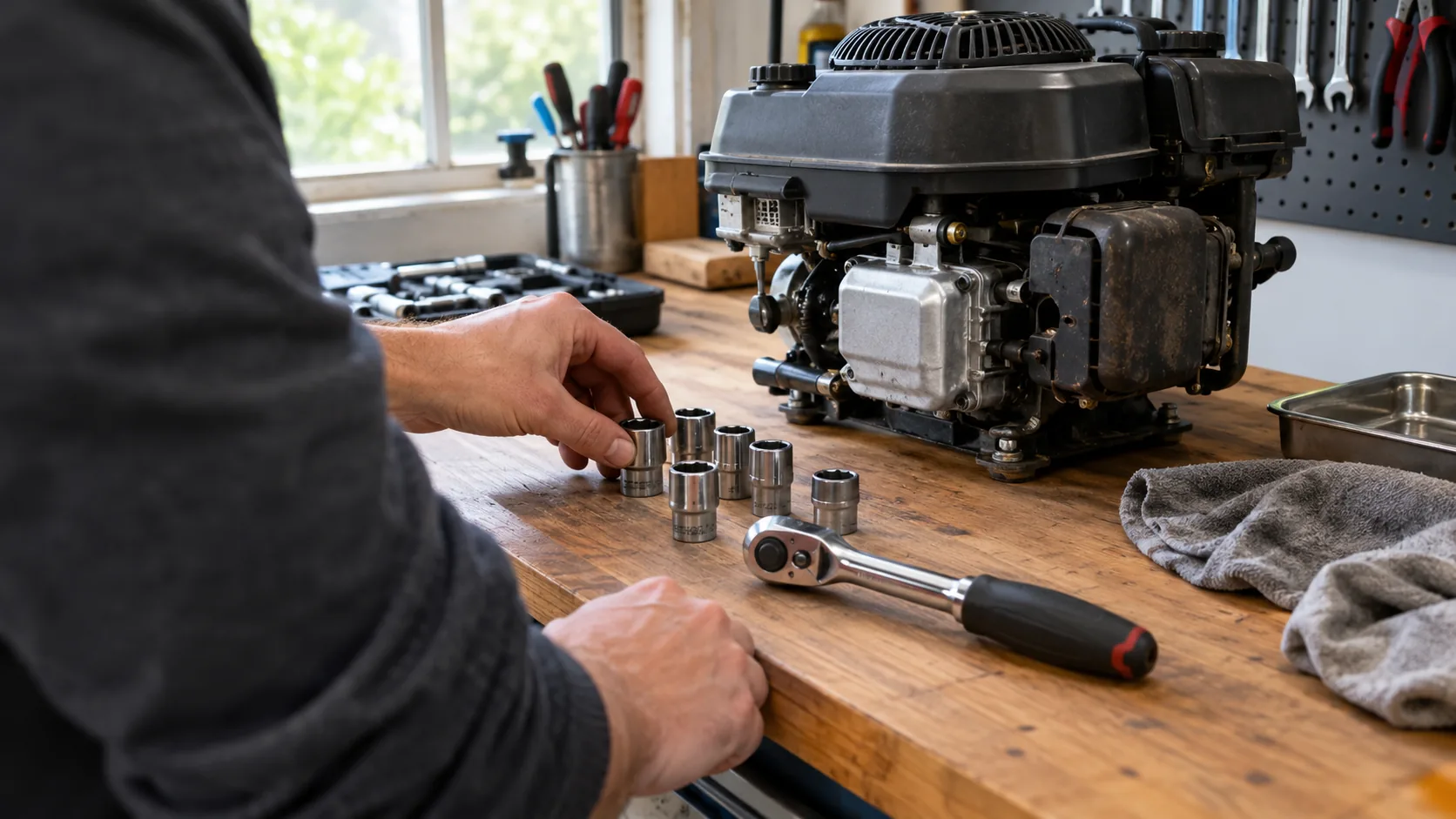
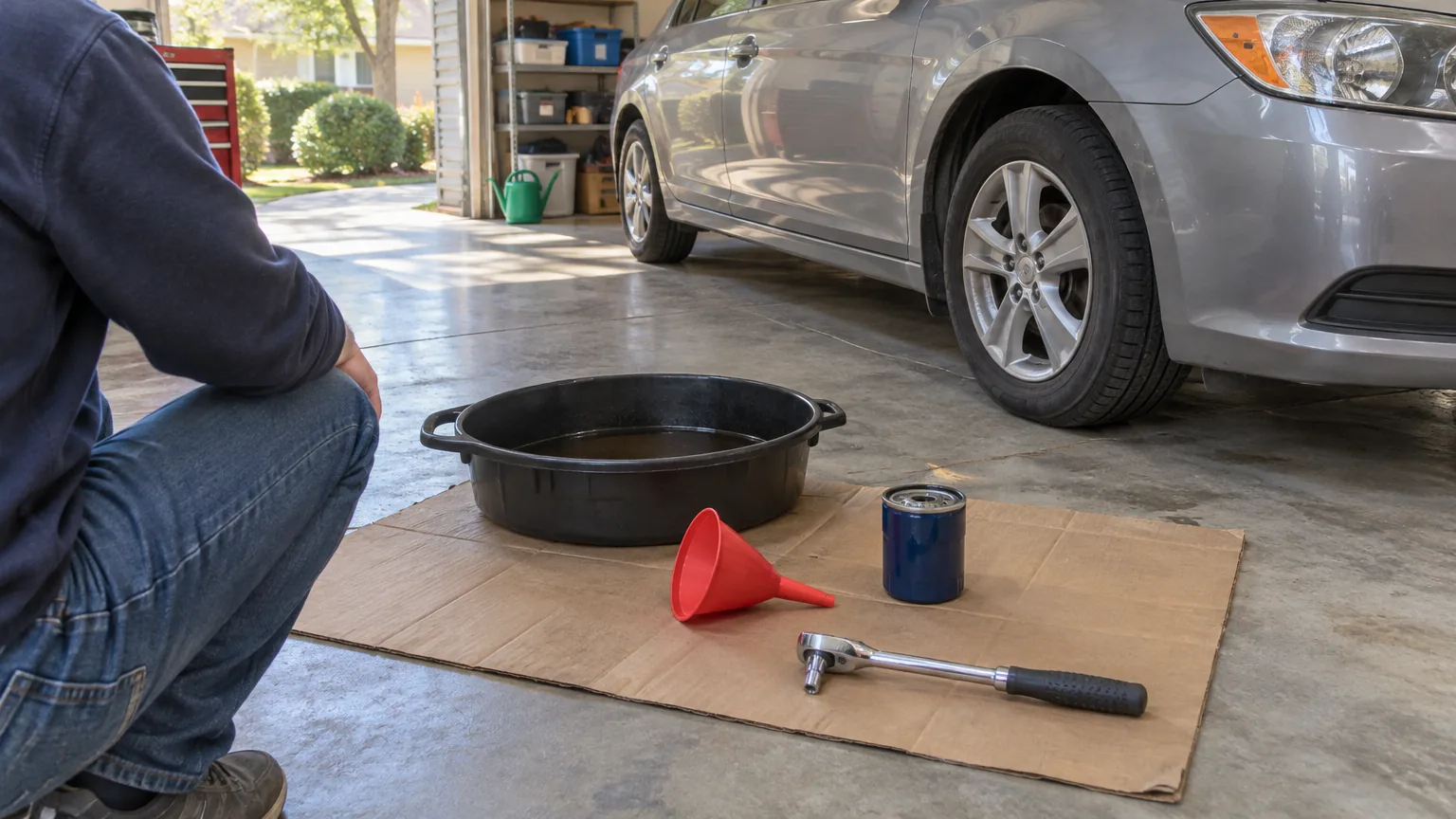
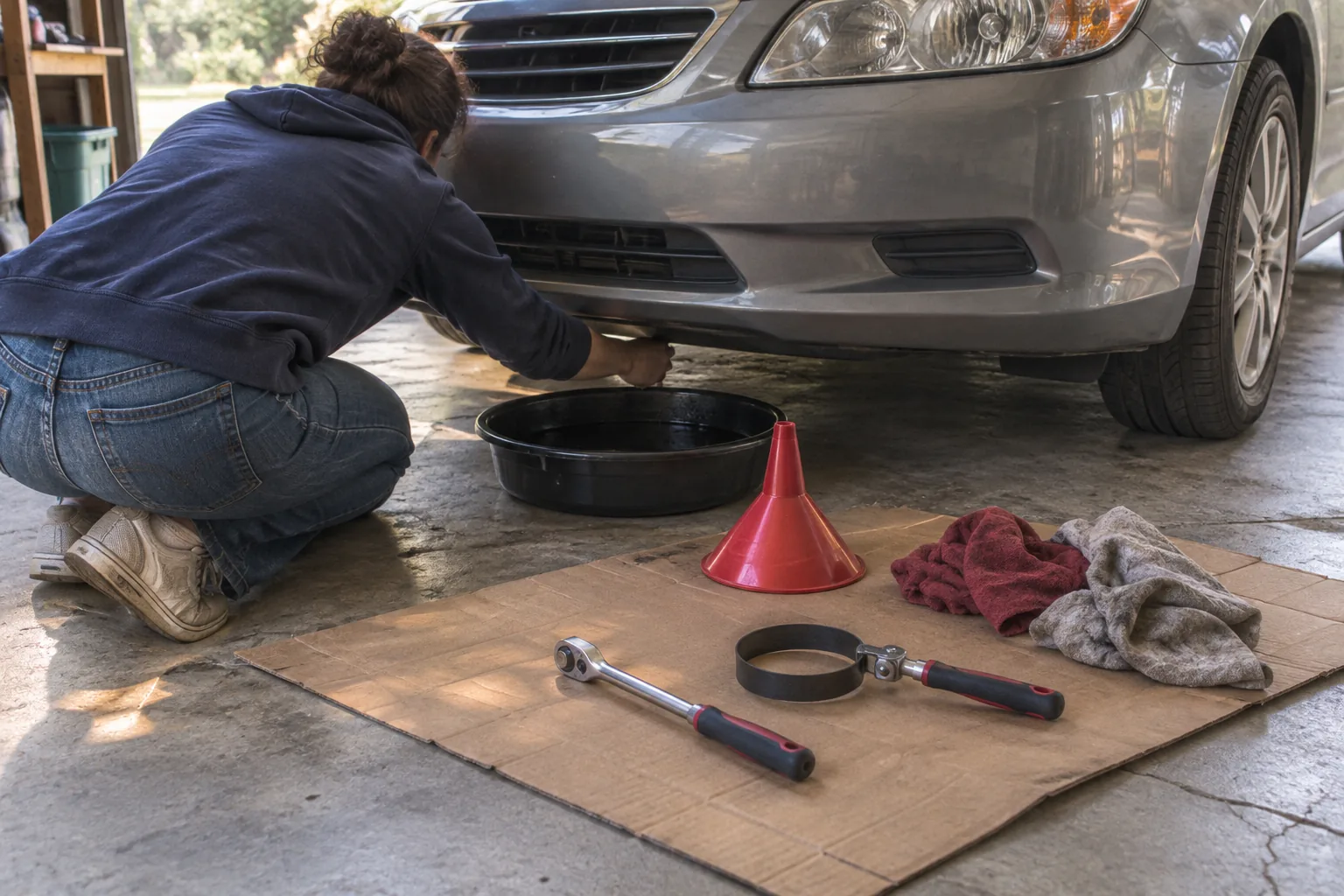
Lay everything out before you loosen anything, because the drain pan goes under the car before the first drop falls. Hand tools are in our Hand & Power Tools collection. If you are unsure which way a ratchet turns, How to Work a Socket Wrench covers the ratchet, sockets and direction.
| Item | What it does |
|---|---|
| Jack stands or drive-on ramps | Hold the raised car in place while you work underneath |
| Wheel chocks | Block the wheels that stay on the ground |
| Drain pan | Catches the old oil; pick one larger than the oil capacity listed in the manual |
| Socket set and ratchet | Fits the drain plug; check the plug head against your sockets |
| Oil filter wrench | Loosens the old filter |
| Torque wrench | Tightens the drain plug to the value the manual lists |
| New oil filter and drain plug washer | Match the filter to your engine; use a new washer if the manual calls for one |
| Funnel | Guides new oil into the fill opening |
| Engine oil | Grade and type from the manual |
| Safety glasses and gloves | Worn while you loosen the plug and the filter |
| Rags and a sealable container | Wipe up spills and carry used oil to a collection site |
Choose the oil: viscosity, car synthetic oil and the manual
The oil cap and the owner manual list the viscosity grade and the oil specification for your engine. Match both for your exact engine. Do not choose by habit or by what the last owner used.
Conventional oil, a synthetic blend and car synthetic oil are sold in the same grades. If the manual calls for car synthetic oil, buy it; if it lists a specification code, find that code on the bottle label. The manual also lists the oil capacity, which tells you how much to buy. Buy the matching filter at the same time.
For timing, the manual gives a mileage interval and a time interval, and you change the oil at whichever comes first. A car that sits most of the year still needs the time-based change. Some modern vehicles have an oil life monitor; the manual states the reading at which to schedule the change, and the same goes for a new car's first change.
Lift and support the car
Park on level concrete, set the parking brake and chock the wheels that stay on the ground. Find the lift points in the manual; they are the spots built to take the car's weight.
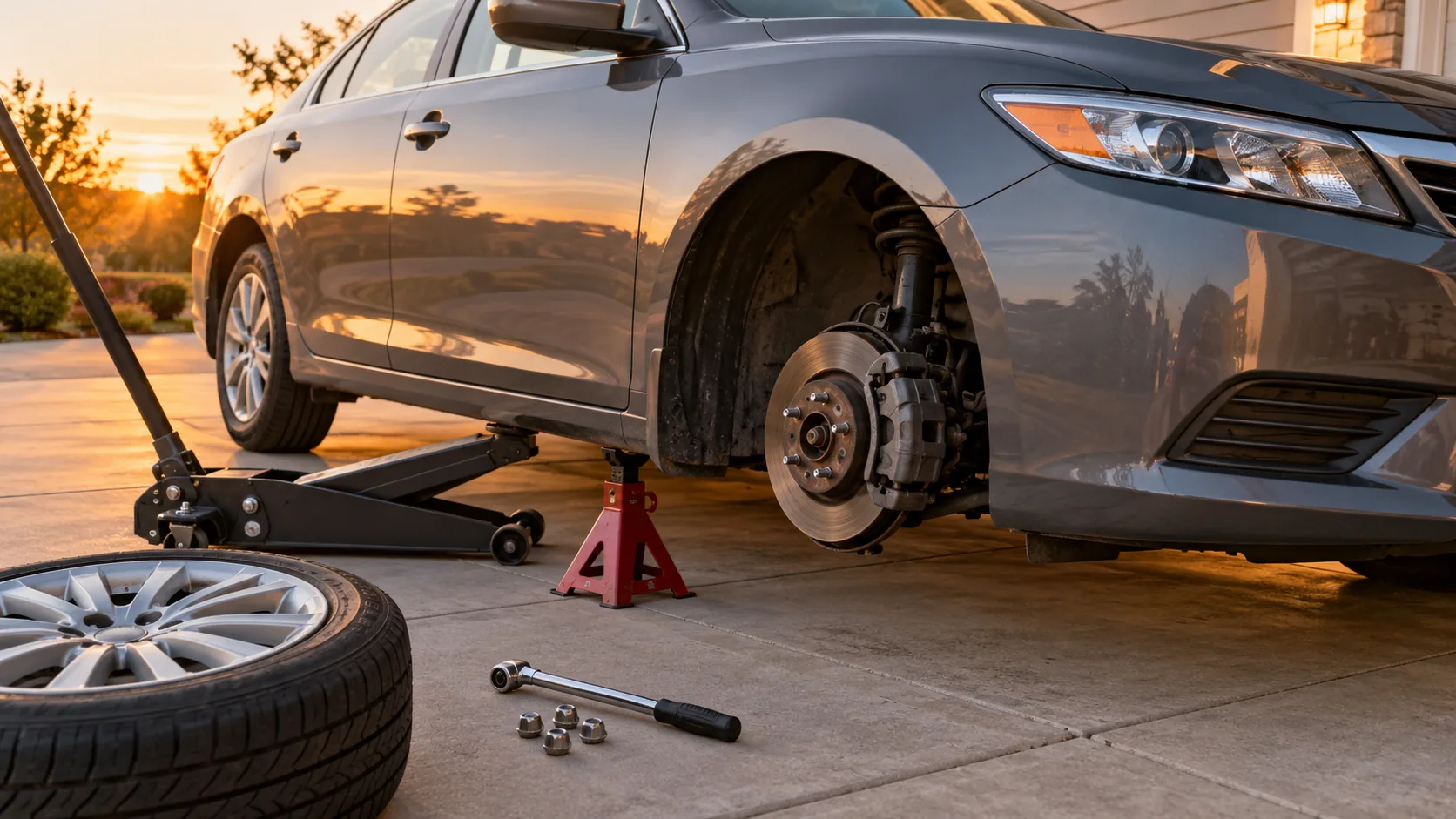
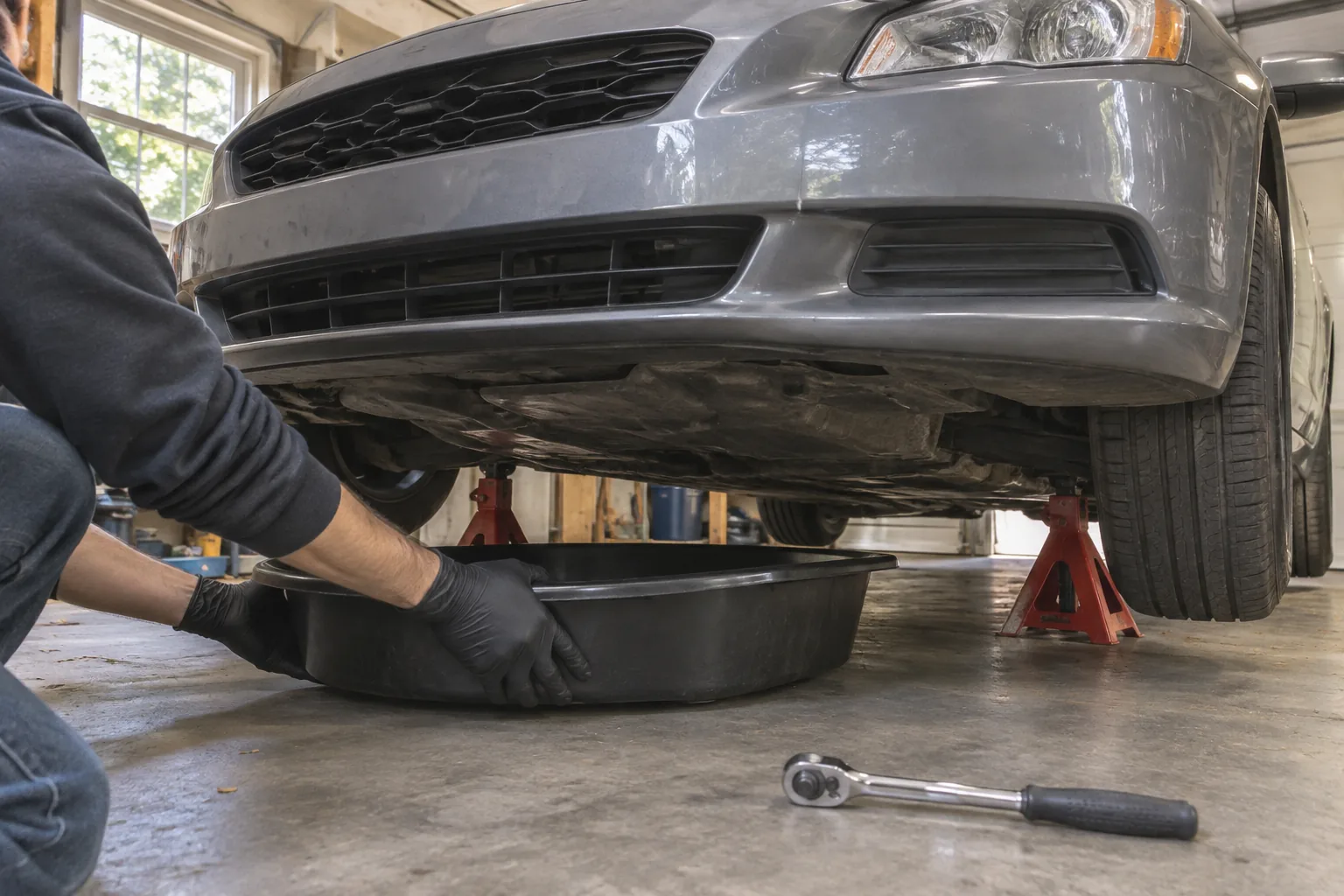
A jack lifts, but jack stands hold. Raise the car at the lift point, set the stands under the points the manual lists, then lower the car onto them. Give the bumper a light push to see that the car sits steady before you slide underneath.
With drive-on ramps, line up straight, drive up slowly, set the parking brake and chock the rear wheels. If you do not have a firm, level surface, or the stands or ramps do not fit your car, have a licensed mechanic do the job.
Field note
Write the date, odometer reading and oil grade on a sticker or in a notebook after each change, so the numbers are on hand when the next one comes due.
Changing car oil step by step
This is the order, from the manual to the final check:
- Read the manual for the oil grade, oil capacity, filter type and drain plug torque.
- Run the engine briefly, then switch it off and let it cool until you can touch the oil pan.
- Chock the wheels, lift the car and set it on stands or ramps.
- Put on safety glasses and gloves, then slide the drain pan under the drain plug.
- Loosen the drain plug with the right socket. Turn the last few turns by hand and pull the plug straight away from the stream.
- Let the oil drain until it slows to drips.
- Wipe the plug and the opening, fit a new washer if the manual calls for one, thread the plug in by hand, then tighten it with the torque wrench to the manual's value.
- Move the pan under the filter, loosen the old filter with the filter wrench and let it drain. Check that the old rubber gasket came off with it.
- Wipe the mounting surface, coat the new filter's gasket with a little fresh oil, thread the filter on by hand and tighten it as the filter's instructions say.
- Lower the car, remove the oil cap, set the funnel and pour in most of the capacity listed in the manual. Pause, read the dipstick, then add oil until the level sits between the two marks.
The drain plug and the filter housing take specific socket sizes, and Metric Socket Set: Sizes, Drives and What You Need explains sizes and drives. Fit the oil cap back on before you start the engine.
Leak and level checks after the refill
Run the engine briefly, then switch it off and look under the car. Wait a few minutes for the oil to settle, or as long as the owner manual says, then wipe the dipstick, push it fully in, pull it out and read the level. Top up in small amounts if it sits below the lower mark, and stop at the upper mark.
Check the drain plug against the value the manual lists, using a torque wrench. Over-tightening can damage the threads in the oil pan, and a loose plug can work free.
| Check | Where | What to look for |
|---|---|---|
| Drain plug | Underside of the oil pan | Wet drips or a shiny film around the washer |
| Oil filter | Around the gasket seam | Wetness at the seam or a doubled gasket |
| Dipstick | Engine bay | Level between the two marks, read twice |
| Dash | Instrument cluster | Oil warning light off after the engine starts |
| Ground | Under the engine | Fresh spots on cardboard after the car sits overnight |
If you find a car leaking oil after the change, switch the engine off and recheck the plug and filter first. Those two are the parts you just handled, so they are the first places to look. If the oil is coming from somewhere else, or you cannot find the source, ask a mechanic to look at it.
If the oil warning light stays on after the engine starts, switch the engine off and do not drive until the level and the cause are checked.
Eye and hand gear while you drain
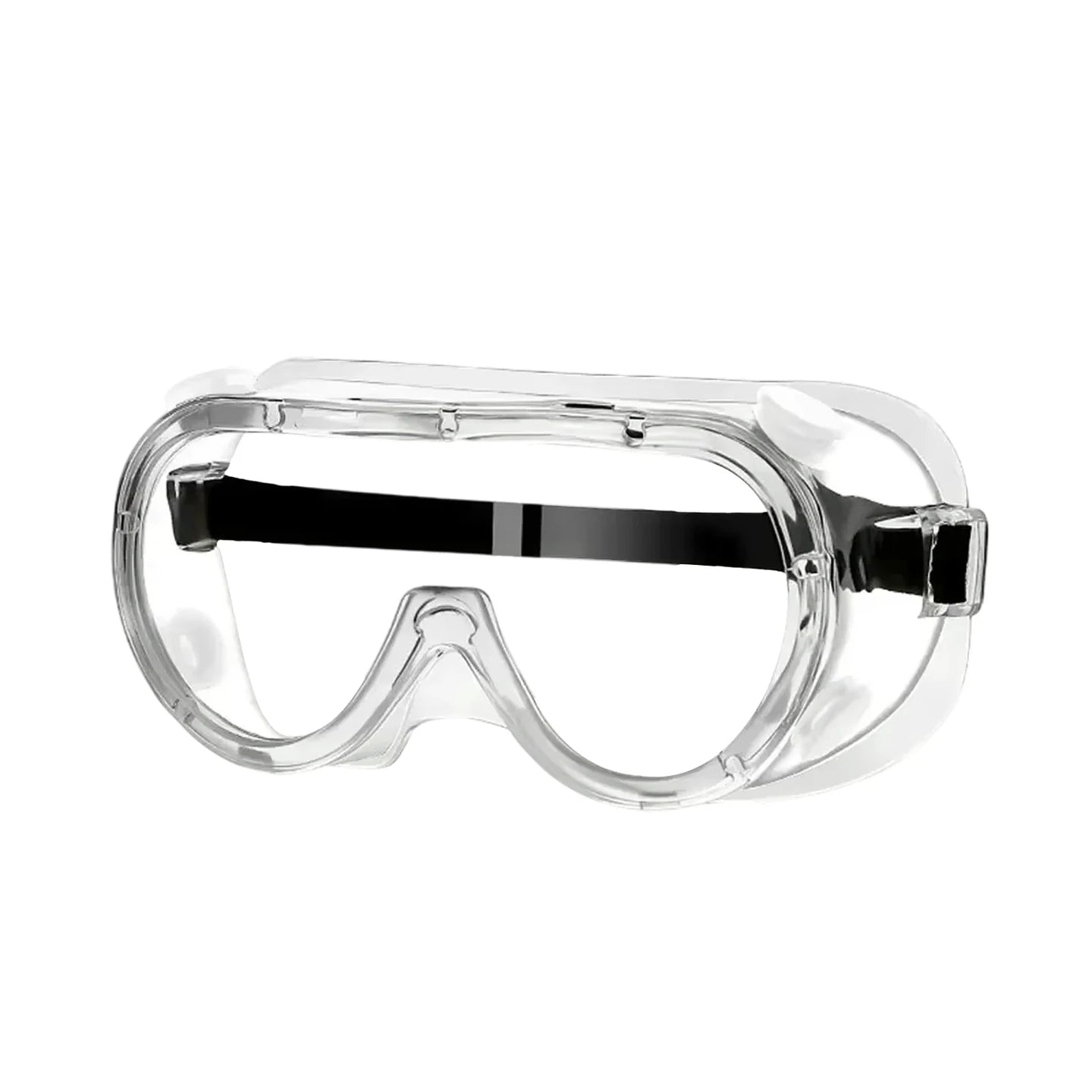
Oil can drip or splash while you loosen the plug and the filter, so wear safety glasses for the whole job. ArgusShield has polycarbonate lenses with a scratch-resistant coating, and the extra interior room lets the frame fit over your own eyeglasses.
Adjust the soft strap until the frame sits snug without pinching. Wear gloves too, and keep a rag within reach for the plug and the filter.
 In this guideArgusShield$59.99View
Handle used oil and clean up
Pour the used oil from the pan into a sealable container with a tight lid, and do the same with the drained filter. Do not pour oil on the ground or into a drain. Your city or county waste office can tell you where to drop it off.
Wipe the plug area, the floor and your tools before you put them away. Keep the old oil away from children and pets, and store it upright until you can drop it off.
Mistakes to skip
- Leaving the old filter gasket stuck to the engine, so two gaskets stack up.
- Relying on a jack alone to hold the car.
- Filling past the upper dipstick mark.
- Reusing a crushed washer when the manual calls for a new one.
- Choosing oil by habit instead of by the grade in the manual.
- Skipping the oil life monitor reset when the manual lists one.
Once you have finished changing car oil the first time, the second goes by the same list. Keep the manual open to the pages for capacity, grade and torque.