What Is a Wheel Bearing? What It Does and How to Check One
A wheel bearing is a ring of balls or rollers that lets a wheel spin on its axle. Here is what it does and how to check it with a jack-up wobble and spin test.
The Quindrel Team
November 9, 2026 · 7 min read
What is a wheel bearing? It is a ring of steel balls or rollers held between two metal rings that lets a wheel spin on its axle or spindle with little friction while carrying the weight of the vehicle. To check a wheel bearing, lift the wheel off the ground on a jack and jack stands, grip the tire at 12 and 6 o'clock to feel for play, then spin the wheel by hand and listen for grinding or roughness.
This guide explains how the part works, where it sits, and how the jack-up wobble and spin test separates a bad bearing from tire noise or a worn CV joint.
What is a wheel bearing and where is it?
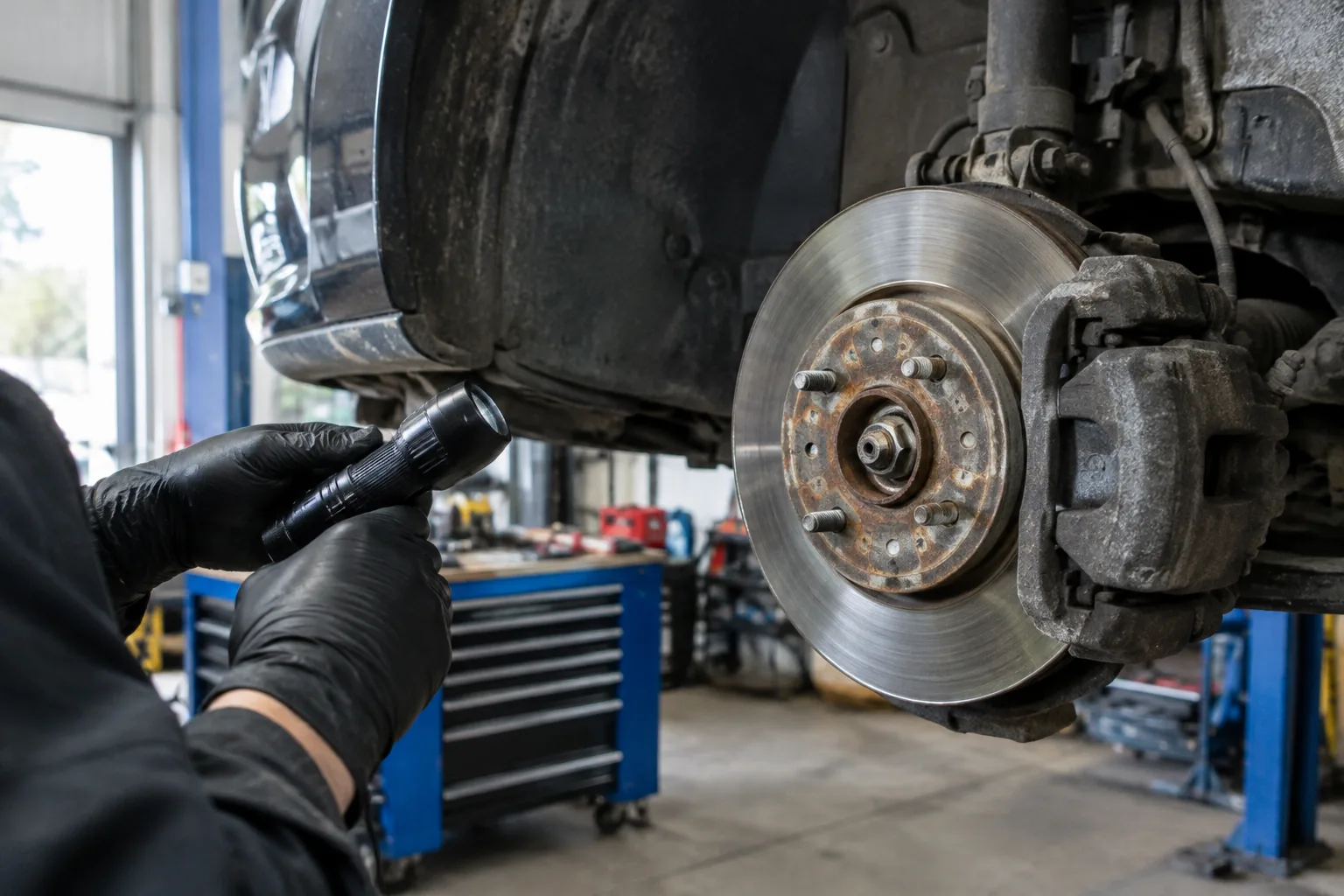
Each wheel on a car has one. The bearing sits in the center of the wheel, behind the brake rotor or drum, inside the steering knuckle on the front or the axle housing or rear knuckle on the back. It is packed with grease and sealed so dirt stays out.
The bearing has an inner ring and an outer ring, with rolling elements between them. One ring stays fixed to the suspension while the other turns with the wheel. On many modern cars the bearing is built into a wheel hub assembly, a single unit that also holds the wheel studs and often a wheel speed sensor ring.
What does a wheel bearing do?
A wheel bearing has three jobs. It lets the wheel turn freely, it carries the vehicle's weight, and it handles the sideways (axial) loads that come from cornering. Without it, the wheel would grind directly on the spindle.
It also keeps the wheel in a fixed position, which matters for the braking system and steering. The brake caliper and rotor depend on the wheel running true. On many cars, the wheel speed signal that feeds anti-lock brakes and traction control is read at the hub, so a worn bearing can set off warning lights.
Types of wheel bearings for cars
Three designs cover most cars. The table shows how they differ in construction and where you find them.
| Type | Construction | Where you see it |
|---|---|---|
| Double-row angular contact ball bearing | Two rows of balls set at an angle, often sealed inside a hub unit | Bolt-on hub assemblies on many passenger cars |
| Tapered roller bearing | Cone-shaped rollers in matched inner and outer races, usually in pairs | Older cars, trucks and trailers; adjustable and repackable |
| Deep groove ball bearing | Single row of balls in a grooved race | Lighter loads; less common as a car wheel bearing |
Whether yours is a pressed-in bearing or a complete hub assembly depends on the vehicle. The service manual lists which one your car uses and the fastener sizes.
Signs of a bad wheel bearing
Yes, a wheel bearing can go bad. Water, dirt, impacts and age wear down the grease and the polished surfaces inside. These are the signs to look for:
- A growling, humming or rumbling noise from one corner that changes with road speed.
- Noise that gets louder or quieter when you steer gently left and right, because the load shifts from one side to the other.
- Loose or vague steering, or a steering wheel that vibrates.
- An anti-lock brake or traction control light, when the hub's speed sensing is affected.
- Extra heat at the hub after a drive.
- A wheel with play you can feel when you rock it.
Driving with a bad wheel bearing lets play build up, which can damage the hub, rotor and sensor and, in the worst case, let the wheel come loose. Take the noise as a reason to inspect soon.
How to check a wheel bearing: jack-up wobble and spin test
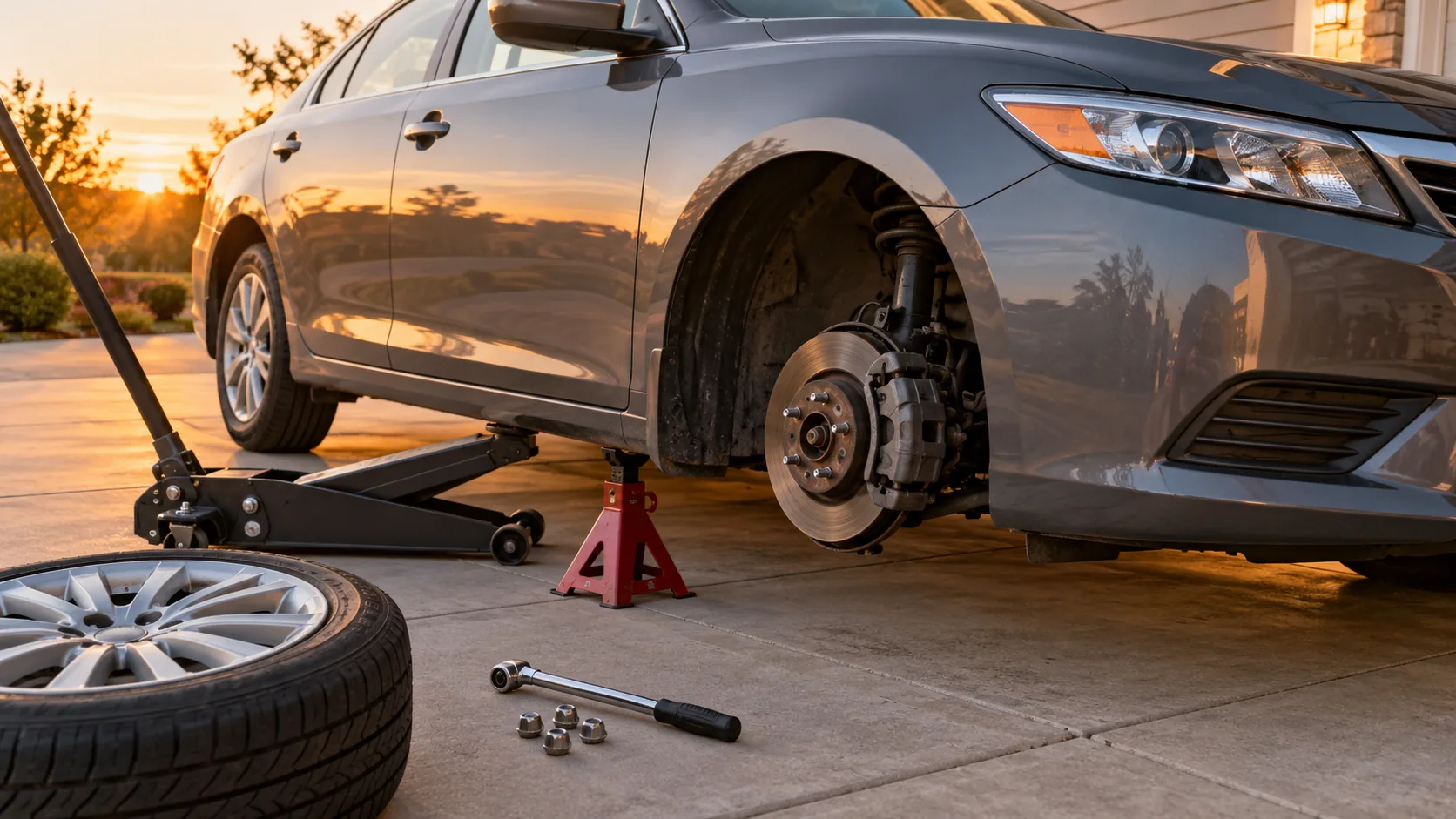
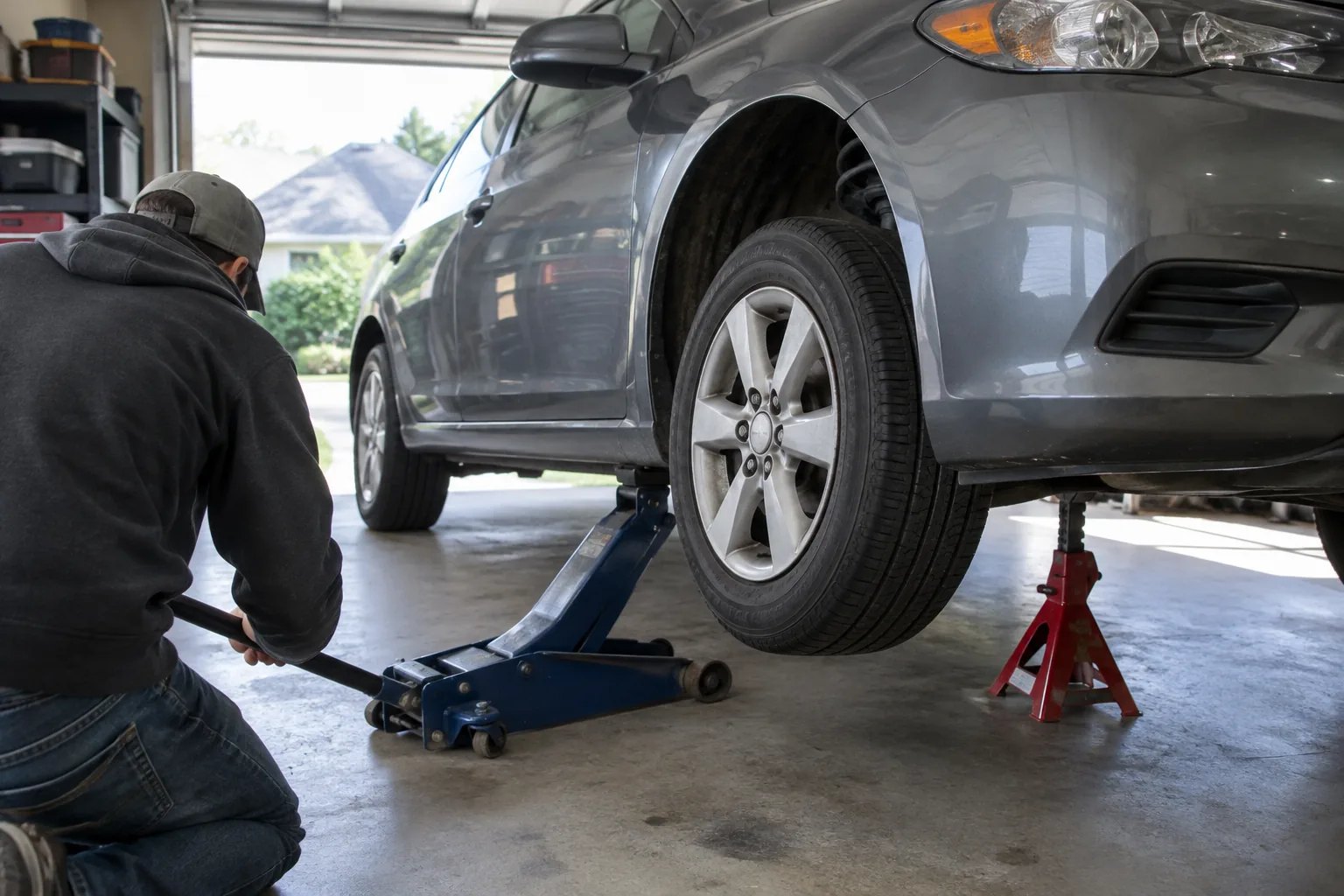
You need a floor jack, two jack stands, wheel chocks and a flashlight. Work on level, solid ground. Follow the vehicle manual for jacking points, do not rely on a jack alone, and do not put any part of your body under a car held only by a jack.
Step 1: Lift and support the vehicle
- Park on level ground, set the parking brake and chock the wheels that stay on the ground.
- Raise the corner you are checking at the jack point listed in the manual.
- Place a jack stand under the specified support point and lower the car onto it.
Step 2: Wobble test
- Grip the tire at 12 and 6 o'clock and push and pull firmly. Feel for movement or a clunk.
- Repeat at 3 and 9 o'clock.
- Have a helper watch the hub and brake parts while you rock the wheel, so you can tell where the movement comes from.
Play at the wobble test points can come from a worn bearing, but also from a loose axle nut, ball joint or tie rod end. If the movement sits in the hub itself, suspect the bearing. If the suspension part moves, the bearing may be fine.
Step 3: Spin test
- Spin the wheel by hand with the brake not applied.
- Listen for grinding, rumbling or clicking, and feel through the tire or a hand on the knuckle for roughness or notchiness.
- Compare with the same wheel on the other side of the car. A good bearing turns evenly.
Light brake pad drag can make a soft rubbing sound that is not the bearing, so look at the pads and rotor if you hear a regular scrape. Lower the car, torque the lug nuts to the value in the manual, and repeat on each corner.
Field note
Check all four corners, not only the noisy one. Comparing a suspect wheel against a known-good wheel on the same axle is the clearest way to judge play and roughness.
Wheel bearing noise vs tire noise vs CV joint noise
Several parts make noise from the wheel area. Use the table to narrow it down before you buy parts.
| Part | Sound | When it happens | What the jack-up test shows |
|---|---|---|---|
| Wheel bearing | Hum, growl or rumble | Changes with speed and with steering load | Play at the hub, rough or grinding spin |
| Tires | Drone or whir, sometimes a thumping beat | Changes with road surface, not with steering load | Smooth spin; uneven wear or bulges on the tread |
| CV joint | Clicking or popping | Tight turns under power | Torn boot, grease thrown around, play in the axle shaft |
Swapping the front tires side to side is one way to test a tire theory, since tire noise follows the tire. Bearing noise stays with the corner.
Common mistakes when diagnosing a wheel bearing
- Lifting the car on a jack alone and skipping the jack stands.
- Mistaking loose ball joints or tie rod ends for bearing play.
- Checking only one wheel and having no side-to-side comparison.
- Replacing the part before ruling out tires, brakes and CV axles.
- Reusing a damaged axle nut or skipping the torque value in the manual.
Replacement is a larger job than the check. Some bearings press into the knuckle and need a press, while a bolt-on hub assembly comes off with the wheel, caliper, rotor and a few bolts. Wrench size depends on the car, so read the manual first. Our metric socket set guide covers sizes and drives, and the Hand & Power Tools collection has more hand tools.
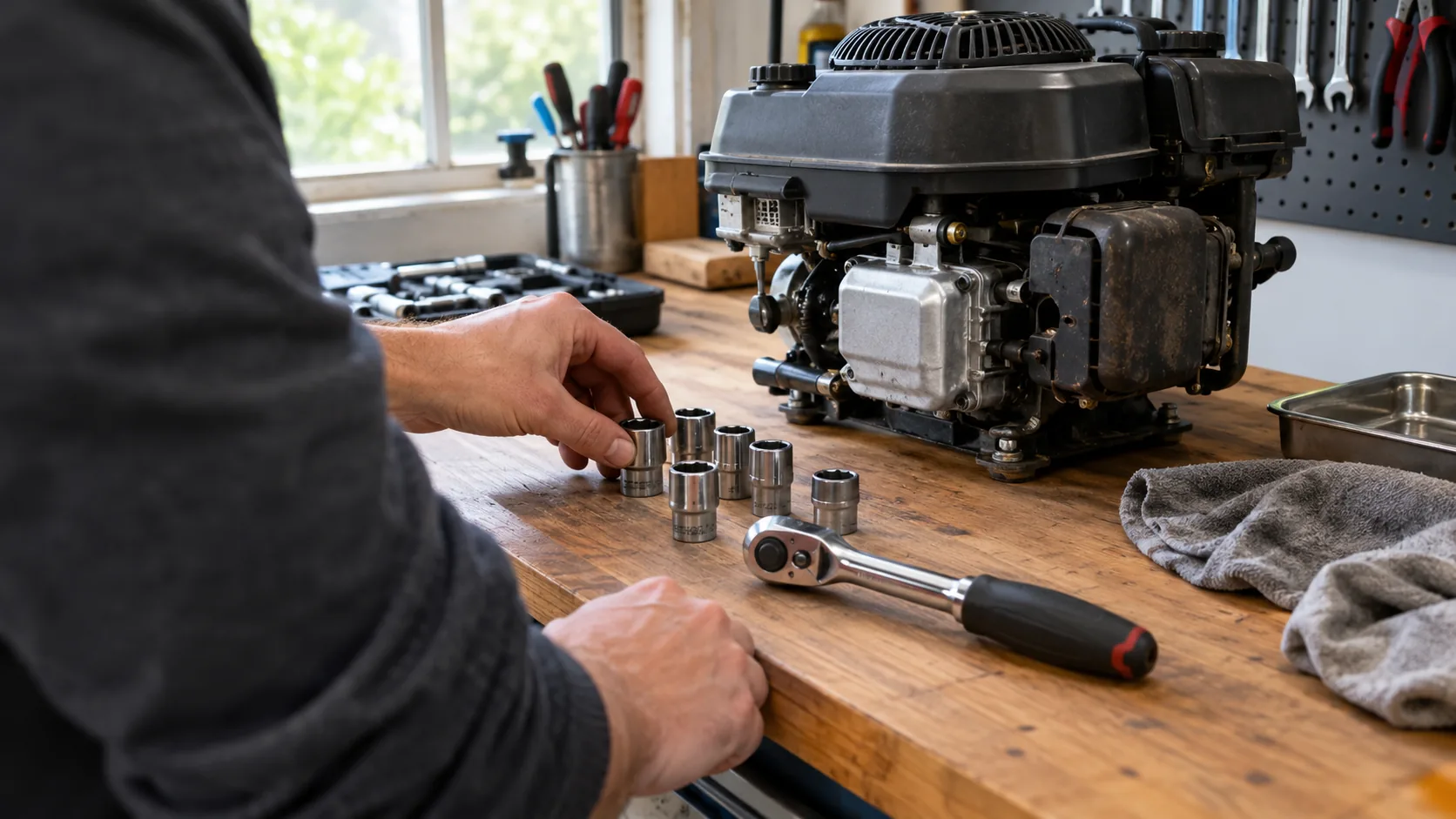
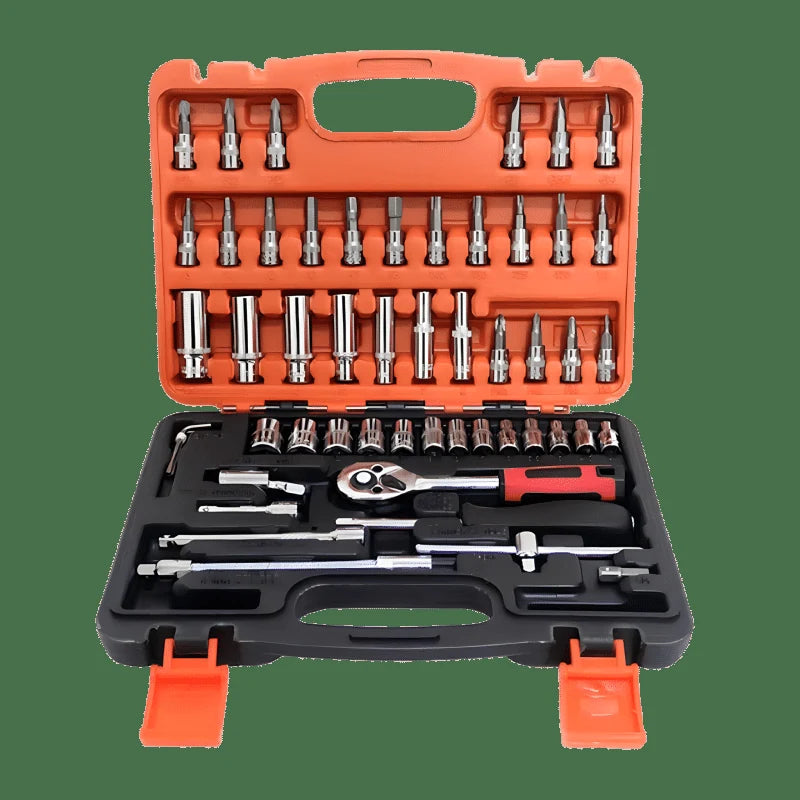
For small brackets and shields around the brake area, a 1/4-inch drive set such as TorqueVantage fits: it is a 53-piece set with metric sockets, a quick-release ratchet wrench and a universal joint. It is sized for 1/4-inch drive hand-ratchet work on metric fasteners, not lug nuts or axle nuts, which call for the tools the manual lists.
 In this guideTorqueVantage$119.99View
Cost and coverage questions
The cost to replace a wheel hub or bearing depends on the vehicle, whether it is a bearing or a full hub assembly, and local labor rates, so ask a shop for a written estimate for your car. Coverage for a failed bearing depends on your vehicle's paperwork or any service contract, so read those documents or ask the dealer before you pay for the repair.
If the test shows play or a rough spin, have a mechanic confirm the diagnosis and avoid driving the car further than needed.