Metric Socket Set: Sizes, Drives and What You Need
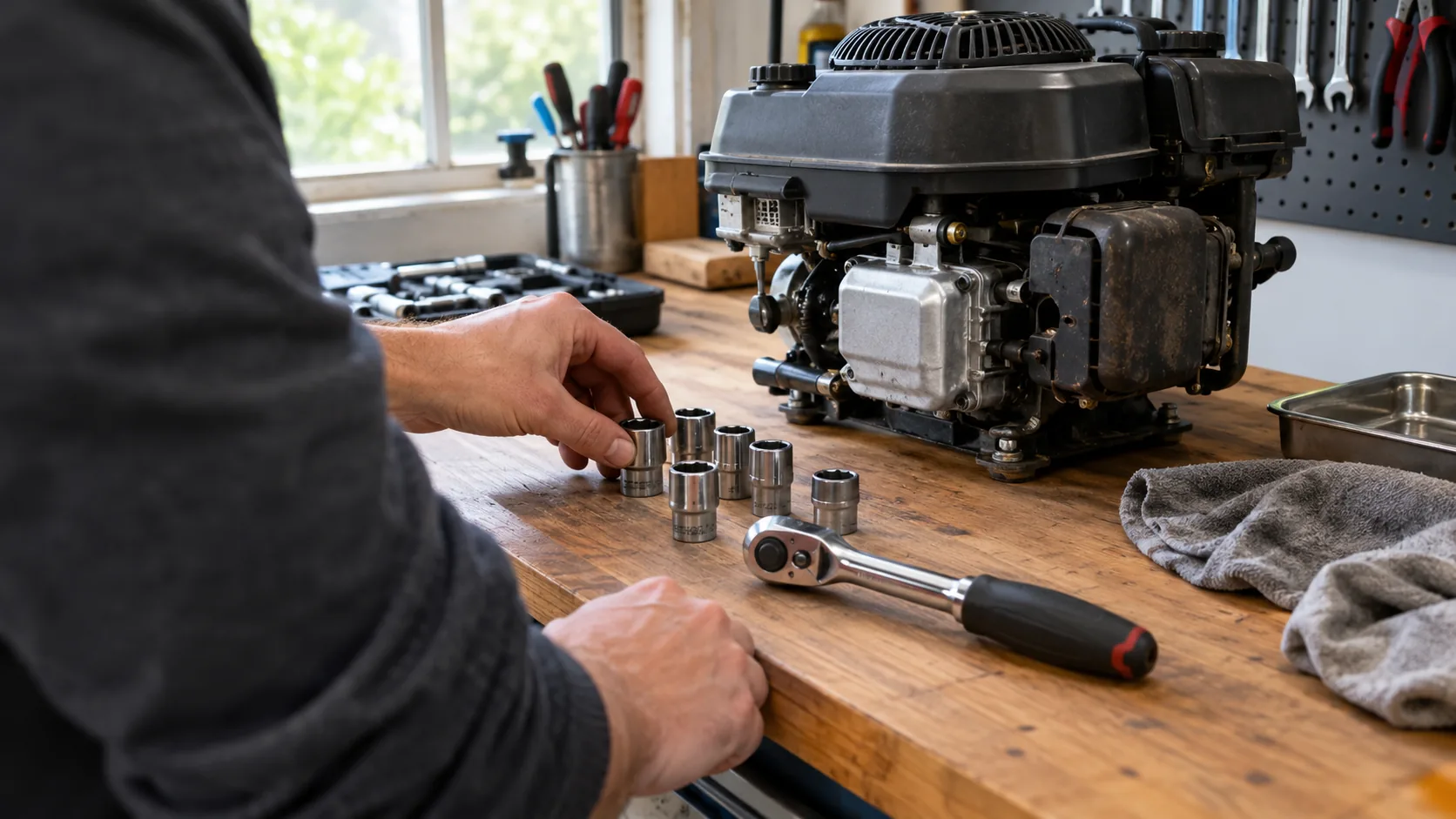
A socket set metric from 8 to 19 mm in 3/8-inch drive covers many car and home bolts. Add 1/4-inch for small fasteners, 1/2-inch for big ones, and SAE only for inch hardware.
The Quindrel Team
October 18, 2026 · 7 min read
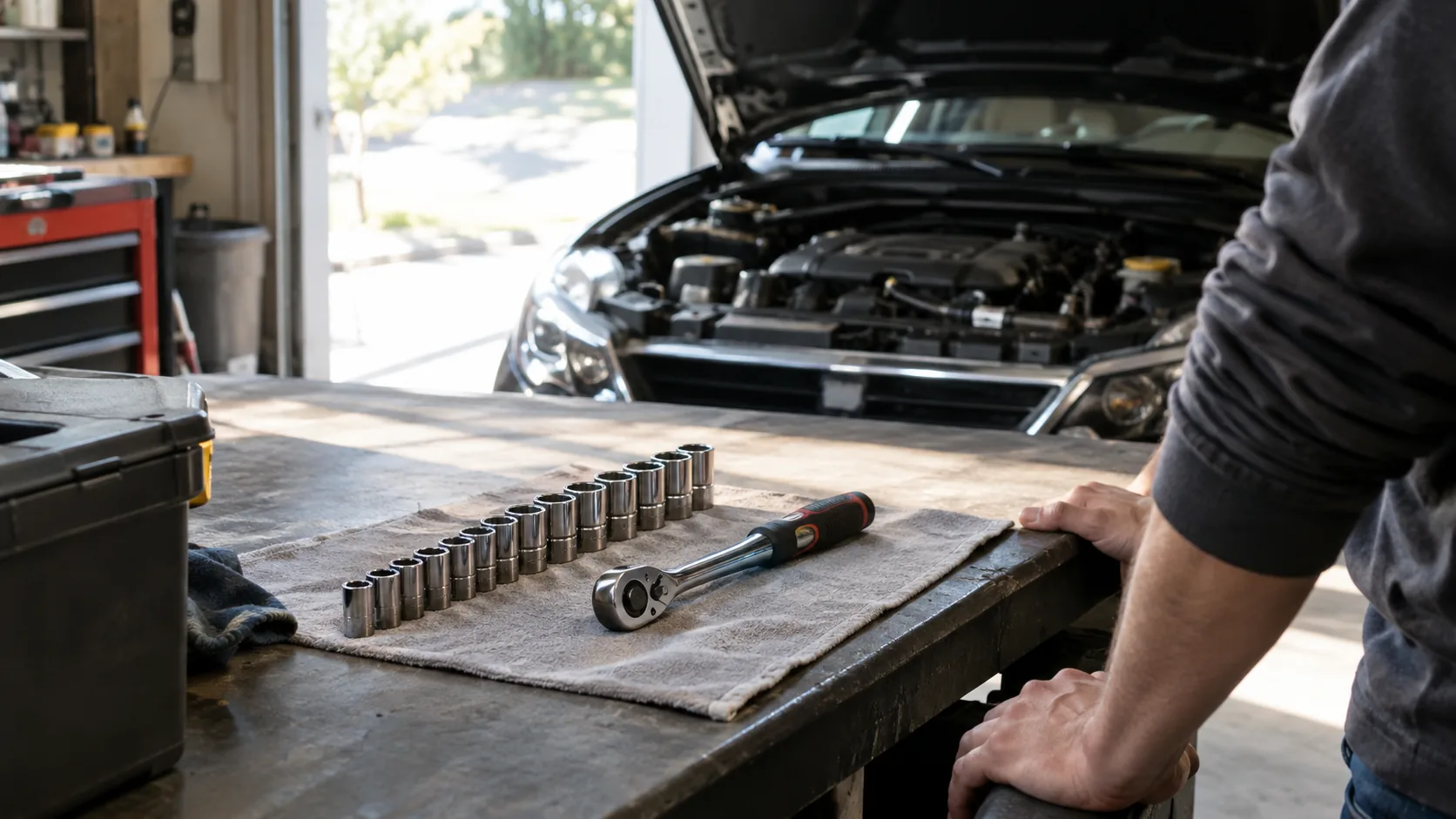
For car and home repairs, a socket set metric in 3/8-inch drive that runs from 8 mm to 19 mm covers the bolts you meet often. Add a 1/4-inch drive set for small fasteners and a 1/2-inch drive for lug nuts and suspension bolts. You only need SAE (inch) sockets when the hardware itself is inch-sized.
This guide shows which drive does which job, which metric sizes to look for, and how to tell when a metric set is not enough.
What "metric" means on a socket
A metric socket is sized in millimeters. The number stamped on it, such as 10 or 13, is the distance across the flats of the bolt head or nut it fits. SAE sockets are sized in fractions of an inch, such as 3/8 or 9/16.
So a 10 mm socket is metric, not standard. "Standard" is a loose name for SAE inch sizes, and a set sold as metric and standard simply holds both kinds. Vehicles and appliances built to metric specifications use metric fasteners, so that is where a metric set earns its place.

Drive sizes: 1/4, 3/8 and 1/2 inch
The drive is the square hole or peg that connects a socket to the ratchet. It is measured in inches even on metric sets. The drive decides how large a fastener you can turn and how tight a space the tool can reach.
| Drive | Typical metric sizes | Typical jobs |
|---|---|---|
| 1/4 inch | 4 to 14 mm | Interior trim, small engine covers, brackets, electronics, appliance panels |
| 3/8 inch | 8 to 19 mm | Battery terminals, brake caliper bolts, intake parts, alternator, general repairs |
| 1/2 inch | 10 to 32 mm | Lug nuts, suspension bolts, axle nuts, large fasteners |
Fleet shops publish their own lists too. The FY2021 Fleet Mechanic/Foreman Tool Requirements from pocatello.gov is one example of a technician tool list that separates sockets by drive and by metric and SAE.
If you buy only one set, choose 3/8-inch drive. It reaches into engine bays and suits medium-size bolts. A 1/4-inch set fills the gap below it, and a 1/2-inch set covers what 3/8 inch cannot turn.
Metric sizes for car and home jobs
Metric hardware clusters around a few sizes. The table below lists sizes to look for and where they often turn up. Sizes vary by make and model, so check the fastener before you buy.
| Socket size | Where it often appears |
|---|---|
| 8 mm | Small brackets, interior panels, some hose clamps |
| 10 mm | Battery terminals, sensor bolts, engine covers, trim |
| 12 mm | Brackets, covers, accessory mounts |
| 13 mm | Intake and exhaust parts, body mounts, seat bolts |
| 14 mm | Caliper bracket bolts, suspension and engine mounts |
| 15 mm | Brake and suspension hardware |
| 17 mm | Wheel hardware on some vehicles, suspension bolts |
| 19 mm | Lug nuts on many vehicles, larger suspension bolts |
| 21 mm | Lug nuts on some vehicles |
For home jobs, imported furniture, bikes, appliances and garden equipment often use metric bolts in the 8 to 14 mm range. A small set that covers those sizes handles many repairs around the house.
If you are chasing a rough idle, you will remove intake hoses and covers along the way. Our guide to a vacuum leak in a car shows where that work leads.
Choosing a socket set metric: what to check
Sizes and drive are the first filters. These points then separate one set from another.
- Point count: 6-point sockets grip the flats of a bolt, while 12-point sockets slip onto a fastener at more angles. Use 6-point for tight or rounded bolts.
- Depth: shallow sockets fit most bolts. Deep sockets reach a nut on a long stud.
- Extensions and a universal joint: these let you reach a fastener behind another part or at an angle.
- Ratchet release: a quick-release button lets you swap sockets by hand.
- Material and finish: forged steel with a chrome finish is common on hand sockets.
- Case layout: a marked slot for each piece shows at a glance what is missing after a job.
Impact sockets are a separate type
If you plan to use an impact wrench, look for sockets made and marked for impact use. An impact socket set is built for that tool, and a chrome socket set made for hand ratchets is a different item. Match the socket to the tool it is meant for, and follow the manual for both the socket and the wrench.
The same applies in reverse: if a set is described for hand use, keep it on a hand ratchet. Hand sets suit hand ratcheting, which covers many home repairs. If you want a socket set for impact work as well, buy it as a separate set so the two do not get mixed in one case.
Field note
Before buying, write down the sizes you have trouble finding in your own toolbox. Fill those gaps first, because a set with a few unused sizes takes up space without adding anything you will reach for.
A 1/4-inch option for small metric fasteners
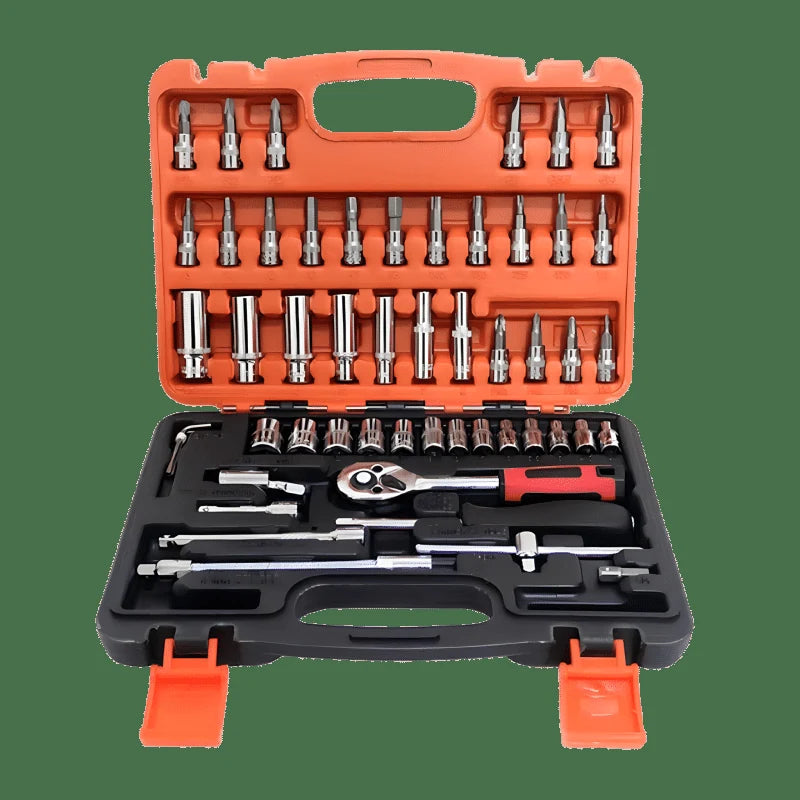
If your jobs involve small engines, brackets and panels, a compact kit can hold everything in one place. TorqueVantage is a 53-piece 1/4-inch drive socket set metric for hand repairs. It includes a 1/4-inch metric socket set, 3 hexagon sockets, 21 screwdriver bits, a quick-release ratchet wrench, extension rods and a 1/4-inch universal joint.
The sockets are forged from carbon steel with a chrome finish. Each piece sits in its own marked slot in the plastic case. Fit a socket or bit on the ratchet, turn by hand, and add the universal joint or a rod when a fastener sits at an angle or deep in a bracket.
 In this guideTorqueVantage$119.99View
When you also need SAE sockets
A metric set alone does not cover every job. Older American vehicles, some motorcycles, farm equipment, plumbing fittings and many US-made tools use inch sizes. If a metric socket slips on a bolt, stop and check the size.
Some metric and inch sizes sit very close together, and the near fit is the trap. A socket that is slightly loose can round the corners of a bolt head, which leaves the bolt hard to remove next time.
| Metric size | Close inch size | What to do |
|---|---|---|
| 10 mm | 3/8 in | Not interchangeable. Use the correct system. |
| 13 mm | 1/2 in | Close but not equal. A mismatch can round the head. |
| 17 mm | 11/16 in | Close but not equal. Check the fit by hand first. |
| 19 mm | 3/4 in | Very close, still not a match. Use the correct size. |
A good fit has no rocking. If the socket wobbles on the head, try the other system before you apply force. When your work spans both, choose a combined metric and SAE set, or a metric set plus a separate inch set.
Common mistakes when buying a socket set metric
- Buying a large piece count with sizes you will not use, instead of a set with the sizes you need.
- Choosing only 1/4-inch drive and then trying to loosen a lug nut with it.
- Using 12-point sockets on stuck or rounded bolts where a 6-point grips the flats.
- Forcing a near-size socket onto a bolt of another system.
- Skipping extensions, which leaves recessed bolts out of reach.
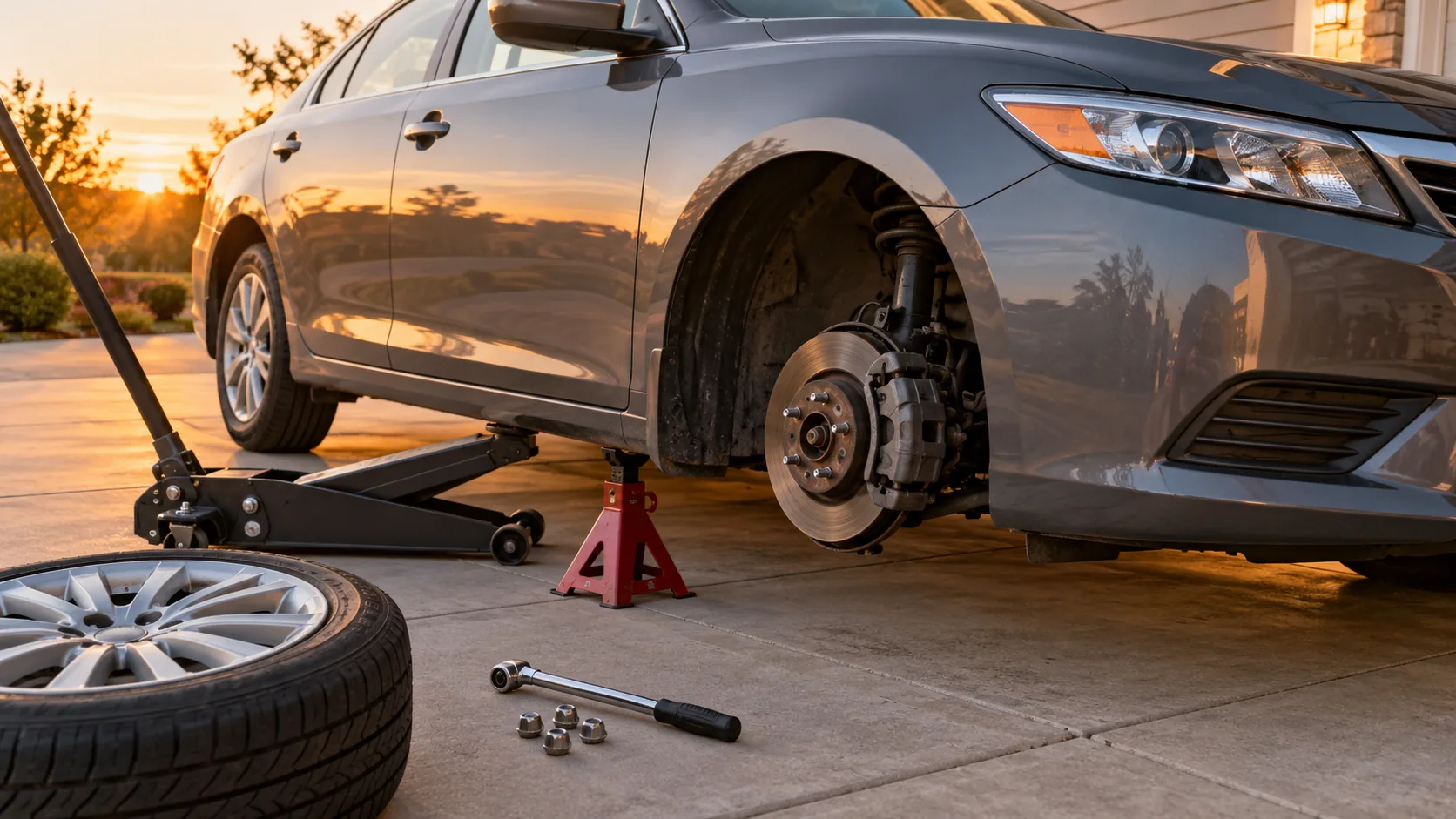
Wheel work shows the drive question clearly. Our guide on how to change a TPMS sensor and reset the system is a job that starts with taking a wheel off, where lug-nut sockets and a larger drive come into play.
Care and storage
Wipe sockets with a dry rag after each job and remove grease and dirt before they go back into the case. Return each piece to its slot so you notice a missing size before the next repair. Keep the case in a dry spot, since moisture can leave rust marks on tool surfaces.
Check the ratchet now and then: if it slips or catches, follow the maker's instructions for cleaning or service. You can also browse the Hand & Power Tools collection for related items.
Field note
Try a socket on the fastener by hand before using the ratchet. A snug fit with no rocking means the size is right. Always follow the tool's manual.