Folding Saw Guide: Blade Length, Teeth and Locks for Pruning
Pick a blade longer than the branch is wide, teeth that suit the wood, and a lock that clicks fully open. This guide covers pruning, camping and a lock checklist.
The Quindrel Team
November 23, 2026 · 6 min read
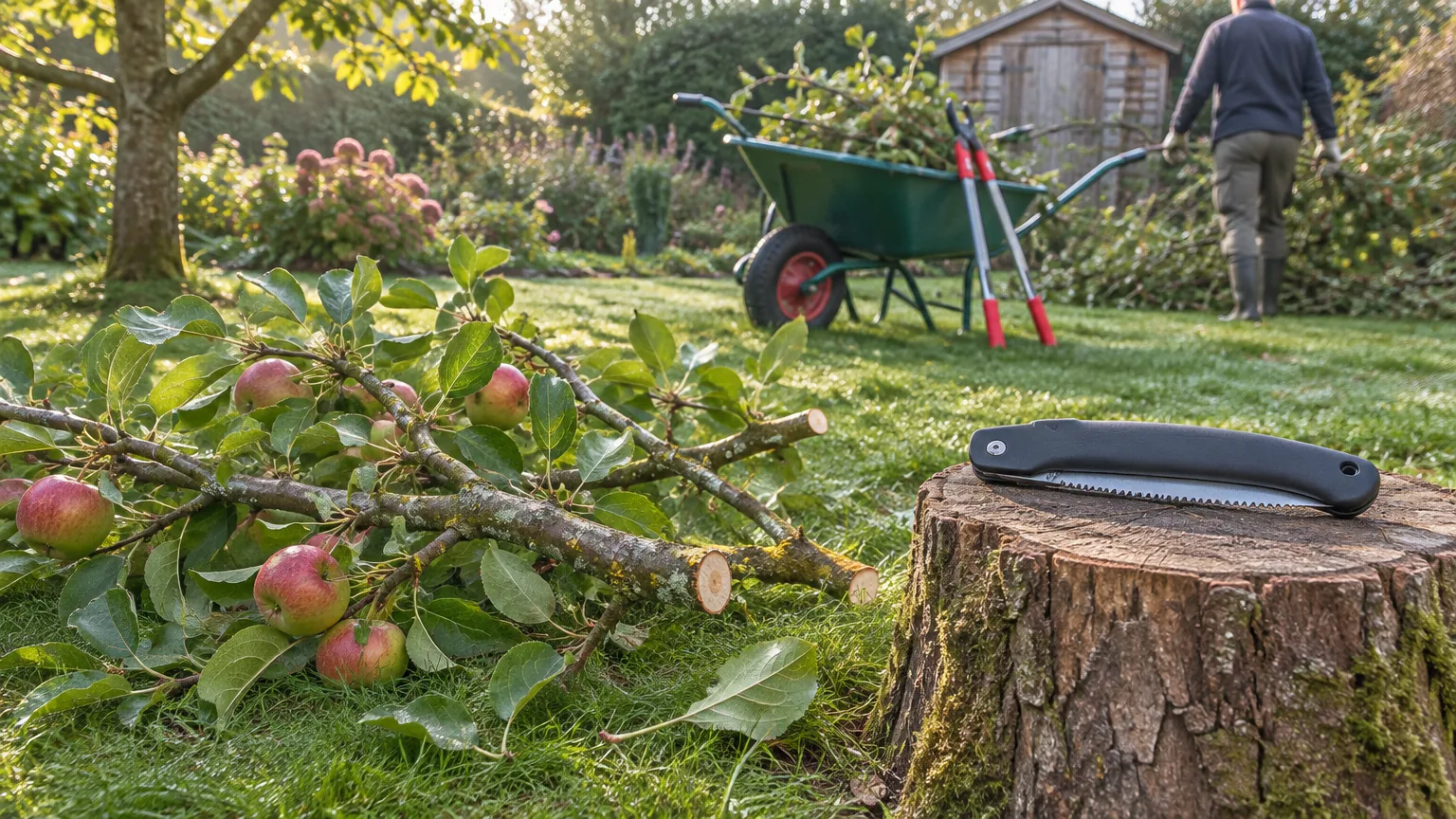
A saw folding at the handle suits pruning and camping when the blade is clearly longer than the branch is wide, the teeth match the wood, and the lock clicks fully open before the first stroke. Choose coarse teeth for green wood and finer teeth for dry, dense wood. Check the lock every time you open the saw, and follow the manual for your model.
The sections below match blade length to branch diameter, explain tooth patterns, separate pruning needs from camping needs, and finish with a lock checklist, the pruning cuts, log support and care steps.
How to match blade length to branch diameter
A blade needs room to travel. If the blade is barely longer than the branch is wide, each stroke covers a short stretch and the saw binds in the cut. A longer blade gives you room for full, even strokes.
Use the table as a starting point, then compare it with the specs on the product page of any saw you consider.
| Branch width | Blade length | Tooth style | Notes |
|---|---|---|---|
| Twigs narrower than a thumb | Short blade | Fine to medium | Fits tight spots between stems |
| Thumb to wrist width | Medium blade | Medium to coarse | Suits general garden pruning |
| Wrist to forearm width | Long blade | Coarse | Calls for a firm handle and steady strokes |
| Wider than a forearm | Use a larger saw, or call a licensed arborist | Not applicable | Beyond what a folding saw is built for |
A long blade also reaches deeper into a crowded shrub. The trade-off is a larger folded size, so check that the closed saw still fits your pack or toolbox.
Tooth pattern and blade material
Coarse, medium and fine teeth
Coarse teeth have wide gaps between them, and those gaps hold sawdust from moist, green wood. Fine teeth leave a narrow cut and suit dry or dense wood and small stock. If you cut both, a medium pattern is a reasonable middle choice.
Cutting direction
Some saws cut on the pull stroke, and some cut on both strokes. Pull-stroke saws tend to have thin blades, because the blade is under tension while cutting. Check the product page or manual to see which direction your saw cuts, then apply pressure only on that stroke.
Steel and tooth grinding
High-carbon steel is a common blade material for hand saws. Teeth ground on several faces give each tooth more than one cutting edge, and chip flutes in the gullets carry dust out of the cut.
These details matter more than a long feature list. Look for a blade that clears dust and a handle you can hold steadily, so you can guide the saw with even strokes instead of forcing it.
Pruning saw vs camping saw: what changes
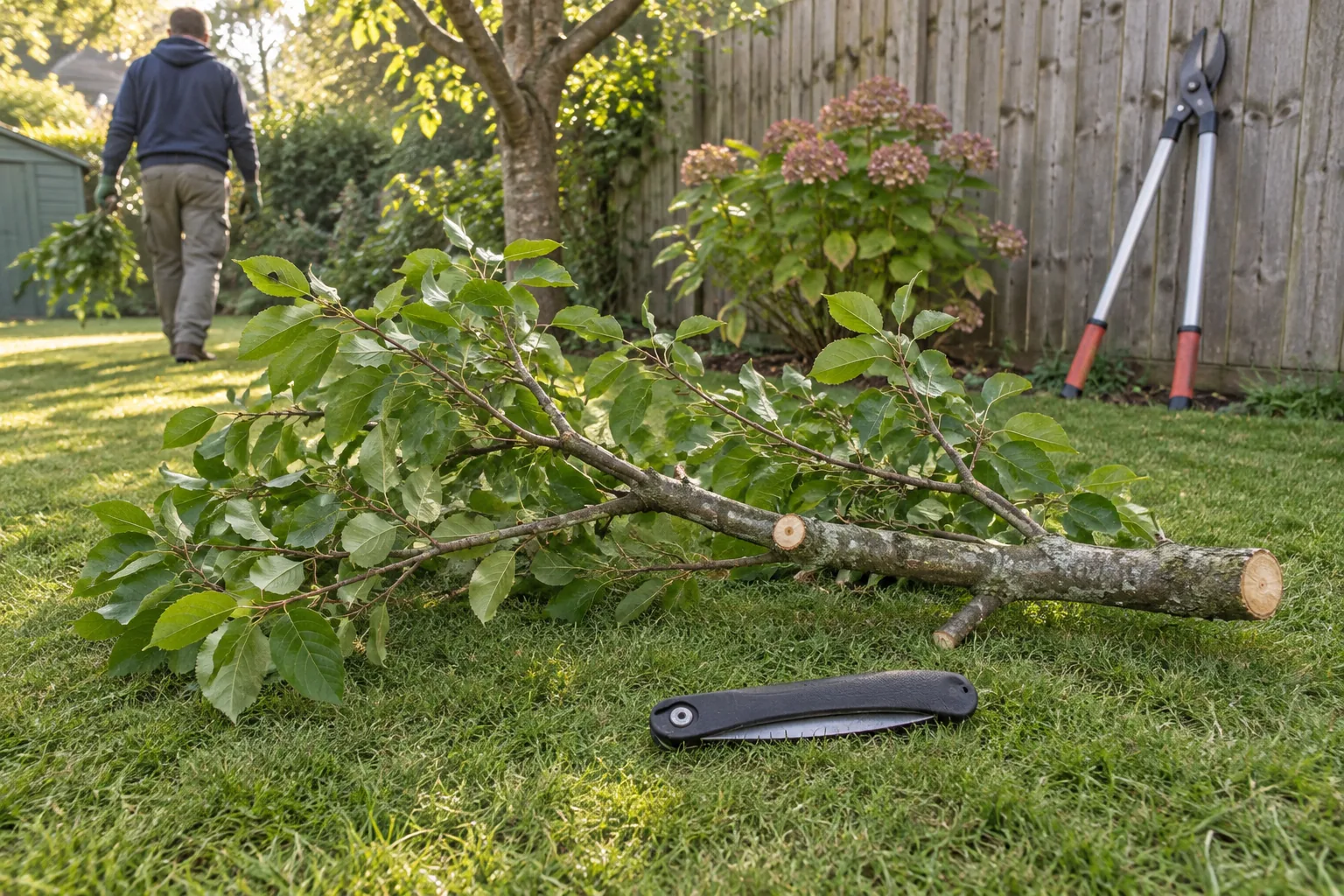
For garden pruning, you cut live wood, often at awkward angles. A curved or slightly tapered blade with coarse teeth suits green wood, and a handle that stays put in a damp hand helps. If you also use a reciprocating saw in the yard, this guide to pruning saw blades for reciprocating saws covers blade choice for that tool.
For camping, you cut small logs and dead branches for a fire or a shelter frame. Here the carry size matters. A sheath or case keeps the teeth covered in a pack, and a handle with some grip helps when your hands are sappy.
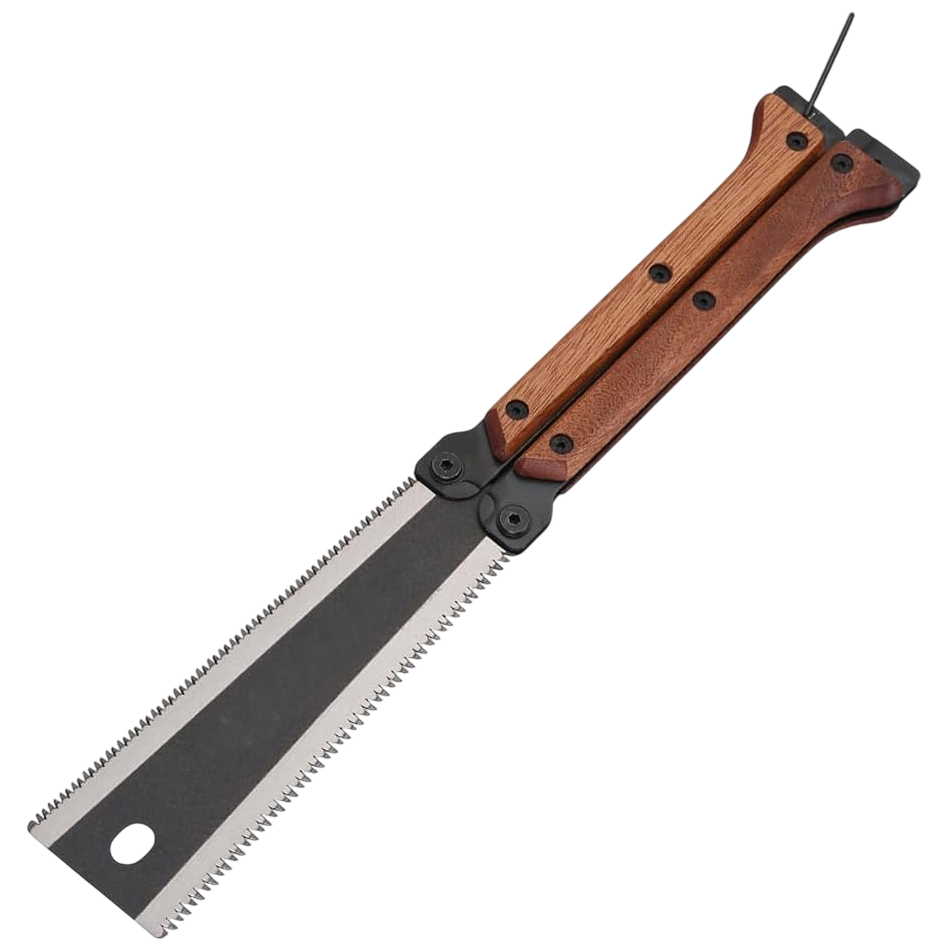
TrueKerf is a folding saw with an SK5 high-carbon steel blade and a soft rubber handle. You unfold it to cut branches and small logs, then fold it shut and slide it into the included sheath. Chip flutes carry sawdust out so the blade keeps moving in the cut, and each tooth is ground on three sides, which gives it several cutting edges.
 In this guideTrueKerf$69.99View
How saw folding locks work and how to check them
The lock is the part of a folding saw that holds the blade in line with the handle. If it slips, the blade can swing toward your fingers. Some folding saws use a button, a collar or a spring catch, so read the manual to see how yours releases and engages.
Run this checklist each time you open the saw:
- Hold the handle away from your body and unfold the blade fully, until it locks open with a click.
- Look at the joint and confirm the blade sits straight with the handle, with no gap at the pivot.
- Twist the blade gently by hand to check for wobble. If you find play, do not use the saw.
- Keep your fingers clear of the fold path while you check.
- Start the cut with a short pull or push and watch the joint for movement.
- When you finish, wipe the blade, release the lock as the manual describes, fold the blade shut and slide the saw into its sheath.
Stop using any saw whose lock does not engage with a clear click, or whose pivot has visible play.
Field note
Open the saw and lock it before you step into a tight spot, not while you stand on a ladder or hold a branch with your other hand.
Cutting technique and branch support
Good technique matters as much as the saw. Wear work gloves and eye protection while you cut, and follow the manual for your model. Start with a short guide notch by drawing the blade lightly along the line, then use long, even strokes and let the teeth do the work. Leaning hard makes the blade bind.
The three-cut method for a branch on a tree
- Make an undercut from below, a short distance out from the trunk and not against it, and stop partway through the branch.
- Cut from above, a little farther out than the undercut, until the branch drops. The undercut stops the bark from tearing down the trunk.
- With the weight gone, remove the remaining stub with a final cut just outside the branch collar, the slightly swollen ring where the branch meets the trunk.
Cut only branches you can reach from the ground. For branches that are wider than a forearm, under tension, near power lines or overhead, call a licensed arborist.
Supporting logs
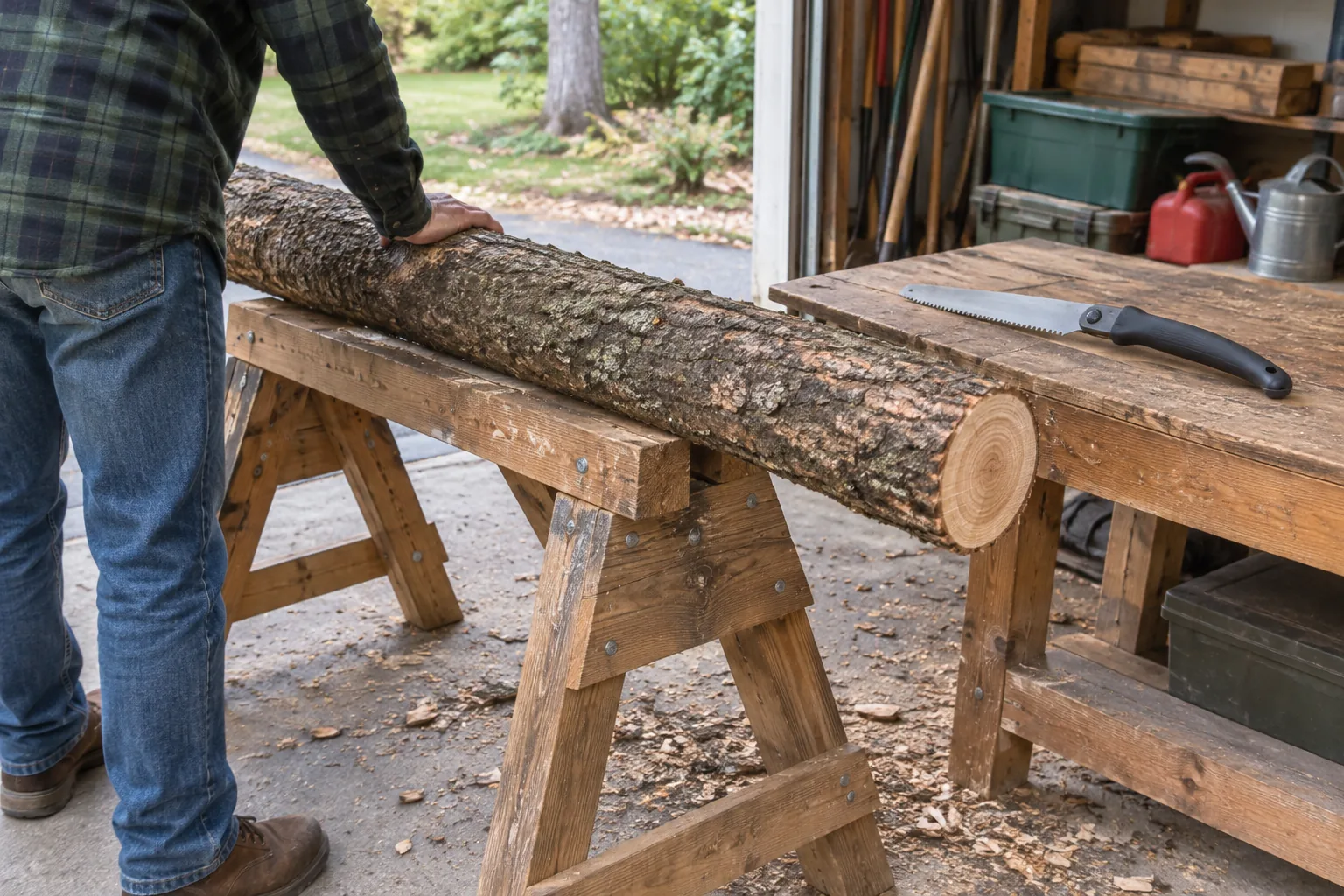
For logs, support the wood so the cut opens as you saw. Rest the log on a folding saw horse so the part you keep sits on the support and the end you cut off hangs free past it. Do not cut between two supports, because the log sags in the middle and pinches the blade. If your saw horse folding legs lock in place, check those locks the way you check the saw's lock before you load a log.
At a campsite, a stable stump or a pair of stacked logs works the same way: the section you keep rests on the support, and the offcut overhangs.
Can a hand saw cut tree branches?
Yes, a hand saw can cut small branches. A pruning or folding saw has teeth and a blade shape made for green wood, while a carpentry saw is made for lumber and can bind in moist wood. Match the saw to the branch width using the table above.
Care, storage and common mistakes
Wipe sap and dust from the blade after each use, fold it shut, and store it in its sheath in a dry place. If you spot surface rust, this guide to removing rust from tools covers soaks, abrasives and prevention. For wider cleaning advice, see what to use to clean hand and power tools.
Watch for these mistakes:
- Choosing a blade that is barely longer than the branch is wide.
- Pressing on the return stroke of a pull-stroke saw.
- Skipping the lock check because the saw opened with ease last time.
- Cutting wet, resinous wood with fine teeth, which clog with dust.
- Sawing a log between two supports so the cut closes on the blade.
- Carrying the saw unsheathed in a pack or glove compartment.
Browse more cutting and shaping gear in the Hand & Power Tools collection. When you compare any saw folding at the handle, put the lock, the blade length and the tooth pattern ahead of extras, and follow the manual for your model.