How to Clean Polishing Pads: Foam, Wool and Microfiber
Clean pads between panels with a brush or a spin-off, then wash them in warm water with mild soap after the job and air dry them flat. Wool and microfiber need their own steps.
The Quindrel Team
November 7, 2026 · 6 min read
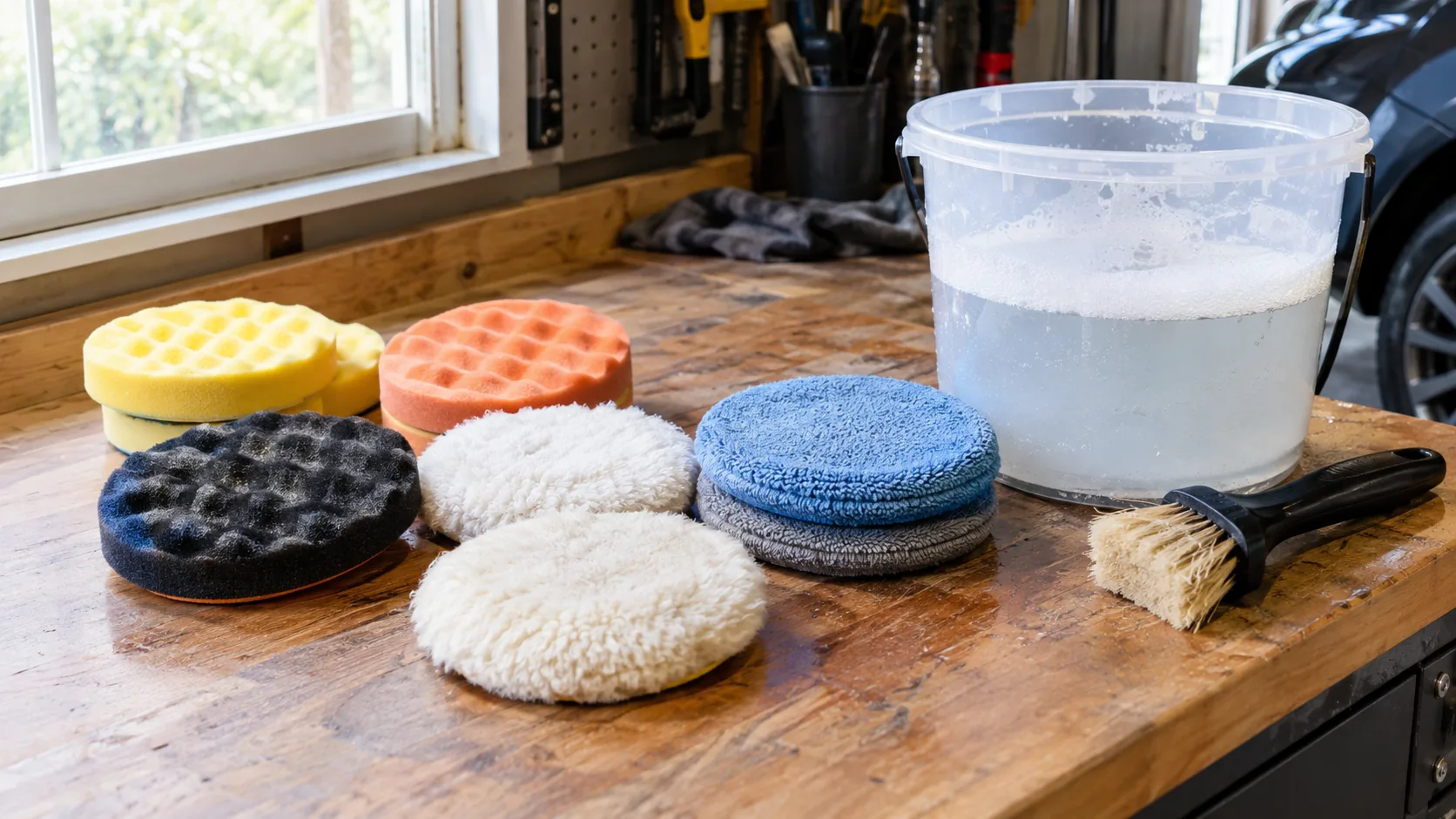
To learn how to clean polishing pads, split the job in two: brush or spin off spent polish between panels, then wash the pads in warm water with a mild soap after the session and let them air dry. Foam, wool and microfiber all follow this pattern, but each handles water, brushing and drying differently.
Dried residue left in a pad gets carried onto the next panel, so cleaning as you go keeps the pad face working the way it did on the first panel. That is what protects its cutting ability from one section to the next. This guide covers each pad type, the on-machine routine, the deep wash, and the drying and storage rules.
Cleaning methods by pad type
Use this table to pick the method before you start. Details for each step follow below.
| Pad type | Between panels | Deep wash | Drying |
|---|---|---|---|
| Foam | Pad brush or a clean towel pressed against the face | Warm water, mild soap, squeeze and rinse | Air dry, face down or on edge |
| Wool | Spur or brush the fibers with the tool switched off and the battery removed | Warm water, mild soap, rinse until clear | Air dry with the fibers facing out, then fluff |
| Microfiber | Brush and shake out, or swap for a fresh pad | Warm water, mild soap, rinse thoroughly | Air dry, no heat |
How to clean polishing pads while polishing
Cleaning on the fly keeps a loaded pad from smearing old polish and paint residue across the next panel. Do it after each section or panel, or whenever the pad face looks caked or glazed.
Step by step, on the machine
- Remove the battery or unplug the tool before you touch the pad, and follow the manual.
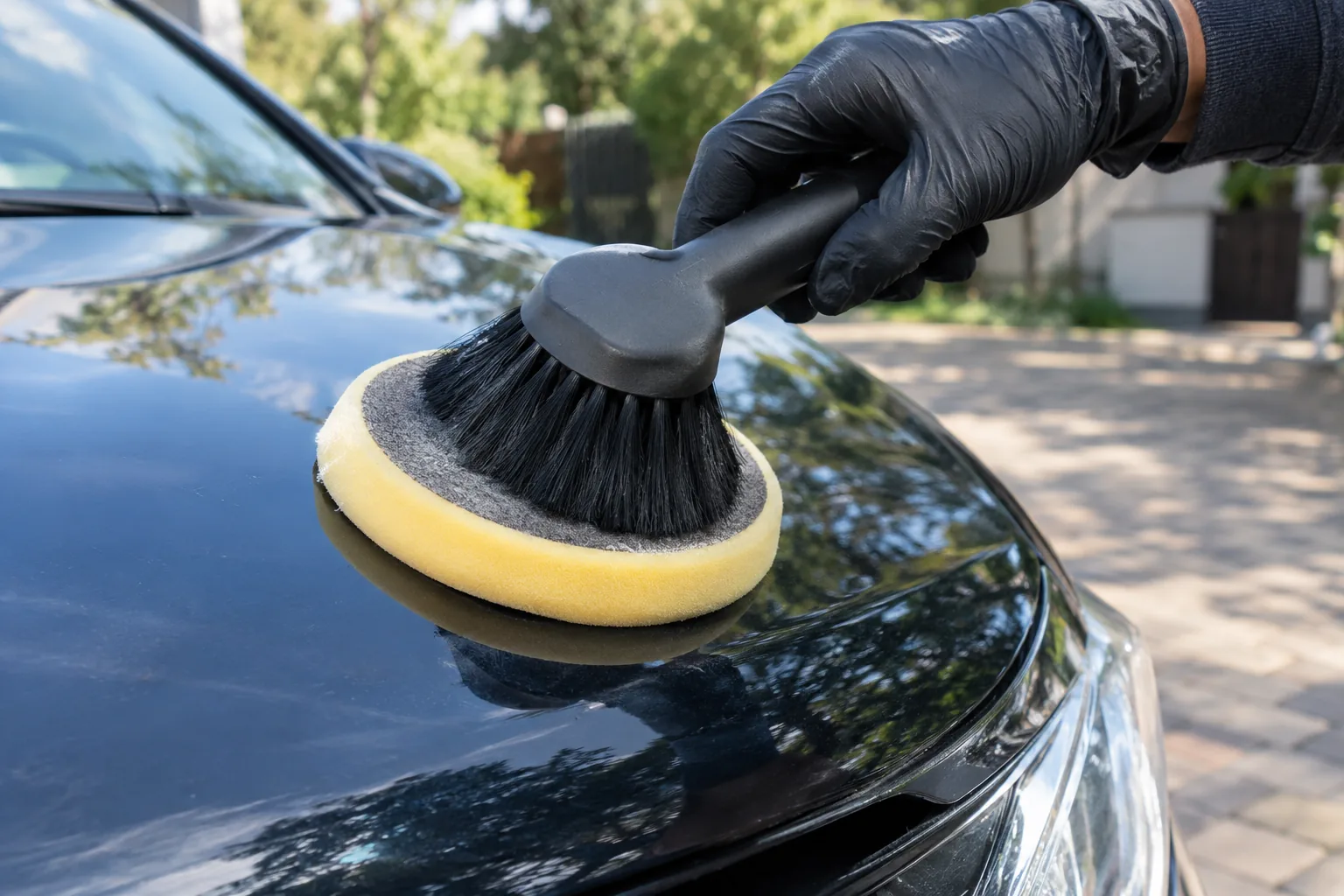
- Hold a pad brush against the face and turn the pad by hand, or brush across the face in one direction.
- Wipe the face with a clean, dry microfiber towel to lift loosened residue.
- Check the face. If the pad still looks matted or saturated, swap it for a clean one from your rotation.
A pad cleaning brush with stiff bristles works on foam and wool. A bristle brush or a wool spur is the usual choice for wool because it lifts the fibers instead of packing them.
Without compressed air
You do not need compressed air. Brushing plus a towel wipe lifts spent polish, and a spare pad covers the rest. If you have a pad washing bucket, a few strokes on the grid insert loosen residue before you wipe.
Keep a pad rotation ready
With a cordless polisher there is no cord to manage while you swap pads panel by panel. The GlossForge is a cordless car polisher with a 15mm random orbital action that takes a compatible 21V battery. Its dial offers 8 speed settings, and low settings suit wax application. The box includes an Orange Flat Polishing Disc, an Orange Wave Polishing Disc and a White Finishing Disc, so you can rotate through several pads on one job. The battery is not listed with the included items.
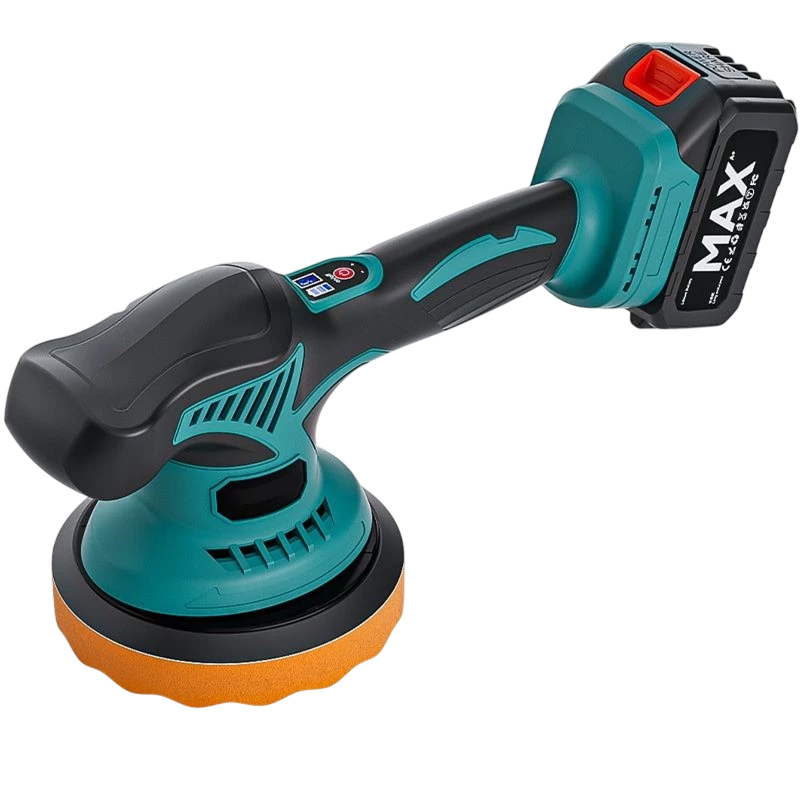 In this guideGlossForge$129.99View
Washing polishing pads after the job
Wash pads soon after you finish, before polish dries hard in the cells or fibers. If you must wait, spray the pad lightly with water and wash it the same day. Do not seal a damp pad in a bag for longer than that, and follow the drying rules below once it is washed.
Foam pads
- Rinse the pad under warm water to loosen surface residue.
- Add a few drops of mild soap or a dedicated pad cleaner to the face and work it in with your fingers or a soft brush.
- Squeeze the pad repeatedly in a bucket of warm water, keeping the hook-and-loop backing as dry as you can.
- Rinse until the water runs clear, then press out the water without twisting hard.
Foam cells trap compound and polish, so extra squeezing matters more than scrubbing. Hard scrubbing can tear the foam surface.
Wool pads
Wool holds more product in its fibers. Soak the pad in warm water with a mild soap for a few minutes, then agitate it by hand and rinse until the water is clear. Shake out the water, then comb the fibers with a wool spur or brush to separate them before drying.
Microfiber pads
Rinse in warm water, work in mild soap, and rinse thoroughly, since leftover soap can leave residue on the next panel. Shake the pad out and brush the fibers loose.
Can you use dish soap?
Yes, a mild dish soap diluted in warm water is a common choice for washing pads. Use a small amount and rinse until no suds remain, because soap left in the pad can carry into the next polish. A dedicated pad cleaner is another option if you want a product made for the job.
If the car was dirty before polishing, a pre-wash helps keep grit off your pads. See how to use a foam sprayer for a pre-wash car clean for that step.
Field note
Keep one bucket of warm soapy water for washing and a second of plain water for rinsing, so dissolved polish does not return to a pad you just cleaned.
Are polishing pads machine washable?
Some are. Check the pad maker's care label or the product page first. If the maker allows it, use a gentle cycle with warm water and a small amount of mild detergent, and wash the pads on their own.
Skip fabric softener, because it can leave a film on the pad face. Do not put pads in a dryer. Remove them when the cycle ends, press out extra water and air dry. Hand washing is the default if you have no care instructions.
Drying and storing polishing pads
Drying is where many pads get damaged. Wet foam that sits in a bag can sour and break down, and heat can warp backings or harden the pad face.
Drying rules
- Squeeze or press out water, then place pads face down on a clean rack or towel so air reaches the face.
- Foam can also stand on edge. Wool dries well with the fibers facing out and open.
- Keep pads away from direct heat, a dryer or a hot car.
- Wait until the pad is dry through the center before you store it. Pinch the middle to check.
Storage
Store dry pads in a clean, covered container or zip bag, grouped by grade: cutting, polishing and finishing. Keep them flat so the face does not crush. Label the container so a compounding pad does not end up on a finishing job.
Common mistakes
- Soaking a pad so long that the backing loosens from the foam.
- Using harsh degreasers or solvents that can break down foam or glue.
- Twisting and wringing wet foam hard.
- Leaving soap in the pad.
- Storing damp pads in a sealed bag.
- Mixing pads between compound and finishing polish.
When to retire a pad
Washing cannot restore every pad. Replace a pad when the foam is torn or crumbling, the backing is peeling, the face stays stiff after washing, or wool fibers are matted flat. A worn pad cuts unevenly, so swap it rather than chase marks it leaves behind.
Cleaning checklist
| When | Do this |
|---|---|
| Every panel or section | Remove the battery, brush the face, wipe with a clean towel, swap if saturated |
| End of the session | Wash the same day; spray lightly only if you must wait |
| Deep wash | Warm water, mild soap, squeeze or agitate, rinse until clear |
| Drying | Face down or on edge, away from heat, until dry through the center |
| Storage | Covered container, flat, sorted by grade |
For more supplies for the garage routine, browse our Car Cleaning & Detailing collection.