How to Descale an Electric Kettle, Including 12V Car Kettles
Fill the kettle with a vinegar or citric acid solution, soak, rinse until no taste or smell remains, and repeat when scale returns. Sealed 12V car kettles get a cool soak.
The Quindrel Team
November 16, 2026 · 7 min read
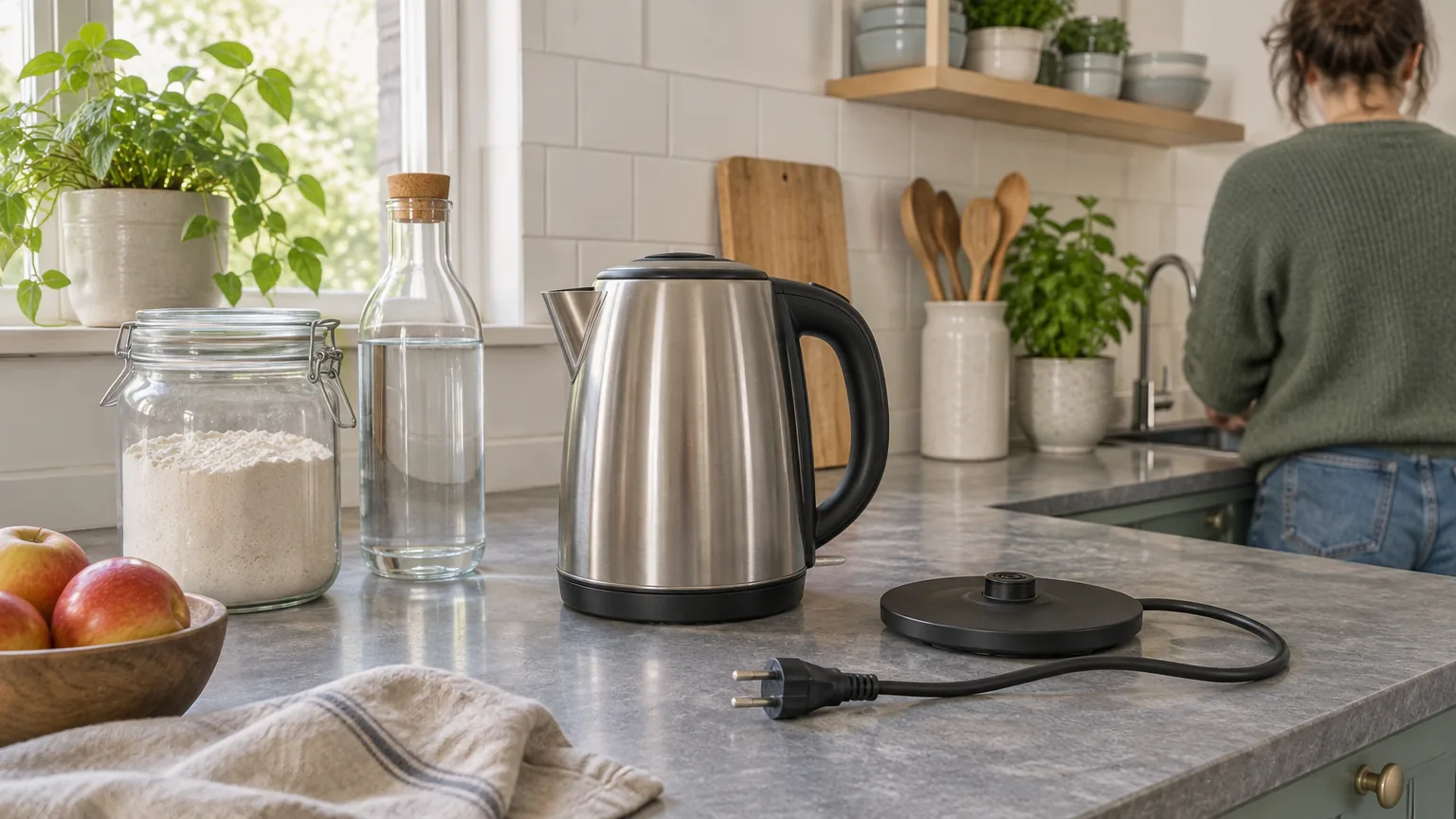
This guide covers how to descale electric kettle models with white vinegar or citric acid: unplug, fill with the solution, soak, rinse, and run a rinse check before you drink from it. Plug-in kettles for a vehicle outlet follow the same idea with one change, because you soak them without heating. The steps, ratios and repeat schedule are below.
Scale is the chalky crust that hard water leaves behind after it is heated. It shows up as white flakes, a gritty film or a rough coating on the bottom and around the heating element.
Is it necessary to descale a kettle?
Yes, if you live in a hard-water area or see buildup. Scale is made of minerals, and it collects on the base and element each time water boils and evaporates. A thick layer can leave flakes in your cup and change how the kettle looks and sounds when it heats.
If your water is soft, the buildup may be light, but check the inside from time to time. A look under good light tells you whether it is time. Look for these signs:
- White or tan flakes floating in a poured cup
- A rough, chalky film on the bottom or around the element
- A cloudy or dull look on the stainless steel or glass interior
- A mineral taste in tea or coffee
What to gather before you start
You need very little. Most of it is already in the kitchen.
- White vinegar, or citric acid powder
- Clean water
- A soft sponge or cloth and a bottle brush for the spout
- A towel for the outside and the base
Read your kettle's manual first. It may list which cleaners are allowed or name a maximum fill line. Follow it over any general advice here. Always unplug the kettle and let it cool before you add anything.
How to descale electric kettle models step by step
This method suits stainless steel and glass kettles with a separate base. Do not submerge the base or the cord at any point.
- Unplug the kettle and let it cool fully.
- Empty it and look inside. Note where the scale sits so you can compare later.
- Mix the solution. For vinegar, use 1 part white vinegar to 2 parts water. For citric acid, dissolve 1 to 2 tablespoons of powder in a liter (about 4 cups) of water.
- Pour the solution in, staying under the maximum fill line.
- Bring it to a boil, then switch off and unplug. If the manual says not to boil acid, skip the boil and use warm water instead.
- Let it soak for 30 minutes. For thick scale, soak for 1 hour.
- Pour out the solution. Wipe loosened scale with a soft sponge. Use the bottle brush on the spout filter area.
- Rinse thoroughly with clean water, at least three times, then run the rinse check below.
Ventilate the kitchen if you boil vinegar, since the steam smells sharp. Keep your face away from the spout when you open the lid.
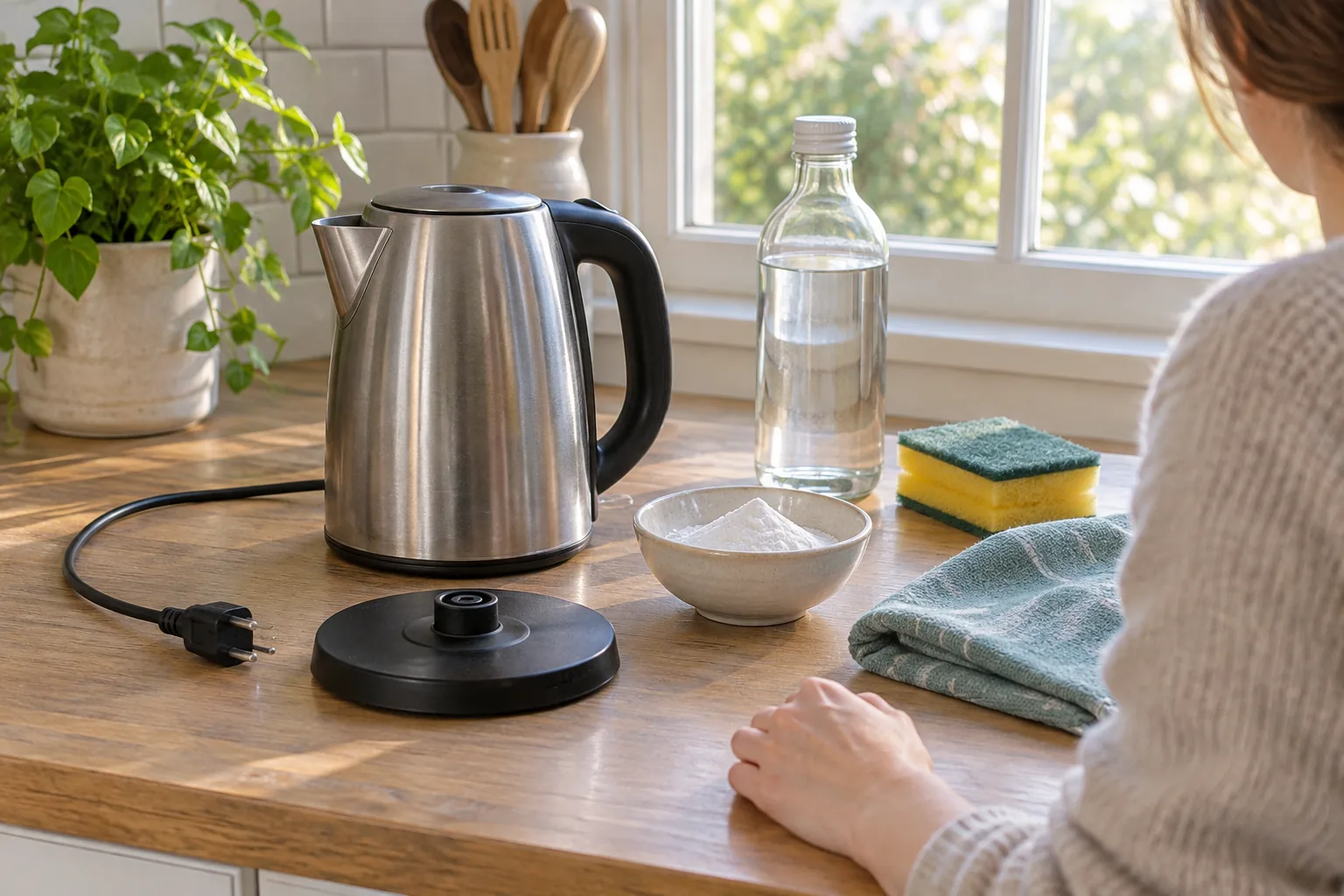
Vinegar, citric acid, lemon or baking soda
The right choice depends on what you have and how thick the scale is. Acids dissolve mineral scale. Baking soda is mildly alkaline, so it does not dissolve scale the way an acid does.
| Option | How to use it | Notes |
|---|---|---|
| White vinegar | 1 part vinegar to 2 parts water, soak | Strong smell, so rinse several times |
| Citric acid | 1 to 2 tablespoons per liter (about 4 cups) of water | Mild smell, useful when you want no vinegar |
| Lemon | Use lemon juice diluted with water, strained of pulp | Juice and pulp leave residue, so rinse well |
| Baking soda | Paste on a cloth for the outside, or a rinse for odors | Not a scale remover |
Can citric acid be used to descale a kettle? Yes. It dissolves mineral scale, and it is the answer when you want to descale without vinegar.
Can baking soda remove limescale? Not on its own. Do not mix it with vinegar inside the kettle, because the two fizz and neutralize each other, leaving a weak solution.
Field note
Out of vinegar? Dissolve citric acid powder in water and follow the same soak steps. Lemon juice works for light buildup, but strain it and rinse extra well.
How to descale a 12V car kettle
A plug-in car kettle is a sealed travel unit, so the method changes. You soak it cool or lukewarm rather than boiling acid, and you keep the plug and any electrical parts dry. Check the manual for what it allows before you start.
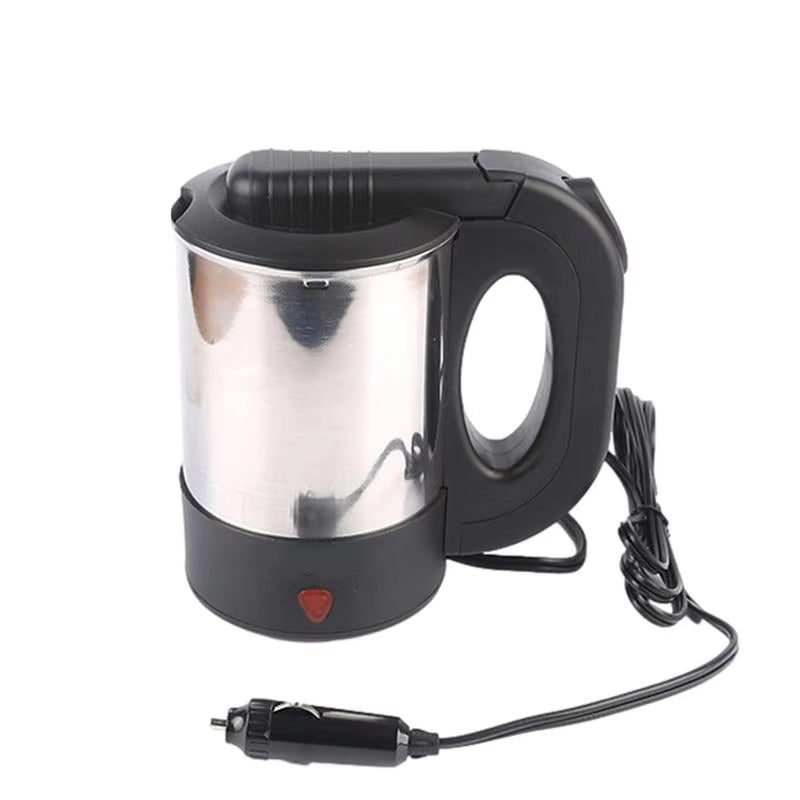
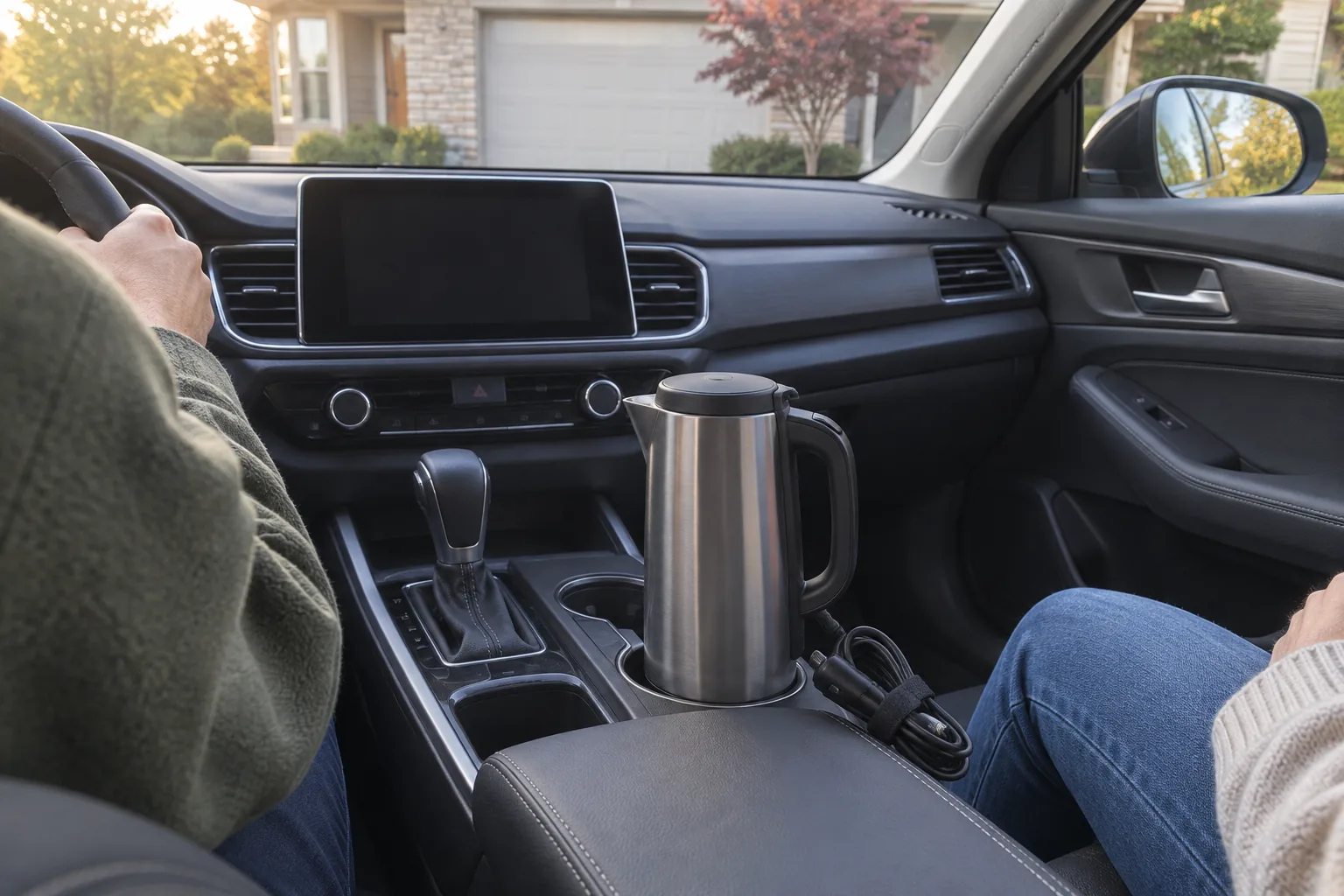
The BrewDrive is an electric car kettle with a 500ml (about 17 fl oz) capacity that plugs into a vehicle outlet. It has a stainless steel body with a flip-up lid. It comes in a 12V or a 24V version, and it has Automatic and Normally Open modes.
 In this guideBrewDrive$89.99View
Cool-soak steps for a travel kettle
- Unplug the kettle from the vehicle outlet and let it cool.
- Mix a mild solution: 1 part white vinegar to 3 parts water, or 1 teaspoon of citric acid in 2 cups of water.
- Fill the kettle partway with the solution, well below the top.
- Leave it parked on a level surface and let it soak for 1 hour. Do not plug it in during the soak.
- Pour out the solution and wipe the inside with a soft cloth.
- Rinse with clean water at least three times.
- Fill with plain water and boil once in Automatic mode, using the vehicle outlet as the manual describes. Discard that water.
Keep the cord and plug end out of the liquid, and wipe them with a dry cloth. If you are unsure what your unit allows, ask the maker or follow the manual instead of guessing.
If the kettle does not heat after cleaning, check the vehicle outlet itself. The guide Electric Tester Types: Which One for Outlets, Wires and Car Circuits shows which tester suits a car circuit.
Rinse checks before you drink from it
A rinse check confirms that no acid is left. Do it every time you descale, whatever the kettle.
- Fill with clean water and smell it. If you notice vinegar, empty and rinse again.
- Boil a full kettle of plain water once and pour it out.
- Taste a small sip of the second boil once it cools. Any sour or mineral taste means another rinse.
- Look inside for loose flakes. Tip them out and rinse again.
Repeat the boil-and-discard step until the water has no smell or taste. Then you can use the kettle as normal.
How to clean a kettle element, the outside and a new kettle
The kettle element
The heating element is the flat plate or coil at the bottom. Soak it in the acid solution as above and wipe it with a soft sponge. Skip steel wool and abrasive pads, which scratch the surface. If the element is exposed, check the manual before using any tool on it.
The outside
Unplug, then wipe with a damp cloth and a drop of dish soap. For stainless steel, wipe along the grain and dry with a clean towel. A paste of baking soda and water on a cloth can lift marks on the exterior, but keep it away from the base contacts and cord.
Before first use
Rinse a new kettle with clean water, fill to the maximum line, boil, and discard. Repeat once if the manual says to. This clears dust and any factory smell from the inside.
How often to descale and what to avoid
Use the signs in the first section as your trigger, not the calendar. Hard water calls for a closer look, and soft water lets you wait. A reasonable habit is to look inside when you refill the water for the week and descale when scale appears.
| What you see | What to do |
|---|---|
| Clean interior, no flakes | Rinse and keep using |
| Light white film | Soak with the diluted solution, rinse |
| Flakes in the cup or thick crust | Soak for 1 hour, brush, rinse three times, repeat if needed |
| Car kettle with film | Cool soak, rinse, one plain boil, discard |
To slow buildup, empty the kettle after use instead of leaving water standing. Use filtered or softened water if your tap water is hard, and wipe the inside dry now and then.
Common mistakes
- Mixing vinegar and baking soda in the kettle
- Soaking with the kettle plugged in
- Submerging the base or cord
- Skipping the rinse check
- Scrubbing the element with abrasive pads
If you keep gear like a travel kettle in the vehicle, the Cabin Comfort collection has more for the cab.