How to Use a Foam Sprayer for a Pre-Wash Car Clean
Mix car shampoo with water by the label, coat the car from the bottom up, let the foam dwell without drying, then rinse from the top down. This guide covers each step.
The Quindrel Team
October 26, 2026 · 6 min read
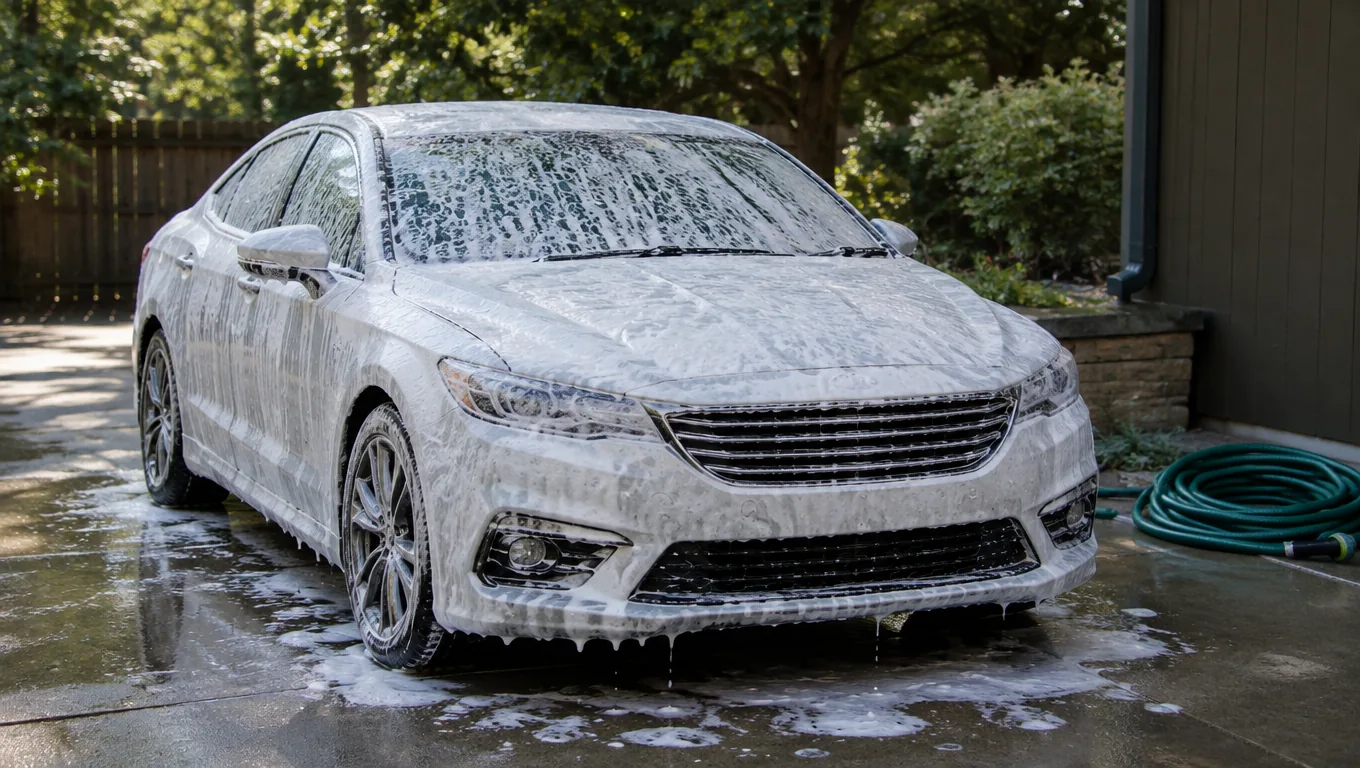
To learn how to use a foam sprayer, fill the tank with water and car shampoo mixed to the ratio on the bottle, spray the foam over the whole car, let it dwell on the paint without drying, then rinse with water. The foam is a pre-wash step: it coats the panels before any mitt touches the paint. This guide gives the full routine, from mixing to rinse order.
The steps below fit a hand-held, battery-powered sprayer and also show where a pressure washer with a detergent tube fits in.
How to use a foam sprayer: the routine at a glance
- Park the car in shade and let hot panels cool.
- Rinse loose dirt off with plain water.
- Mix water and car shampoo in the tank, following the bottle label.
- Coat the car with foam, starting at the lower panels and working up.
- Let the foam sit on the paint. Do not let it dry.
- Rinse from the roof down, then continue with your normal contact wash.
Each step is explained below, with a mixing table and a list of common mistakes.
What a foam sprayer does
A foam sprayer pushes soapy water through a nozzle that mixes in air. The result is a thick layer of foam that clings to vertical panels instead of running straight off. The foam loosens surface dirt before you wash by hand.
It is a pre-wash tool, not a replacement for the contact wash. Think of it as the first pass that handles loose road film before the mitt comes out.
Two common types
| Type | How it works | Good to know |
|---|---|---|
| Battery-powered hand sprayer | Trigger spray from a tank, with air mixed in at the nozzle | No hose or power outlet needed for the foam step |
| Pressure washer with detergent tube | Draws shampoo from a bottle or tube into the water stream | Needs a water hose, a covered outdoor outlet and the right fittings |
Set up the sprayer
For a hand sprayer such as FoamCrest, the setup is short. It is a battery-powered foam sprayer with a 2-liter (about 0.5 gallon) tank and a wide filling mouth. It comes with a rechargeable battery pack and a USB charging cable, so charge the pack between wash sessions.
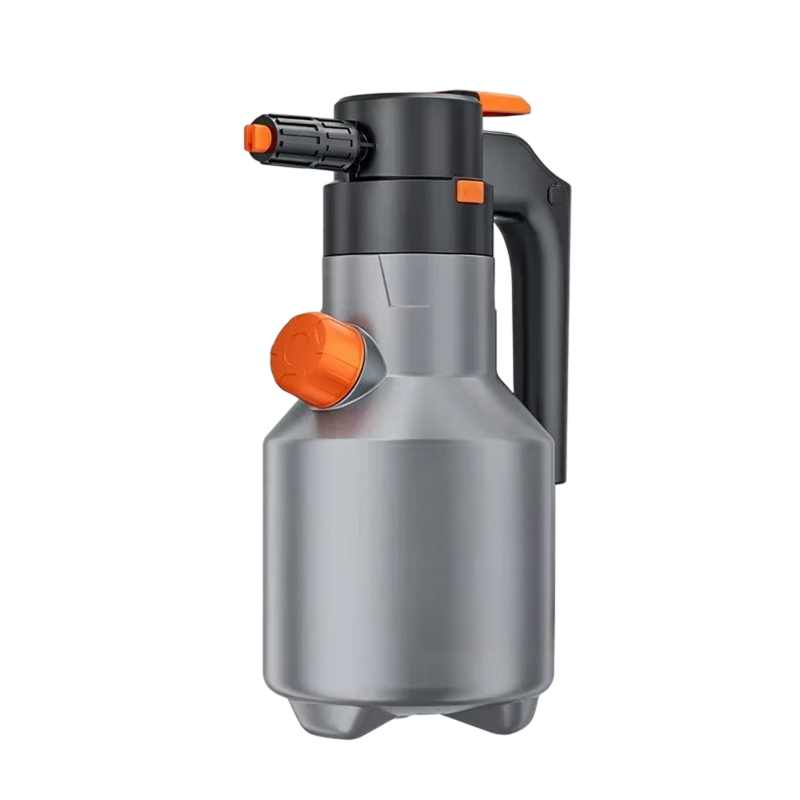 In this guideFoamCrest$89.99View
Setup checklist
- Charge the battery pack with the USB cable before you start.
- Check that the tank sits snug against the housing.
- Gather two buckets, a wash mitt, a hose or pressure washer for rinsing, and drying towels.
- Read the quick start guide that comes in the box.
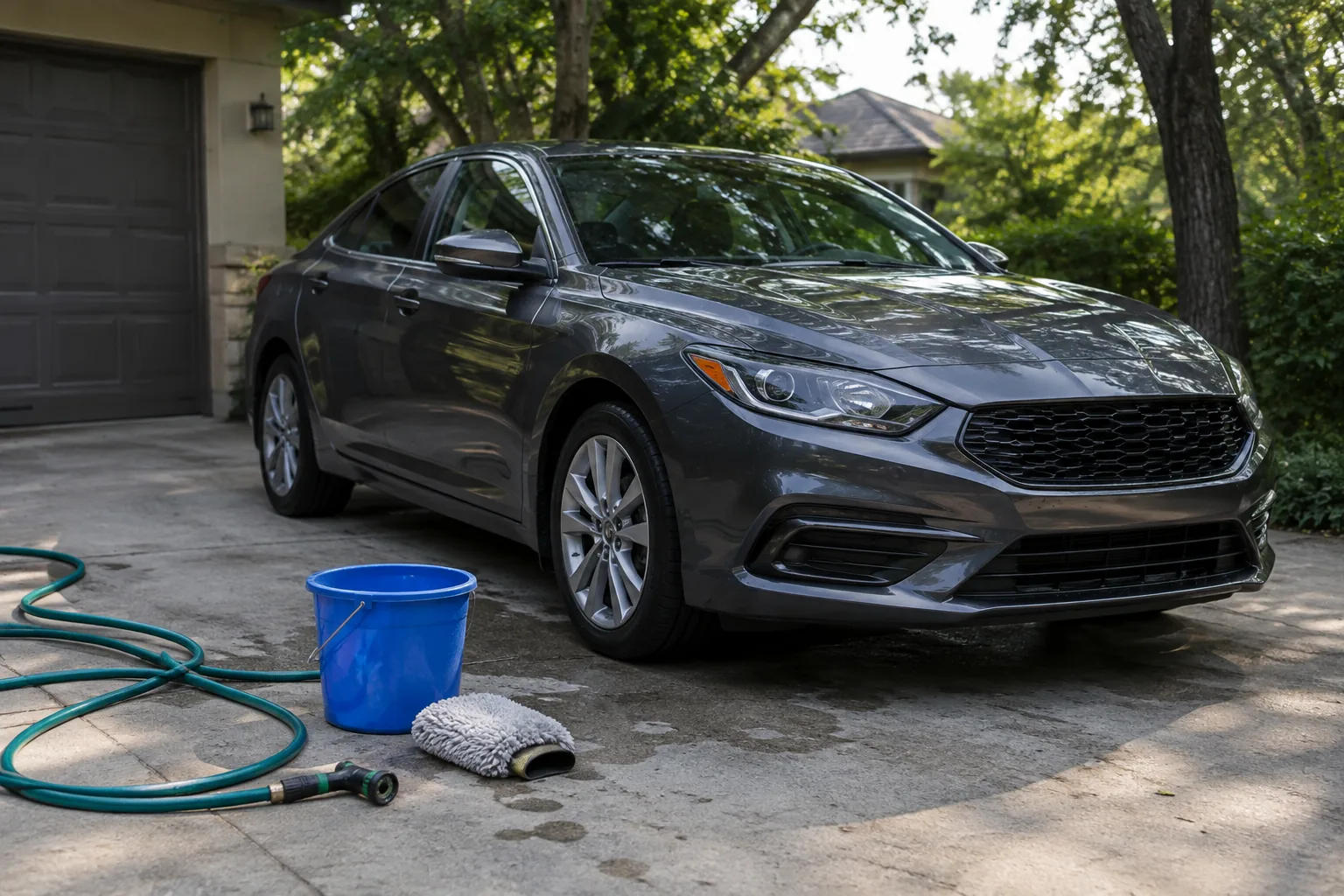
- Pick a shaded spot with a drain-friendly surface.
Shade matters because foam on a hot panel can dry before you rinse it, which leaves spots.
Dilution ratios: how to mix the tank
The right ratio depends on your shampoo, so the bottle label is the authority. Some shampoos are made for foam sprayers and list a specific ratio. Others list a bucket ratio only. Start with the label and adjust the amount by small steps if the foam looks too thin or too heavy.
Mixing steps
- Add the water to the 2-liter tank first.
- Measure the shampoo with a cap or small measuring cup, using the label ratio for the volume of water you added.
- Pour the shampoo in slowly so the tank does not fill with suds.
- Close the tank and tilt it gently to blend. Do not shake hard.
| Situation | Adjustment to try |
|---|---|
| Foam runs off the panels | Add a little more shampoo next time |
| Foam is thick but leaves residue | Use a little less shampoo |
| Hard water in your area | Check the shampoo label for hard-water notes |
| Shampoo is very concentrated | Measure with a marked cup rather than by eye |
Write the ratio you settle on on a piece of tape on the tank so you can repeat it. Mix fresh for each wash rather than leaving a mix in the tank for days.
Field note
Rinse loose dirt off with plain water first. A foam layer works on road film, so it does not need to fight through heavy mud or sand.
Apply the foam
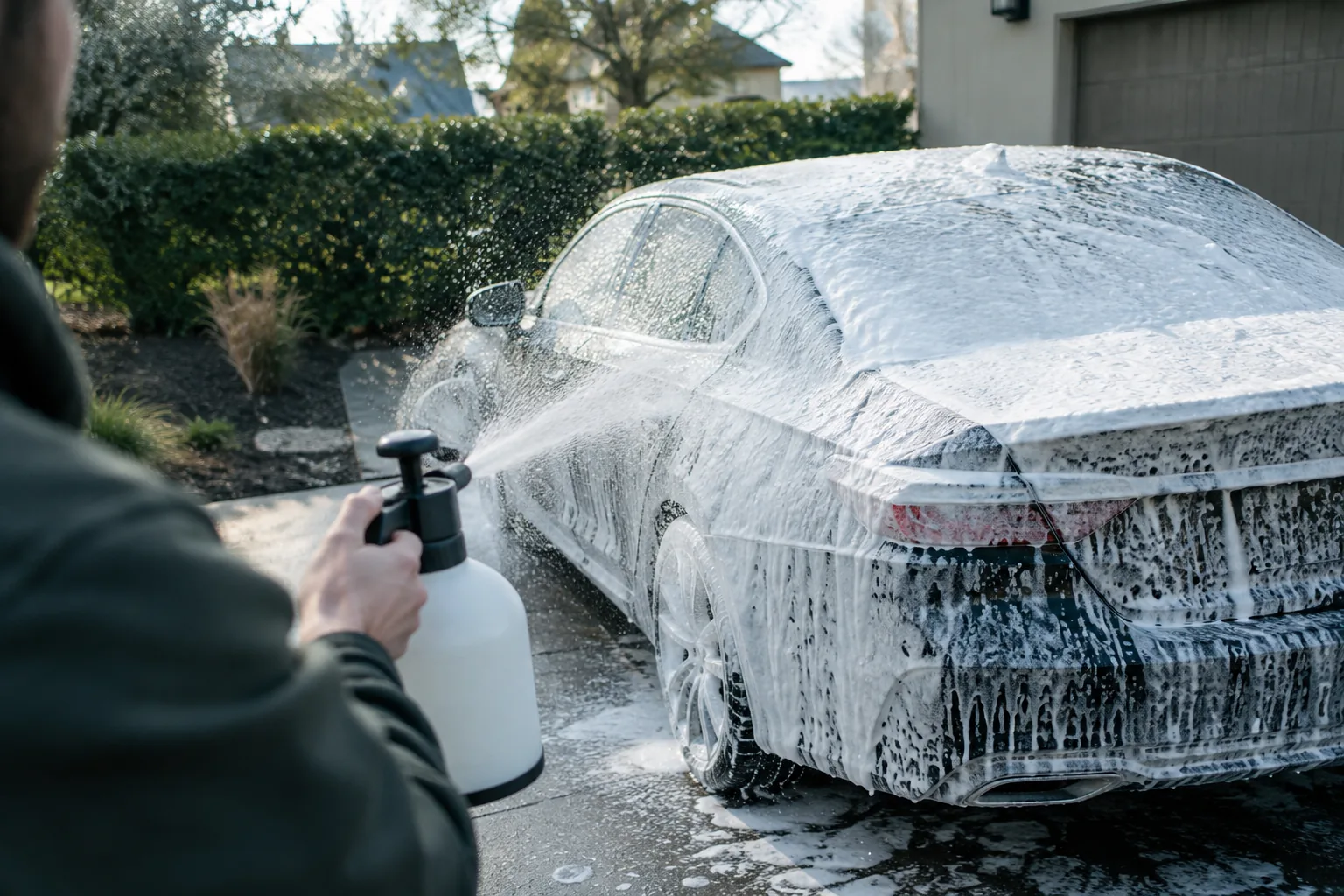
Switch the sprayer on and squeeze the trigger. The nozzle mixes air into the soap solution as it sprays, and the foam settles on the paint. Hold the nozzle a short distance from the panel and move steadily so the coat stays even.
Spray order
- Start with the lower panels, rocker area and wheel arches.
- Work upward across doors, hood and trunk.
- Finish with the roof and glass.
Start low because foam applied at the top runs down over panels you have not coated yet. Cover the whole car before the first panel starts to thin out.
Dwell time and rinse sequence
Dwell time is how long the foam stays on the paint before you rinse. The shampoo label may give guidance, so follow it. The rule that applies to every shampoo is simple: rinse before the foam dries.
Watch the panels. When the foam begins to slide and thin out, it is working on the dirt. When the edges look dry or tacky, rinse right away.
Rinse order
- Rinse the roof and glass first.
- Move down the upper sides, hood and trunk.
- Finish with the lower panels and wheel arches, where the heaviest dirt collects.
- Check seams, mirrors and door handles, where foam collects.
After the rinse, go on to your two-bucket contact wash or dry the car, depending on how dirty it was.
Using a pressure washer for the foam step
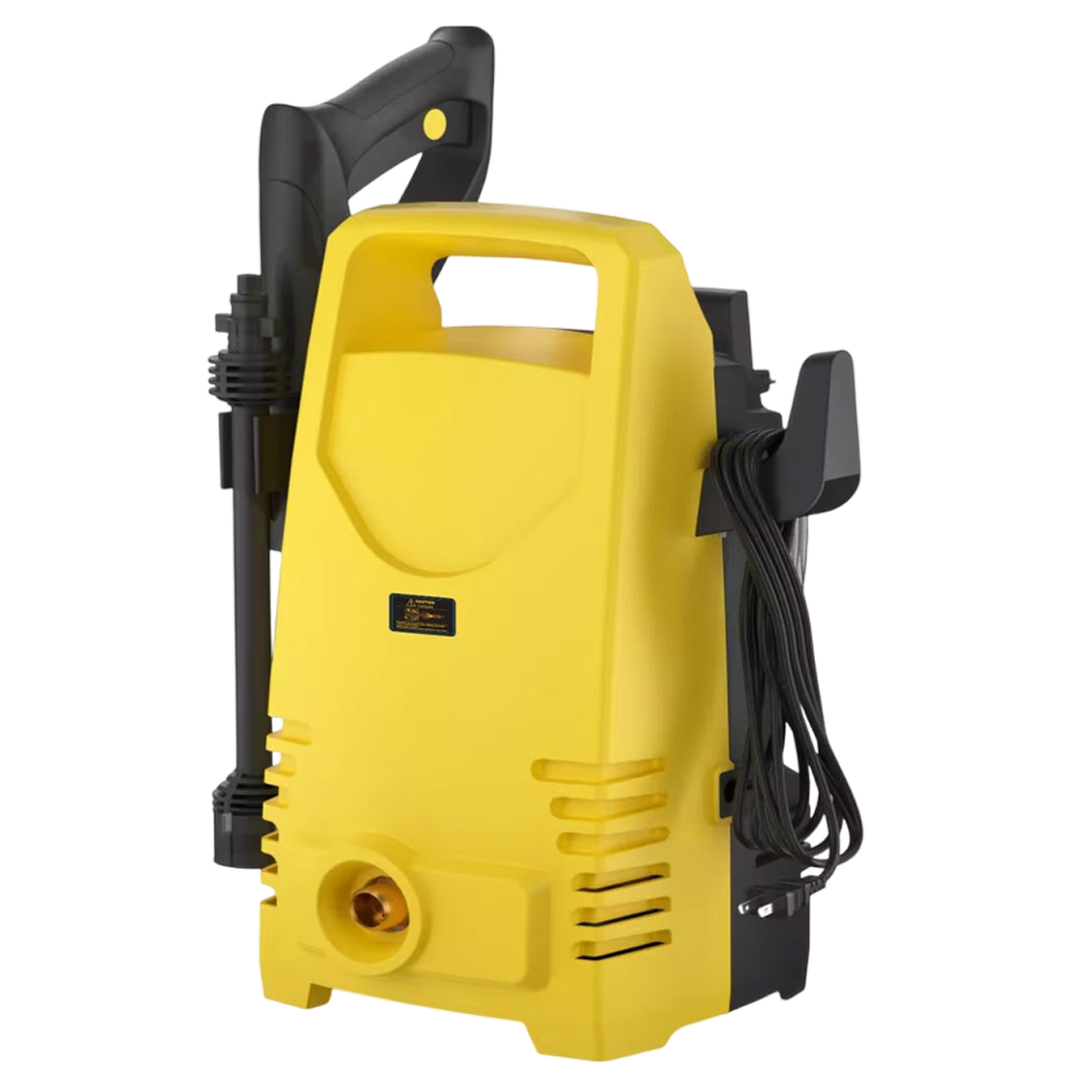
If you rinse with a pressure washer, you can also use it for the foam. WashForge is an 1800W electric pressure washer that delivers 360 l/h (1.6 GPM) at 110 bar (about 1,600 psi). It ships with a detergent suction tube for foam-soap pre-wash and a nozzle that adjusts from 1° to 180°.
Pressure drives the rinse, while the flow rate is the figure to check if you pair a washer with a foam cannon. Connect a garden hose to the M22 inlet, plug the cord into a covered outdoor outlet, and attach the lance. For pressure ratings and hose fittings, see Choosing a Good Power Washer for Home Use.
 In this guideWashForge$179.99View
Use the wide 180° fan when rinsing body panels and narrow it for wheel barrels. Keep the lance at a sensible distance from paint and trim, and do not aim the narrow 1° jet at body panels. Release the trigger when you pause, and follow the manual for electrical and water connections. More equipment is in the Pressure Washing, Snow & Weed Control collection.
Common mistakes
- Washing in direct sun, so the foam dries on the paint.
- Guessing the ratio instead of reading the shampoo label.
- Starting at the roof, so foam runs down over the lower panels before you coat them.
- Using dish soap or a cleaner not made for paint. Use car shampoo.
- Leaving a mix in the tank for days.
- Skipping the rinse of the sprayer after use.
Care after the wash
Knowing how to use a foam sprayer includes cleaning it afterward. Empty any leftover mix and fill the tank with clean water. Spray it through the nozzle until the stream runs clear, then let the parts dry. FoamCrest has chemical-resistant seals where the housing meets the tank, fitted for regular contact with car soap mixed with water, and a rinse after each use clears leftover shampoo from the nozzle.
| When | Task |
|---|---|
| After each wash | Empty the tank, flush with clean water, wipe the housing |
| Between sessions | Recharge the battery pack with the USB cable |
| Before storage | Dry the tank and keep it with the lid off |
If you use a pressure washer, the inlet filter is replaceable and the unit has storage hooks for the hose and cable. For upkeep steps, read Pressure Washer Servicing: A DIY Maintenance Checklist.