What Is Wheel Alignment? Toe, Camber, Caster and Home Checks
Wheel alignment is the setting of toe, camber and caster to the maker's specification. Learn each angle and run a home pre-check of pressure, wear and lean before paying a shop.
The Quindrel Team
November 14, 2026 · 8 min read

What is wheel alignment? It is the adjustment of the angles at which your wheels meet the road and each other, set to the vehicle maker's specification. The three main angles are toe, camber and caster, and a shop changes them through the suspension and steering parts, not by moving the wheels on their hubs. This guide explains each angle, then walks you through a home pre-check you can do before paying for an alignment.
What Is Wheel Alignment? The Angles Explained
Alignment describes direction, not the wheels or tires themselves. Each angle is measured against the road, the vehicle's centerline or a vertical line, and the maker publishes a target and an allowed range for each one. Your owner's manual or a shop's alignment printout lists those targets.
| Angle | Viewed from | What it describes | What it can look like when off |
|---|---|---|---|
| Toe | Above | Whether the front edges of a pair of tires point slightly inward or outward | Feathered tread edges, a steering wheel that sits off-center |
| Camber | Front or rear | The inward or outward lean of the wheel from vertical | Wear concentrated on the inner or outer shoulder, a pull to one side |
| Caster | Side | The forward or backward tilt of the steering axis | Steering that feels light, heavy or slow to return to center |
| Thrust angle | Above | The direction the rear wheels point relative to the centerline | Car that crabs or a steering wheel off-center on a straight road |
Toe
Toe is easiest to picture from above. If your tires point slightly toward each other, that is toe-in; if they point apart, that is toe-out. Even a small error drags the tread sideways as the wheel rolls, which can leave a saw-tooth or feathered texture across the tread.
Camber
Camber is the tilt of the top of the wheel. Leaning inward is negative camber, leaning outward is positive. Because it shifts the contact patch toward one shoulder, camber wear shows up on the inner or outer edge of the tire.
Caster
Caster is the measurement of the front spindle tilt when viewed from the side. Think of a shopping cart wheel trailing behind its pivot. More positive caster tilts the steering axis backward at the top and helps the wheel return toward straight ahead after a turn.
Thrust angle
Thrust angle compares the rear axle's direction with the vehicle centerline. If the rear wheels point slightly off to one side, the front wheels and steering wheel have to compensate, and the car can feel as if it steers around a corner while going straight.
What Does Wheel Alignment Do?
Correct alignment lets the tires meet the road at the angles the engineers designed for. That means the vehicle can track straight ahead without veering when you hold the steering wheel level, and the tread contacts the road across its intended width. Worn ball joints, bushings and tie rods change those angles over time, which is why alignment and suspension condition go together.
An alignment does not fix a worn part. If a ball joint or tie rod has play, a shop should replace it first, because the angles will not hold otherwise. Bent control arms or a hard curb strike can also push a car outside the range an adjustment can reach.
Alignment vs. Balancing: Two Different Services
Is there a difference between an alignment and a wheel alignment? No. "Alignment," "car alignment" and "wheel alignment" all name the same service. The mix-up comes with tire balancing, which is a separate job.
| Item | Wheel alignment | Tire balancing |
|---|---|---|
| What changes | Suspension and steering angles | Small weights added to the wheel |
| What it addresses | Pulling, off-center steering wheel, uneven tread wear | Vibration that changes with road speed |
| Where you notice it | Steering behavior and tire wear | Steering wheel, floor or seat vibration |
| Done when | Parts are replaced, or pulling or uneven wear appears | Tires are mounted or vibration appears |
If the steering wheel shakes at highway speed, ask about balancing first. If the car drifts or the tread wears on one edge, ask about alignment.
Signs You Need an Alignment and How Often to Check
- The car pulls or drifts to one side on a flat, straight road.
- The steering wheel is off-center when the car travels straight.
- The inner or outer edge of a tire is more worn than the rest of the tread.
- The steering wheel does not return to center on its own after a turn.
- You recently hit a pothole or curb, or replaced steering or suspension parts.
On how often wheel alignment should be checked, the owner's manual or the maker's service schedule is the authority for your vehicle. Some shops also suggest a check when you buy new tires, after suspension repairs, or after a hard impact. Is an alignment needed after replacing tires? Not automatically, but new tires are a sensible time to look at the wear pattern on the old ones, because it shows what the angles were doing.
Is wheel alignment necessary? It is when the angles are outside the maker's range, since the tread then drags unevenly and the steering may pull. If your car tracks straight and the tires wear evenly, a measurement may simply confirm that. The home checks below help you decide.
Home Pre-Check Before You Pay for an Alignment
These steps rule out simple causes that mimic an alignment problem. They do not replace a rack measurement, but they give the shop a clearer starting point. Park on level pavement, set the parking brake, and follow your owner's manual whenever you work around the wheels.
Step 1: Set tire pressure
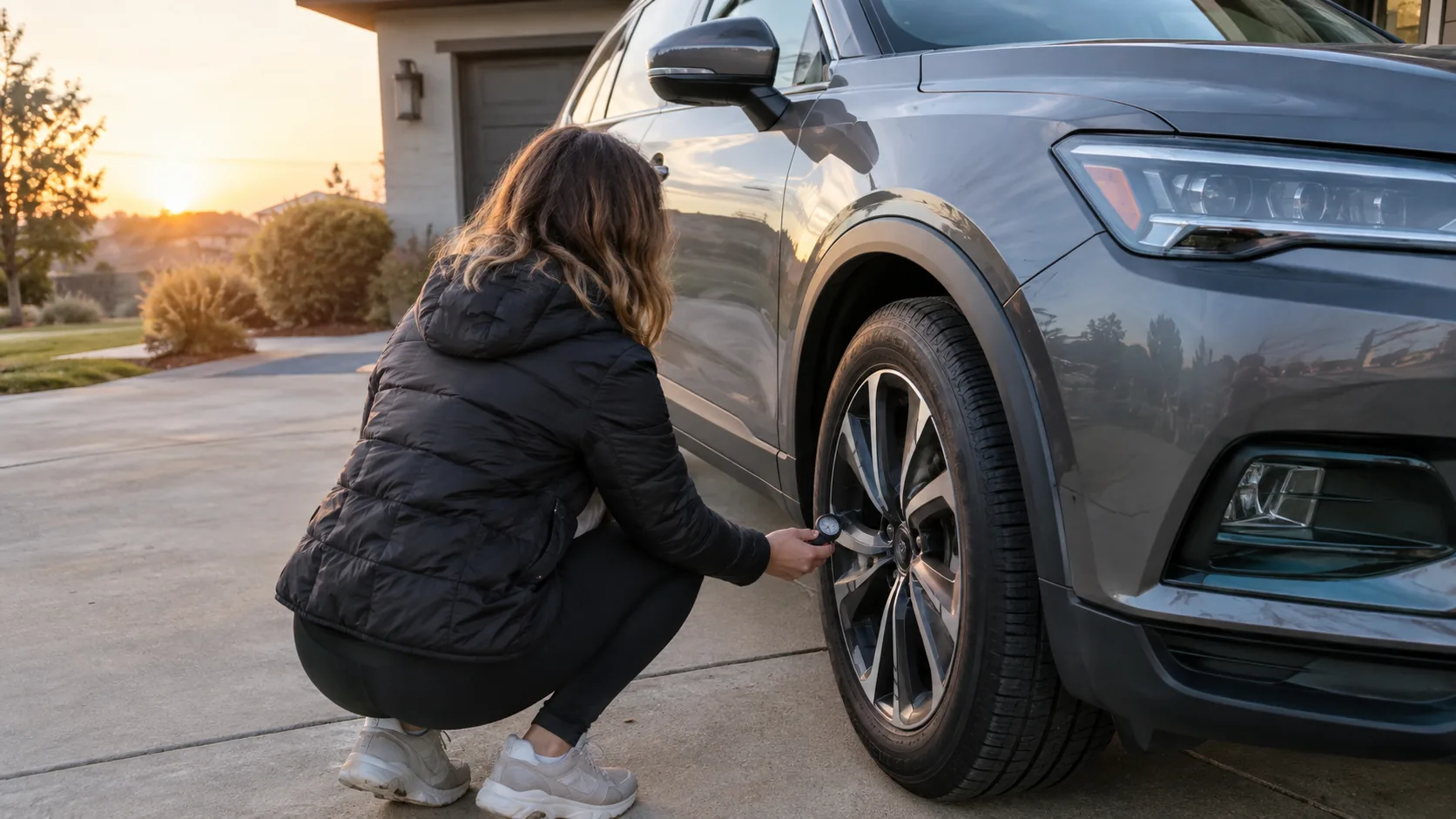
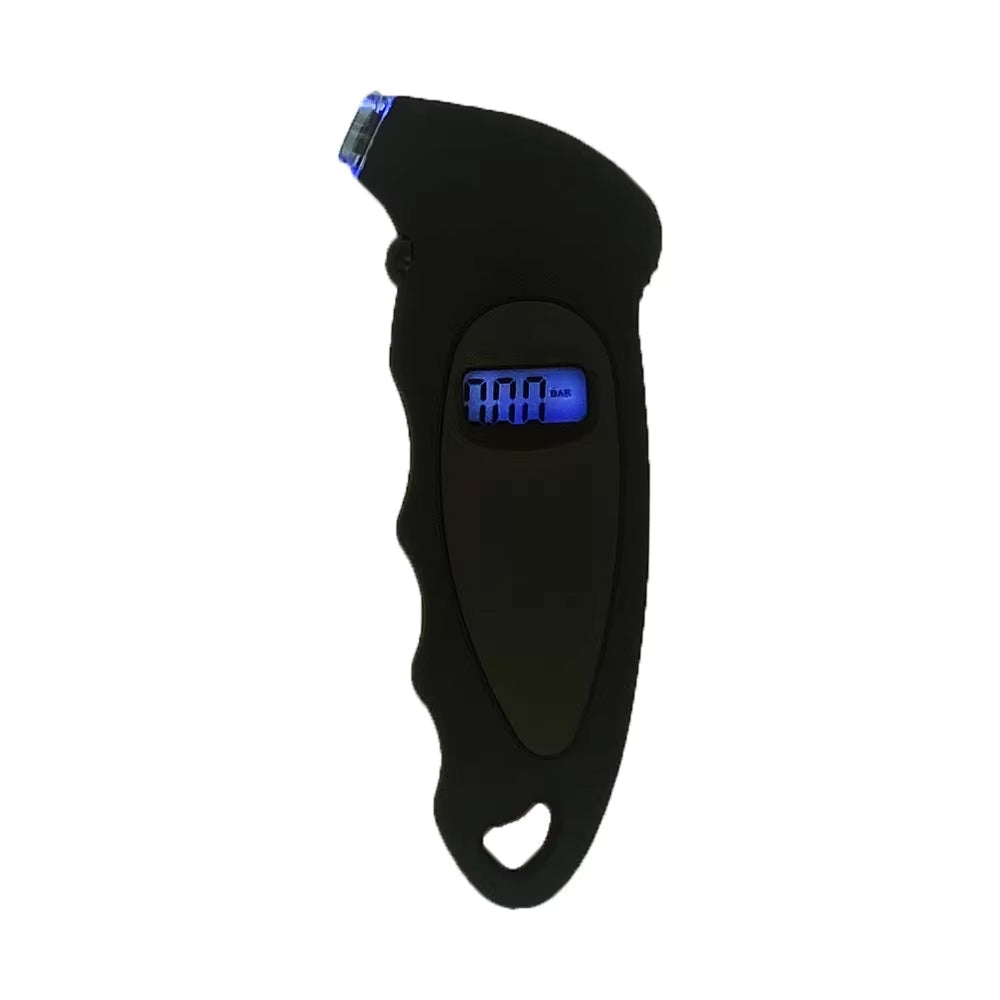
Low or uneven pressure makes a car pull and wear the shoulders of a tire. Check all four tires cold, using the pressure printed on the driver's door jamb label or in the manual. A digital gauge shows the number directly, and the guide on using a tire pressure gauge and checking its accuracy covers the technique.
The TrueTread digital gauge has an oversized LCD, reads in PSI, BAR, KPA or KG/CM², and you press it onto the valve stem and read the screen.
 In this guideTrueTread$49.99View
Step 2: Read the wear pattern
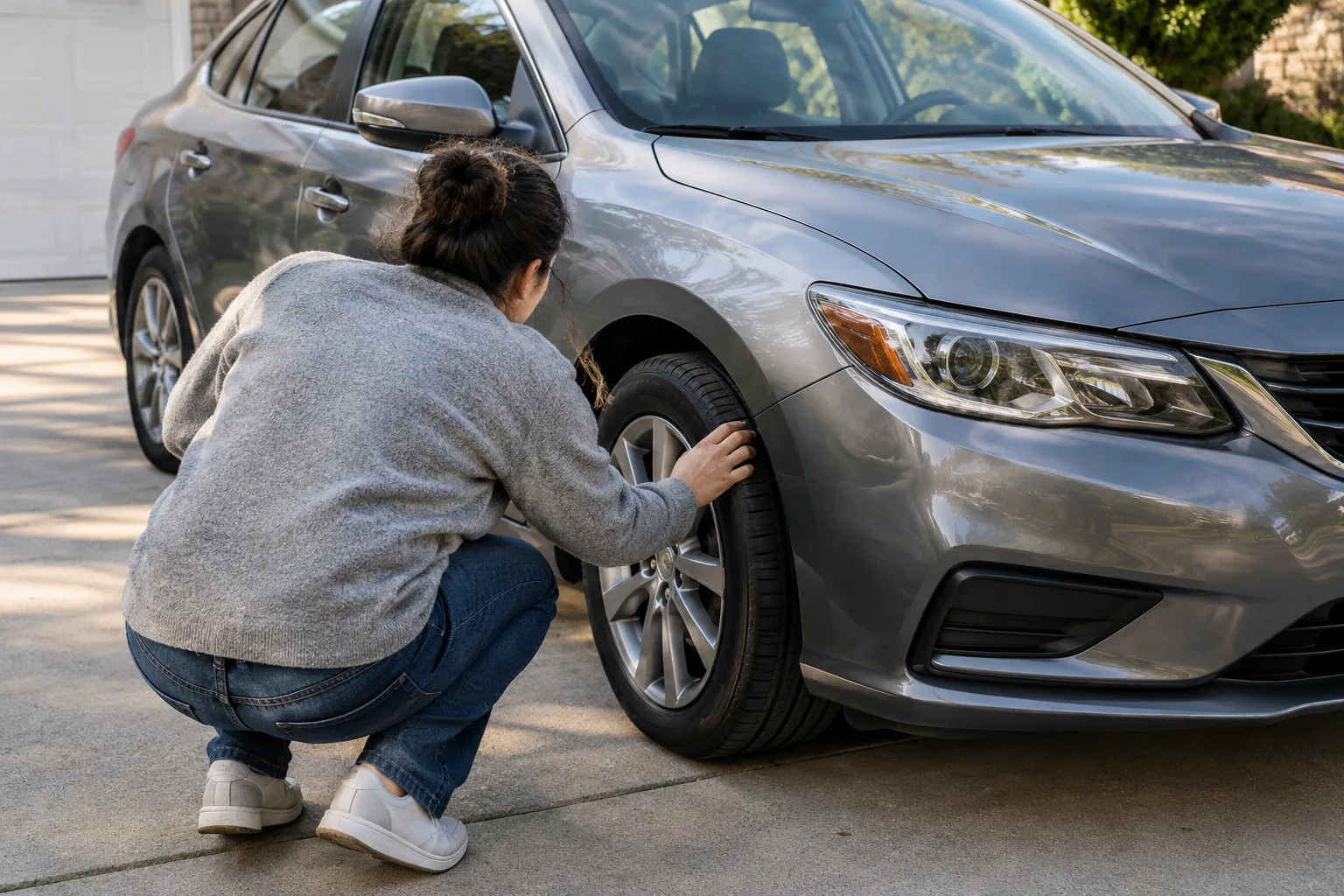
With the engine off and the vehicle parked, look at each tread first for exposed cords or embedded objects such as nails or glass. If the tire looks clear, use light hand pressure rather than a firm swipe, since worn tires can have sharp edges. Compare the inner shoulder, center and outer shoulder, and look for the patterns below.
| Wear pattern | Possible cause |
|---|---|
| Both shoulders worn | Under-inflation |
| Center worn | Over-inflation |
| One shoulder worn | Camber out of range |
| Feathered or saw-tooth tread | Toe out of range |
| Patchy cupped spots | Worn suspension parts or an out-of-balance wheel |
Pressure-related wear comes first, so fix pressure and re-check before blaming the angles. For topping up at home, see how to use a portable tire inflator. Our Battery, Tire & Air Care collection has related gear.
Step 3: Take a rough camber reading
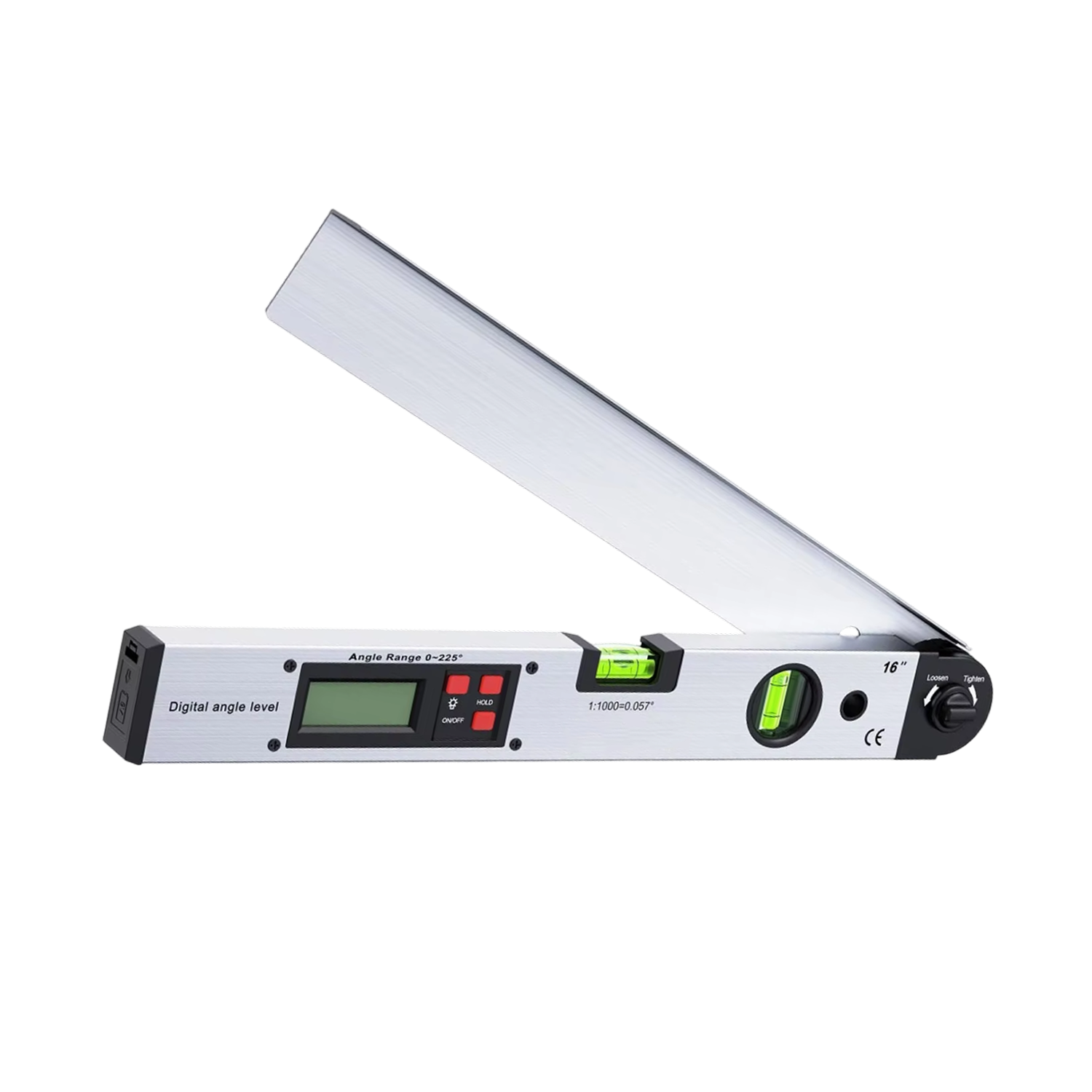
An angle finder can show whether one wheel leans differently from its twin. Park on level ground with the wheels straight, and hold the arm flush against a flat, vertical part of the wheel, then read the number. Repeat on the other side and compare. A difference between sides is useful information for the shop, but a home reading is a rough comparison, not a specification check.
The VertexGauge shows angles on a backlit LCD in 0.1-degree steps across a range of 0 to 225 degrees, and the HOLD button freezes the number. Its mechanical lock holds the arm in place. Battery is not included.
 In this guideVertexGauge$79.99View
Field note
Write down your tire pressures, the wear pattern on each tire and any pulling direction before you visit a shop. A specific complaint, such as "drifts right at steady speed on a flat road," gives the technician a starting point.
Step 4: Look for loose or damaged parts
With the car on the ground, this is only a rough visual check. Look for bent wheels, bulges on the sidewalls and uneven ride height side to side. A proper check for play in joints and bearings needs the wheel raised, so leave that to a shop. If you raise the car yourself, follow the manual, use the jack points and support the car on jack stands; never go under a vehicle held only by a jack.
Step 5: Do a straight-road drive
On an empty, flat road, hold the wheel lightly at a steady speed and note which way the car drifts. Some roads slope for drainage, so drive the same road in the other direction before you decide, and only where it is legal and traffic allows. Note whether the steering wheel sits level while the car goes straight.
How a Wheel Alignment Is Done
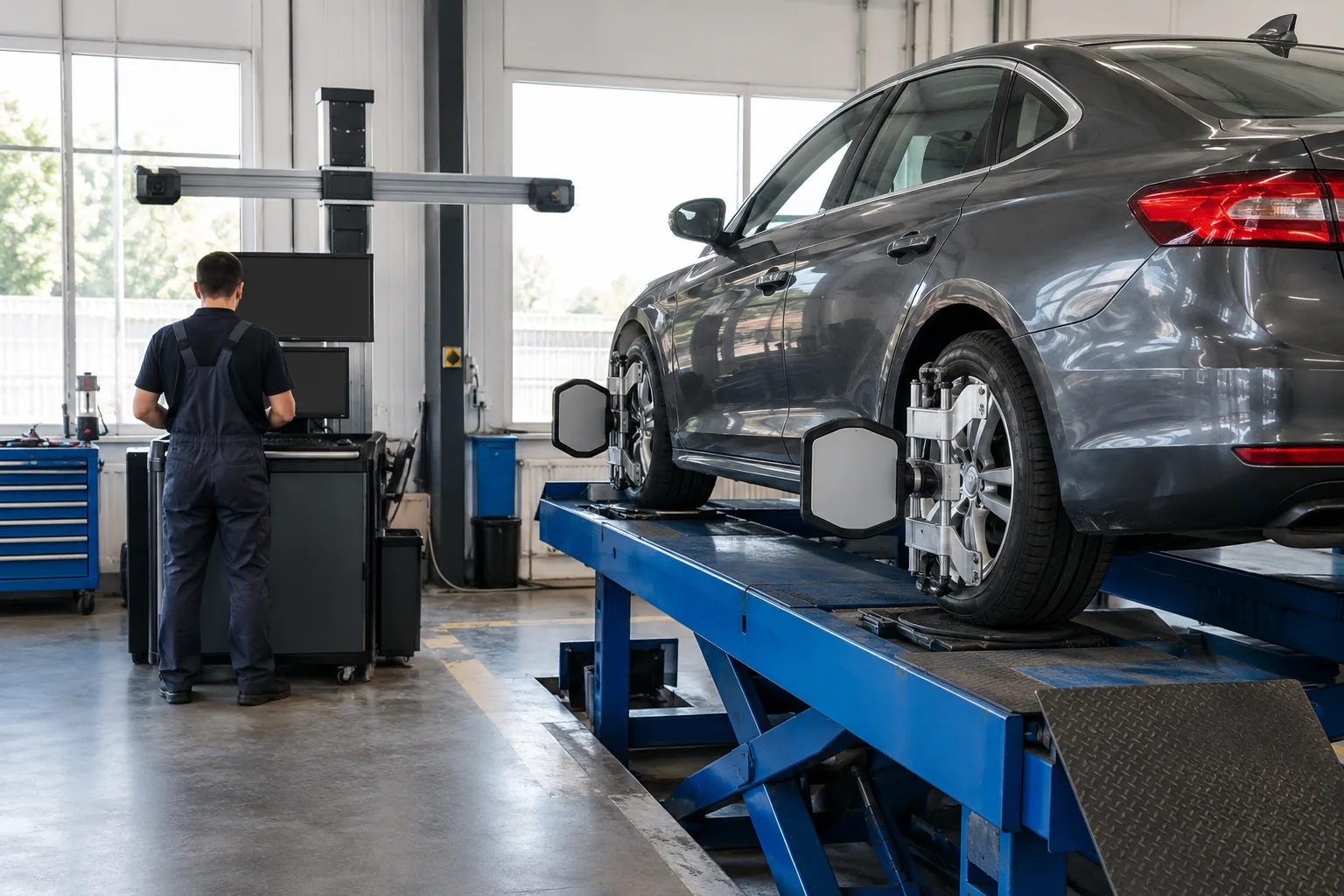
A technician drives the car onto a lift, mounts sensor heads on each wheel and reads the current angles against your vehicle's specification. Adjustments are made at tie rods, control arm or cam bolts, or shims, depending on the design. Some vehicles have little adjustability at the rear, and the shop will tell you which angles can be changed.
How long does a 4 wheel alignment take? Ask the shop for an estimate when you book, because the time depends on the vehicle, rusted fasteners and whether worn parts need replacing first.
Types of alignment
What are the four types of alignment? The term has no single standard list. Shops offer a front-end (two-wheel) alignment, a thrust-angle alignment and a four-wheel alignment. If you mean the four angles, they are toe, camber, caster and thrust angle. A two-wheel alignment suits solid rear axles with no adjustment, while a four-wheel alignment suits vehicles with adjustable rear suspension.
Cost and finding a shop
Quotes differ by shop, region and vehicle, so get a written quote before you book. Ask whether it includes a printout of before and after angles, and whether it covers all four wheels.
Common Mistakes to Avoid
- Aligning before fixing worn tie rods, ball joints or bushings.
- Ignoring tire pressure and judging wear from a single tire.
- Confusing vibration, a balancing issue, with pulling, an alignment issue.
- Relying on a drift test on a crowned road.
- Skipping the printout, so you cannot confirm the angles changed.