How to Pump a Bike Tire: Presta, Schrader and the Right Pressure
Identify the valve, seat the pump head fully, inflate to the range printed on the tire sidewall, and check with a gauge. This guide covers Presta, Schrader and powered inflators.
The Quindrel Team
November 6, 2026 · 6 min read
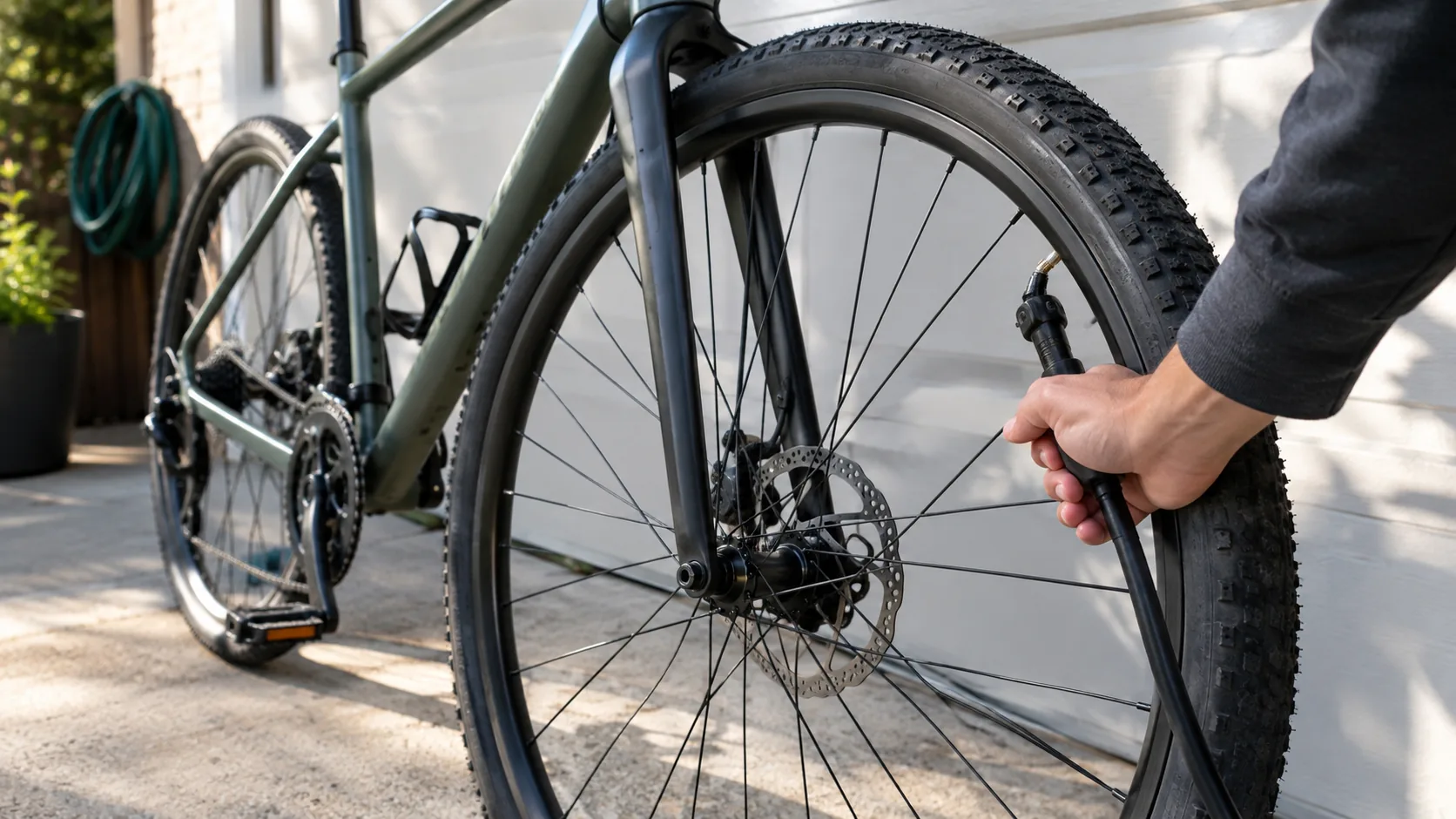
Knowing how to pump bike tire valves of either type comes down to four moves: identify the valve, seat the pump head fully, inflate to the range printed on the tire sidewall, and close the valve. A Presta valve is the narrow one with a small lock nut on top. A Schrader valve is the wider one that looks like a car valve.
This guide walks through both valves, shows the pressure ranges by tire type, and explains how to use a powered inflator without overinflating.
Identify your valve first
Look at the top of the valve stem with the dust cap off. The valve type decides which pump head or adapter you need, so check before you attach anything.
| Feature | Presta | Schrader |
|---|---|---|
| Stem width | Narrow | Wider, like a car valve |
| Top of the stem | Small lock nut you unscrew | Spring-loaded pin inside the opening |
| Found on | Road bikes and some mountain bikes | Some hybrid, kids and casual bikes |
| Pump head | Needs a Presta-compatible head or adapter | Fits a car-style head and gas station hoses |
Do you need a special pump for a Presta valve? Not always. Some pump heads fit both valve types, and a small adapter lets a Schrader-only head work on a Presta stem. Look at the head or read its manual to see what it fits.
Find the right pressure for your tire
The tire sidewall prints a pressure range in PSI, often with a bar or kPa figure beside it. Stay inside that range. The exact number inside it depends on rider weight, load and road surface, and wider tires run a lower tire pressure than narrow ones.
| Tire type | General starting range | Notes |
|---|---|---|
| Road, narrow | 80 to 130 PSI | Heavier riders sit toward the upper end of the sidewall range |
| Gravel | 30 to 60 PSI | Lower for loose surfaces |
| Hybrid and commuter | 50 to 70 PSI | Check the sidewall; ranges vary by width |
| Mountain, tubeless or tubed | 20 to 35 PSI | Lower pressure for grip on trails |
| Kids' bikes | 20 to 40 PSI | Follow the sidewall |
These are general starting points, not a replacement for the printed range. If the sidewall and a table disagree, the sidewall wins. For more on how pressure readings work, see What Is Barometric Pressure and How to Read It on a Handheld Meter.
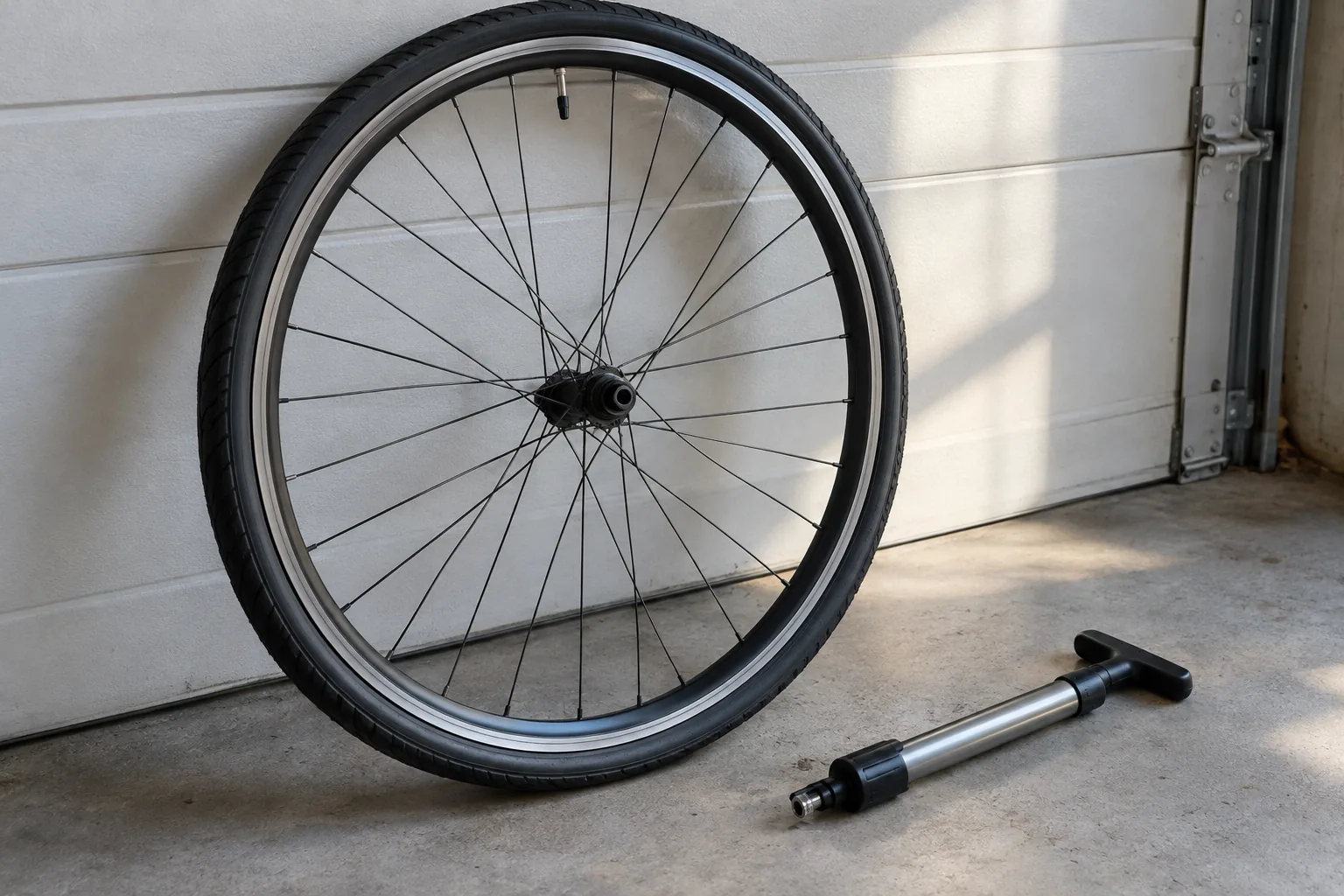
How to pump bike tire valves step by step
Gather a pump with a gauge, a separate handheld gauge if you have one, and the adapter that fits your valve. Then follow the steps for your valve type.
Presta valve
- Turn the wheel so the valve sits at the top, and unscrew the dust cap.
- Unscrew the small lock nut on the stem, then press the tip briefly until you hear a short burst of air. This frees the valve so air can flow.
- Push the pump head straight onto the stem until it is seated, then flip the lever to lock it.
- Pump while watching the gauge, and stop at your target PSI.
- Flip the lever back, pull the head straight off, tighten the lock nut, and refit the cap.
Schrader valve
- Unscrew the dust cap and set it where you can find it again.
- Press the pump head onto the valve and lock the lever, or thread the head on if it screws.
- Pump to the target PSI on the gauge.
- Release the lever and pull the head off with a straight motion.
- Refit the cap.
A pump head that is not fully seated will hiss. If you hear air hissing while pumping, release the lever, reseat the head straight on the stem, and lock it again.
Pumping with a hand pump, floor pump or ball pump
A floor pump has a gauge and a stable base, which gives you control for regular top-ups. A mini hand pump is for the road, and it takes many more strokes to reach a high road pressure.
Can you pump up a bike tire with a ball pump? Only if the head or adapter fits and seals on the valve. A bare ball needle does not seal on a bike valve, so use the adapter that came with the pump or a bike pump instead. Sports ball pumps are also built for much lower pressures than a road tire needs.
A gas station air hose fits a Schrader valve. A Presta stem needs a small adapter threaded on first. Station compressors push a lot of air, so add air in short bursts and check a handheld gauge between them, since a station gauge can be off.
Using an electric inflator without overinflating
A powered inflator does the pumping for you, so a small mistake in setup can overshoot the target. Set the pressure before you start, not while the tire is filling.
The PneumaCore is a cordless digital tire inflator with a piston motor and a display for setting a target pressure. It has five modes, including one for bikes, and the pressure range tops out at 150 PSI. You enter the target PSI, attach the air tube and the right nozzle to the valve, then press start. The inflator stops at the preset pressure. Remove the nozzle and refit the valve cap.
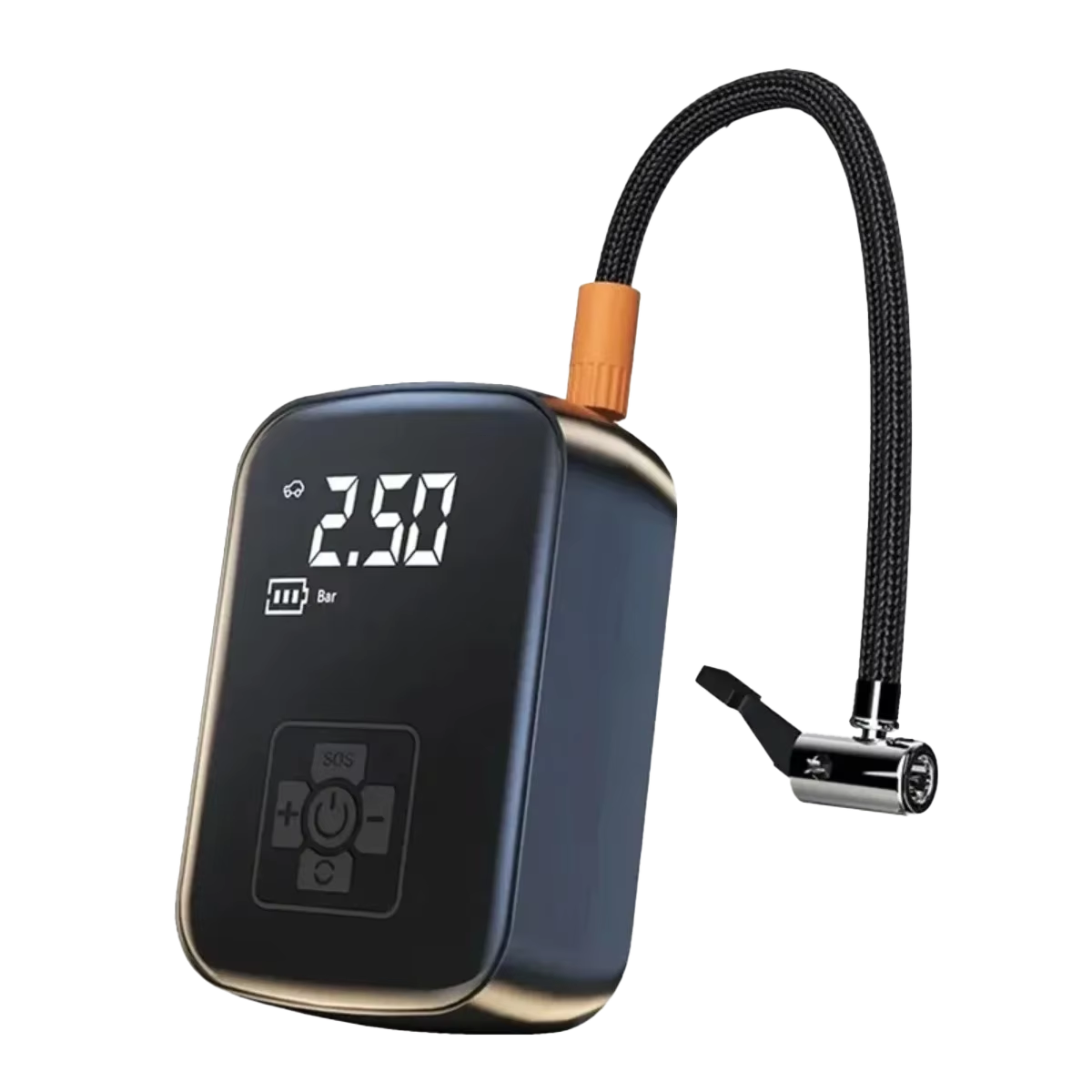 In this guidePneumaCore$99.99View
A routine for a powered pump
- Select the bike mode and enter a target inside the sidewall range, not the maximum.
- Make sure the nozzle fits your valve. A Presta stem needs a nozzle or adapter made for its narrow stem, so check before you start.
- For a tire that is close to flat, inflate in two stages and check with a separate gauge halfway.
- If the pressure overshoots, press the valve pin (Schrader) or the tip of the stem with the lock nut open (Presta) to let air out in short pulses.
- Follow the manual for the inflator, and ask a bike shop if a tire or rim looks damaged.
A separate gauge is useful because two gauges can disagree by a few PSI. Choose one gauge for checks and keep using it, so your readings stay comparable from ride to ride.
Overinflating is easy to correct. Let air out in short pulses, recheck, and repeat until the gauge reads your target. A tire pumped past its sidewall range should be released down before you ride.
Field note
Check pressure before every ride and again after pumping. A short check with the same gauge each time keeps your numbers consistent.
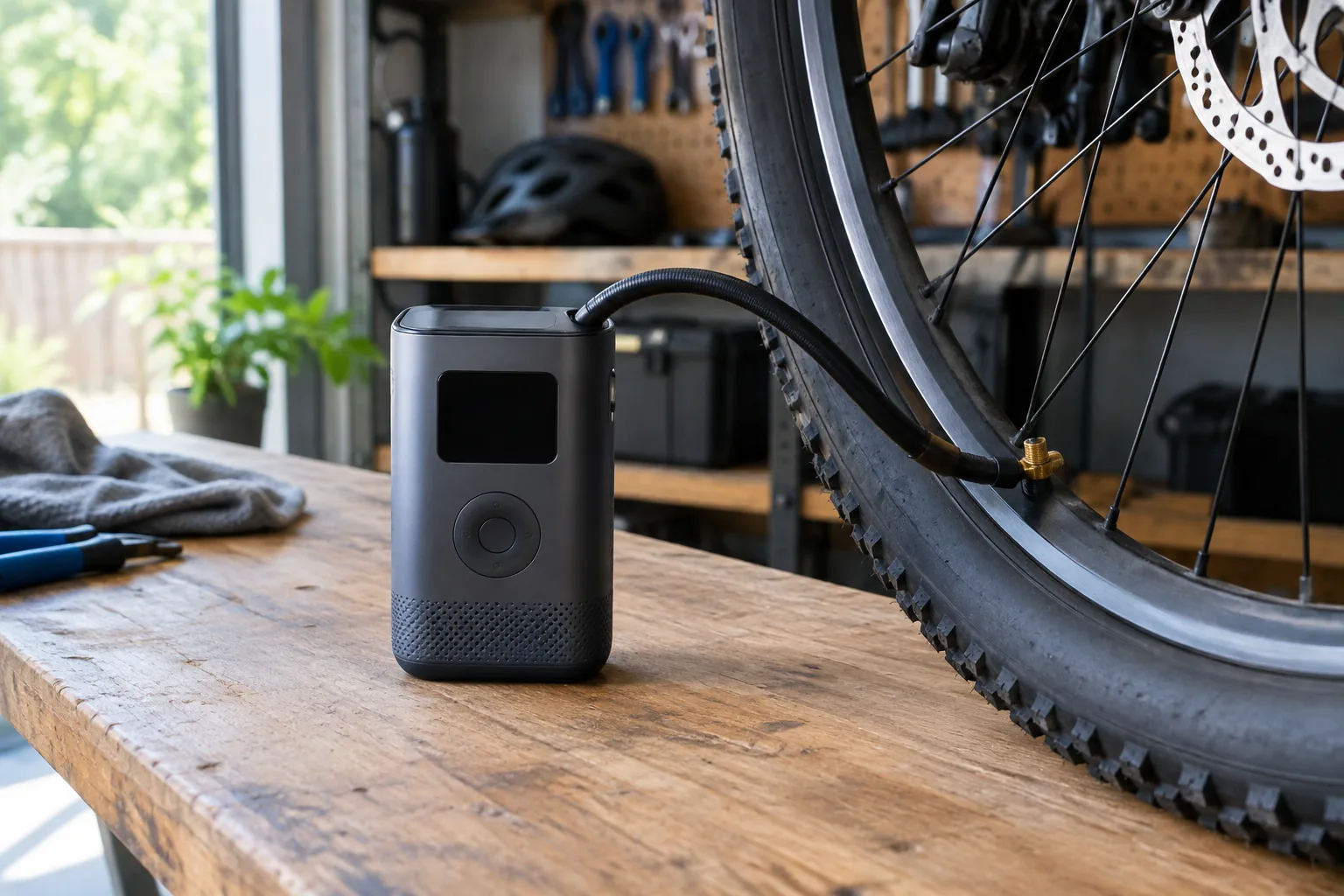
Why is the tire deflating after you pump it?
If the tire goes soft after pumping, work through the likely causes in this order.
| Sign | Likely cause | What to do |
|---|---|---|
| Hissing while pumping | Head not seated or lever not locked | Reseat the head straight and lock it |
| Air escapes as you pull the head off | Small loss at release, or a bent Presta stem | Detach with a straight pull |
| Presta tire goes soft | Lock nut left open or valve core loose | Tighten the nut; snug the valve core if it is removable |
| Soft again within a day | Slow puncture or a damaged tube | Inspect the tire and tube; patch or replace |
| Bubbles at the valve with soapy water | Leaking valve | Replace the tube or valve core |
A brief puff of air when you release the head is normal. A tire that does not hold pressure overnight points to a puncture or a faulty valve.
Common mistakes and a checklist
- Pumping to the number on the pump, not the one on the tire sidewall.
- Leaving the Presta lock nut closed, so no air enters.
- Pushing the head on at an angle, which can bend a Presta stem.
- Losing the dust cap, which keeps dirt out of the valve.
- Starting a powered inflator without a preset target.
Before you ride, confirm the valve is closed, the cap is on, and the tire is firm but still shows a little give under your thumb. Browse more gear in the Battery, Tire & Air Care collection.