
Metal Detector Beach Hunting: Settings, Spots and Technique
Set your detector for the sand you are standing on, hunt as the tide drops, and pinpoint before every dig. This guide gives the settings, spots and a field checklist.
The Quindrel Team
October 22, 2026 · 6 min read

For a metal detector beach session, match your settings to the sand under the coil, work the zone the tide has just left, and pinpoint every signal before you dig. Dry sand, wet sand and shallow water each behave differently, so adjust as you move between them. The sections below give the settings, the spots and a checklist you can follow on site.
Check local rules before you go. Many beaches, parks and preserves set their own limits on detecting, digging and hole depth, so look up the managing agency's posted rules for your stretch of shore.
Metal detector beach settings: wet sand vs dry sand
Sand type changes how the ground responds to your coil. Dry sand is usually quiet and stable. Wet sand, especially near salt water, holds conductive minerals and moisture that can trigger false signals on a detector that is set too hot.
Start with a moderate sensitivity, then raise it only while the detector stays steady. If the threshold hum jumps or chatters as you sweep, lower sensitivity one step. If your detector has a ground balance control, reset it when you move from dry sand to the wet zone.
| Zone | Ground behavior | Settings approach | Sweep style |
|---|---|---|---|
| Dry sand | Low mineral response, loose and deep | Higher sensitivity is workable if the detector stays steady | Slow, overlapping passes |
| Wet sand (wave line) | Salt and moisture raise false signals | Lower sensitivity; re-balance the ground if your model allows | Coil low and level |
| Shallow water | Moving water, shifting sand | Keep settings conservative; watch your control housing height | Short, steady sweeps |
| Black sand patches | Heavy mineral content | Reduce sensitivity until the noise settles | Slower sweeps |
How to use discrimination on sand
Discrimination filters out unwanted metal such as bottle caps and pull tabs. The trade-off is that some small gold and thin jewelry can read close to junk, so a heavy filter may also mute targets you want. A light filter is a reasonable start, and you can widen it if the beach is full of trash.
A beach metal detector with the features that matter
Beach hunting rewards a comfortable, adjustable build because you sweep for long stretches on soft footing. GleamCoast is a beach metal detector with an adjustable stem, a padded armrest and a search coil. You sweep the coil low over sand, soil or shallow water, and the control housing stays above the waterline while you work along the wave line.
It signals a target with audio tones and shows it on a visual pinpoint display, and you use both together to decide where to dig. A discrimination mode lets you filter out signals from items like bottle caps and pull tabs when you want to focus on other targets. It runs on two standard 9V batteries, so carry spares.
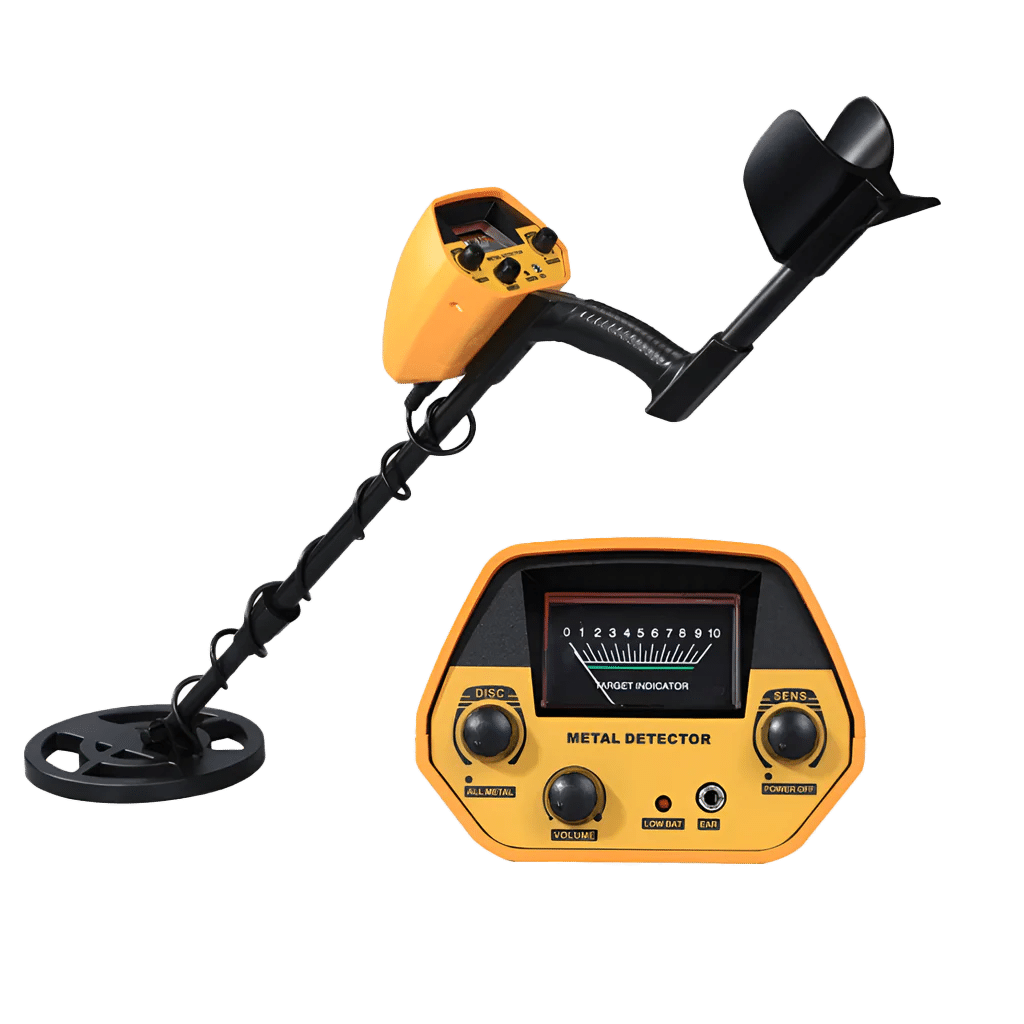 In this guideGleamCoast$119.99View
Tide timing: when and where to sweep
The tide decides which sand is worth your time. As water drops, it exposes a fresh band of beach that waves have recently reworked. Plan to arrive as the tide is going out and follow the waterline down.
- Check a tide chart for your beach the day before and note the low tide time.
- Start on the upper beach while the water is high, then move toward the wave line as it retreats.
- Work the cut or step in the sand, where waves have scooped a small ledge.
- Return after a storm or heavy surf, when waves may have shifted sand and exposed new ground.
Early morning and evening also mean fewer people walking through your sweep area. That gives you room to work in straight lines.
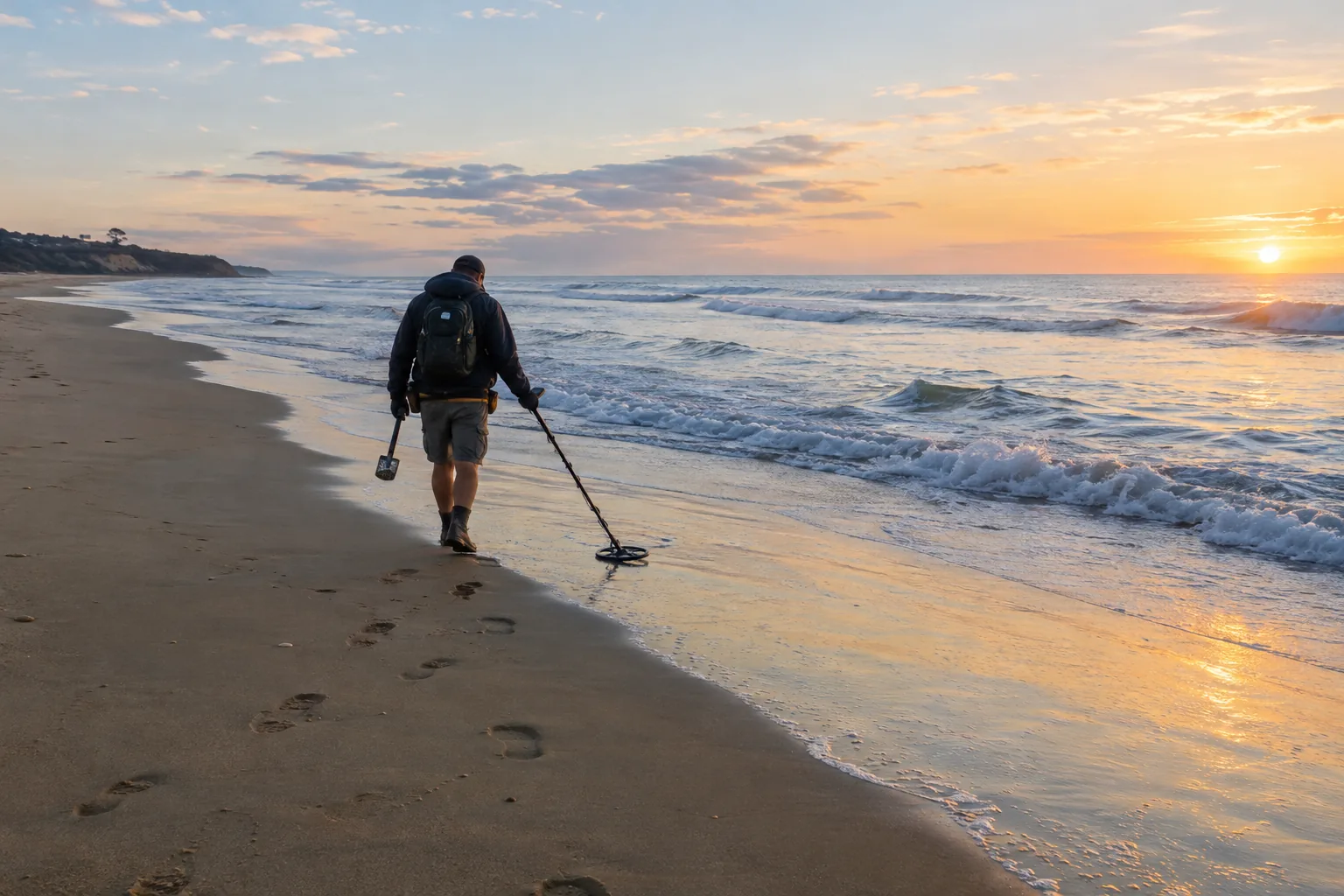
Where to hunt on the beach
People leave things where they gather. Think about foot traffic, not just open sand.
| Spot | Why it can pay off | Tip |
|---|---|---|
| Towel lines and sunbathing areas | Items slip off fingers and out of pockets | Grid the area in overlapping rows |
| Beach entrances and walkways | Everyone passes through | Expect more junk metal here |
| Volleyball courts and play areas | People stay put and move around a lot | Check the court edges |
| Wave line and cut | Waves move and settle heavier objects | Hunt as the tide drops |
| After-storm stretches | Sand shifts and exposes new ground | Look for fresh scoured areas |
Rocks, jetties and creek mouths can hold mineralized ground that makes a detector noisy, so lower sensitivity there.
Pinpointing workflow: from signal to target
A clean pinpointing routine keeps holes small and the beach tidy. Use the same steps for every signal.
- Sweep the coil low and level, and stop when you hear a tone.
- Sweep across the signal from two directions and note where the audio is strongest.
- Watch the visual display on your detector to confirm the spot.
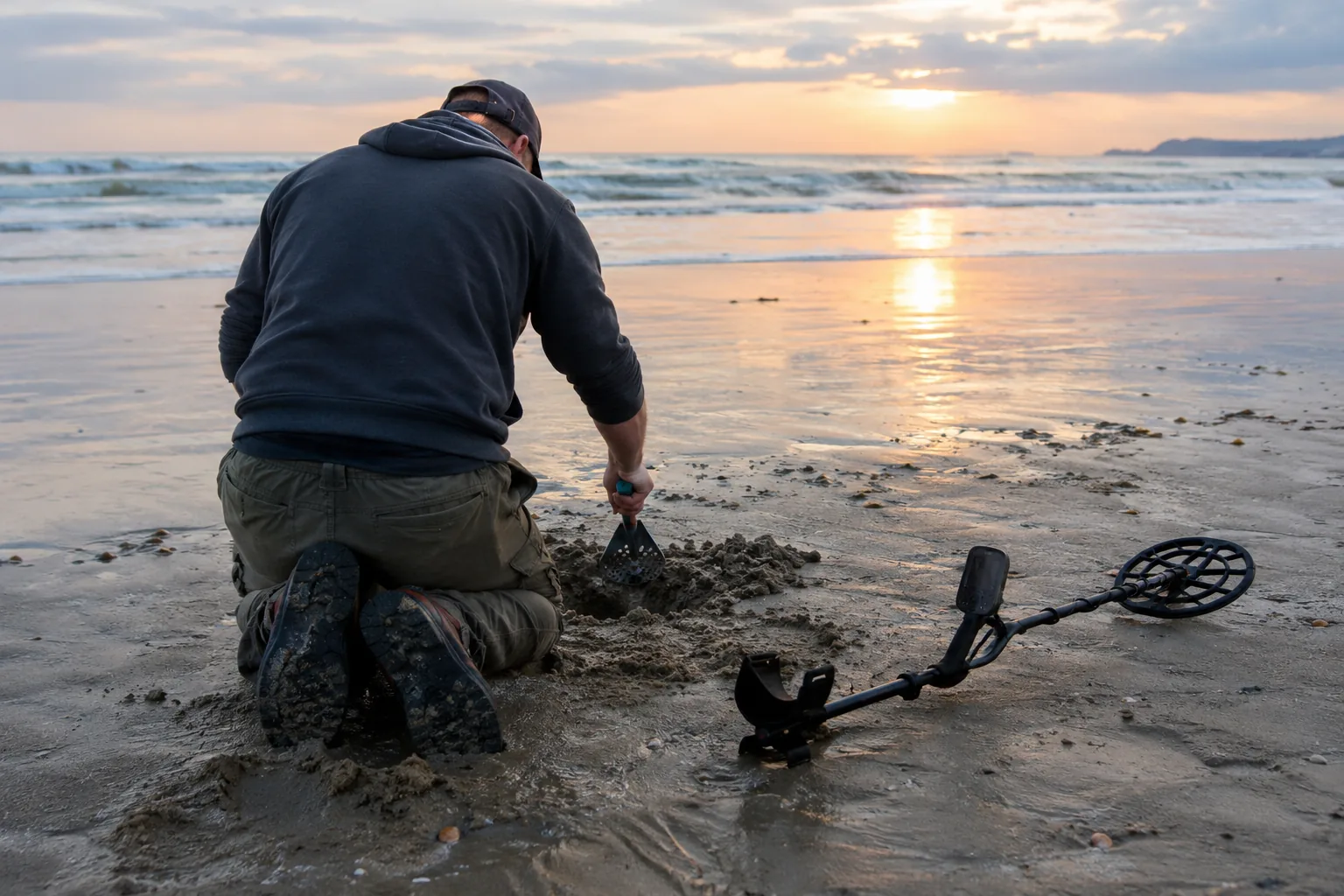
- Dig a small plug of sand, set it on a mat or beside the hole, and scan the plug and the hole again.
- Use a handheld pinpointer in the hole to find the target, then lift it out.
- Refill the hole and smooth the sand.
A handheld pinpointer narrows the search inside the hole, so you are not digging wide. ProbeStrike is a handheld pinpointer used to locate a target inside a dig hole after the detector has signaled. It has a single control button, three sensitivity levels shown by LED and audio and vibration alerts near a target.
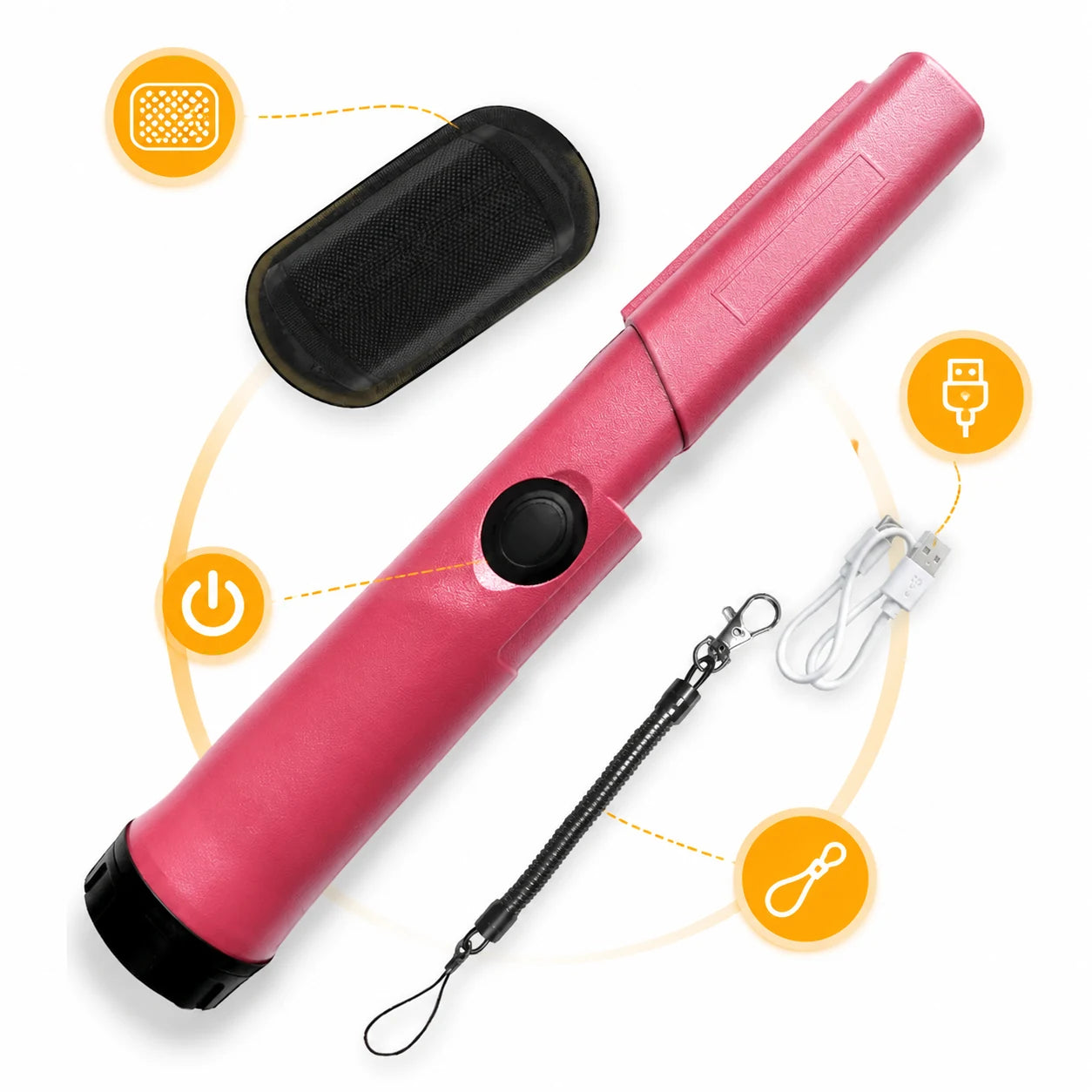 In this guideProbeStrike$189.99View
ProbeStrike's probe detects at the tip and along its sides, so you sweep it around the hole. Its sensitivity levels let you set it for the ground you are digging in, such as clean sand or a trashy park. The body is a sealed housing, and a belt holster with a lanyard loop is included. It is charged with the included USB-C cable.
Field checklist for a beach session
Before you leave
- Look up local rules on detecting and digging at your beach.
- Check the tide chart and weather.
- Charge the pinpointer and pack spare 9V batteries for the detector.
- Extend the stem and set the armrest for your arm before you start sweeping.
On the sand
- Start on dry sand to learn how your detector sounds.
- Lower sensitivity when you reach the wet zone.
- Sweep low, level and in overlapping rows.
- Pinpoint before every dig, and keep each hole small.
- Carry a pouch for trash and remove what you dig up.
After the hunt
- Rinse sand and salt off the equipment as the manual directs.
- Let everything dry before storage.
- Charge the pinpointer for the next trip.
Common mistakes on the beach
- Running sensitivity too high on wet sand, which makes the detector chatter.
- Lifting the coil at the end of each sweep, which leaves gaps.
- Sweeping too fast to hear faint tones.
- Digging wide holes instead of using a pinpointer.
- Heavy discrimination that masks small jewelry.
- Leaving holes open, which can trip other beachgoers.
Keep the control housing above the waterline whenever you work in the surf, and follow the user manual for how deep you can go.
Field note
Dig a test target hole: bury a coin in damp sand, then sweep it with different sensitivity settings so you know how your detector sounds before the real hunt.
What you can expect to find
Expect plenty of junk: pull tabs, bottle caps, foil and small fasteners. Coins and jewelry turn up too, mostly where people spend time. Gold is possible, but rare, and a ring can read close to junk on a heavily filtered detector.
If you want to browse more tools for locating and measuring, see the Precision Measuring & Detection Tools collection.
Frequently asked questions
Keep reading
 Precision Measuring & Detection ToolsHow Do Metal Detectors Work? VLF, Pulse Induction and Pinpointers8 min read
 Inspection Cameras & ScopesVideo Borescopes: How They Work and How to Use One on a Car7 min read
 Weather, Air & Moisture MetersHow Does a Moisture Detector Work? Readings and What Skews Them9 min read