How Does a Moisture Detector Work? Readings and What Skews Them
A moisture detector sends a small electrical signal into a material and reads how water changes it. This guide covers pin vs pinless sensing, normal readings by material and what skews them.
The Quindrel Team
November 17, 2026 · 9 min read
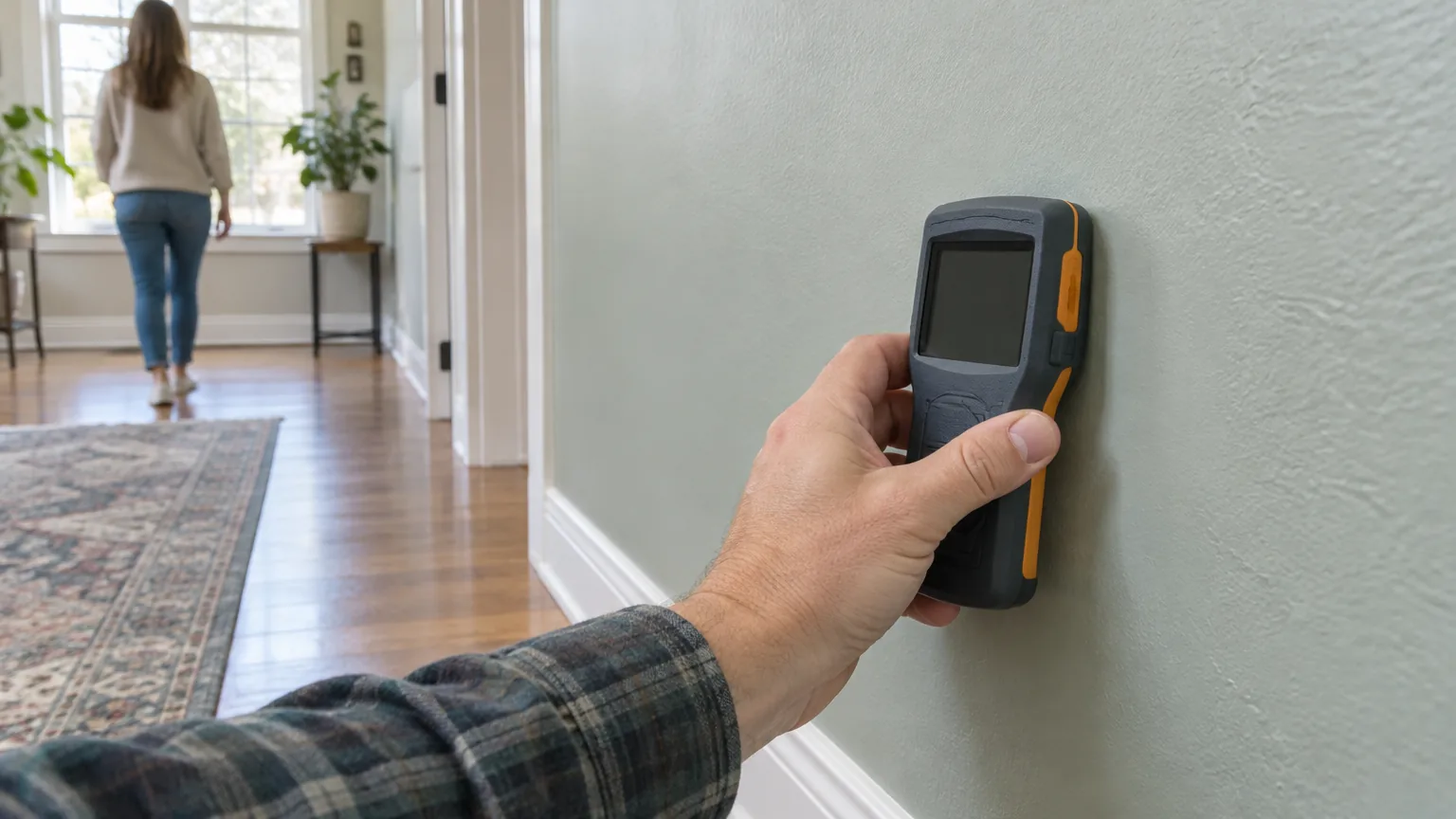
How does a moisture detector work? It sends a small electrical signal into a material and reads how that material responds, because water changes how easily the signal travels. Pin-type models read electrical resistance between two metal pins, and pinless models read a change in the electrical field through the surface. The meter then converts that signal into a number or a color zone for the material mode you picked.
This guide explains both methods, what a normal reading looks like for wood, drywall and masonry, what throws a reading off, and how to check a house for hidden damp.
What is a moisture detector?
A moisture detector, also sold as a moisture meter, is a handheld instrument that estimates how much water is in a solid building material. You use it on wood, drywall, plaster, concrete and similar surfaces, usually before painting, flooring, staining or repairs.
It does not measure water directly. It measures an electrical property that shifts as moisture content changes, then the meter's internal scale translates that property into a reading. That is why the material setting matters so much: the same signal means different things in pine and in drywall.
How does a moisture detector work on wood, drywall and masonry?
Dry building materials resist electricity and do not store much charge. Water does the opposite: it conducts, and it has a very high dielectric constant, which means it strongly affects an electrical field. Meters use one of these two effects.
Pin-type sensing: electrical resistance
A pin meter pushes two metal pins into the material and passes a tiny current from one to the other. Dry wood passes very little current, so electrical resistance is high. As water content rises, resistance drops, and the meter reports a higher reading.
Because the pins reach into the material, the reading reflects the depth the pins reach. Pins also leave small marks, so choose a spot that will be hidden or repaired anyway.
Pinless sensing: capacitance
A pinless meter has a flat sensor that sends an electromagnetic field a short distance into the material. Water raises the material's dielectric value, which changes the capacitance the sensor sees. The meter reads that change without piercing the surface, so you can scan a wall, floor or trim and leave nothing to patch.
Pinless sensors read an average over the area and depth under the sensor, so they suit scanning for wet zones. Pin readings are tied to the exact spot and depth of the pins.
Pin vs pinless at a glance
| Feature | Pin-type (resistance) | Pinless (capacitance) |
|---|---|---|
| What it senses | Current passing between two pins | Change in an electrical field under the sensor |
| Contact with material | Pins pressed into the surface | Sensor held flush on the surface |
| Marks left | Small pin holes | None |
| Reading area | Between the pin tips | Averaged under the sensor |
| Use for | Confirming a specific spot or depth | Scanning a wall or floor for wet areas |
You can pair them: a pinless meter to scan, then a pin meter to confirm a suspect spot. Our guide How to Pick a Good Wood Moisture Meter: Pin vs Pinless goes deeper on that choice for lumber.
Surface sensor or pin meter: choosing the tool
Scanning without drilling
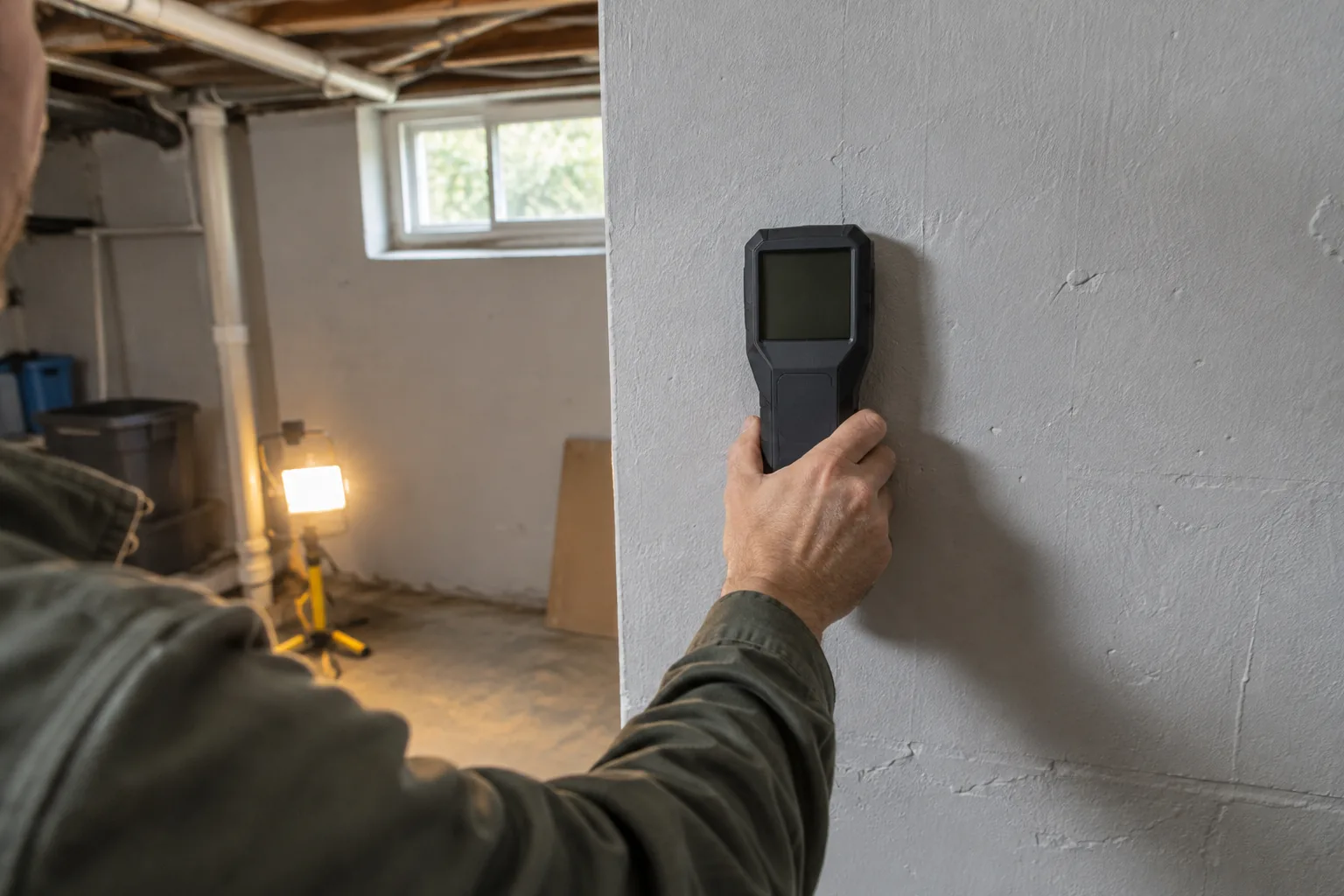
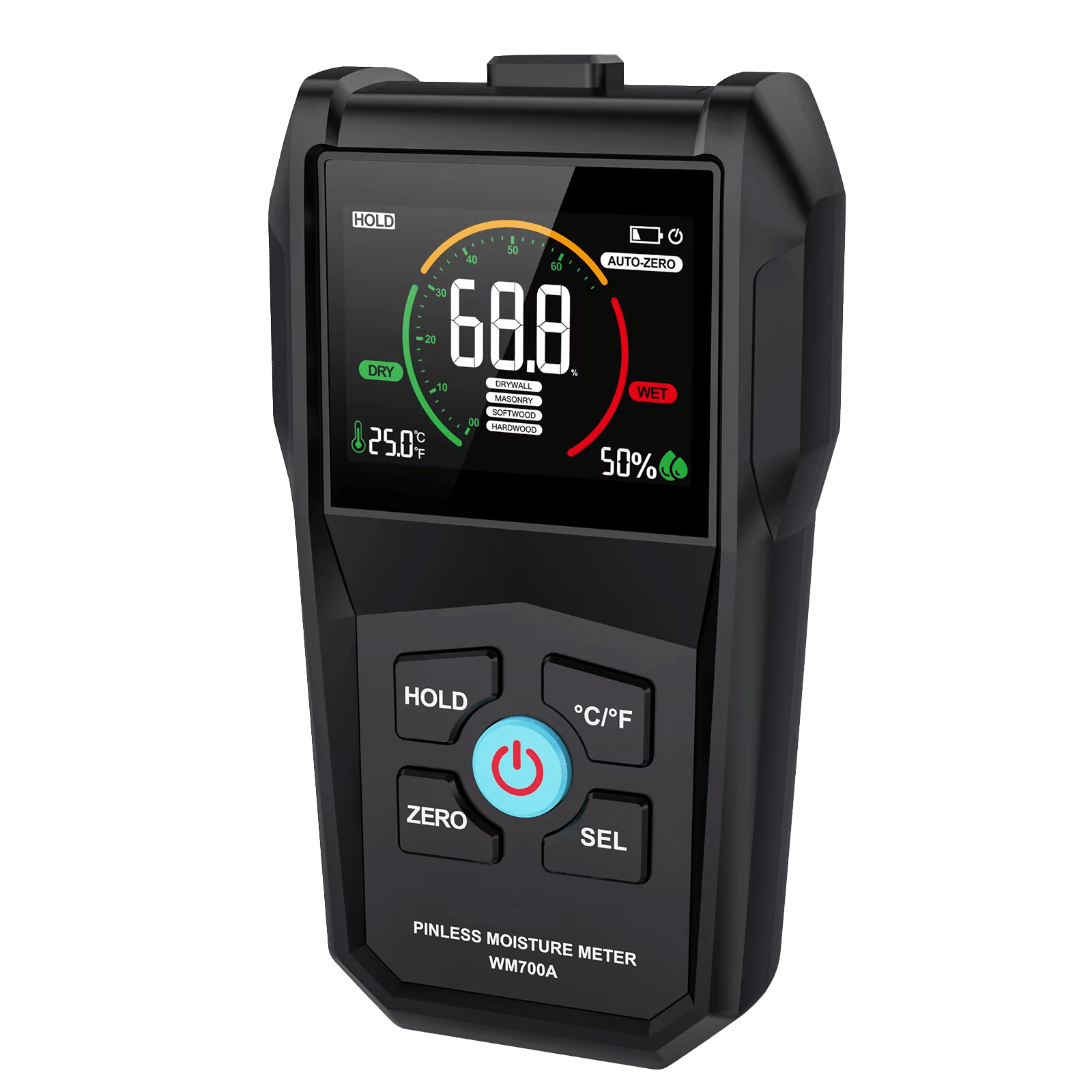
If you want to check walls, floors or trim without making holes, a surface sensor is the tool that fits. DampSentry is a handheld moisture detector with an electromagnetic surface sensor. It sends a signal into the material from the surface, so you can check the same spot again and have nothing to patch.
You pick one of three material modes (wood, drywall or masonry), press the sensor flush against the surface, and read a green, yellow or red display. There is no lookup chart to consult. The display is meant to be read in tight, dim places such as under sinks, behind furniture and in basements.
 In this guideDampSentry$89.99View
Pin-type readings on wood and other materials
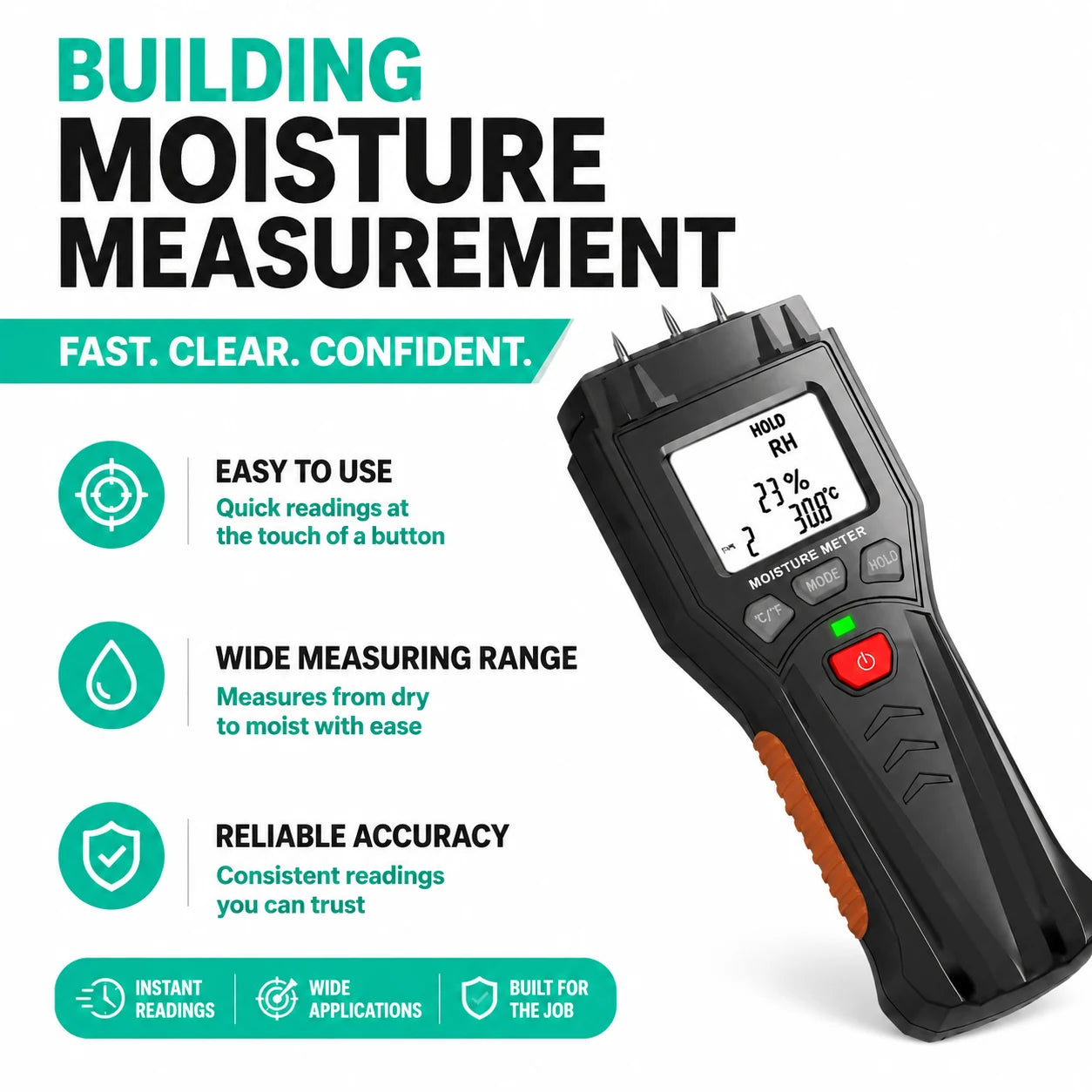
When you need a reading at a specific spot, a pin meter gives you one. HydroTrace Pro is a pin-type moisture meter for wood and other building materials. You choose a mode for hardwood, softwood, concrete or drywall, press the stainless steel pins into an accessible spot, then press the one-touch button to take the reading.
The housing is ruggedized for jobsite handling, and the pins are replaceable, with spare pins in the kit. A worn or bent tip changes how well the pins contact the material, so swap them when they show wear.
Before you stain or finish a board, check it first. Our guide How to Stain Wood: Moisture Check, Sanding and Even Application shows where that check fits in the process.
 In this guideHydroTrace Pro$99.99View
Quick reference: choosing a method
| Your job | Method to reach for |
|---|---|
| Scan a finished wall, floor or trim without marks | Pinless surface sensor |
| Confirm one board or one spot | Pin-type meter |
| Check humidity of the room, not the material | Hygrometer or data logger |
| Mixed materials in one project | A meter with separate wood, drywall and masonry modes |
What is a normal moisture reading?
A normal reading depends on the material, the room and the season, so no single number fits everything. Wood is read as a percent of its weight that is water, and its equilibrium moisture content drifts toward the humidity of the space it sits in. Drywall and masonry often read on a relative scale, which is why meters give them separate modes.
Instead of memorizing numbers, use a three-step method: read a spot you know is dry, read the suspect spot, and compare the two in the same mode. A clear jump above your dry baseline matters more than any absolute figure. For exact thresholds, check the chart in your meter's manual.
| Material | What a normal reading looks like | What to watch for |
|---|---|---|
| Interior hardwood and softwood | Low on the scale and steady from board to board in a conditioned room | One board reading well above its neighbors |
| Drywall | Low, even readings across the wall | A patch, ring or stripe that reads higher than the rest |
| Concrete and masonry | Steady readings that vary little along the same wall or slab | Readings that climb near the floor line, corners or a pipe |
| Plaster | Close to the drywall baseline for the same room | Stained or flaking areas that read high |
Color zones follow the same idea. On the HydroTrace Pro, green means clear, yellow means the spot needs closer monitoring, and red means act on it. You read the zone instead of checking a chart.
What can throw off a moisture meter?
Several things skew readings, and the cause is often what is in or behind the material, not the meter itself.
- Metal: nails, screws, pipes, foil-backed insulation and metal lath can read as wet, especially on pinless sensors, because metal affects the electrical field.
- Salts: dissolved salts in masonry, plaster or treated lumber conduct electricity, so a surface can read wet when it is not.
- Wrong material mode: a drywall mode on wood, or the reverse, gives a number that does not match the material.
- Temperature: very cold or hot materials, and a meter that has not adjusted to room conditions, can shift readings. Follow the temperature range in your manual.
- Surface condensation: a film of water on the surface reads as moisture in the material itself. Wipe it off and read again.
- Poor contact: a sensor that is tilted or a pin that is loose changes the signal.
- Thickness and layers: paint, wallpaper, tile and layered boards change what the sensor sees.
- Worn pins or low power: bent pins and an unstable power source can give erratic numbers.
When a reading looks odd, change one thing at a time: switch spots, switch modes, wipe the surface, then read again. If the reading changes back and forth with each of those, the cause is probably the setup, not damp.
Field note
Take a baseline first. Read a wall or board you know is dry, in the same mode, and write the result down. Compare every later reading against it.
How accurate are moisture detectors?
Accuracy depends on matching the method to the job. A meter set to the right material, held flush or pressed in properly, and used on a clean, room-temperature surface gives a dependable indication of dry versus wet. Use it as an indicator for deciding where to look, not as a lab measurement.
Wood scales are built around the material. Drywall and masonry readings are usually relative, so compare spots in the same wall rather than comparing one house to another. Pin meters report the depth between the pins; pinless meters report an average under the sensor, so two methods can show different numbers on the same board and both be working normally.
If a result affects a big decision, such as a floor installation or a structural repair, confirm it with a second spot, a second method, or ask a contractor.
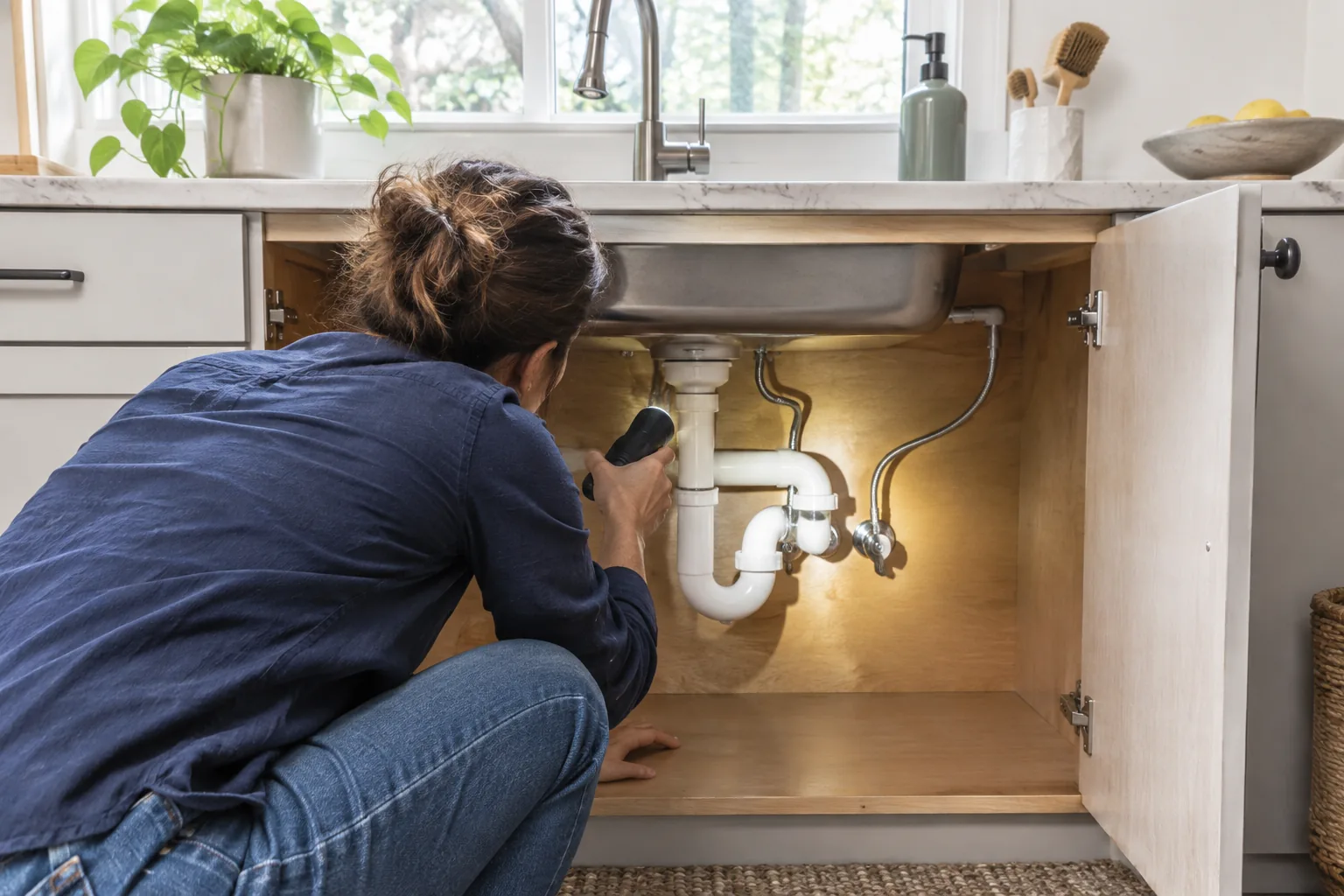
How to figure out if a house has a moisture issue
Start with your eyes and nose, then confirm with a meter. Look for stains, bubbling or peeling paint, warped trim, soft flooring, a musty smell and condensation on windows. Then work through this checklist.
- Pick the material mode that matches each surface, and take a baseline on a wall you know is dry.
- Scan the usual spots: under sinks, around tubs and showers, behind the toilet, along exterior walls, near the water heater and in basements and crawl spaces.
- Read along a line near the floor and again higher up, and note where readings rise or the color moves from green toward yellow or red.
- Mark the edges of any high area with painter's tape so you can recheck it on another day.
- Look for the source: a pipe, a window leak, a gutter that drains toward the foundation, or high indoor humidity.
- Recheck after the source is fixed and the area has had time to dry, and compare to your baseline.
A temperature and humidity data logger adds a record of room conditions over days, which helps separate a leak from high relative humidity. If readings stay high after you fix the source, or you suspect a leak inside a wall, ask a plumber or a moisture professional to inspect it.
Common mistakes and a care routine
Bad readings often trace back to a short list of habits. Fix these and you have a clearer basis for your numbers.
- Reading a single spot and calling the whole wall wet or dry. Take several readings.
- Leaving the meter in the last material's mode.
- Pressing a pinless sensor at an angle or over a stud, pipe or fastener.
- Reading a surface that is wet from cleaning or condensation.
- Comparing a pin reading with a pinless reading as though they were the same measurement.
- Storing the meter with bent pins or in a damp truck bed instead of its case.
For care, wipe the sensor face or pins after use, keep pins straight, replace worn ones, and store the meter in its case. Follow the manual for power and battery instructions. If you are comparing models for different jobs, the Weather, Air & Moisture Meters collection lists the options we stock.
Whichever you use, set the right mode, take a dry baseline, and read more than one spot. A moisture detector tells you where to look; the source of the water is what you still need to find and fix.