What Does a Water Pump Do in a Car? Role, Failure Signs, Checks
The water pump circulates coolant between the engine and radiator so heat can leave the engine. This guide covers failure signs, a home check sequence and when to stop driving.
The Quindrel Team
November 16, 2026 · 8 min read
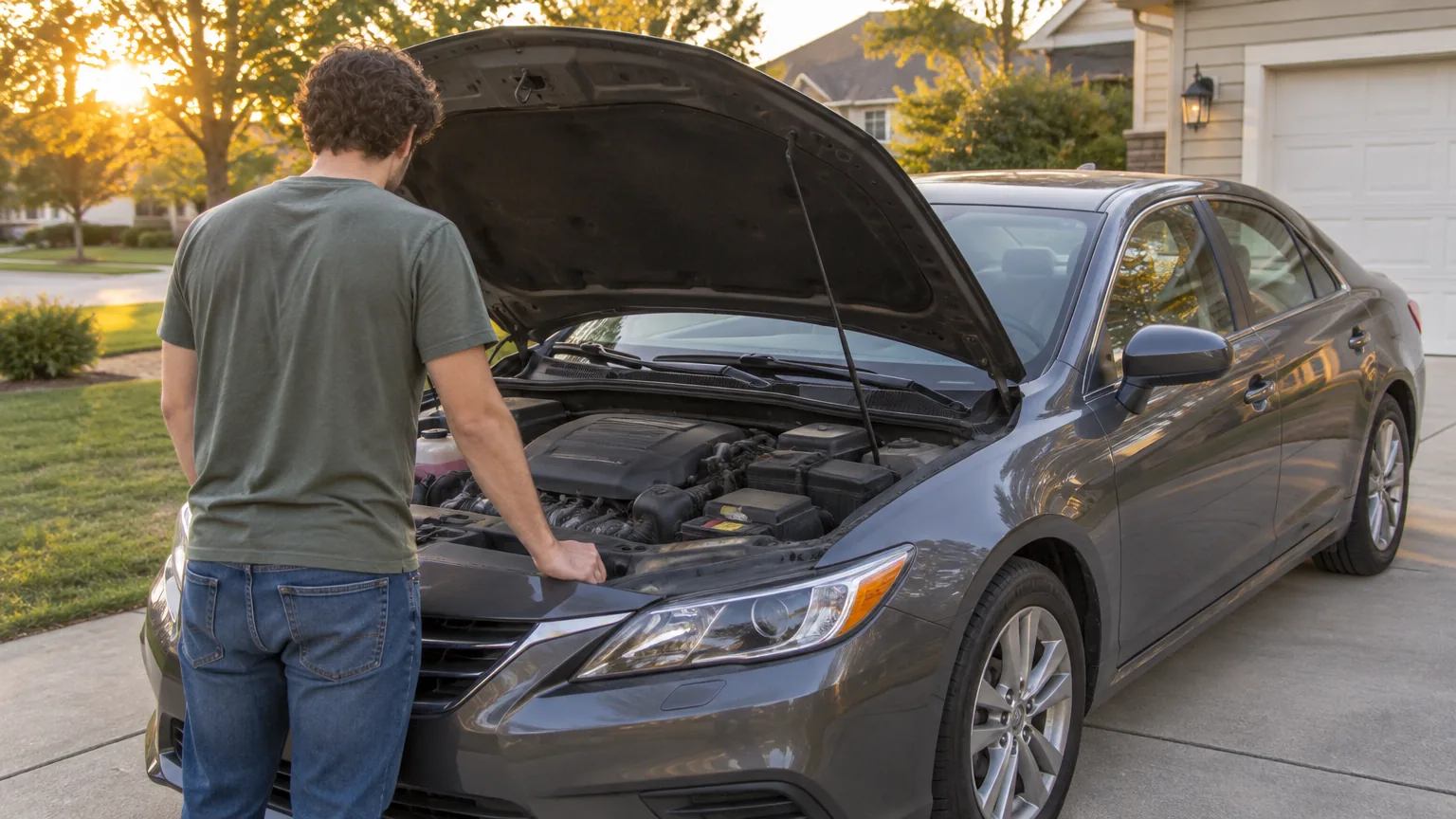
What does a water pump do in a car? It circulates coolant through the engine block, cylinder head, hoses and radiator so heat leaves the engine instead of building up. If the pump leaks, slips or its bearing fails, coolant does not move as it should and the engine can overheat.
This guide explains how the part works, the signs of a failing unit, a three-step home check with a scanner and an inspection camera, and the point where you should park the car and call for help.
What is a water pump in a car?
A water pump is a belt-driven or electrically driven pump mounted on the engine. Inside its housing sits an impeller, a finned wheel that spins on a shaft. A bearing supports the shaft and a seal holds coolant inside the housing.
It is called a water pump because the fluid it moves is a mix of water and antifreeze. Some shops also say coolant pump, and the two names mean the same part. On many engines a pulley on the front of the pump is turned by the serpentine belt. On some engines the pump is driven by the timing belt or chain, which changes how the repair is done.
Mechanical and electric water pumps
A mechanical pump turns with the engine through a belt or chain. An electric pump is powered by the vehicle's electrical system and is controlled by the car rather than turned by a belt. Some vehicles use one type, and some use an electric pump alongside a mechanical one. Check the manual to see which your car has.
What does a water pump do in a car, step by step
The pump runs whenever the engine runs, and the flow follows the same loop each time. This is the cycle:
- The belt turns the pump pulley and the impeller spins.
- Centrifugal force pushes coolant outward from the impeller into passages in the engine.
- Coolant picks up heat from the block and cylinder head.
- Once the engine is warm, the thermostat opens and hot coolant flows to the radiator.
- Air passing through the radiator cools the fluid, and the pump pushes it back into the engine.
A branch of the same loop feeds the heater core, so weak coolant flow can also show up inside the cabin. The pump is one part of the cooling system. At low temperatures the thermostat stays closed, and coolant circulates inside the engine only.
Parts that work with the pump
| Part | Job | What to look for |
|---|---|---|
| Radiator | Releases heat from the coolant to the air | Wet spots, bent fins, low coolant level |
| Thermostat | Opens to let coolant reach the radiator once the engine is warm | Temperature that swings or stays low |
| Hoses and clamps | Carry coolant between parts | Cracks, bulges, crusty residue |
| Serpentine belt | Turns the pump pulley on some engines | Cracks, glazing, loose tension |
| Timing belt or chain | Turns the pump on some engines | Check the service schedule in the manual |
Signs of a failing water pump
A failing pump rarely shows just one sign. Compare what you notice with the table, because several items on it also point to a bad thermostat, a loose hose or a low coolant level.
| Sign | What it points to | Other causes to rule out |
|---|---|---|
| Coolant drips near the front of the engine | Worn seal leaking at the weep hole | Hose, clamp or radiator leak |
| Whine or grinding from the belt area | Worn pump bearing | Belt tensioner or other pulley |
| Pulley that wobbles by hand | Bearing play | Loose mounting bolts |
| Rising temperature gauge or steam | Weak coolant flow | Low coolant, stuck thermostat, fan fault |
| Heater blows cool air | Coolant not circulating | Air in the system, clogged heater core |
| Sweet smell, low reservoir | Coolant escaping | Any leak in the loop |
The weep hole is a small opening in the pump housing. A trace of dried coolant there points to a seal that is wearing out, and active dripping means the pump is due for service.
What wears a water pump out
Seal wear is a common route to a leak, and a worn bearing produces noise and play in the pulley. Old coolant or the wrong coolant type can leave deposits inside the cooling system, so follow the coolant type and change schedule in the manual. A belt that is too loose or too tight puts extra load on the pump bearing, so check belt tension and condition at each service.
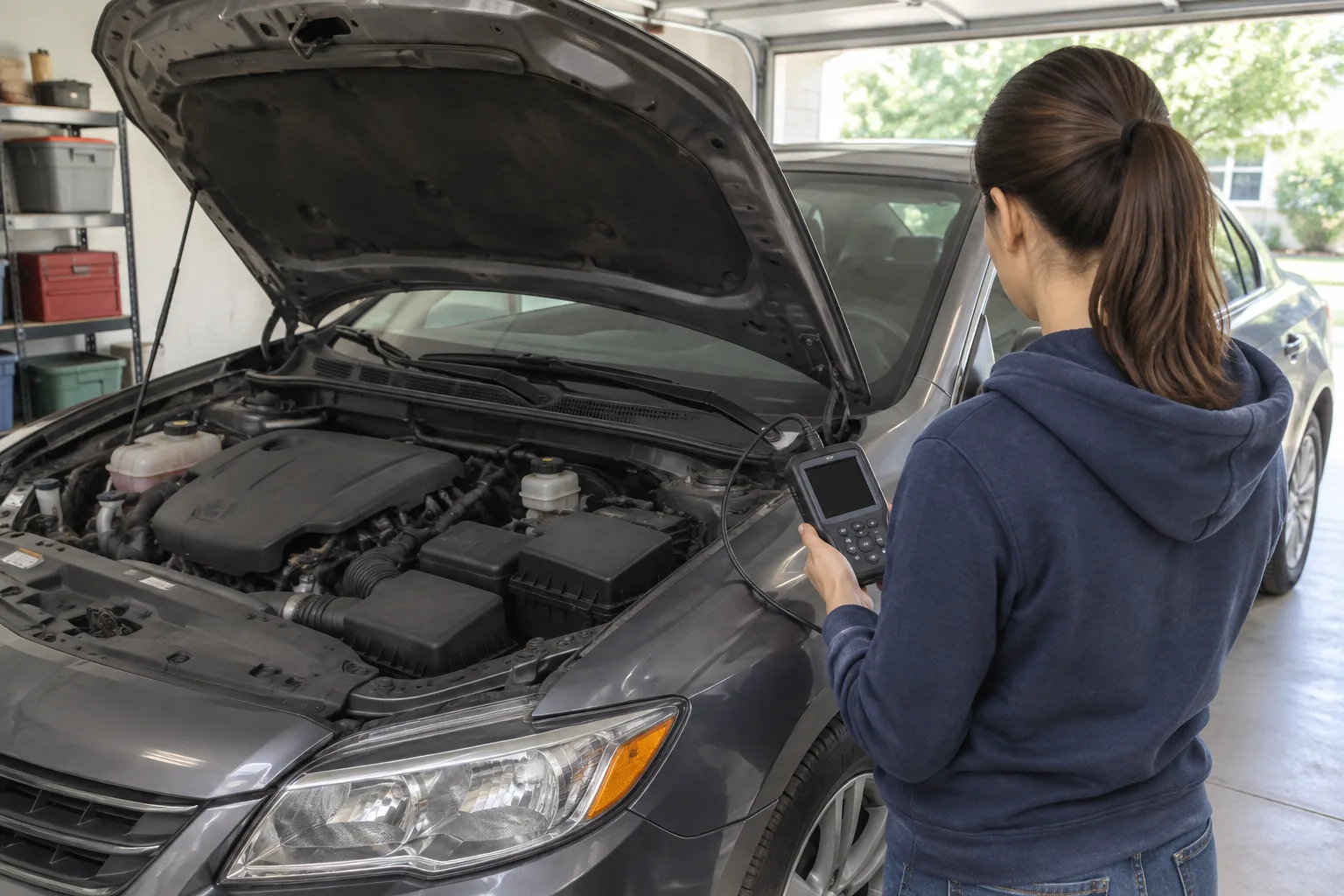
Home check sequence for a suspect water pump
Work through these three steps in order. The first one is read-only, and the other two are visual or hands-on. Do the hands-on steps only with the engine off, the key out and the engine cool to the touch; if you are not sure it is cool, ask a mechanic.
Step 1: Watch live coolant temperature on a scanner
Plug the scanner into the OBD2 port, turn the ignition on and open the live data list. VantageScan streams live data to its screen, so you can watch the engine's readings while you work through a check, provided your vehicle reports a coolant temperature item.
Look for a reading that climbs steadily past where it settled on earlier drives, or one that jumps around while the dash gauge stays still. Note the numbers and compare them with the normal range in your manual. If a fault code appears, its freeze-frame data stores the temperature and RPM from the moment it was logged. For help reading the codes, see how to use a car code reader.
 In this guideVantageScan$99.99View
Step 2: Look at the weep hole and pulley with a camera
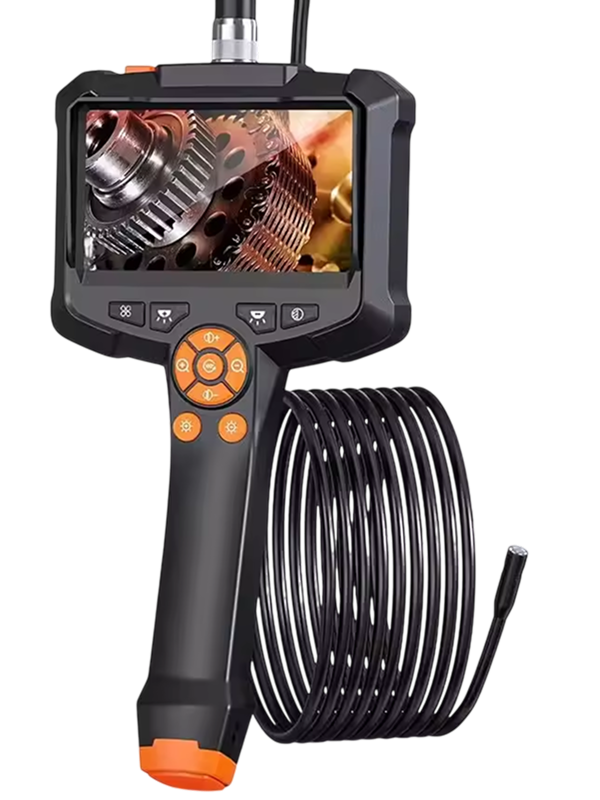
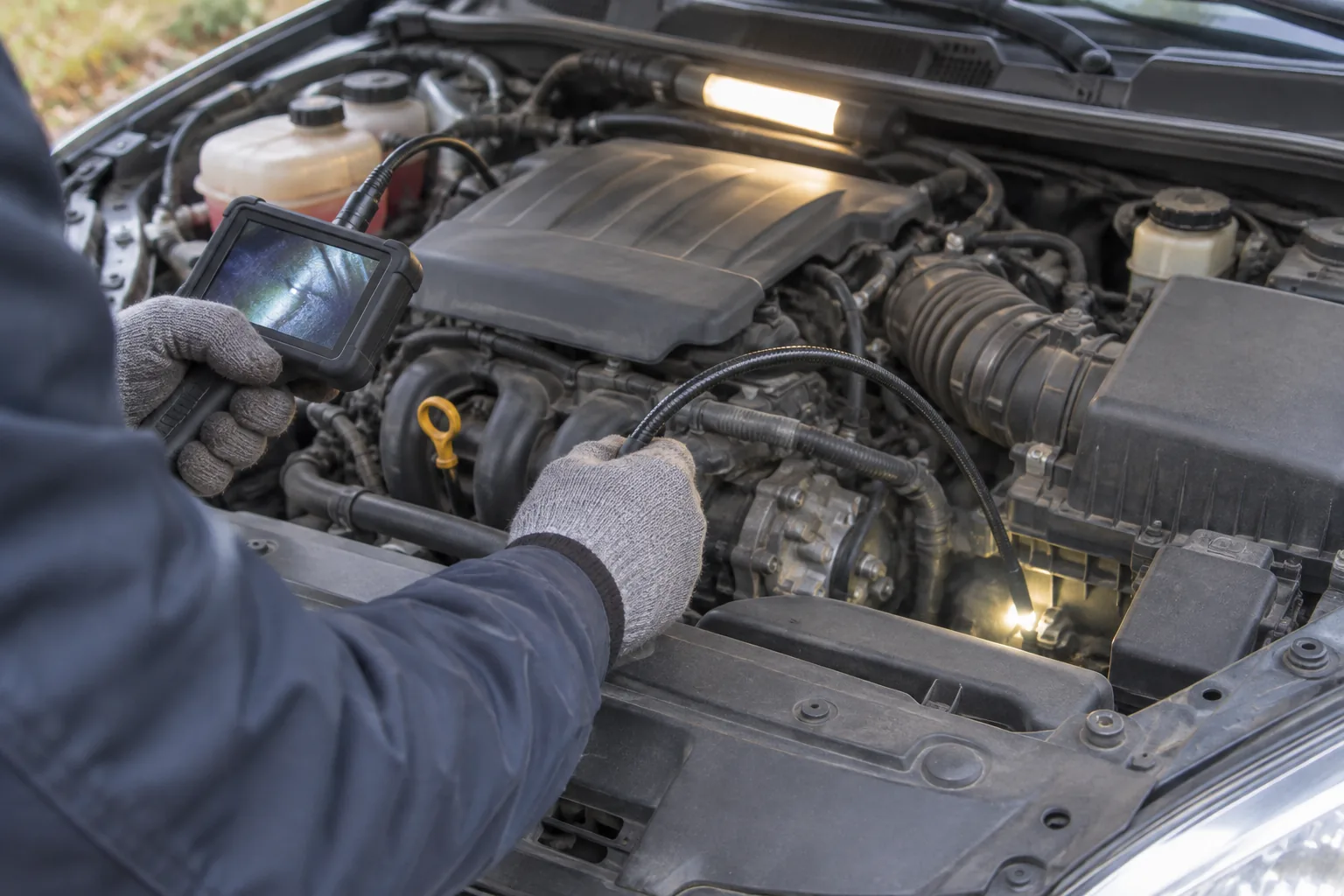
The pump often sits low and behind other parts, which makes a direct look hard. A handheld inspection camera such as ScopeCraft has a 2.9cm (about 1.1 inch) lens on a semi-rigid cable and LEDs at the tip, so you can feed it into the engine bay and watch live video on the handheld display. Its mirror attachment helps with blind corners.
With the engine off and cool, keep the cable clear of the belt, pulleys and fan. Then check these points:
- Dried or wet coolant trails below the weep hole
- Crusty white, green or orange residue around the gasket edge
- Rust or staining on the pulley face
- Belt edges that look frayed near the pump
Take photos or record a clip so you can show a mechanic exactly what you found.
 In this guideScopeCraft$129.99View
Step 3: Check the pulley by hand
With the engine off and cool, grip the pulley where it is reachable and try to move it side to side. A little rotation against the belt is normal, but a pulley wobble or a gritty feel when turning points to a worn bearing. Some pumps are hidden behind covers, in which case skip this step and rely on the camera.
Finally, check the reservoir level with the engine cool and add only the coolant type the manual lists. A level that keeps falling means coolant is going somewhere.
Field note
Write down the coolant reading at idle after warm-up, then repeat the same drive a few days later. Two sets of numbers from the same route give a mechanic more to work with than a general impression that the car runs hot.
When to stop driving
Pull over and switch the engine off when any of these happen. Then arrange a tow or ask a mechanic before you drive again.
- The temperature gauge enters the red zone or a coolant warning light comes on
- Steam rises from under the hood
- A grinding or screeching noise comes from the belt area
- The belt looks loose, frayed or has come off
- Coolant is dripping fast enough to leave a puddle
Do not open the radiator or reservoir cap while the engine is hot, because the system is under pressure and the fluid can spray. Let the engine cool first.
What happens when you drive with a bad water pump
Coolant flow drops, so heat builds in the block and cylinder head. The result can be engine overheating, a warped cylinder head, a blown head gasket or a seized engine. If the pump shares a belt with other parts, a failed bearing can also damage the belt, which then affects the alternator, power steering or the timing drive itself.
A seeping weep hole on a car that is not overheating still needs attention, but you can plan the repair instead of calling a tow truck. Keep checking the coolant level in the meantime.
Is replacing a water pump a big job?
It depends on where the pump sits. On some engines it bolts to the front and sits behind an accessory belt, which makes it a manageable job for a person with tools and the manual. On others it sits behind the timing cover, and the work includes removing the timing belt and then setting engine timing again.
Layouts differ between makes and engines, so two cars can need very different steps. Look up your engine in the service manual before you decide whether to do the work yourself.
What affects the replacement cost
The total depends on how long the labor runs, the part itself and whatever gets replaced alongside it. Some shops suggest changing the timing belt, tensioner, thermostat and coolant at the same visit when the pump is driven by the timing belt. Ask for a written quote that lists each item, and ask which items are optional.
If you shop for a quote, bring your photos, clips and scanner readings. They show where the leak is and what the coolant temperature did, which helps the shop confirm the cause. Browse the inspection cameras and scopes collection if you want other tools for looking into tight areas.
The short answer to what does a water pump do in a car is that it keeps coolant moving between the engine and the radiator. When it fails, the signs show in the temperature reading, the weep hole, the pulley and the belt, and the checks above help you find them before you decide on a repair.