
What Is an Electronic Distance Meter? EDM vs Laser Measures
An electronic distance meter measures distance by sending out a signal and timing or comparing its return. This guide explains the principle and how EDM differs from a handheld laser measure.
The Quindrel Team
November 4, 2026 · 6 min read
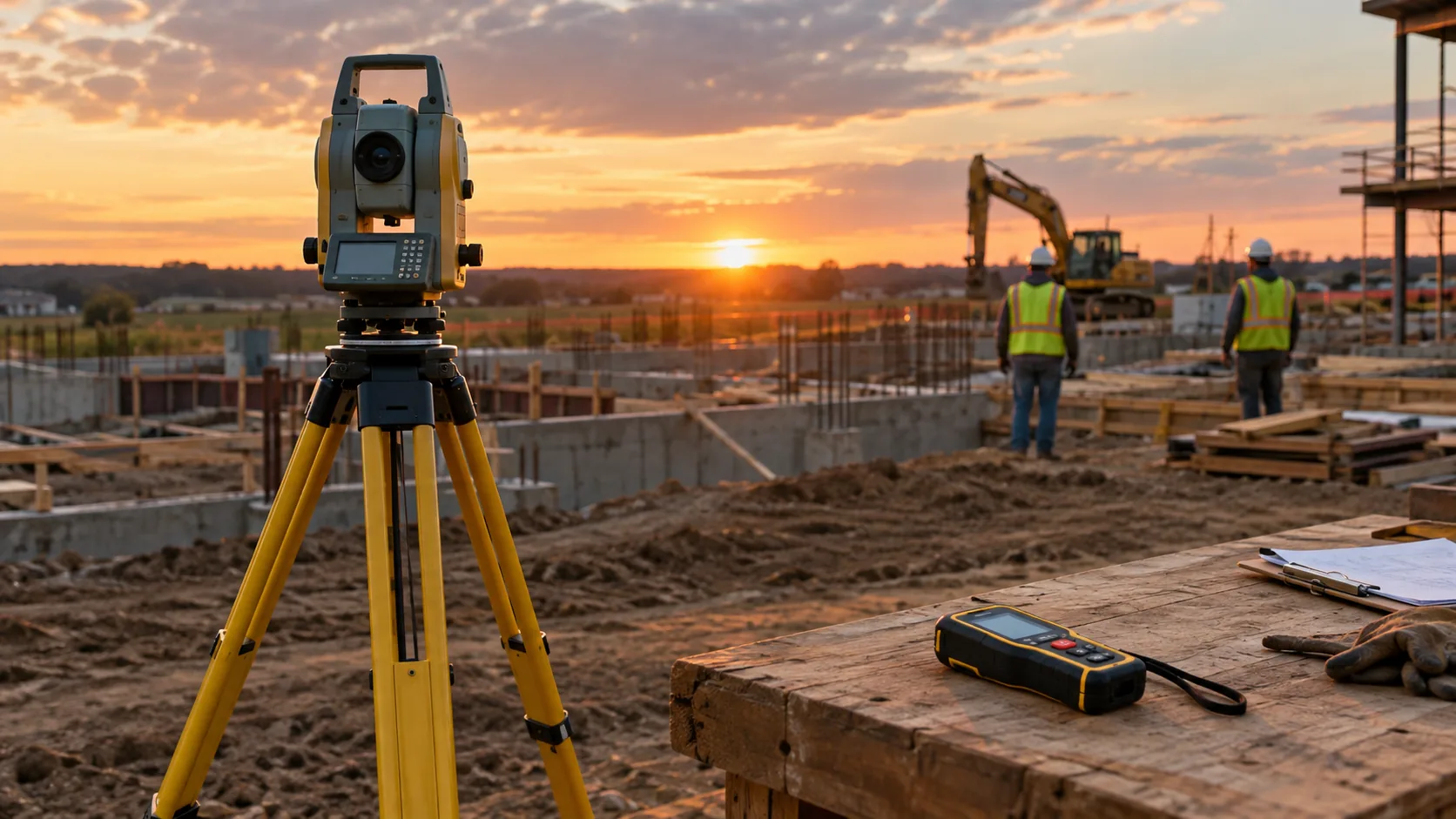
What is electronic distance meter equipment? An electronic distance meter (EDM) is an instrument that measures the distance to a point by sending out a light or radio signal and analyzing how it returns. It is the distance-measuring part of surveying equipment, built into a total station or used on its own, and a handheld laser measure works on a related idea at shorter range.
This guide explains the basic principle, the instrument types, what EDM is used for, and which tool a DIY user needs.
What is electronic distance meter technology and how does it work?
An EDM sends electromagnetic waves, usually infrared or laser light, toward a target. A reflector or the target surface sends the signal back, and the instrument calculates the distance from what it receives. The distance is worked out from the known speed of the wave and the change measured in it.
There are two common ways to do the calculation:
- Pulse (time-of-flight) method: the instrument times how long a short burst of light takes to travel to the target and back.
- Phase-shift method: the instrument sends a continuous modulated wave and compares the phase of the returning wave with the one sent out.
Either way, the result is a distance measurement shown on a display. Surveying instruments also apply corrections for conditions such as air temperature and pressure, because these affect how the wave travels.
What EDM is used for in surveying
In land surveying, EDM measures distances between points so a surveyor can establish boundaries, set out building corners, and map a site. Rather than stretching a tape across uneven ground, the surveyor reads the distance from the instrument to a reflector held on a pole at the target point.
Common uses include:
- Boundary and topographic surveys
- Setting out foundations, roads and utilities
- Checking positions of structures during construction
- Monitoring structures over time
Where the total station fits in
A total station combines an EDM with an electronic angle reader and a computer. It records distance and angle measurements together, so each point can be located in the field and stored for later use. Total stations are the most familiar form of EDM in the field today.
Types of EDM instruments
EDM instruments are usually grouped by the wave they use and how they measure.
| Type | Wave used | Method | Typical setting |
|---|---|---|---|
| Infrared EDM | Modulated infrared light | Phase comparison | Surveys with a prism reflector |
| Laser (reflectorless) EDM | Visible or invisible laser | Pulse or phase | Measuring to surfaces with no prism |
| Microwave EDM | Radio waves | Phase comparison | Long lines, used less often today |
| Total station | Infrared or laser | EDM plus angle reader | Full site surveys and layout |
So, in answer to which instruments are used for EDM: total stations, standalone infrared or laser distance meters, and older microwave units. Surveyors pair them with reflecting prisms, tripods and data collectors.
EDM vs laser measure: what is the difference?
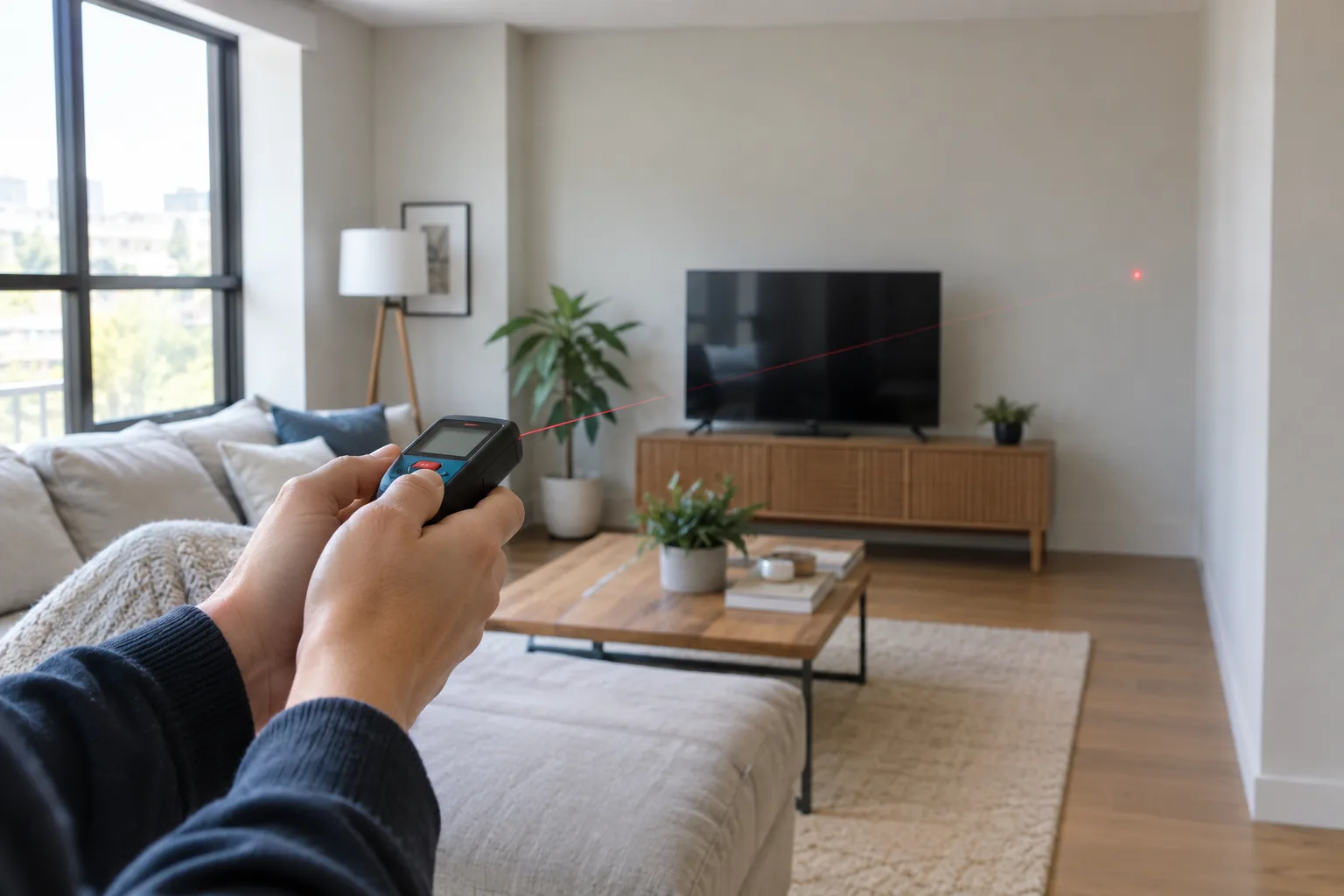
A handheld laser measure is a compact distance meter that uses the same core idea. The difference is scale, accuracy class, and what comes with it. A survey EDM is part of a system with a tripod, reflectors and software; a handheld unit is a one-hand tool for rooms and short layouts.
| Point | Surveying EDM / total station | Handheld laser measure |
|---|---|---|
| Range | Built for long lines across a site, often with a prism | Built for rooms, yards and building interiors; the spec sheet lists the range |
| Accuracy | Specified for survey work, with atmospheric corrections | Specified for construction and home tasks; check the manual |
| Angles | Reads horizontal and vertical angles | Varies by model; some read a single angle |
| Setup | Tripod, leveling, reflector | Point and read, or mount on a tripod |
| Who needs it | Surveyors, civil and layout crews | Home owners, builders, DIY users |
If you are not establishing legal boundaries or staking out a large site, a handheld laser measure covers the measuring you are likely to do.
Which one do you need for DIY work?
Once you know what is electronic distance meter equipment and what it does, this short decision list matches the tool to the job:
- Measuring a room, a wall, a deck or a cabinet run: a handheld laser measure.
- Finding area or checking a square cut or level mount: a laser measure with area and angle modes.
- Setting out property lines or a large lot: hire a licensed surveyor, who uses a total station.
- Occasional long shot from a fixed position: a laser measure mounted on a tripod.
For jobs 1, 2 and 4, a compact laser measure is enough. Job 3 is surveying work and stays with a surveyor. You can browse more options in the Precision Measuring & Detection Tools collection.
A handheld option for home and shop
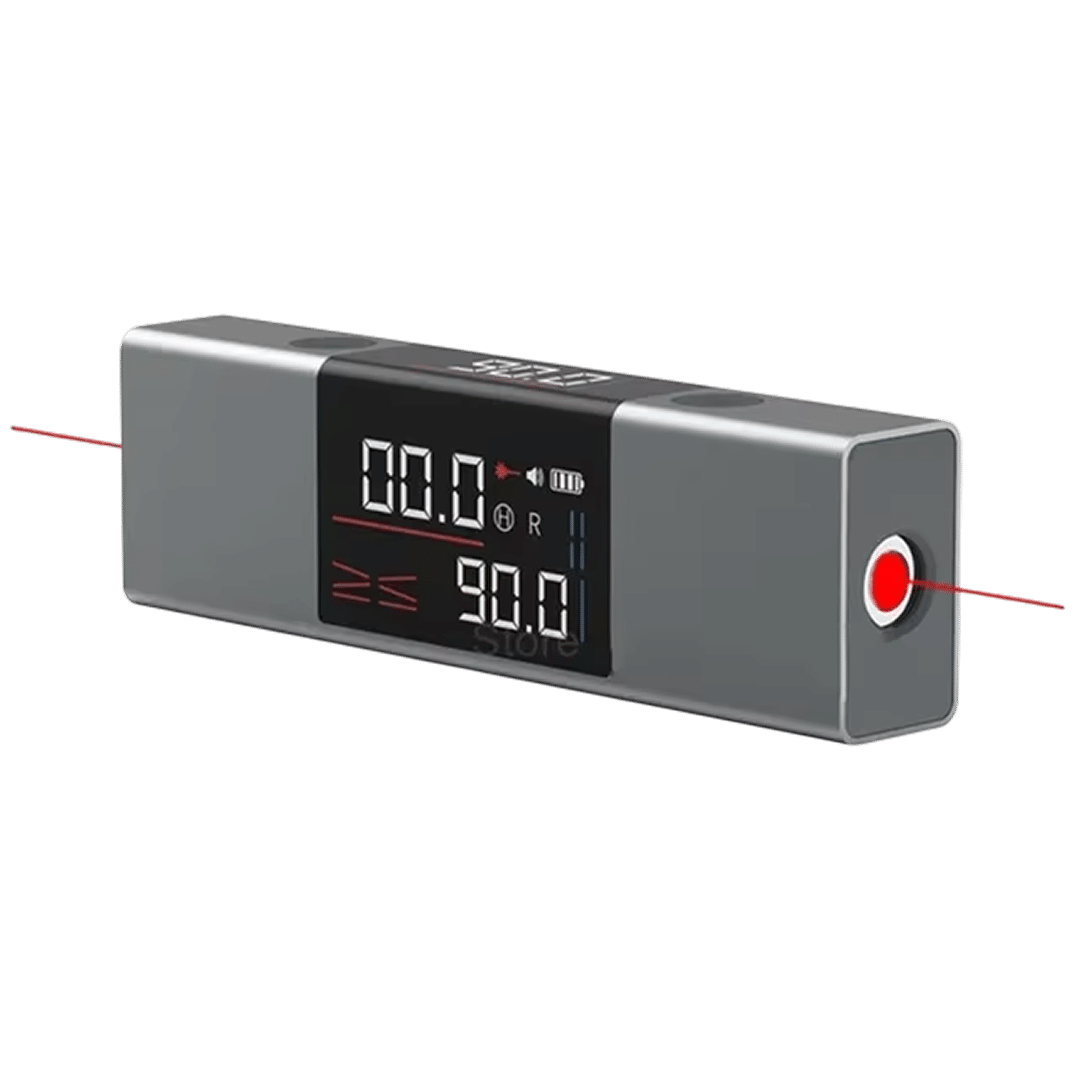
PrecisionBeam is a handheld laser distance measure. You aim the visible laser at a target point and read distance, angle or area on its dual-sided display, and you can save measurements and refer to them on the same screen. It has a frosted aluminum shell, the whole tool weighs 95 grams (about 3.4 ounces), and it charges over USB-C.
It has a 1/4-inch thread that fits a standard tripod, and a universal mounting bracket is in the box. Angle measurement works in absolute or relative mode, which helps when you check square cuts, level mounts and layout lines.
 In this guidePrecisionBeam$139.99View
Getting a reliable reading with a laser measure
Use this checklist for consistent readings.
- Pick a flat, solid target surface; the laser needs a clear return.
- Keep the beam square to the surface, since a slanted beam reads longer than the true distance.
- Choose the same reference edge (front or back of the tool) for every reading.
- For a long shot, mount the tool on a tripod so your hand does not move.
- Take two readings and compare them before you cut or drill.
Common mistakes
- Aiming at glass or shiny surfaces that scatter the beam.
- Mixing readings taken from different reference points.
- Reading in bright sunlight and missing the laser dot; try a lighter target or shade.
Field note
Before a big cut, check your laser measure against a tape over one known length, such as 6 feet. If the two disagree, check the reference edge setting first.
Price and apps: what to know
Survey-grade EDM and total stations are specialist equipment, and their cost reflects that, so most home projects do not call for one. Handheld laser measures cover a much wider range of uses for DIY users.
Phone apps that claim to measure distance rely on the camera or sensors, not on an EDM signal. For anything where a cut or a purchase depends on the number, use a dedicated measuring tool. Our article on sound level meter app vs dedicated meter makes the same app-versus-dedicated-tool comparison for another instrument.
Other instruments for measuring
Distance is one of several things you measure on a project. Common instruments across a shop or site include a tape measure for short lengths, a laser distance measure for rooms, a level for flat and plumb checks, calipers for small parts, and a multimeter for electrical values. Each fits a different job, and an EDM or laser measure is the one for distance at range.
Frequently asked questions
Keep reading
 Precision Measuring & Detection ToolsWhat Is a Cord of Wood? Measure a Stack and Check Seasoning7 min read
 Inspection Cameras & ScopesVideo Borescopes: How They Work and How to Use One on a Car7 min read
 Weather, Air & Moisture MetersHow Does a Moisture Detector Work? Readings and What Skews Them9 min read