
What Is a Cord of Wood? Measure a Stack and Check Seasoning
A cord is a tightly stacked pile of wood measuring 4 ft by 4 ft by 8 ft, or 128 cubic feet. Here is how to measure what you received and check that it is dry.
The Quindrel Team
November 8, 2026 · 7 min read
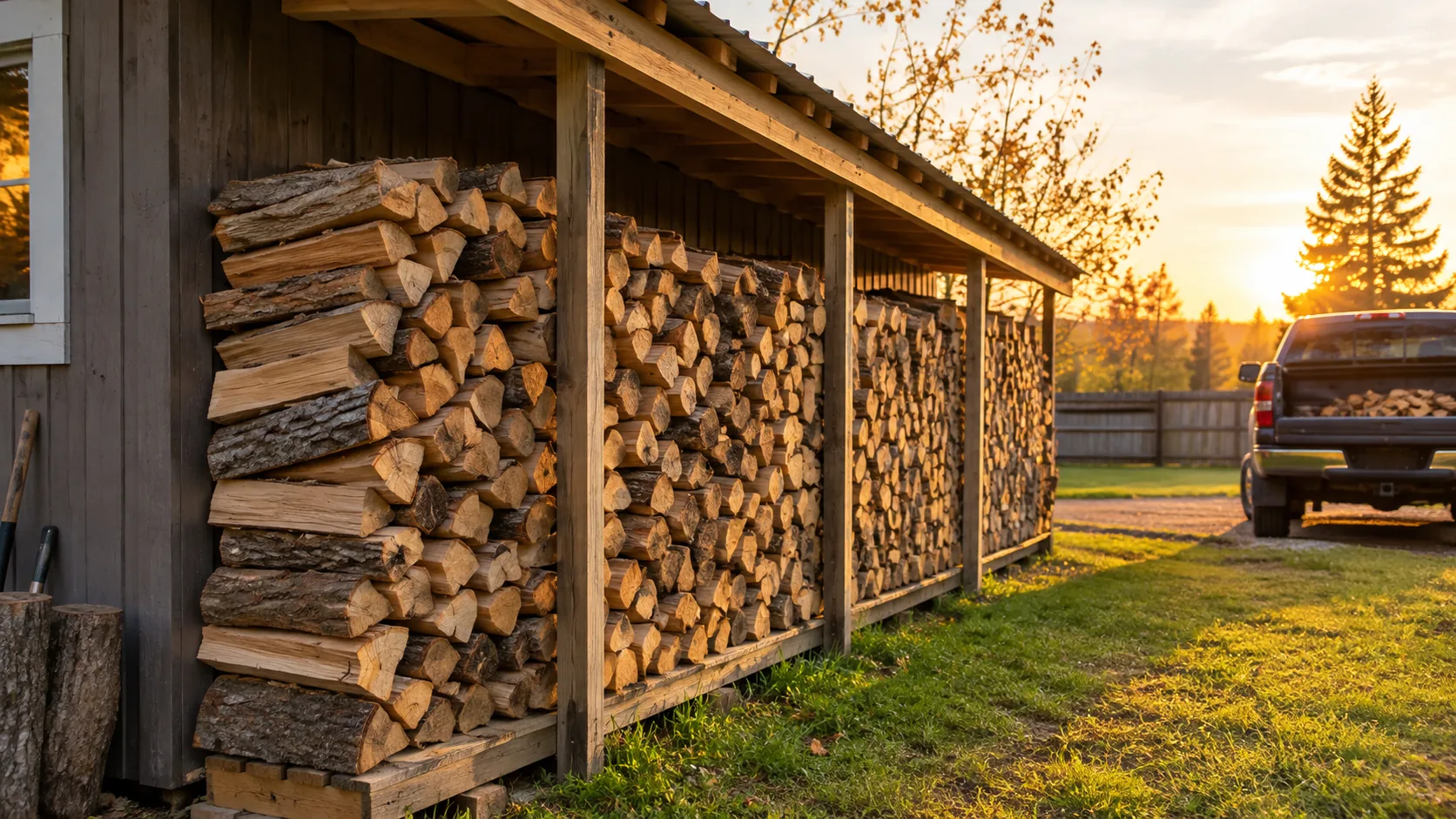
What is a cord of wood? It is a stack of firewood measuring 4 feet high, 4 feet wide and 8 feet long, which equals 128 cubic feet of stacked wood, air gaps included. A face cord (also called a rick) covers the same 4 by 8 foot face but is only as deep as one log, so it is a fraction of a full cord.
This guide gives you the math, a step-by-step way to measure a delivered stack, and a moisture check so you know the wood is both full-volume and dry enough to burn.
What is a cord of wood in cubic feet?
A full cord is 128 cubic feet of neatly stacked wood: 4 ft x 4 ft x 8 ft. The logs lie parallel, in a tight pile, with the pieces cut to a consistent length. A pile thrown loose into a truck or yard holds more air and less wood, so it cannot be judged by its footprint alone.
The 4 by 4 by 8 shape is only one way to reach 128 cubic feet. A stack 4 ft high and 16 ft long with 2-ft logs also totals 128. The volume is what counts, not the exact shape.
Cord, face cord and rick: the math
The terms face cord, rick, stove cord and fireplace cord are local names that are not the same everywhere. A face cord is 4 ft high and 8 ft long, but its depth is the log length, so its volume changes with how the wood was cut. Ask the seller for the log length in inches and do the math yourself.
| Stack (4 ft high x 8 ft long) | Log length (depth) | Volume | Share of a full cord |
|---|---|---|---|
| Full cord | 48 in (4 ft) | 128 cubic feet | 1 |
| Face cord | 24 in | 64 cubic feet | 1/2 |
| Face cord | 16 in | about 43 cubic feet | 1/3 |
| Face cord | 12 in | 32 cubic feet | 1/4 |
The formula is simple: height x length x depth, all in feet, gives cubic feet. Divide by 128 to get cords. A stack 4 ft high, 12 ft long and 16 in (1.33 ft) deep is about 64 cubic feet, which is a half cord. This is the same calculation a cord calculator runs, and you can do it on a phone.
That also answers the 1/2 cord question: a half cord is 64 cubic feet, in whatever shape the wood is stacked.
How to measure a cord of wood, step by step
Measure after the wood is stacked, not while it sits in a heap. If the seller dumped it, restack it first, with the split pieces lying in the same direction and the gaps small.
- Pick a flat spot and stack the logs in rows, bark side up on the top layer, with the ends flush on the face.
- Measure the height of the stack at several points. The top often slopes, so use the average.
- Measure the length along the face from end to end.
- Measure the depth, which is the length of the logs. Check a few pieces, since cut lengths can vary.
- Multiply the three numbers in feet, then divide by 128.
- Compare the result with what you ordered. If a cord was promised and you have less, raise it with the seller while the wood is still there.
Measuring a truck load
For a pickup, measure the inside length and width of the bed, then the height of the wood. Multiply them and divide by 128. A standard pickup truck bed filled level holds a fraction of a cord, so a delivered load called a cord needs a close look. Loose loads settle once restacked, so measure after stacking.
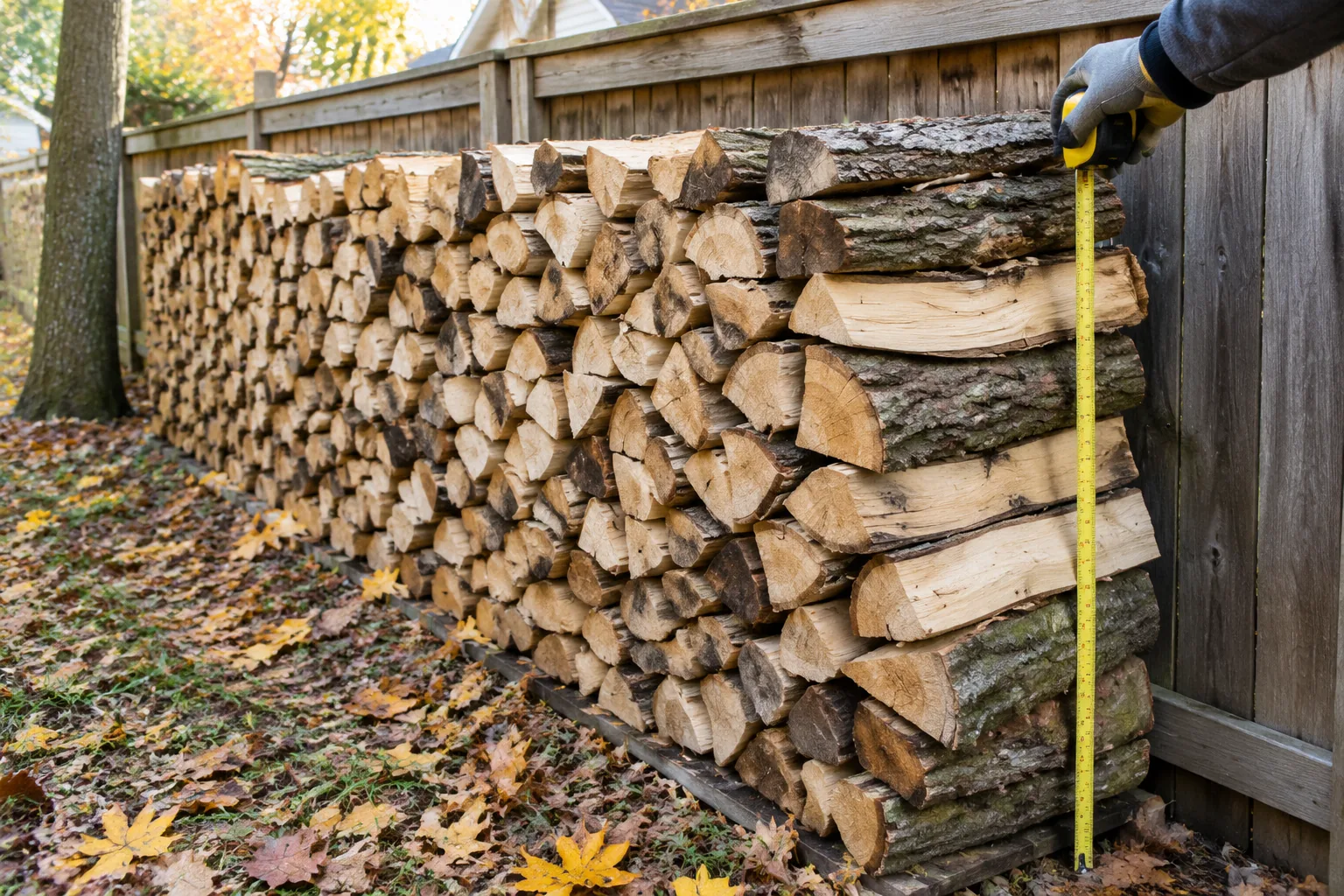
Measuring a long stack with a laser measure
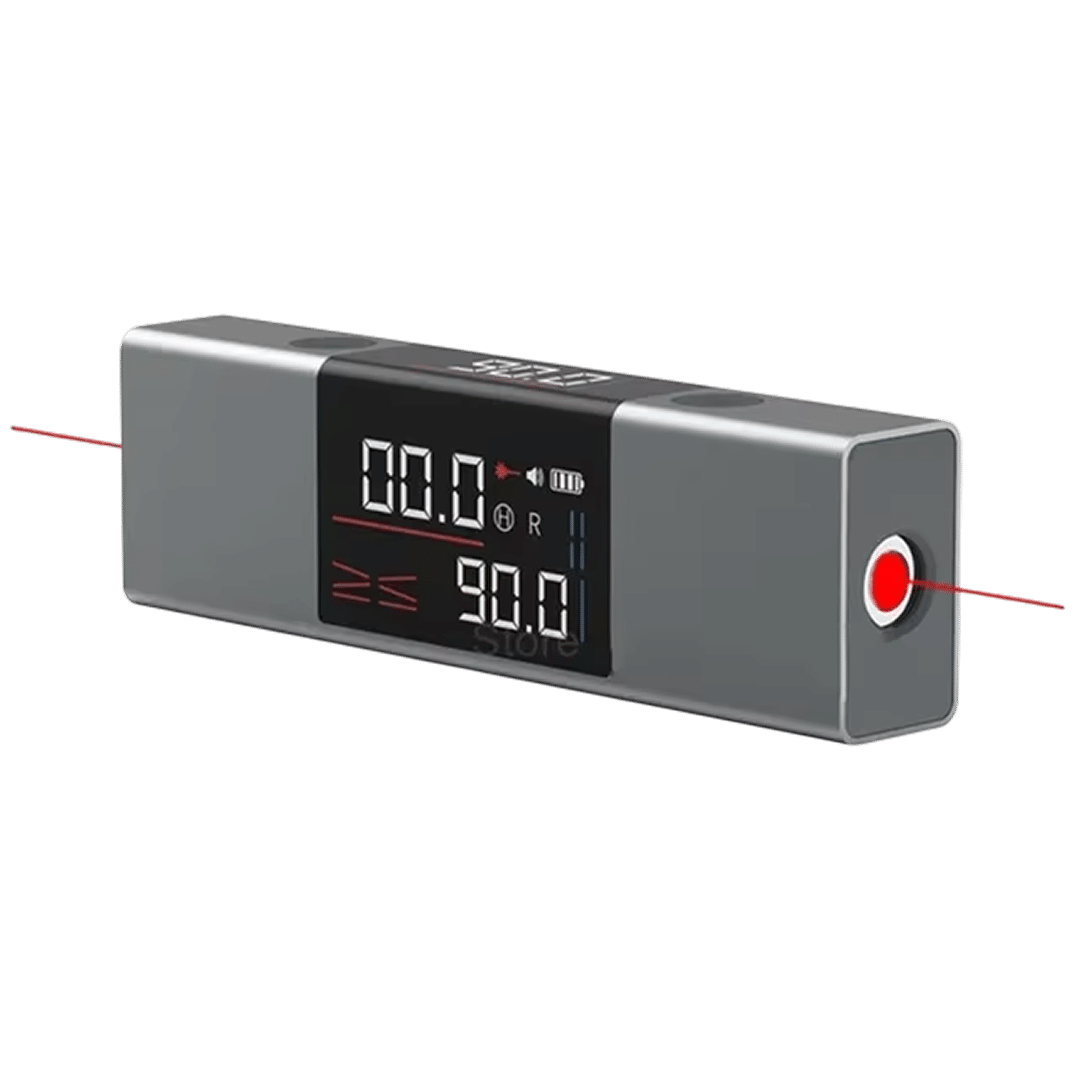
A tape works for short stacks, but a long rick against a fence line is awkward to pull across. A laser distance measure reads the length from one end, and its area mode helps with the face. The PrecisionBeam reads distance, angle and area, shows results on a dual-sided display and can save measurements, so you can note the height, length and depth as you go.
It has a 1/4-inch thread for a standard tripod, and a mounting bracket comes in the box. For a general explanation of how these tools differ from older survey gear, see what an electronic distance meter is.
 In this guidePrecisionBeam$139.99View
How much space to store a cord of wood
A full cord stacked 4 ft high and 8 ft long takes up a footprint of about 32 square feet, 4 ft deep. Leave extra room around it for air movement and for walking along the stack. A single row of 16-inch logs, 4 ft high and 24 ft long, holds a full cord of those shorter pieces in a thinner footprint, but the row is tall and narrow, so it needs a firm base and end supports.
- Stack on pallets, rails or gravel so the bottom row stays off bare ground.
- Leave a few inches between rows and the wall of a shed or house.
- Cover the top, and leave the sides open so air can pass.
- Keep the stack away from the house wall and away from the entry points where pests could move in; the manual for your stove may list clearances for fuel storage.
Checking that the wood is seasoned
A full-volume cord of wet wood still burns poorly. Seasoned wood has been split and left to dry for months, while green wood is freshly cut and holds much more water. Wood that is too wet gives off more smoke and leaves more residue in a stove or chimney.
Visual and handling checks
- Dry pieces have cracks, or checks, in the end grain, and the ends look gray rather than bright.
- Two dry pieces knocked together give a hollow sound; green pieces thud.
- Seasoned logs feel light for their size.
- The bark often loosens on dry pieces.
These signs are a start, but they do not give a number. A moisture reading does.
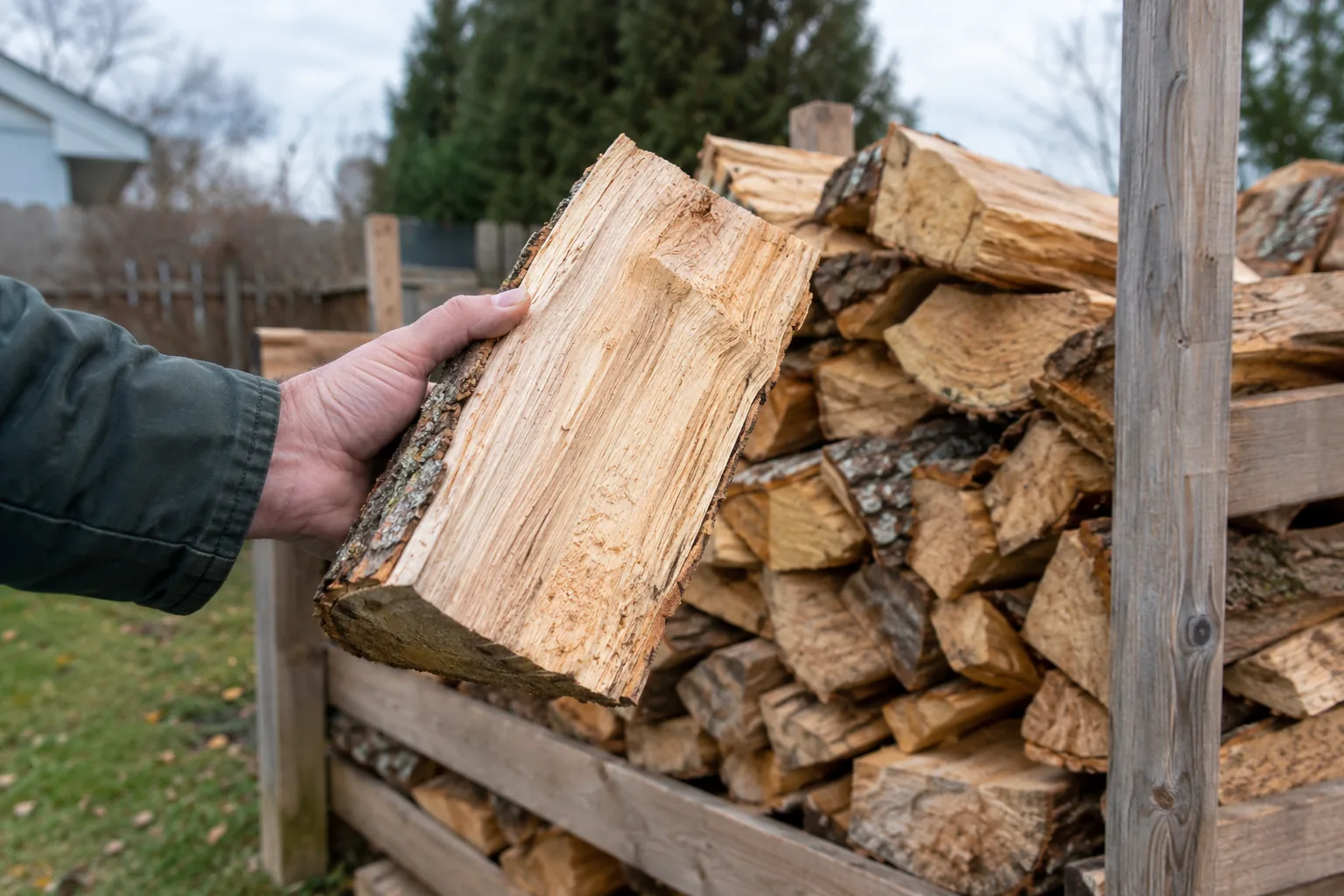
Reading moisture content with a pin meter
Moisture content is the share of a piece's weight that is water. Check your stove or furnace manual for the moisture limit it lists for firewood. To read a delivered cord, sample several pieces from different parts of the stack, not only the top row.
- Split a few logs so you have a fresh, flat face; the outside dries first and can mislead.
- Select the mode on the meter that matches the wood type, hardwood or softwood.
- Press the pins into the fresh face and press the button.
- Read the zone on the display and note it.
- Repeat on at least five pieces from the top, middle and bottom of the stack.
The HydroTrace Pro is a pin-type meter with modes for hardwood and softwood, stainless steel pins and a green, yellow and red three-zone display. Green means clear, yellow means the spot needs closer monitoring, and red means act on it. Spare pins and a carrying case come in the kit. If you are weighing pin and pinless types, read how to pick a good wood moisture meter, and browse the weather, air and moisture meters collection.
 In this guideHydroTrace Pro$99.99View
Field note
Bring the meter and a tape on delivery day. Measure the restacked pile and read a few fresh splits before the seller leaves, so any gap in volume or dryness is settled on the spot.
Buying checklist and common mistakes
| Check | What to ask or do |
|---|---|
| Unit | Ask whether the quote is a full cord or a face cord, and the log length in inches |
| Wood type | Ask for hardwood or softwood, and whether it is mixed |
| Seasoning | Ask how long it has been split and stored, then read the moisture yourself |
| Delivery | Agree on stacked measurement, not a loose heap |
| Volume | Height x length x depth in feet, divided by 128 |
- Accepting a face cord as a cord without checking depth.
- Measuring a loose pile and counting the air as wood.
- Reading moisture only on the outer surface of a log.
- Burning wood that was just cut, which is the worst case for smoke and residue.
Pricing is quoted per cord in many regions and varies with wood type, season and delivery distance, so compare quotes by the cubic feet you will actually receive.
Frequently asked questions
Keep reading
 Weather, Air & Moisture MetersHow Does a Moisture Detector Work? Readings and What Skews Them9 min read
 Precision Measuring & Detection ToolsWhat Is an Electronic Distance Meter? EDM vs Laser Measures6 min read
 Hand & Power ToolsHow to Stain Wood: Moisture Check, Sanding and Even Application6 min read