What Makes a Good Car Vacuum Cleaner: Specs to Compare
A good car vacuum cleaner matches its suction, power source and attachments to your messes. Compare corded and cordless designs against real jobs like pet hair, sand and vents.
The Quindrel Team
October 21, 2026 · 10 min read · Updated November 18, 2026
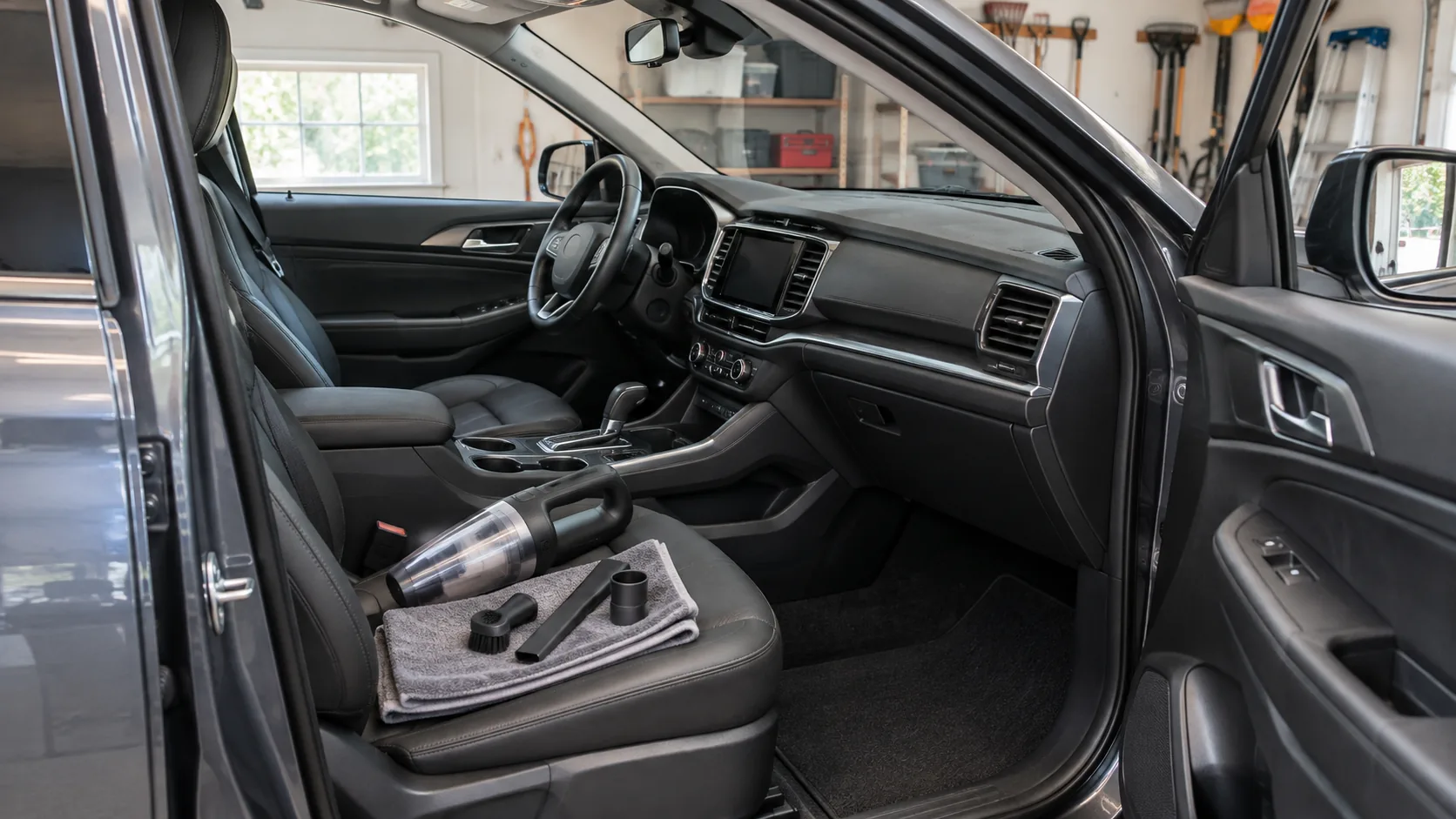
A good car vacuum cleaner has enough suction for sand and pet hair, a power source that suits how you clean, a crevice tool and brush that reach your seats and mats, and a filter you can rinse and reuse. Match those four points to the messes in your own car and the spec sheet becomes simple to read.
This guide compares corded and cordless designs, explains the suction numbers on a spec sheet, and ties each attachment to a real cleaning job. A checklist near the end covers setup, care and the mistakes that waste a purchase.
What makes a good car vacuum cleaner: specs tied to real jobs
Start with the mess, not the model. Sand in floor mats, dog hair woven into seat fabric and crumbs in a seat seam each ask for something different from the tool.
| Cleaning job | Spec to check | Attachment to look for |
|---|---|---|
| Sand and grit in floor mats | Suction, canister size, filter that handles fine dust | Brush head or turbo brush |
| Pet hair on seats | Agitating brush, cyclonic separation so hair collects in the bin | Brush or pet hair attachment |
| Crumbs between seat and console | Slim nozzle, extension reach | Crevice tool |
| Dust in dashboard vents | Blower mode | Narrow nozzle or flexible tube |
| Under-seat and trunk corners | Light body, extension tube or hose | Extension hose |
| Wet spills | Listed as wet/dry by the maker | Wide nozzle |
If a listing does not say wet/dry, assume the unit is dry-only and read the manual before touching a spill.
Write your own version of this table before you shop. Two or three rows are enough, and they show which specs deserve your attention and which you can skip.
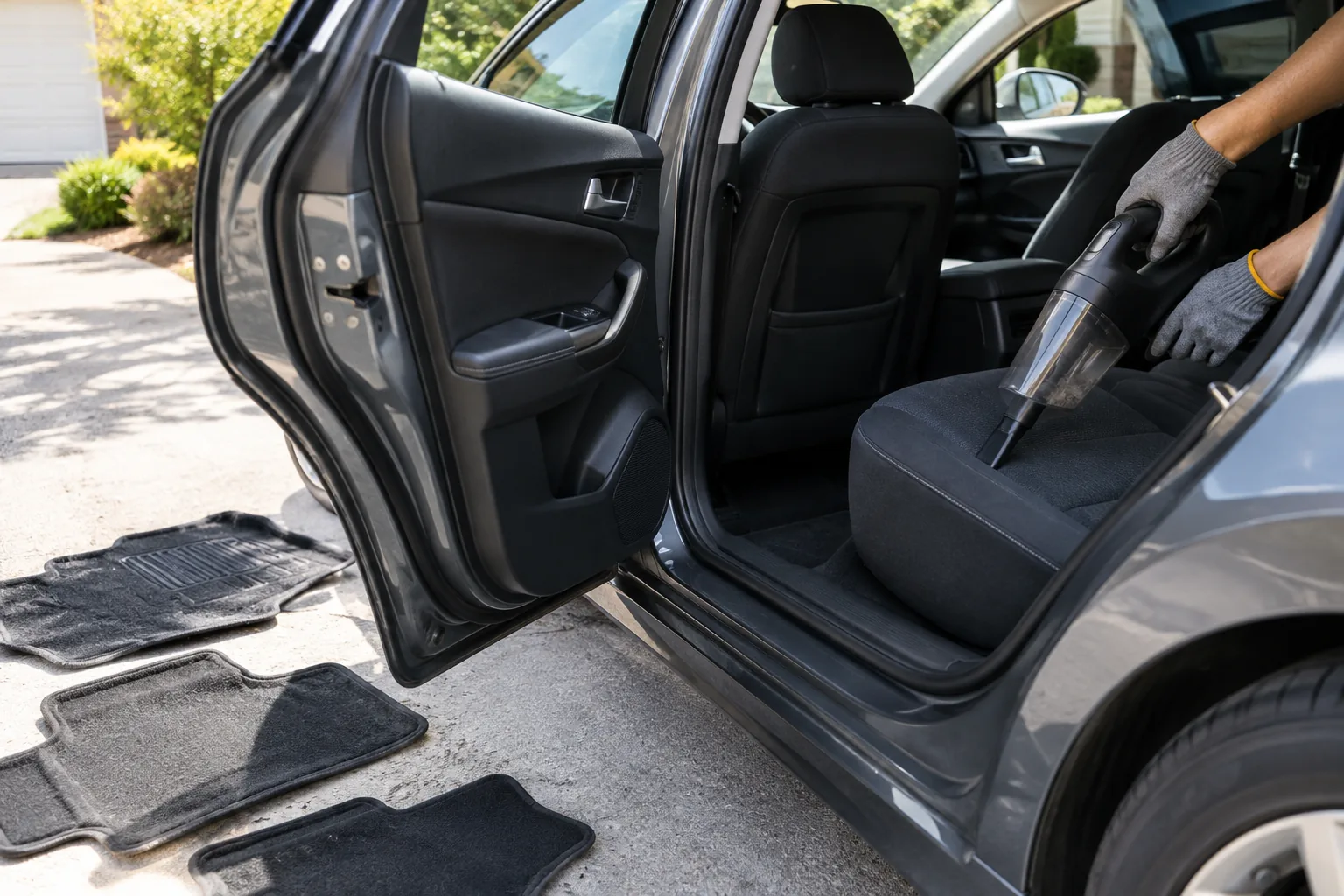
Corded vs cordless car vacuums
The power source shapes how you work more than any other spec. A cordless unit moves with you, while a unit with a DC cord draws from the vehicle's 12V outlet.
| Point | Corded (12V outlet) | Cordless (battery) |
|---|---|---|
| Where it works | Within cord reach of the outlet | Anywhere, including away from the car |
| Charging | Plug in and run | Charge before the job |
| Run time | Runs while the outlet supplies power; the manual says whether the engine should be running | Check the maker's stated battery run time and the mode it applies to |
| Cord handling | Cord can drag across seats and mats | No cord to manage |
| Fits you if | You clean next to the car in one session | You clean in short bursts or in different spots |
A cordless car vacuum cleaner suits short touch-ups. A corded one suits a full interior clean where you do not want to watch a battery. Read each product page to see how the unit is powered and what cable comes with it.
Check the run time figure
Battery run time is listed for a specific mode and is often given for the lowest setting. Look for the stated figure alongside the mode it applies to, and compare it with the mode you plan to use, such as full suction with a motorized brush.
Think about where the car sits
Picture your usual spot: a driveway, a garage, the street or a self-serve wash bay. Then pick the power source that works there without extension cords or detours.
Do not run the engine in an enclosed or attached garage, because exhaust gas builds up. If the manual calls for the engine to be running, move the car outdoors or open the garage door fully, and ask a mechanic if you are unsure.
Suction metrics: how to read the numbers
Spec sheets use several units, and they do not convert neatly into each other. Knowing what each one describes helps you avoid comparing the wrong figures.
- Pascals (Pa) or kilopascals (kPa) describe static suction, the pull at a sealed opening. It matters for lifting heavy grit from carpet pile.
- Airflow, in cubic feet per minute (CFM) or liters per second, describes how much air moves. It matters for pulling hair and crumbs along a nozzle.
- Air watts combine suction and airflow into one figure, but only when the maker measures it the same way as others.
- Motor watts or volts describe electrical input, not cleaning output.
Read any single number with caution. A high suction figure with a narrow inlet and a clogged filter will not clean well. The nozzle, the seal around it and the state of the filter all change what reaches the bin.
Why separation and filters matter
Cyclonic separation spins debris toward the walls of the dust chamber before air reaches the filter. That keeps coarse material off the filter surface, which matters when you pick up sand. A washable HEPA filter adds a rinse-and-reuse routine instead of a disposable cartridge.
Reading a powerful cordless spec for pet hair
A listing for a powerful cordless model may quote a peak figure. Ask which mode it applies to and whether it is measured at the nozzle or at the motor. For pet hair, the brush attachment and the bin matter as much as the headline number, since hair has to be loosened from the weave before airflow can carry it away. If the maker does not say how the figure was measured, compare the attachments and canister instead.
Attachments, weight and bin size
A car interior is mostly edges, seams and hard-to-reach angles. The attachment kit often decides whether a compact vacuum is useful or frustrating.
- A crevice tool reaches the gap between seat and console, along rails and inside door pockets.
- A brush head loosens dust from fabric, vinyl and dashboard texture before suction pulls it away.
- An extension tube or flexible hose lets you reach under seats without twisting your wrist.
- A turbo or agitating brush works pet hair and grit out of mats and seat fabric.
- A blower mode pushes dust out of vents so you can pick it up on the next pass.
Look at how the attachments fit. Nozzles that click into place and stay there suit a long session, while loose friction fits can drop off mid-pass.
Weight and handling
You hold the vacuum overhead, under seats and in door pockets, so check the weight on the listing. A handheld body with a grip that suits your hand matters over a long session.
Bin size and emptying
A transparent canister shows when it is time to empty it. A one-touch release lets you tip the contents into a trash can without touching the dirt. A larger bin needs emptying less often, while a smaller one keeps the body compact.
Noise level
Small motors run at a high pitch in the closed space of a cabin. Check whether the maker lists a sound level in decibels, and keep in mind that every vacuum makes noise. Hearing protection is a reasonable habit for long sessions.
A cordless car vacuum we stock
A good car vacuum cleaner for your garage or driveway depends on how it is powered and on the kit that comes with it. ClearDrive Pro is a cordless model with a built-in rechargeable battery and a USB charging cable.
One switch changes it between vacuum and blower modes. Blower mode pushes dust out of vents and tight corners, so you can loosen debris before you vacuum it up. Inside, a cyclonic dust chamber sends debris to the chamber walls ahead of the filter, and a one-touch release opens the chamber so you can empty it.
Six attachments cover under-seat rails, dashboard vents, console gaps, upholstery and floor mats, including a slim crevice tool and a brush head. The washable HEPA filter can be rinsed and reused, and two filters come in the box along with a USB charging cable. Let a rinsed filter dry completely before you put it back.
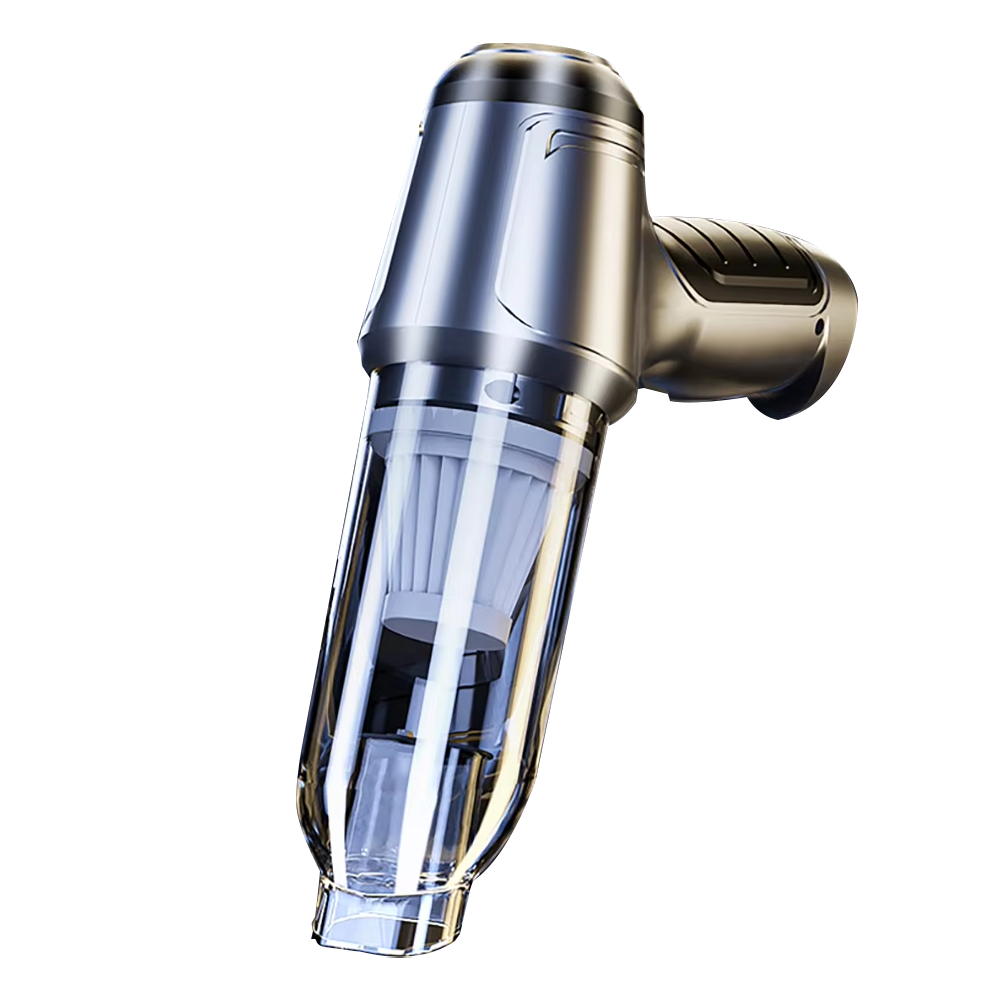 In this guideClearDrive Pro$139.99View
If you also wash the exterior, the Car Cleaning & Detailing collection has more interior and exterior supplies in one place.
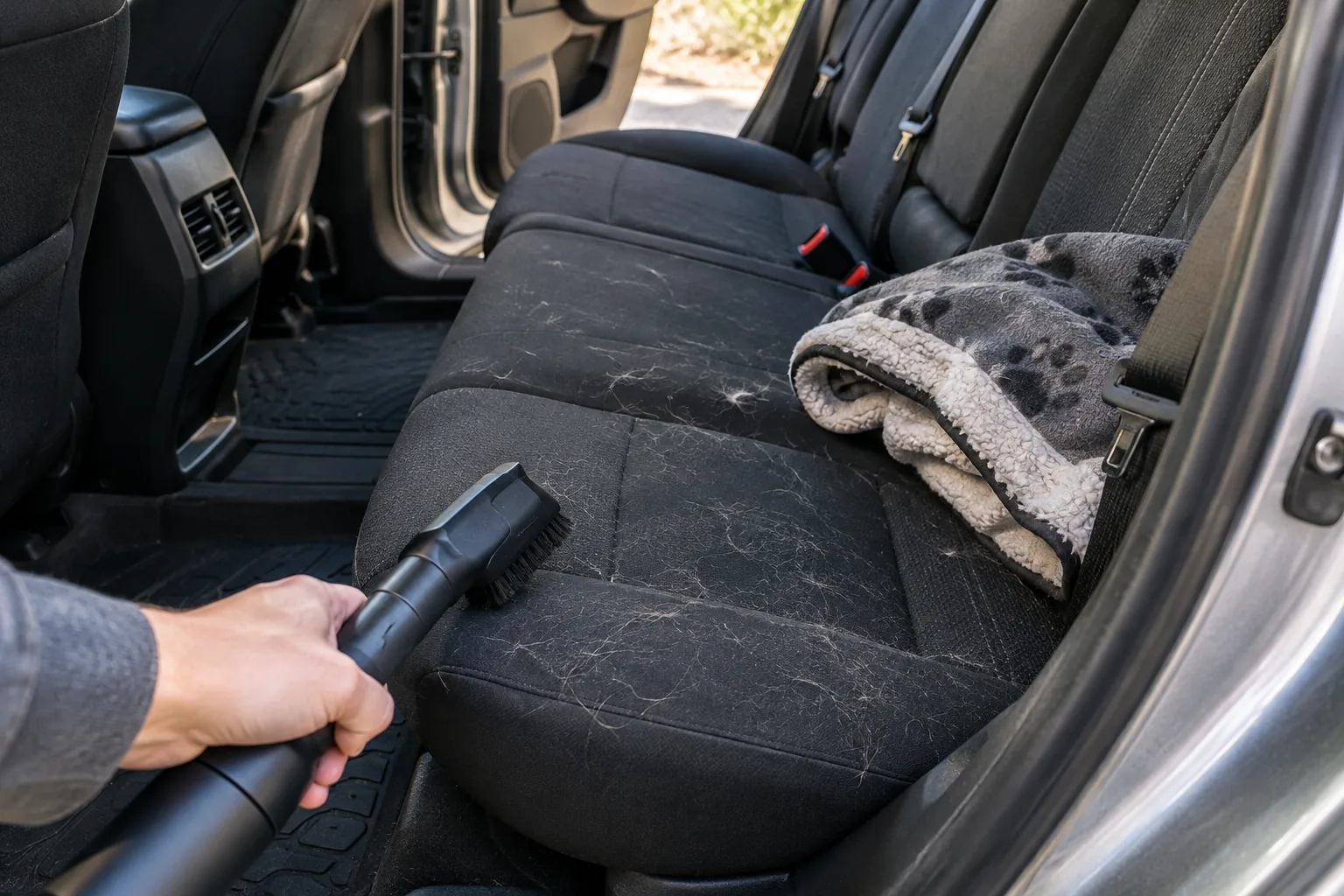
Matching a vacuum to pet hair, sand and spills
Pet hair
Loosen the hair with a brush first, then vacuum along the weave. Empty the bin before it fills, since a packed bin restricts airflow, and the separation described earlier only helps while the chamber has room.
Sand and grit
Use blower mode to move sand out of seams, then vacuum it up with the crevice tool. Pull mats out and shake them before you vacuum, because loose grit hides under them.
Liquid spills
A compact dry vacuum is not meant for liquid. Blot the spill with a towel, then use a unit the maker lists as wet/dry if you need one. A wet/dry shop vacuum with a long hose suits bigger jobs and a truck bed or boat, though it takes more space to store.
Can a household vacuum do the job?
A household upright or canister model can reach a car's floor if its hose and cord reach the driveway. Seats, vents and door pockets are harder, because household tools are sized for rooms rather than cabins. A compact car unit with a crevice tool and a brush is built around those tight spots.
For washing the outside before you vacuum, our guide to choosing a power washer for home use explains pressure and flow settings.
Field note
Work from the top down: vents and dashboard first, then seats, then mats. Dust you blow out of a vent lands on the seats below, and the floor is the last place it should end up.
Storage, cords and replacement filters
A vacuum you cannot find or untangle does not get used. Plan where the unit lives before you buy it.
- Coil a corded unit's cable loosely rather than tightly, so the insulation is not kinked.
- Keep the attachments in the same bag or trunk pocket as the body.
- Store a cordless unit where the charger reaches, away from heat sources, and follow the manual on battery storage.
- Look up the replacement filter on the product page or the maker's parts list before you buy. A model with a spare filter in the box gives you one to use while the other dries.
Washable filters reduce the number of parts you need to reorder, but they still wear. Replace a filter that is torn, stiff or no longer holds its shape.
Setup and care checklist
- Read the manual and confirm the vacuum is suited to a dry interior.
- Charge a cordless unit, or plug a corded unit into the 12V outlet, following the manual on whether the engine should be running. If it should be, park outdoors, not in a closed garage.
- Choose the attachment for the job and click it into place.
- Run blower mode on vents and tight corners, then switch to vacuum mode.
- Empty the bin after each session using the release.
- Rinse the washable HEPA filter, let it dry completely, and refit it. Use the second filter while the first dries.
- Store the attachments with the unit so the kit stays together.
Unplug or disconnect the unit before you open it, and follow the manual for cleaning.
Common mistakes
- Fitting a damp filter, which can clog it and leave a musty smell.
- Letting the bin stay full, which restricts airflow.
- Judging by one suction figure and skipping the attachment list.
- Vacuuming wet carpet with a dry-only unit.
- Leaving a corded unit running with the cord pinched in a door.
Care schedule
After each session, empty the bin and wipe the nozzle. Rinse the filter when it looks dusty or the airflow feels weak. Once the filter is fully dry, keep it with the spare so you always have one ready.
Decision steps
Work through these in order and you will land on a short list.
- Decide where you clean. If you clean in a driveway with the car nearby, a long cord is workable; if you clean at car washes or on trips, look at cordless.
- List your worst mess: pet hair, sand, crumbs or dust.
- Check that the kit includes a crevice tool and a brush, plus an extension reach if you need to get under seats.
- Look for a washable filter and a second one in the box.
- Check the weight, since you hold the unit overhead and under seats.
- Confirm whether it is wet/dry or dry-only.
A good car vacuum cleaner is the one whose spec sheet, parts and filter supply fit your routine. Brand names matter less than those details, so check whether replacement filters are available before you buy.