
What's a Good Radar Detector? Features to Compare
A good radar detector covers X, K, Ka and laser, filters false alerts, shows signal direction and supports GPS lockouts. Use the spec table to compare any unit.
The Quindrel Team
October 15, 2026 · 8 min read
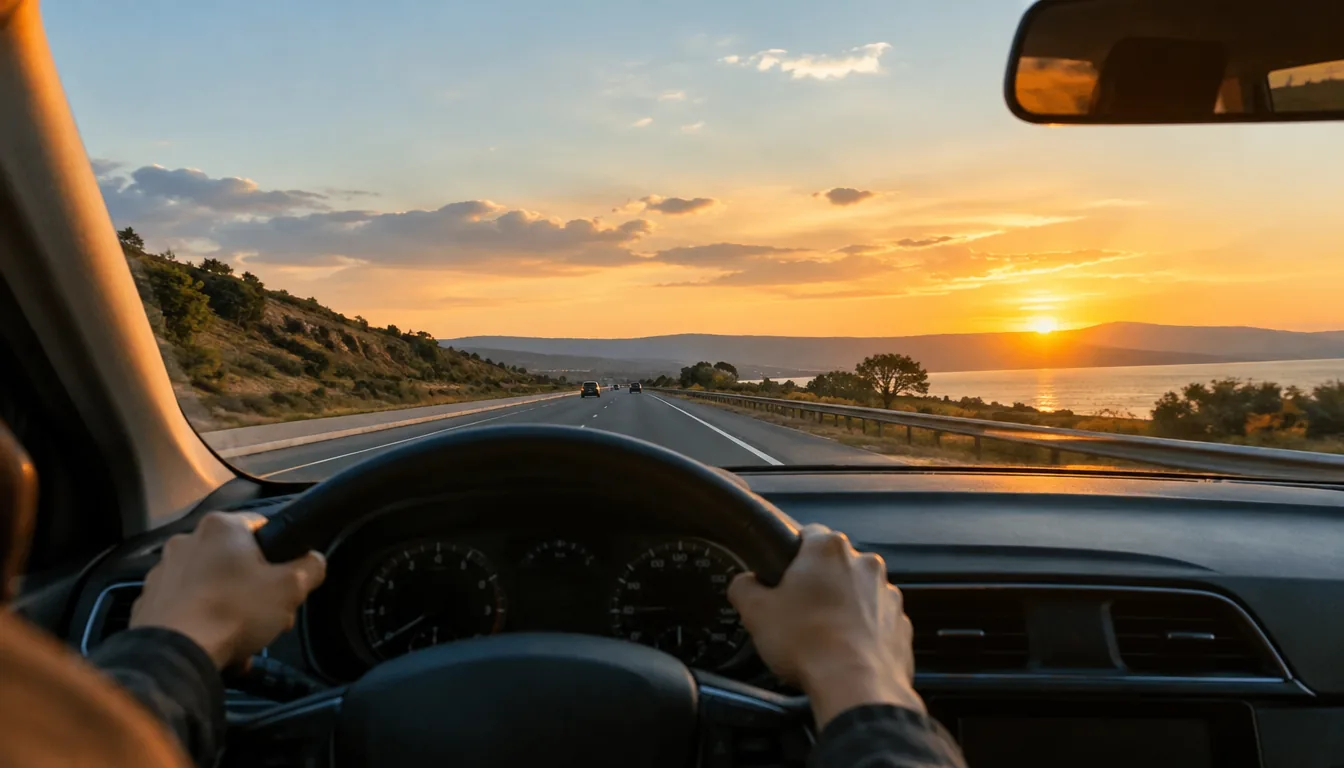
So, what's a good radar detector? One that scans the bands used where you drive (X, K, Ka and laser), filters out false alerts from other cars and fixed sensors, shows which direction a signal comes from, and lets you mute repeat alerts at known locations. Range matters, but filtering and clear alerts decide whether you keep the unit switched on.
This guide breaks each feature into plain terms, gives you a spec table to judge any radar detector for cars, and covers legal limits, setup and common mistakes. Use it to compare units side by side, whatever the name on the box.
What's a good radar detector? Start with five features
Spec sheets get crowded. Five things separate a useful unit from an annoying one:
- Band coverage: X, K, Ka and laser.
- False alert filtering: software that ignores signals from non-police sources.
- Direction information: arrows that tell you where a signal is.
- GPS lockouts: the ability to mute alerts at fixed false-alert spots.
- Alert style: voice, tones, display, or all three.
Everything else, such as case color or menu themes, is secondary. If a listing hides any of these five, treat that as a gap in the information and look for a clearer listing.
Readers often ask for a short ranked list of models. This guide does not rank models or name brands. Run any shortlist through the five-feature checklist and the spec table below, and the units that fit your driving will stand out.
Radar bands and laser, explained
Speed enforcement uses radio waves (radar) and light pulses (laser, also called lidar). A detector listens for the radio bands and watches for laser light. Any cop detector is simply a receiver tuned to those signals. Radar detection is passive: the unit receives, it does not transmit.
X, K and Ka
X band is old technology. Many areas have few or no X band enforcement sources, yet door openers and other fixed devices can still use it, which is why X often produces false alerts. K band is shared with blind-spot monitors and some other vehicle sensors. Ka band covers a wide span of frequencies, so a unit should cover the whole span rather than a few spots in it.
Laser
A laser detector watches for pulses of light. A laser beam is very narrow and aimed at one vehicle, so a detector may pick up only a reflection or a nearby aim. Take a laser alert as information, not a promise of warning. Driving at the posted limit is the dependable approach.
Why local conditions matter
Which bands are active depends on your region and your roads. Some areas see mostly Ka and laser, others see more K. A unit that scans all four bands covers whichever applies to you.
Spec table: how to judge any radar detector
Use this table to read a product page. The right column tells you what to look for and what to question.
| Spec | What it means | What to look for |
|---|---|---|
| Band coverage | Which signals the unit receives | X, K, Ka and laser all listed |
| Range | How far away a signal is picked up | Described by band and conditions, not one big number |
| Filtering (DSP) | Software that separates real sources from noise | Names blind-spot sensors, door openers and adaptive cruise |
| GPS lockouts | Stored locations where alerts are muted | Works automatically, lets you add or remove points |
| Directional arrows | Shows front, side or rear source | All three directions, not front only |
| Alerts | How you learn about a signal | Voice callouts plus a clear display |
| Mounting and power | How it attaches and gets power | Windshield mount, 12V cable, no wiring needed |
| Updates | How lockout data and software change | A stated update method |
Range and accuracy: what they can and cannot tell you
Shoppers often hunt for the longest range radar detector. Range is real, but a single number hides a lot. Signal pickup depends on road curves, hills, traffic and the angle of the source. A unit with longer range that triggers constantly on harmless signals will teach you to ignore it.
Accuracy is about how well alerts match reality: the right band, the right direction, and few alerts with no enforcement behind them. Compare range claims only when they name the band and the conditions. If a seller gives no conditions at all, put more weight on filtering and direction features, which you can check from the spec list.
Also know that a detector cannot always warn you. A signal may be switched on only when aimed at your car, and a stop can happen with no alert at all. Police agencies publish plain explanations of why a driver can be stopped without the unit ever sounding.
Filtering, GPS lockouts and updates
Modern cars carry radar sensors for blind-spot warning and adaptive cruise control. Stores, banks and automatic doors use sensors too. All of these can trigger a detector that has weak filtering.
DSP filtering
DSP stands for digital signal processing. It examines what a signal looks like and sets aside patterns that match known non-enforcement sources. Look for a unit that names the sources it filters.
GPS lockout points
A GPS lockout stores the position of a repeated false alert, such as the same automatic door on your commute. Next time you pass, the unit stays quiet there. Check that you can look over and delete lockouts, because a point stored in the wrong place could mute a real alert.
Direction arrows
Directional arrows separate a source ahead from one beside or behind. That context tells you whether to pay attention or whether a car passing you is the cause.
Software updates and extras
Lockout data and filtering rules change as new vehicle sensors appear, so check how a unit receives firmware updates. Some models also advertise shared alerts from other drivers, or stored speed camera and red light camera locations. These depend on a connected phone or database, so read what the listing says it needs. Separate laser jammers are a different category of device with their own legal limits; this guide covers detectors only.
What the alerts mean
Learn the alert vocabulary before your first drive, so you react to the right thing.
| Alert | What it usually means | What to do |
|---|---|---|
| X band | Often a door opener or other fixed device | Note the location; a lockout candidate |
| K band | Could be a blind-spot sensor or a speed source | Check the arrow and signal strength |
| Ka band | A band used for speed enforcement | Check your speed and the arrow |
| Laser | A light pulse aimed at a vehicle | Check your speed; it may be a reflection |
| Rear arrow | Source behind you | Often a passing vehicle sensor |
A unit that covers these features: ClearPath Pro
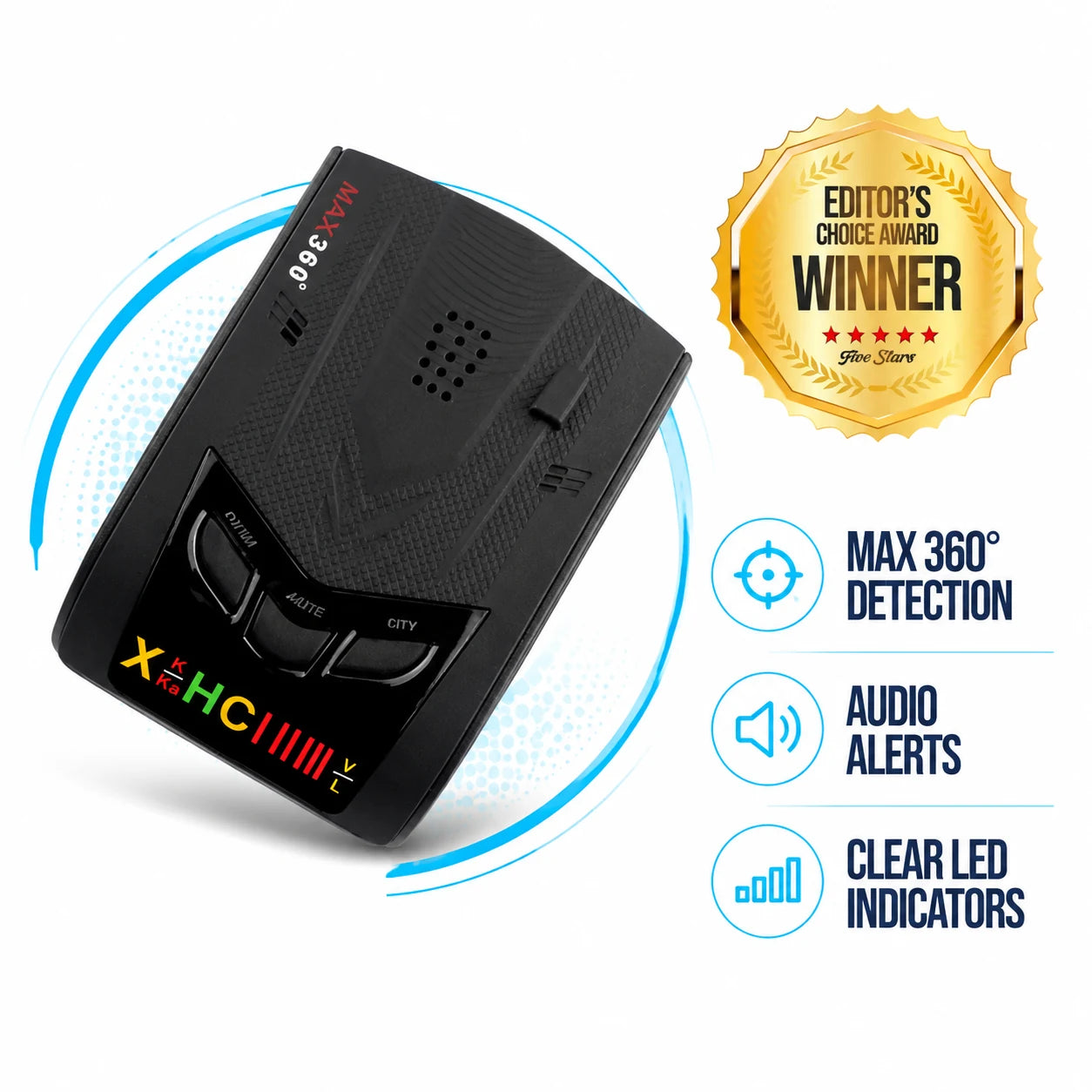
The ClearPath Pro is a windshield-mounted detector that scans X, K and Ka radar bands plus laser. It gives front, side and rear directional arrows, voice callouts for band and signal strength, and an LED display. DSP filtering is aimed at signals from blind-spot sensors, door openers and adaptive cruise, and GPS lockout mutes alerts at locations it has marked as known false alert sources.
It plugs into the vehicle's 12V power outlet, so no tools or wiring are needed. The box includes a carrying case, the 12V car power cable and a quick-start manual.
 In this guideClearPath Pro$99.99View
Are radar detectors illegal? State rules and detection
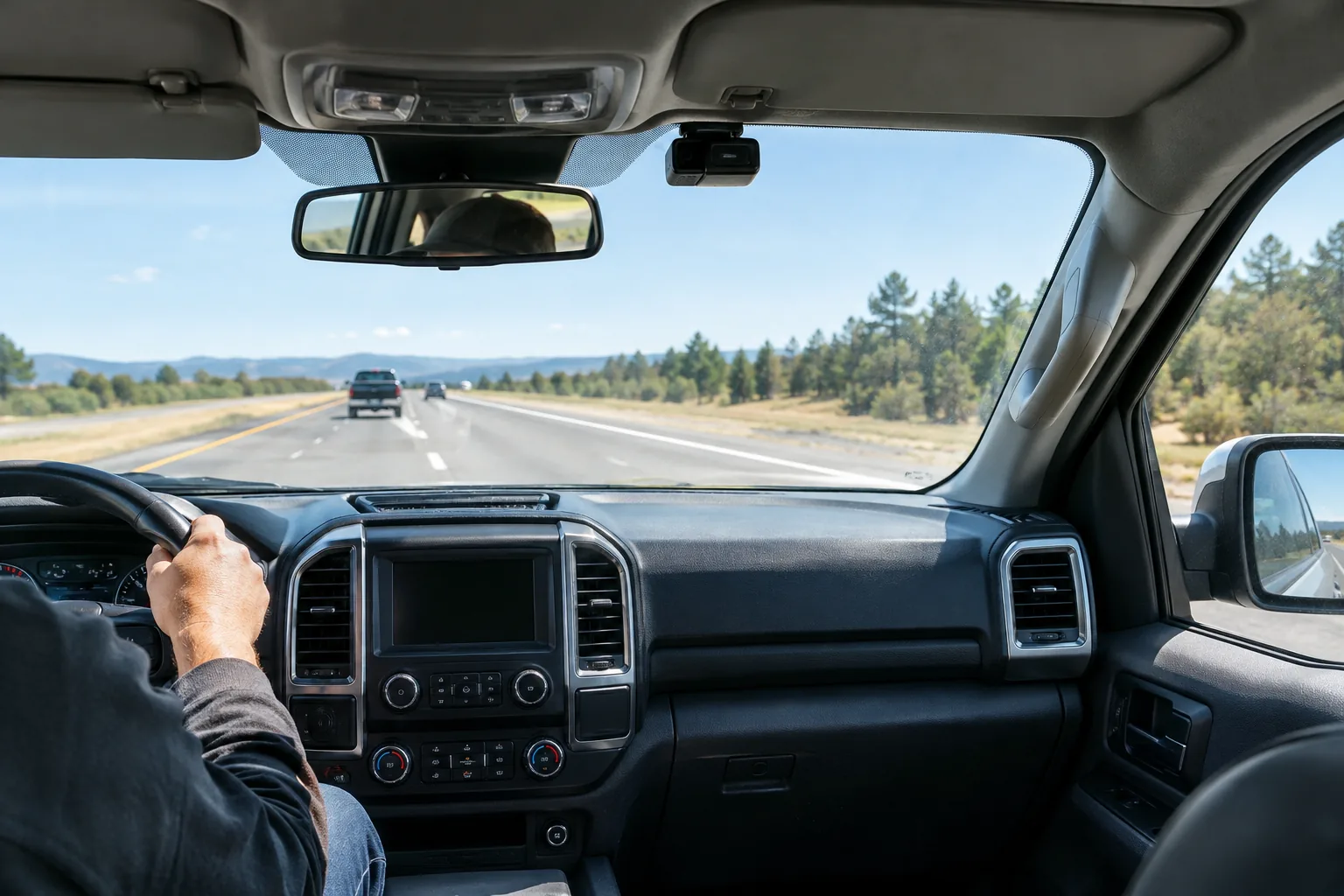
Before you settle on a unit for your car, check whether you may use one at all. In most of the US, using one in a passenger car is allowed. Virginia and Washington, D.C. ban them in passenger vehicles, and federal rules ban them in large commercial trucks. Some federal and government facilities restrict them too.
Some states also limit windshield mounting of any device, which affects where you can put one. Laws change, so check current rules for every state on your route, and ask a local attorney if you are unsure.
How can police tell if you have one?
Officers can see a unit on the dash or glass, or a power cable running to it. Some jurisdictions that ban detectors use devices that sense signals leaking from certain detector designs. Where detectors are banned, a visible unit or cable is the usual giveaway. Where they are legal, none of this matters, but a detector does not excuse speeding.
| Situation | General rule |
|---|---|
| Passenger car in most states | Allowed |
| Virginia and Washington, D.C. | Banned in passenger vehicles |
| Large commercial trucks | Banned under federal rules |
| Windshield mounting | Restricted in some states; check local law |
Buying mistakes, setup and final decision
Common buying mistakes
- Chasing one big range number. Filtering and direction data affect daily use more.
- Ignoring false alerts. A noisy unit gets switched off, which defeats its purpose.
- Skipping the local-law check. Know the rules before you travel.
- Blocking the view. Mount it where it does not obstruct your line of sight.
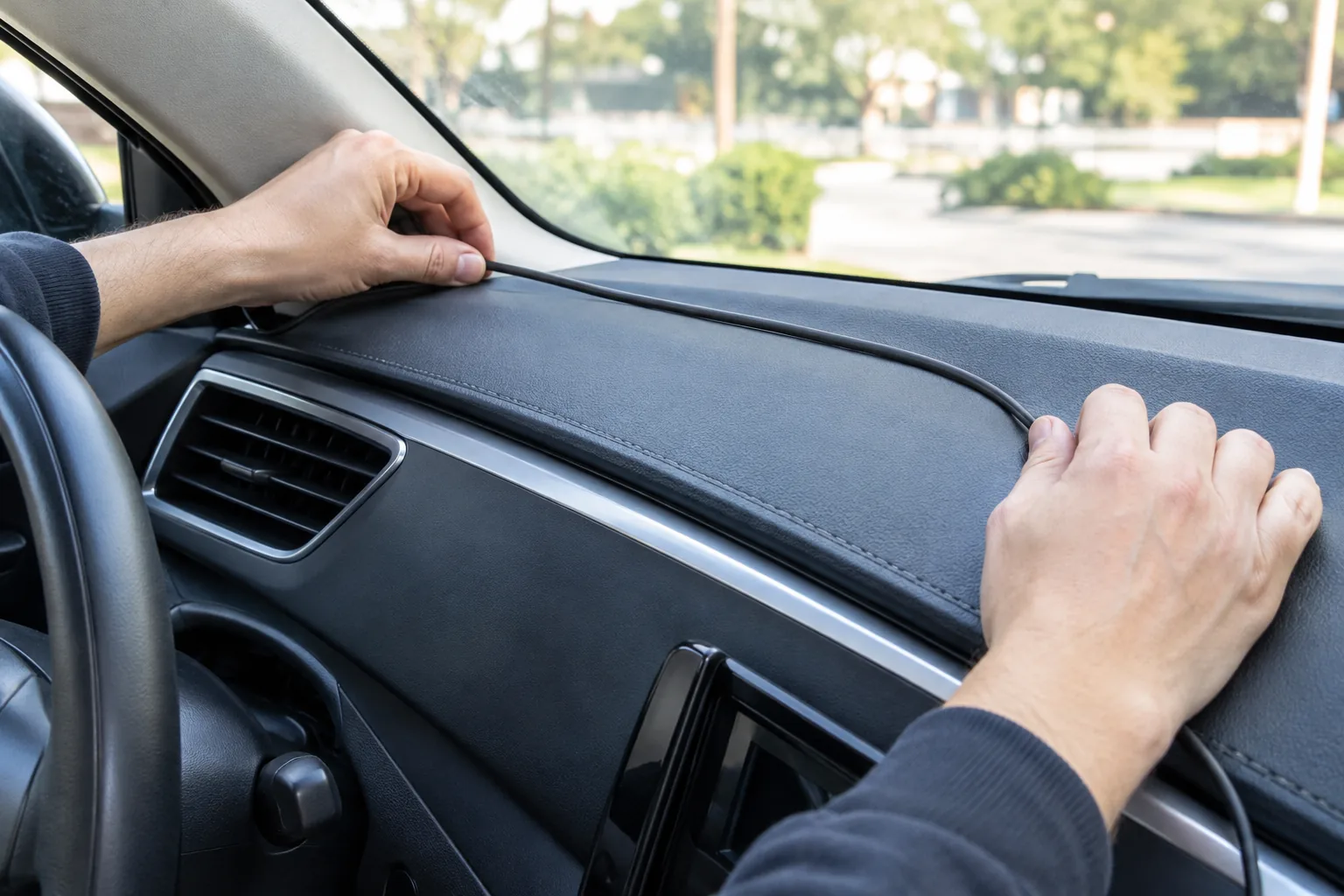
- Leaving the cable loose. Route it along the trim so it does not tangle with controls.
- Using it as permission to speed. It is an aid, not a substitute for watching your speed.
Field note
Drive your usual commute for a week and note where false alerts repeat. Those spots are the ones worth locking out with GPS, once you are sure no real enforcement uses that exact location.
Setup checklist
- Read the manual before mounting.
- Clean the glass, then attach the unit near the mirror with a clear view forward.
- Plug the cable into the 12V outlet and route it along the trim.
- Power on and confirm the display and voice alerts work.
- Set the alert volume low enough not to mask traffic sounds.
- Go over your lockouts after the first week.
- Stow the unit out of sight when you park, in its carrying case if included.
If you also want a record of what happens on the road, a dash cam is a separate tool for that. Our guide on how to choose a good car dash cam covers features to compare, and the Dash Cams, Trackers & Anti-Theft collection lists what we stock.
How to decide
To answer what's a good radar detector for your own roads, write down your driving conditions: highway or city, mostly alone or often with passengers, one state or several. Then score each candidate against the spec table: all four bands, named filtering, three-way arrows, editable lockouts, clear alerts. Pick the unit that satisfies the most items, then confirm that it is legal where you drive.
When two units tie, choose the one whose alerts you find easier to understand at a glance. A good radar detector is the one you can read quickly while watching the road, because that is the one you will keep using. It is judged by daily use, not by an extra line on a spec sheet.
Frequently asked questions
Keep reading
 Audio, Connectivity & DiagnosticsQi-Certified Wireless Chargers: What It Means for a Car Mount7 min read
 Audio, Connectivity & DiagnosticsWhat Does a Water Pump Do in a Car? Role, Failure Signs, Checks8 min read
 Audio, Connectivity & DiagnosticsWhat Is a Knock Sensor? What It Does and How to Check It7 min read