Pass Through Socket Set vs Standard Sockets: When to Use Each
A pass through socket set lets a long stud or bolt end slide through the socket and ratchet. Use it for long studs and tight clearance; standard sockets cover the rest.
The Quindrel Team
October 20, 2026 · 7 min read
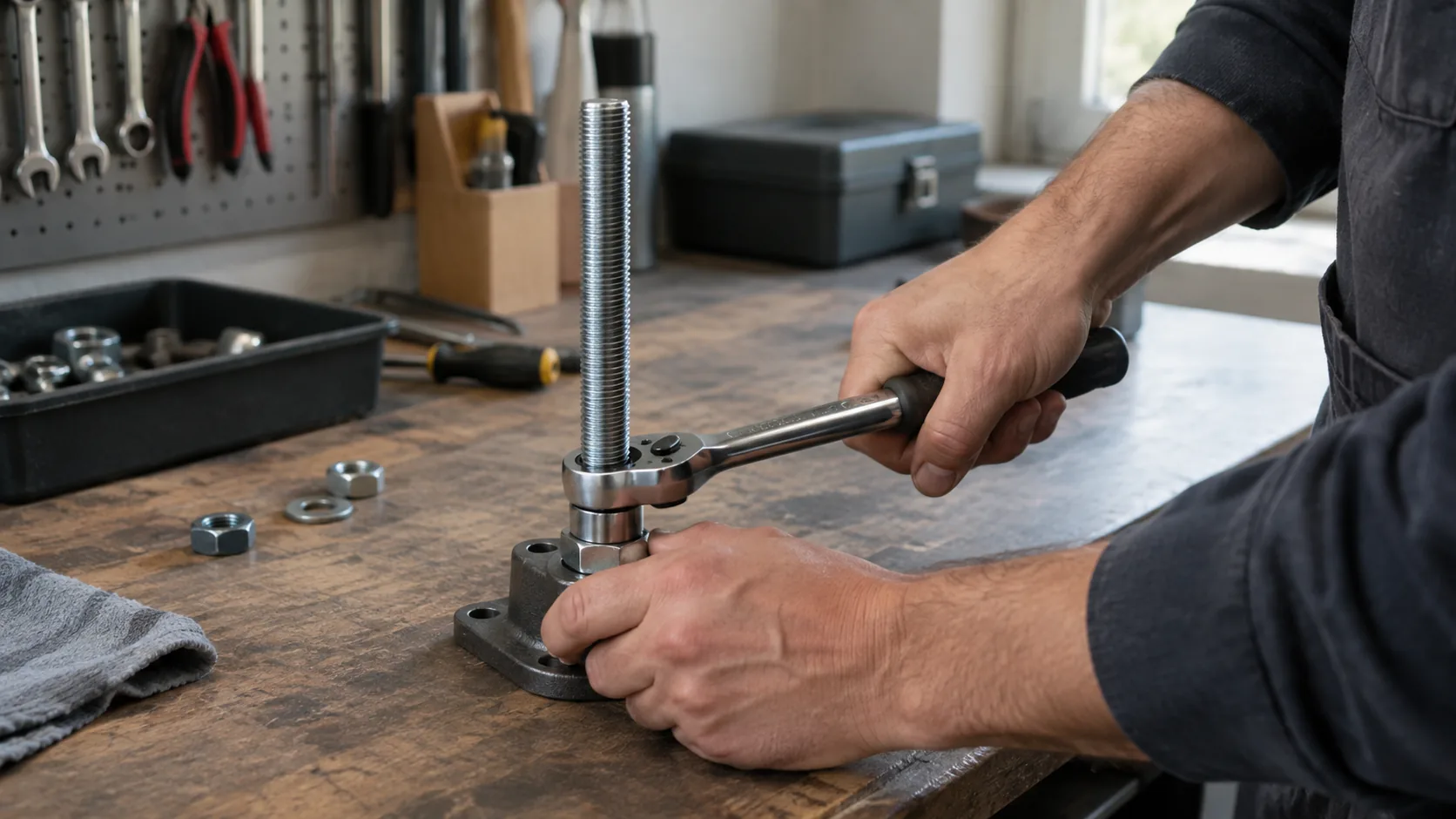
A pass through socket set uses sockets and a ratchet with an open bore, so the end of a long stud, bolt or threaded rod can slide straight through the tool instead of bottoming out. Use it when a fastener sticks out past the nut, or when there is no room for a deep socket plus an extension. Standard sockets cover the other jobs, and this guide shows where each type belongs.
What the open bore is for
The idea is simple: the socket has no closed back wall. When you set the socket on a nut, the extra length of bolt moves up through the socket and out through the hollow head of the ratchet.
That solves a problem a regular socket cannot. A standard socket has a blind end, so a stud longer than the socket depth stops the tool before it reaches the nut. You then reach for a deep socket, a thin-wall socket or a wrench, and each of those has its own limits.
Typical jobs
- Nuts on long studs, such as exhaust or flange studs
- Nuts on threaded rod and all-thread hangers
- Bolt ends that stick out past the nut in a bracket or clamp
- Fasteners where the stud end has to stay clear of the tool
How pass through sockets work
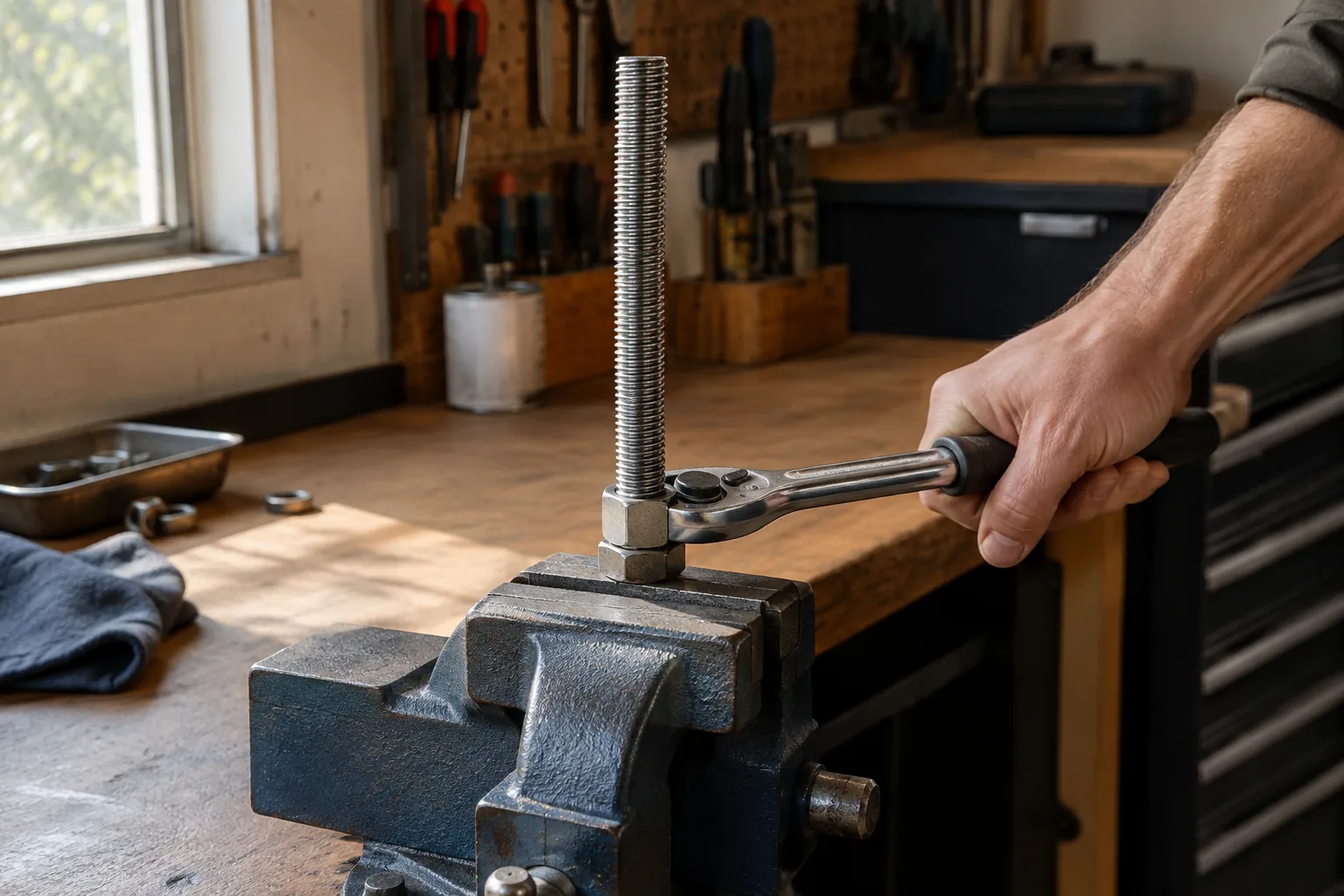
In a typical pass through system, the socket does not use the square drive hole you find in a standard socket. Instead, the socket has an outer profile, and the matching ratchet has a hollow ring head that grips the outside of the socket. Because nothing sits at the back of the socket, the stud has a clear path through both pieces.
That is why the ratchet matters as much as the socket. The sockets pair with the ratchet built for that system and size range, so read the maker's description before you mix pieces from different sets.
Adapters for a standard square drive
Some makers offer an adapter that lets a pass through socket sit on a standard square drive. With an adapter in place, the socket works with a regular ratchet or extension, but the stud no longer passes through the drive end. Use the adapter to reach a nut with tools you already own, and keep the hollow ratchet for long studs.
If you are choosing sizes, the guide to a metric socket set covers common sizes and drives, and the same size logic applies here.
Pass through socket set vs standard sockets
The table puts the two types side by side so you can match the tool to the job.
| Factor | Pass through sockets | Standard sockets |
|---|---|---|
| Long studs and threaded rod | Stud end passes through the socket and ratchet | Stud stops against the closed end unless you use a deep socket |
| Tight clearance | Stud end goes inside the tool, not above it | Low-profile sockets fit, and extensions reach recessed bolts |
| Ratchet pairing | Pairs with the hollow ring-head ratchet built for that system; adapters for a standard square drive exist, so check the maker's description | Square drive hole fits any ratchet of the same drive size |
| Extensions and joints | Fewer extension options; adapters vary by maker | Wide range of extensions, adapters and universal joints |
| Impact use | Check the maker's markings before using with power tools | Impact-marked sockets exist for impact tools |
| Torque values | Check the maker's notes on use with a torque wrench | Fits standard torque wrenches of the same drive |
| Kit scope | Specialty kit with a narrower job | Large kits with bits, adapters and rods |
The pattern is the same on every line: pass through sockets handle protruding ends, and standard sockets handle the wider range of fasteners and accessories.
When to use a pass through socket set
Long studs and threaded rod
This is the clearest case. If the nut sits low on a long stud, a standard socket cannot reach it, and a wrench needs sweep room. A pass through socket lets you turn the nut with a ratchet while the stud end moves through the tool. Work on long studs is where this kind of set earns its place in the toolbox.
Tight clearance above the nut
Deep sockets add height. When there is little space above a nut, a pass through socket with a hollow ratchet puts the stud inside the tool instead of above it. Measure the room around the head before you commit, because the ratchet still needs room to swing.
Repeated work on the same fastener type
If you regularly run nuts onto all-thread, hanger rod or long studs, a pass through set gives you one tool family for the whole job instead of swapping deep sockets and wrenches.
Point count, sizes and ring-head clearance
Two details decide whether a socket fits the nut in front of you: the number of points and the size system. Check both before you start.
6-point or 12-point
A 6-point socket contacts the flats of a hex nut, which suits tight or worn fasteners. A 12-point socket slips onto the nut in more positions, which helps when the ratchet has only a short swing. Look at the maker's description to see which point count a set offers.
SAE or metric
SAE sockets are sized in inches and metric sockets in millimeters. Read the size on the fastener or its documentation, and pick a set that covers it. Some pass through sets include both size systems, so check the listing for the sizes you need.
Ring-head thickness
The ring head wraps around the outside of the socket, so the tool is wider around the nut than a slim standard socket. Measure the space beside the fastener, including nearby walls, brackets and other nuts. If the ring head will not fit, a standard thin-wall socket or a wrench may be the better route for that spot.
When standard sockets fit the job
A standard socket suits any fastener where the bolt head sits flat in the socket and nothing extends past it. That covers bolt heads on engines, brackets, covers and fittings. Because the drive is a square hole, you can also add extensions, adapters and a universal joint when the fastener sits at an angle.
- Bolt heads and short nuts, where nothing sticks out past the fastener
- Recessed fasteners that need an extension or a universal joint
- Jobs that call for a torque wrench and a specific socket
- Impact tool work with impact-marked sockets
Follow the maker's instructions for any tool, and use a torque wrench with standard sockets when a torque value is given for the fastener.
Field note
Before you pick a type, hold a spare nut and the stud end next to the work. If the stud is longer than a deep socket is tall, a pass through socket is the option that clears it.
How to choose: a four-step check
- Look at the fastener. Does a stud or bolt end stick out past the nut?
- Check the ratchet. Pass through sockets pair with the ratchet built for that system and size range, so confirm the set includes one or lists an adapter.
- Measure the space above and around the fastener, including the ratchet head.
- Decide on power. If you plan to use an impact tool, read the markings on the sockets and confirm they are made for it.
If the fastener has no protruding end, a standard socket is the direct choice. If it does, a pass through set is worth adding. When you have both kinds of work, keep a standard kit as the base and add the pass through set for studs.
For power tools, look for impact-marked sockets and follow the maker's instructions. Sockets without that marking are meant for hand ratchets.
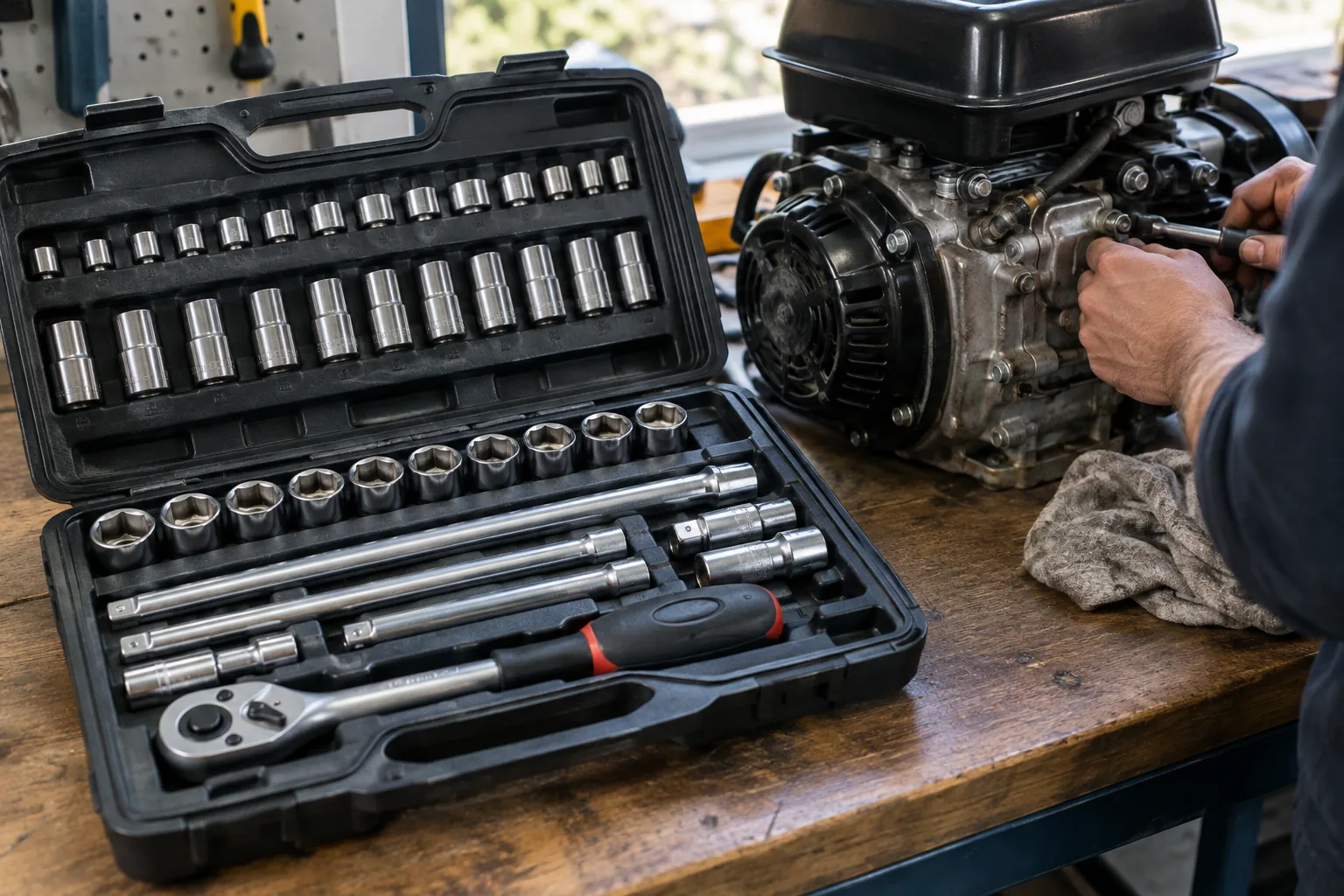
A standard 1/4-inch kit for everything else
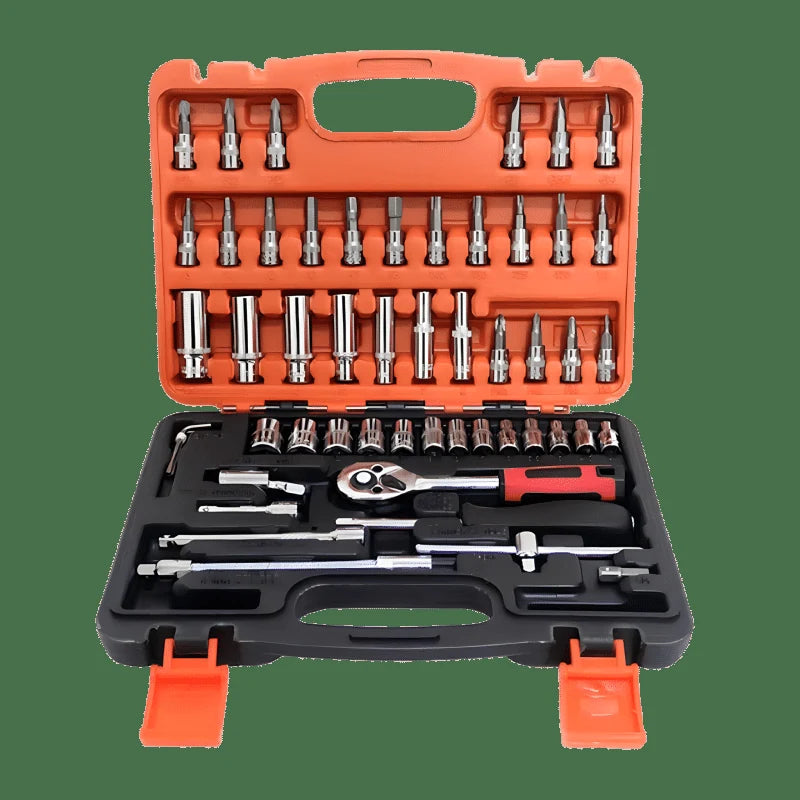
The TorqueVantage is a standard set, not a pass through set. It is a 53-piece 1/4-inch drive set for hand repairs on metric fasteners, such as bolts on small engines and brackets. The sockets are forged from carbon steel with a chrome finish.
It includes a quick-release ratchet wrench and a 1/4-inch universal joint that bends between the ratchet and the socket, so you can turn a fastener from an angle. Add the universal joint or a rod when a fastener sits deep in a bracket. The kit also holds 3 hexagon sockets and 21 screwdriver bits, with a slider, posts and an adapter. Each piece has its own marked slot in the plastic case, so you can see at a glance which piece is out of place.
 In this guideTorqueVantage$119.99View
Common mistakes and care
- Buying a pass through set and using it on bolt heads where a standard socket would fit the same way
- Mixing sockets and ratchets that are not made to pair, so the stud cannot pass through or the socket does not seat
- Forgetting the overhead space the stud needs above the ratchet
- Using a socket on an impact tool without checking it is made for that
- Skipping the torque wrench when a torque value is given
After a job, wipe each socket clean and return it to its slot or rail. A marked case shows a missing size before the next job, and a quick look at the bore for debris is worthwhile on open-bore sockets.
You can find more hand tools in the Hand & Power Tools collection.