What Is a Ground Fault? Causes, GFCI Protection and How to Test
A ground fault is current taking an unintended path to ground. This guide covers causes, the difference from a short circuit, GFCI protection and a step-by-step outlet test.
The Quindrel Team
November 22, 2026 · 8 min read
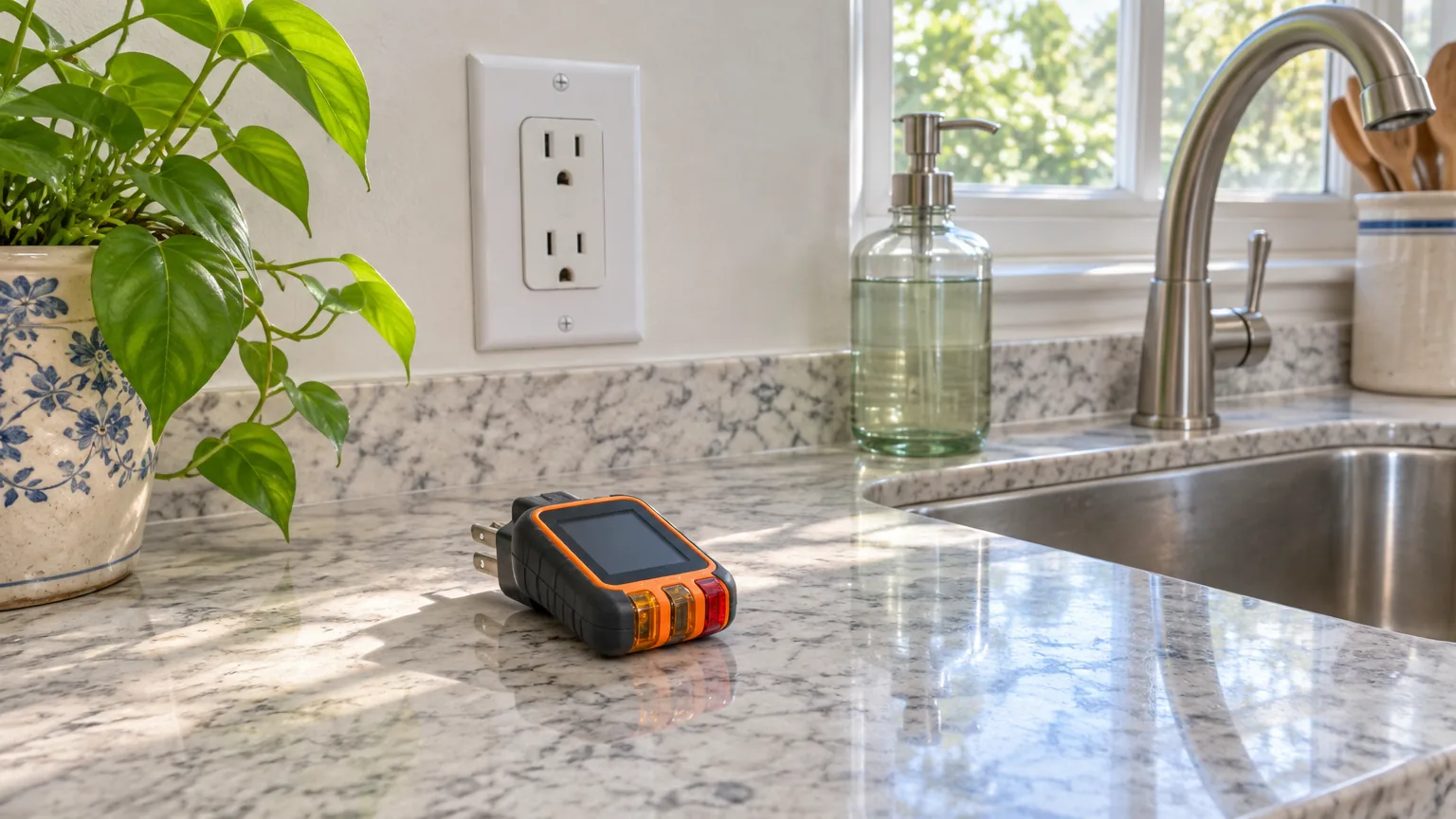
What is a ground fault? It is an unintended path that lets electric current leave a hot conductor and flow to ground, or to anything connected to ground, instead of returning through the neutral wire. A GFCI (ground fault circuit interrupter) senses that leak and cuts power. You can check a GFCI outlet with its built-in test button and a plug-in tester, as the checklist below shows.
This guide explains the idea in plain terms, lists the causes, compares a ground fault with a short circuit, and walks through a homeowner test routine. It also covers where protection is placed and what to do when a test result looks wrong.
What is a ground fault in a house circuit?
In a normal circuit, current travels out on the hot wire, through the lamp, appliance or tool, and back on the neutral wire. The amount leaving equals the amount returning. A ground fault happens when some of that current finds an alternative path, such as a metal appliance case, a grounding wire, a wet surface or a person.
The danger is the path itself. If the path runs through a body, the result is an electric shock. If it runs through damaged wiring or a loose connection, it can produce heat. Because the leak can be small, an ordinary breaker may not react to it, which is why a separate device is used.
Plain-language description
Think of the neutral wire as the planned return road. In everyday terms, a ground fault is a detour. The current is still moving, but it is no longer all coming back where it should, and the missing portion is going somewhere it was not meant to go.
What causes a ground fault
A few conditions account for ground faults in homes and workshops. A ground fault occurs whenever a live conductor can touch, or leak into, something that is grounded or that offers a path to ground.
- Damaged or worn insulation on cords, cables and tool leads, from age, heat, pinching or rodents.
- Moisture and water contact in outdoor outlets, basements, bathrooms, kitchens and wet garage floors.
- Wiring errors, such as a hot wire touching a metal box or a neutral and ground wired together in the wrong place.
- Physical damage, including a nail or screw through a cable, a crushed extension cord or a cracked plug.
- Appliances and power tools with internal insulation breakdown, especially when used on job sites and in damp workshops.
That last point answers the question about when a ground fault can occur at work: it can occur any time a portable tool, cord or temporary power setup has damaged insulation or is used in wet conditions. Inspecting cords before use and plugging into GFCI-protected outlets are sensible job-site habits.

Ground fault vs short circuit
Both are faults, but the current takes a different route and different devices respond. A short circuit is hot touching neutral (or another hot) with almost nothing in between, so current surges. A ground fault is hot reaching ground, and the current may be too small for a standard breaker to notice.
| Point | Ground fault | Short circuit |
|---|---|---|
| Path of current | Hot conductor to ground or a grounded object | Hot conductor to neutral or another hot conductor |
| Size of current | Can be small and still hazardous | Large, a surge |
| Typical cause | Moisture, damaged insulation, wiring error | Failed insulation between conductors, loose strands, crushed cable |
| Device that responds | GFCI outlet or breaker (RCD); a standard breaker may also trip if the fault current is large | Standard circuit breaker or fuse |
| Main concern | Electric shock | Heat and fire |
A circuit can have both at once, and a ground fault can grow into a short circuit if the damage spreads. If a breaker keeps tripping, see how to reset a breaker and find what keeps tripping it.
How ground fault protection works
A ground fault protection device constantly compares the current going out on the hot wire with the current coming back on the neutral. If the two differ by a small amount, some current is leaking elsewhere, and the device opens the circuit. A standard breaker watches for overload and surge, so it does not do this job.
Types of ground fault protection
- GFCI receptacle: covers itself and, depending on wiring, outlets downstream of it.
- GFCI breaker: sits in the panel and covers the whole branch circuit.
- Portable GFCI: a plug-in or cord-mounted unit for tools and outdoor use.
- RCD: the term used in many countries for the same kind of leakage-sensing device, and the label on many plug-in testers.
Where ground fault protection is required
Requirements come from the electrical code your area has adopted, and they change by edition and by city. Protection is commonly called for in bathrooms, kitchens near sinks, garages, basements, crawl spaces, laundry areas and outdoor outlets, as well as around pools and on construction sites. Check with your local building department before assuming an older home is exempt, and ask a licensed electrician about adding protection.
Frequent trips with nothing obviously wrong are called nuisance tripping. Moisture in an outdoor box, a worn appliance cord or a long extension run can cause it, so see repeated trips as a reason to investigate, not just to reset.
How to test a GFCI outlet with a plug-in tester
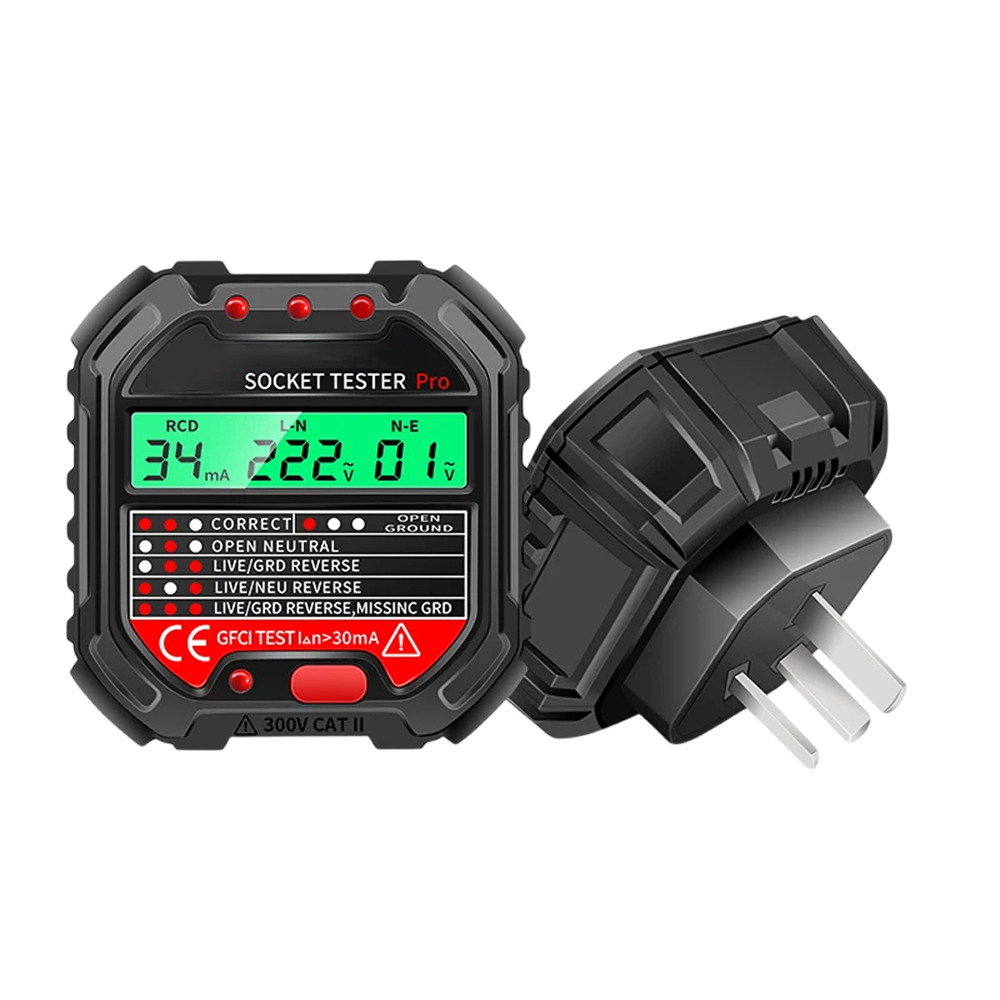
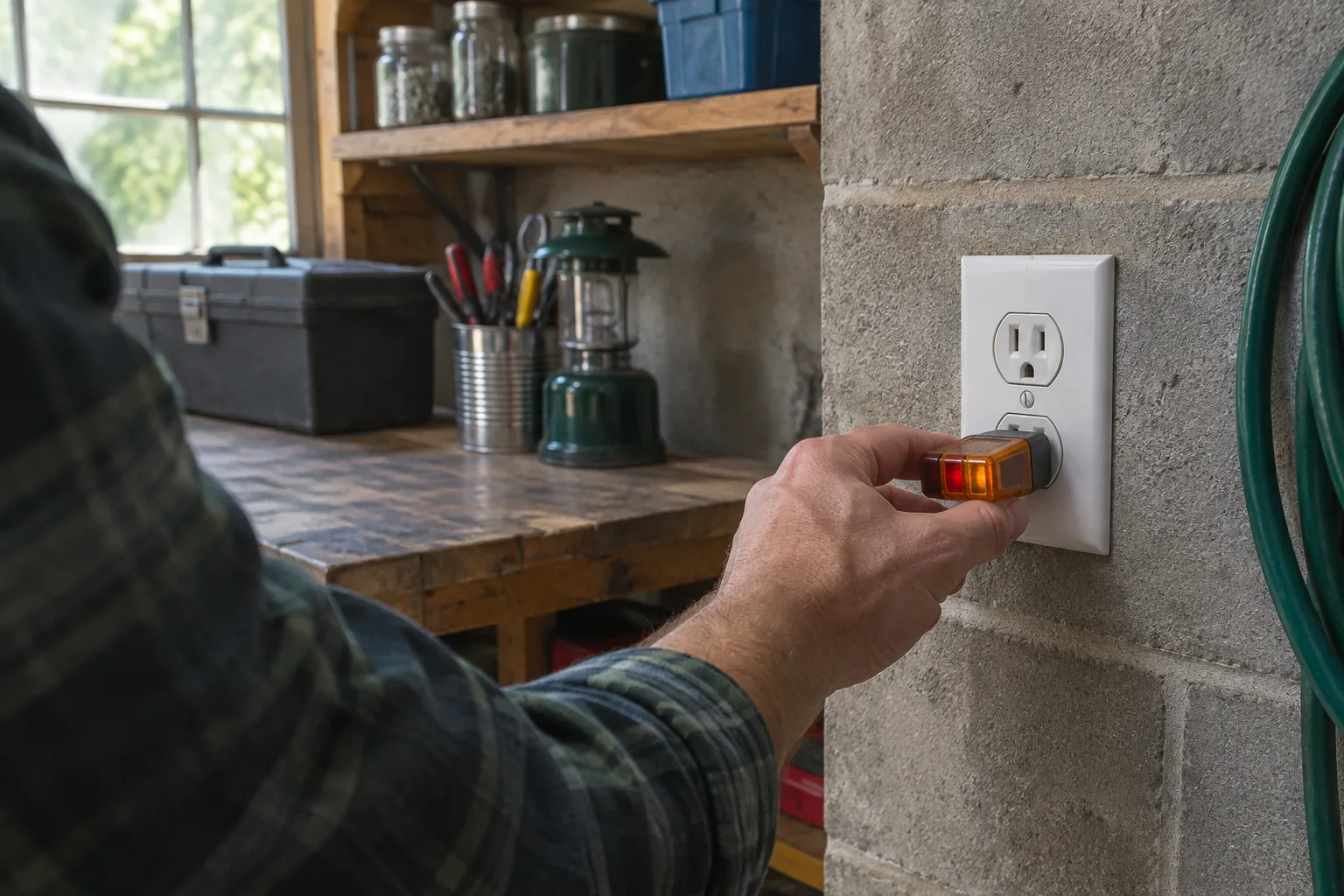
A plug-in outlet tester shows the wiring state of a receptacle, and some models include a button that trips the protective device. The OutletIQ is a plug-in socket tester with a backlit digital display. It draws power from the outlet being checked, so it needs no batteries, and it reads AC voltage from 48V to 250V. It reports conditions such as open ground and reversed polarity, and its dedicated RCD button lets you see whether the protective device trips.
 In this guideOutletIQ$69.99View
Homeowner checklist
- Look at the outlet and cover plate. Skip the test if you see cracks, scorch marks, a loose plate or water inside, and call an electrician.
- Plug the tester straight into the outlet. Read the display for the wiring status and the AC voltage.
- Note any reported fault, such as open ground or reversed polarity, before you press anything.
- If the wiring status is normal, press the RCD button and watch whether the outlet trips and the display or power drops out.
- Press the RESET button on the outlet to restore power, then run the outlet's own TEST button once as a second check.
- Repeat for every GFCI outlet and for each outlet marked as protected, such as those downstream in a bathroom or garage.
- Write down which outlets passed, which did not trip and which showed a wiring fault.
If the tester shows open ground or reversed polarity, or the outlet does not trip, stop using the outlet and call an electrician. Follow the manual that comes with the tester and any GFCI outlet, and only use the tester on a standard wall outlet.
What the results point to
| Result | What it suggests | Next step |
|---|---|---|
| Wiring normal, outlet trips on RCD button | The protective device responded | Reset the outlet and log it |
| Wiring normal, outlet does not trip | The protective device may not be working | Stop using the outlet and call an electrician |
| Open ground | The ground connection is missing or broken | Do not connect equipment; call an electrician |
| Reversed polarity | Hot and neutral are swapped | Stop using the outlet and call an electrician |
Signs of a ground fault and what to do next
Warning signs include a GFCI outlet that trips repeatedly, a warm or discolored cover plate, a burning smell, buzzing at an outlet and tools that trip protection only when used outdoors. Any of these is a reason to stop using that circuit.
Can you fix a ground fault yourself?
Simple steps are fine: unplug everything on the circuit, reset the GFCI, then plug devices back in one at a time. If the trip returns with one appliance, that appliance or its cord is the likely source. Replace the cord or the appliance instead of repairing it casually.
If the GFCI trips with nothing plugged in, the fault is in the wiring, a box or a fixture. Wiring work belongs to an electrician, especially in a panel or on a circuit you cannot identify.
Finding a ground fault with a multimeter
A multimeter helps you check one thing at a time. Work in two steps:
- Switch off the breaker and confirm with a tester that the outlet is dead.
- Check an unplugged appliance or cord on its own, following the meter manual.
Isolating conductors and testing the insulation of the wiring inside walls and boxes is electrician work, so ask an electrician when results are unclear. For meter basics, see how to use a digital voltage meter on 12V and household circuits.
To compare the instruments you might use for each job, read electric tester types for outlets, wires and car circuits, or browse the Electrical & Signal Testers collection.
Field note
Test GFCI outlets on a regular schedule, such as the first day of each month, and after a storm or any time the outlet has been wet. Keep a note of the date next to the panel.
Prevention checklist
| Task | How to do it |
|---|---|
| Inspect cords | Look for cuts, flattened sections, bent prongs and exposed conductors; replace damaged cords |
| Check outdoor outlets | Confirm covers close and the box is dry inside |
| Check grounding | Use a plug-in tester to look for an open ground before connecting equipment |
| Use protected outlets | Plug tools and appliances into GFCI-protected outlets in damp areas |
| Keep water away | Do not run cords through puddles or let sprinklers hit outlets |
| Plan an inspection | Ask an electrician to review older wiring, especially two-prong outlets |
If you are preparing a house for sale or buying one, the home inspector pre-inspection checklist covers where outlet checks fit. Store testers in their box between uses so the prongs and screen stay clean.