What Is an Inverter? What It Does and What It Can Run From a Car
An inverter converts direct current from a battery or solar panels into the alternating current household devices use. This guide covers sine wave types and sizing for a car.
The Quindrel Team
November 5, 2026 · 7 min read

What is an inverter? It is an electronic device that converts direct current (DC), the kind a battery or solar panel produces, into alternating current (AC), the kind a wall outlet supplies. In a vehicle, that means a 12V battery can power a laptop or a small appliance that normally plugs into a house outlet.
This guide explains how inverters work, the main types, and how to size one for the things you want to run. It also answers the practical questions about fridges, connecting to a car battery, and how much load a car battery can carry.
What is an inverter, and what does an inverter do?
A battery pushes current in one direction. Household devices expect current that reverses direction many times per second. An inverter uses electronic switching to create that reversing waveform from the battery's steady voltage, and it raises the voltage to the level your devices expect.
So what does an inverter do? It changes the form of electricity so that AC devices can run from DC sources. It does not create energy. Everything it delivers comes out of the battery or panels behind it, which is why sizing and battery capacity matter.
DC and AC in one minute
- DC: steady, one direction. Batteries, solar panels, USB ports.
- AC: alternates direction. Wall outlets, most household appliances, the power grid.
- Inverter: DC in, AC out. A charger or adapter does the opposite job.
Where inverters are used
- Vehicle inverters: plug into a 12V or 24V outlet or connect to the battery to run laptops, camera chargers and small tools.
- Backup power: an inverter paired with a battery bank supplies AC during an outage.
- Solar systems: panels make DC, so an inverter is needed before the energy reaches household circuits or the electrical grid.
- Motor drives: in an inverter air conditioner or inverter drive, the electronics vary the frequency supplied to the motor so it can change speed instead of switching fully on and off.
What is a solar inverter and what is a hybrid inverter?
A solar inverter takes the DC from solar panels and converts it to AC for your home or for the grid. A string inverter connects to a series (a string) of panels. Other designs convert at each panel instead.
A hybrid inverter combines the solar conversion with a connection to battery storage, so one unit can manage panel output, a battery and the grid connection. Installation of these systems involves high voltages and local code, so ask a licensed electrician to do it.
Pure sine wave vs modified sine wave
The shape of the AC output is called the waveform. A pure sine wave is a smooth curve, matching what the grid delivers. A modified sine wave is a stepped approximation that costs less to build.
| Feature | Pure sine wave | Modified sine wave |
|---|---|---|
| Waveform | Smooth curve like grid power | Stepped, blocky approximation |
| Simple heating loads | Works | Check the appliance manual |
| Motors and compressors | Suited | Check the appliance manual |
| Sensitive electronics, audio gear | Suited | May hum or misbehave |
| Chargers with electronic controls | Suited | Check the manual |
If a device has a motor, a timer or a digital control board, check what its manual says about waveform before you choose.
What appliances can run off an inverter?
The deciding number is wattage. Add up the running watts of everything you plan to run at the same time, then compare with the inverter's continuous output. Motors also draw a surge at startup, often several times their running watts, so leave room for it.
The figures below are typical ranges for planning. Your own labels differ, so confirm with the appliance label or a meter.
| Device | Typical running watts | Approx. DC amps at 12V | Notes |
|---|---|---|---|
| Phone charger | 5 to 20 | 0.5 to 1.7 | Fits any vehicle inverter |
| Laptop | 45 to 90 | 3.8 to 7.5 | Check the charger label |
| LED work light | 10 to 50 | 0.8 to 4.2 | Low load |
| Cordless tool charger | 50 to 150 | 4.2 to 12.5 | Check the charger label |
| Small TV | 50 to 120 | 4.2 to 10 | Screen size matters |
| Mini fridge | 50 to 100 running, higher at startup | 4.2 to 8.3 | Compressor surge |
| Microwave | 600 to 1,500 | 50 to 125 | Needs a large inverter wired to the battery |
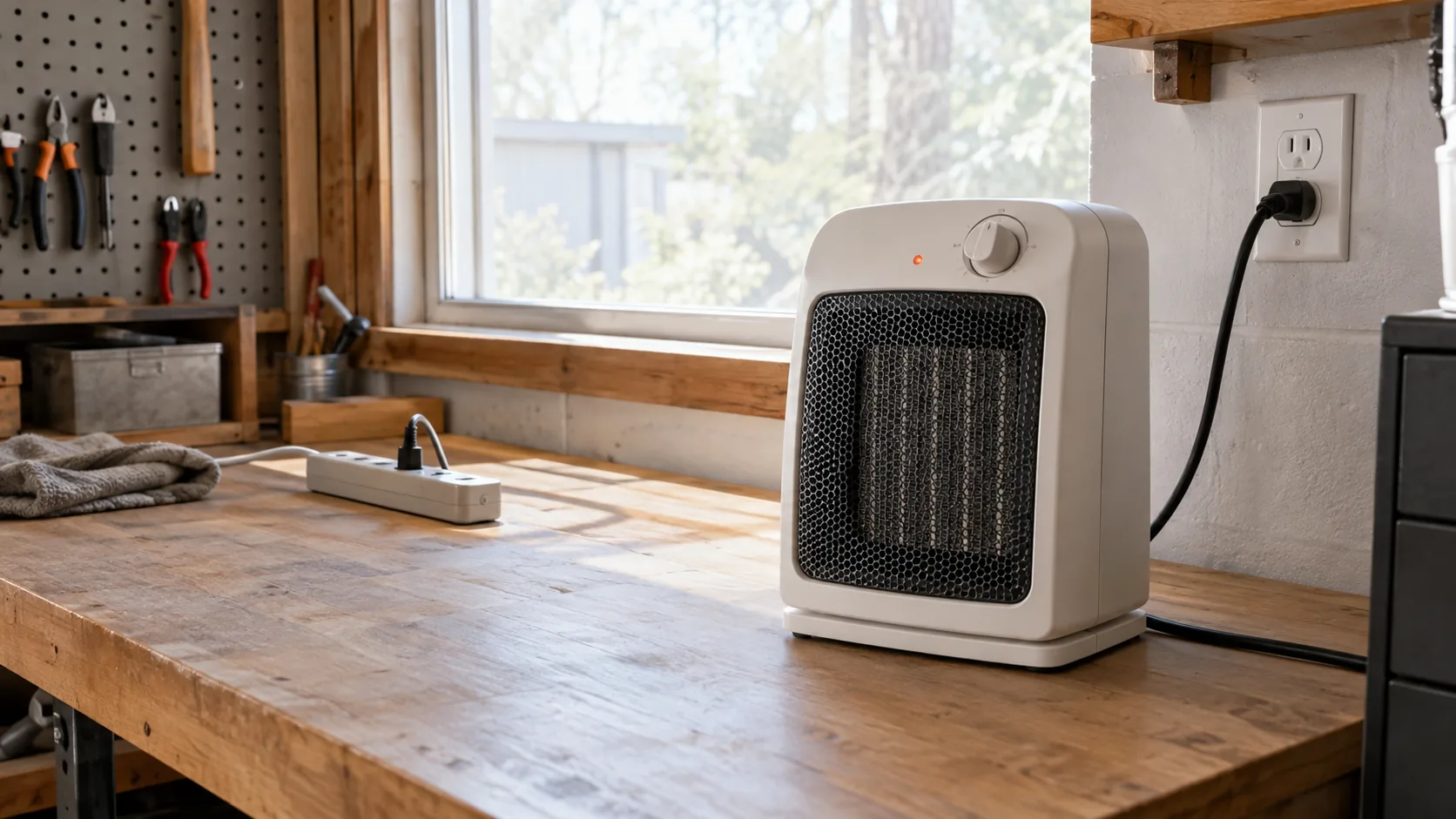
| Space heater, hair dryer, kettle | 1,000 to 1,800 | 83 to 150 | Heating loads are a poor fit for car power |
The amps column is simply watts divided by 12. Real draw is a bit higher because the inverter itself loses some energy as heat.
Measure instead of guessing
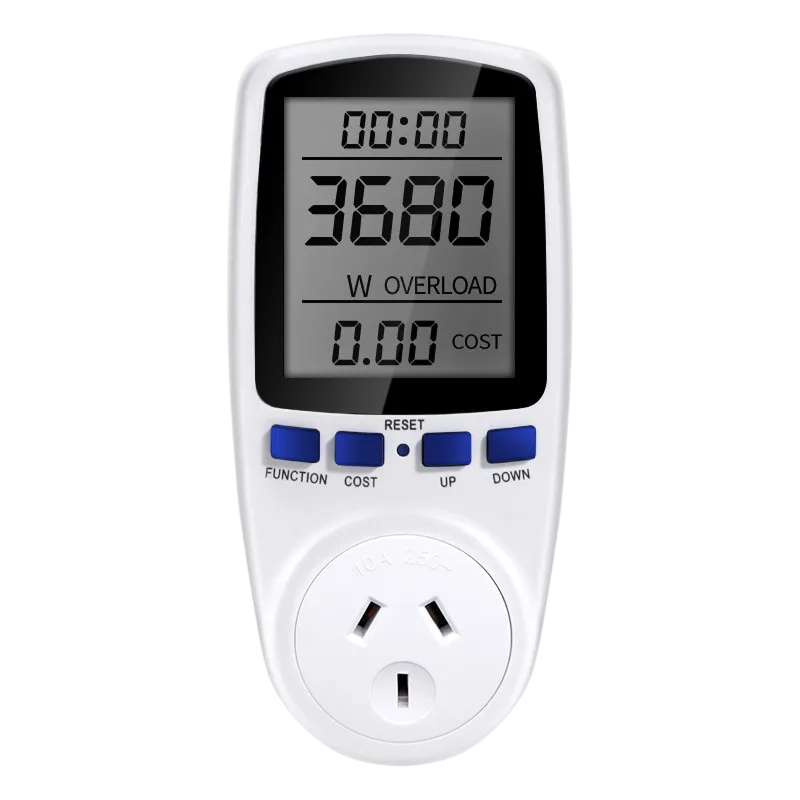
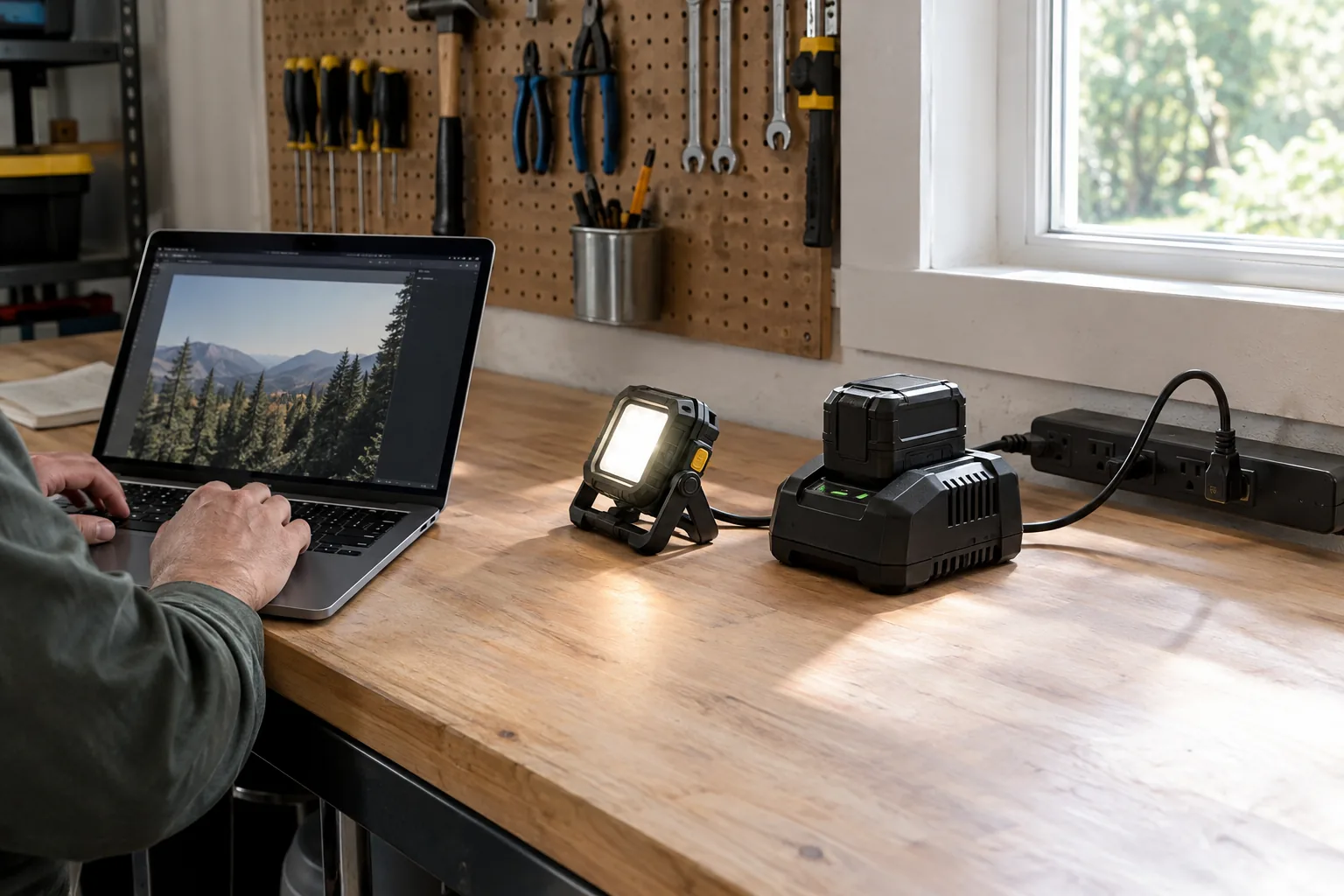
Labels show maximum or nameplate values, not what the device draws in use. The WattSage wattmeter plugs between a wall outlet and an appliance and shows wattage, voltage, current and frequency on its LCD. It works with 110V to 250V outlets, so you can read the actual draw of a device at home before deciding what inverter it needs.
 In this guideWattSage$69.99View
Can an inverter run a fridge?
Yes, a suitably sized inverter can run a fridge, but the compressor makes it a harder load than its running watts suggest. The motor draws a surge when it starts, so the inverter's surge rating has to cover it. Pure sine wave units are the common match for compressors; check the fridge manual.
A small mini fridge is a modest load. A full household refrigerator is a different case and calls for a large inverter connected to a battery bank, not a plug-in unit in a dashboard outlet. Measure the real draw with a wattmeter first.
Can you connect an inverter to a car battery?
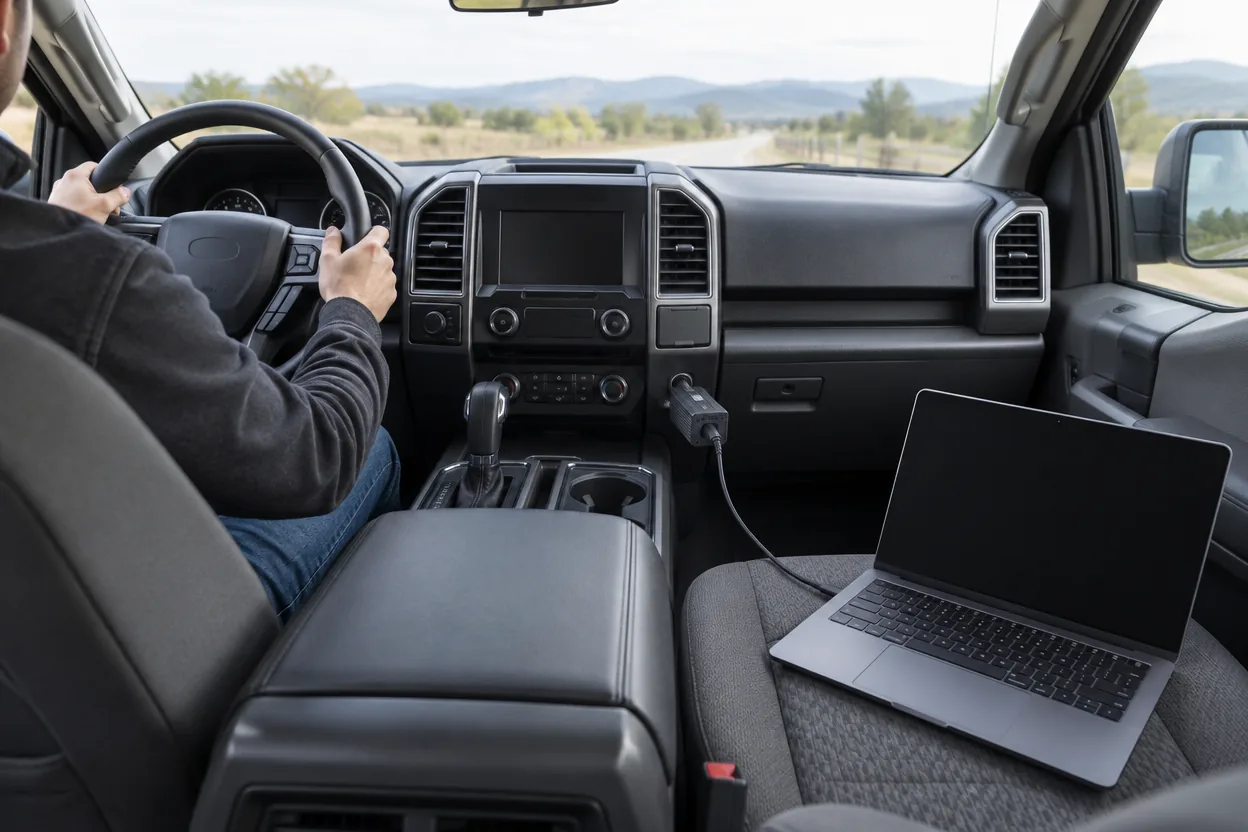
Yes, in two ways. Small inverters plug into the 12V or 24V outlet. Larger inverters connect with cables to the battery terminals, often with a fuse in the positive line. Follow the inverter's manual for cable size, fuse and polarity, and disconnect the battery connection before changing wiring.
Outlet-type inverters rely on the outlet's wiring and fuse, so keep the load within what your vehicle manual lists for that outlet. Anything bigger than a small electronics load belongs on direct cables.
A plug-in option for small loads
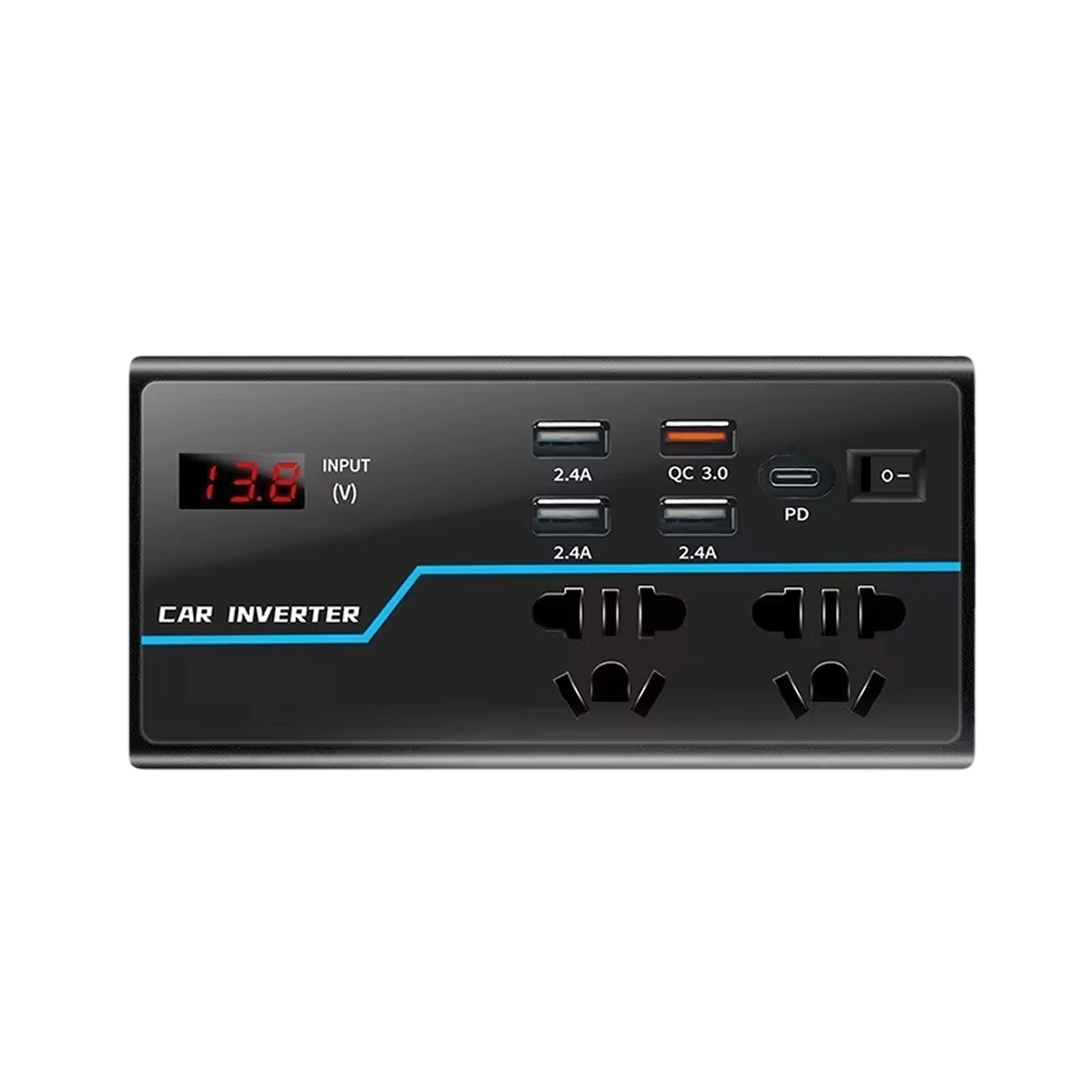
The WattRoam vehicle inverter plugs into a 12V or 24V vehicle outlet with no wiring. It converts battery DC power to AC for its sockets, and it also has USB and USB-C ports for laptops, phones and other small electronics. It has a cooling fan that switches on when the internal temperature rises, so keep the vents clear of cloth, bags and cargo. It also has a low-voltage alarm and an automatic shutoff.
 In this guideWattRoam$89.99View
How long a car battery can carry a load
Battery capacity is listed in amp-hours (Ah). Multiply amps drawn by hours of use and compare with the capacity. A car battery is built to deliver a burst for starting, not to be drained deeply, so plan to use only a modest share of its capacity.
- Add up running watts of the devices.
- Divide by 12 to get approximate amps, then add a margin for inverter losses.
- Divide a conservative share of the battery's Ah rating by those amps to get hours.
- Keep enough charge to start the engine.
For example, a 60-watt laptop is roughly 5 amps at 12V, while a 1,000-watt load is roughly 83 amps. The second drains a battery far sooner, which is why heating appliances are a poor fit. Running the engine lets the alternator supply current, but follow your vehicle manual on idling in enclosed spaces and ventilate.
Check the battery before you rely on it
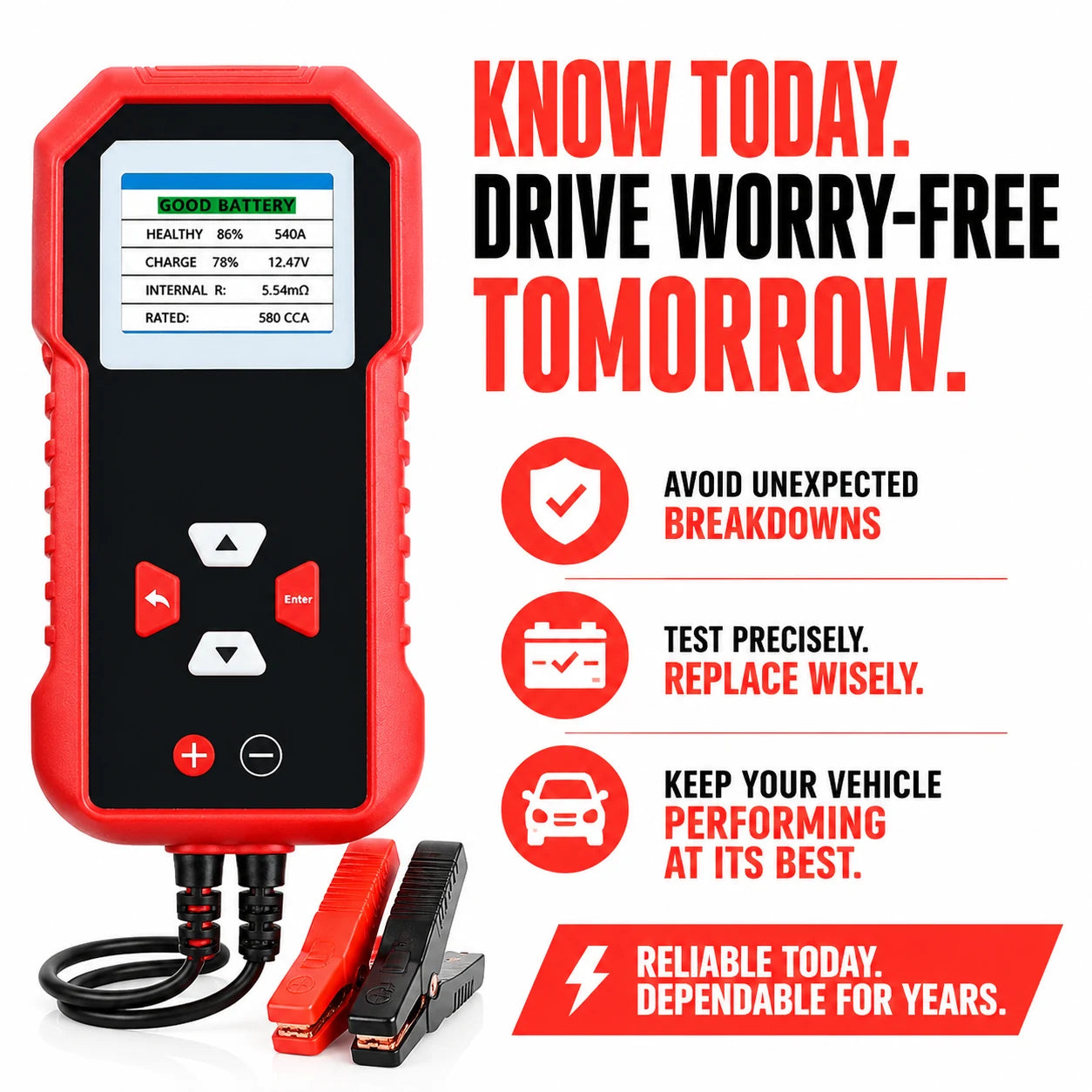
A weak battery turns any inverter plan into a stalled engine. The VoltProbe car battery tester clips onto the terminals of a 12V battery and uses a conductance method to read voltage, CCA and State of Health. Its color LCD shows a GOOD, CHARGE or REPLACE verdict, plus an alternator and charging system result. You pick Flooded, AGM or GEL before testing, and the battery can stay in the vehicle.
 In this guideVoltProbe$99.99View
Setup checklist and common mistakes
- Add up running watts and allow for startup surge on motors.
- Match waveform to the device: pure sine wave for motors and sensitive electronics.
- Check the vehicle outlet's fuse rating in the manual before using an outlet-type inverter.
- Keep vents clear so the fan can move air around the housing.
- Watch the low-voltage alarm and stop when it sounds.
- Use direct, fused cables for large loads instead of the dashboard outlet.
Common mistakes include running a heating appliance from an outlet-type unit, ignoring surge watts, burying the inverter under cargo, and draining the battery until the engine will not start.
Field note
Before buying a larger inverter, plug each device into a wattmeter at home and write down its real running watts. Size the inverter to that total, not to the label maximum.
Related guides and tools
For reading battery voltage at the terminals, see How to Use a Digital Voltage Meter on 12V and Household Circuits. If a battery is low after a long session, How to Use a Battery Charger for a Car, Step by Step walks through recharging it. More meters are in the Electrical & Signal Testers collection.